 Everett
 Why Port Gardner Roofs Take a Different Kind of Beating
Homes along Port Gardner don't wear roofs out the way homes ten miles inland do. The combination of salt-tinged air moving off the bay, driving rain that comes in sideways during winter storms, and a moss season that runs most of the year adds up to conditions that punish a roof from several directions at once — not just from above. A roofing material that performs fine in a drier, calmer climate can start showing real problems here years ahead of schedule if it wasn't chosen and installed with this specific exposure in mind.
Metal roofing has become a common answer for homeowners in this part of Everett who are tired of re-treating moss, patching wind-lifted shingles, or watching granule loss accelerate on a south- or west-facing slope that takes the brunt of the weather off the water. It isn't the right fit for every home or every budget, but done correctly it's one of the most durable answers to exactly the kind of exposure Port Gardner properties deal with year after year.
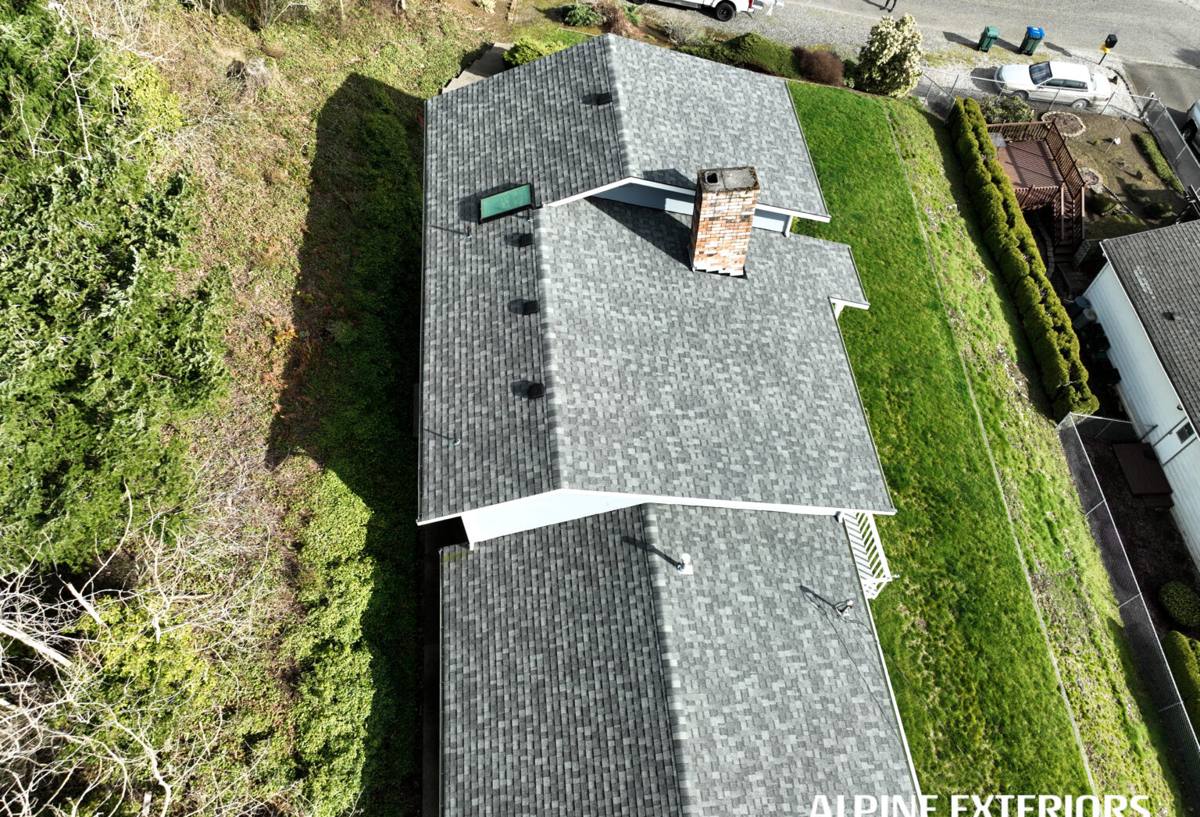
What Port Gardner's Climate Actually Does to a Roof
Salt Air and Corrosion
Proximity to Port Gardner Bay means airborne salt settles on roofing surfaces, fasteners, and flashing more than it does on homes further from the water. On metal roofing specifically, this makes panel coating, fastener grade, and flashing metal compatibility real decisions rather than afterthoughts — get them wrong and you're looking at premature rust streaking or galvanic corrosion where dissimilar metals meet.
Driving Rain
Storms off Puget Sound frequently push rain sideways instead of straight down, which stresses every horizontal seam, panel overlap, and penetration on a roof. A metal roof's advantage here is real — continuous panels with properly lapped seams shed wind-driven water far more reliably than a roofing material built from thousands of individual overlapping pieces — but that advantage only holds if the seams, underlayment, and flashing details are installed correctly in the first place.
Moss Season
Snohomish County's moss season is long, and shaded or north-facing roof planes under mature tree cover stay damp for extended stretches. Moss needs a foothold to establish, and metal roofing's smooth, hard surface gives it far less to grab onto than the porous, granular surface of asphalt shingles. That's one of the more practical, day-to-day reasons Port Gardner homeowners under tree cover look at metal — it's not a moss-proof material, but it's a much harder surface for moss to colonize.
What a Correct Metal Roofing Job Involves Here
Metal roofing has a reputation for being low-maintenance, and that reputation is earned — but only when the installation accounts for coastal conditions. A metal roof installed the same way you'd install one in a dry, inland climate is a metal roof that underperforms its own potential. The details that matter most on a Port Gardner home:
- Panel and coating selection matched to salt exposure — not every finish system is rated the same for coastal environments, and this matters more the closer a home sits to the water
- Fastener and flashing compatibility — mixing incompatible metals accelerates corrosion through galvanic reaction, a preventable mistake that shows up as rust stains and failed seals within a few years
- Full synthetic underlayment, not a minimal-code layer, as genuine backup protection against wind-driven rain that finds its way past seams during the worst storms
- Properly detailed valleys, penetrations, and wall transitions — the majority of roof leaks on any material originate at these transition points, not on the open field of the roof
- Adequate attic ventilation — condensation control matters on metal roofing just as much as on shingles, and older homes in this area often need ventilation upgrades as part of the re-roof
- Correct panel expansion allowance — metal panels move with temperature swings, and fastening systems that don't account for that movement lead to oil-canning or fastener backout over time
Standing Seam vs. Exposed-Fastener Metal Roofing
Not all metal roofing is the same system, and the difference matters more in a climate like this one than it does in milder, drier regions.
| Feature | Standing Seam | Exposed-Fastener Panel |
|---|---|---|
| Fastening method | Concealed clips under raised seams — no exposed fastener penetrations on the panel field | Screws driven directly through the panel face, exposed to weather |
| Weathertightness in driving rain | Very strong; continuous seams shed wind-driven water well | Adequate when installed correctly, but each exposed fastener is a potential future leak point as gaskets age |
| Maintenance over time | Minimal; no fasteners to re-seat or reseal | Exposed fastener gaskets typically need inspection and occasional replacement over the roof's life |
| Upfront cost | Higher | Lower |
| Best fit | Homes prioritizing lowest long-term maintenance and best coastal wind-driven rain performance | Homes on a tighter budget, or secondary structures like shops and garages |
For a primary residence on Port Gardner facing direct exposure off the bay, we lean toward standing seam for the simple reason that it removes the one long-term maintenance item — exposed fastener gaskets — that tends to be the first thing to need attention on the alternative system. That said, exposed-fastener panel roofing installed well is a legitimate, durable option, and it's a reasonable call on a budget-conscious project or a detached structure that doesn't take the same direct weather exposure as the main house.
How We Approach a Port Gardner Metal Roofing Project
1. On-Site Assessment
We start by walking the roof and the property, not just measuring square footage. Exposure direction, tree cover, existing moss or moisture staining, current ventilation, and how close the home sits to the water all factor into the material and detailing recommendations we make.
2. Tear-Off and Deck Inspection
Once the existing roofing is removed, we inspect the decking underneath for rot or moisture damage — a real possibility on a home that's had years of moss retention or a ventilation shortfall. Any compromised decking gets replaced before anything new goes down; installing a new roof over a soft or damaged deck just hides a problem instead of fixing it.
3. Underlayment and Flashing First
The waterproofing layer underneath the metal panels — synthetic underlayment plus properly detailed flashing at every valley, penetration, and wall transition — is arguably more important to long-term performance than the panels themselves. This is the layer that has to work correctly even if wind-driven rain gets past the panel seams during a bad storm.
4. Panel Installation
Panels go on with corrosion-resistant fasteners and clips rated for coastal exposure, with expansion allowance built into the fastening system so the panels can move with temperature changes without stressing seams or backing out fasteners over time.
5. Final Walkthrough
We walk the finished roof with the homeowner, cover what maintenance (if any) the specific system needs, and make sure warranty paperwork on both material and workmanship is handled before we consider the job done.
What to Ask Before Hiring Anyone for This Job
Metal roofing is unforgiving of installation mistakes in ways that don't always show up right away — a poorly detailed seam or an incompatible fastener choice can look fine for a year or two before the corrosion or leak becomes visible. Before hiring a crew for a Port Gardner metal roof, it's worth asking:
- Have they installed metal roofing specifically on homes in this direct-coastal, high-moss area — not just metal roofing in general?
- What fastener and flashing metal do they specify, and is it rated for salt-air exposure?
- Do they carry manufacturer certification for the panel system they're proposing?
- What does the workmanship warranty cover, separate from the manufacturer's material warranty?
- Will they inspect and address deck condition and attic ventilation as part of the project, not just lay panels over what's already there?
A crew that already works this specific stretch of Everett knows which details actually matter here versus which ones are boilerplate from a drier climate — that difference shows up in how the roof performs in year eight, not in how it looks on installation day.
Cost Factors Specific to Port Gardner Metal Roofs
| Factor | Why It Affects Cost Here |
|---|---|
| Panel system (standing seam vs. exposed-fastener) | Standing seam costs more upfront but removes long-term fastener maintenance |
| Coating and finish grade | Coastal-rated finishes cost more than standard finishes but resist salt-driven fading and corrosion better |
| Roof complexity | Valleys, dormers, and multiple roof planes add labor for the flashing detail work that matters most in driving rain |
| Deck and ventilation repairs | Moss retention and past moisture exposure sometimes mean deck replacement or added ventilation is needed once tear-off begins |
| Access and site conditions | Steep pitches, limited staging area, or difficult material delivery access add labor time |
We give straightforward, itemized estimates rather than a single lump number, so homeowners can see exactly what's driving cost and where there's room to make choices based on budget.
Is Metal Roofing Right for Your Port Gardner Home?
Metal roofing makes the most sense for homeowners planning to stay in the home long-term, for properties under heavy tree cover dealing with chronic moss problems, and for anyone tired of the recurring maintenance cycle that comes with asphalt shingles in this climate. It's a bigger upfront investment than a shingle re-roof, and it's not always the right call on every budget or every home — an honest assessment of your roof, your timeline, and your priorities is the right starting point, not a sales pitch toward the most expensive option.
If you're weighing metal roofing against other materials for a Port Gardner home, we're happy to walk the roof, talk through what your specific exposure and tree cover mean for material choice, and give you a straight answer — including telling you if a different material makes more sense for your situation. Reach out for a free, no-pressure estimate using the form below.