 Everett
 Why Decks in Pinehurst Wear Out Faster Than the Manual Says
Every deck manufacturer publishes a lifespan number, and almost none of them were tested in a place like Pinehurst. Between the marine-influenced air moving in off Puget Sound, the long stretch of wet months Snohomish County gets every year, and the moss and algae that thrive in the shade of mature Northwest trees, a deck here works harder than the same deck would in a drier inland climate. Salt-laden moisture in the air accelerates corrosion on fasteners and hardware. Driving rain finds its way into joints and end grain that would stay dry somewhere else. And moss doesn't just look bad — it holds moisture against wood and composite surfaces for months at a time, which is exactly the condition that causes rot, delamination, and slick, unsafe footing.
A deck built without those specifics in mind might look fine for a few years. But the failures we see in Everett and the surrounding Pinehurst area almost always trace back to the same root causes: undersized or unprotected framing, fasteners that weren't rated for this environment, and flashing details that were skipped to save time. Replacing a deck the right way means designing for the climate it actually sits in, not the climate on the packaging.
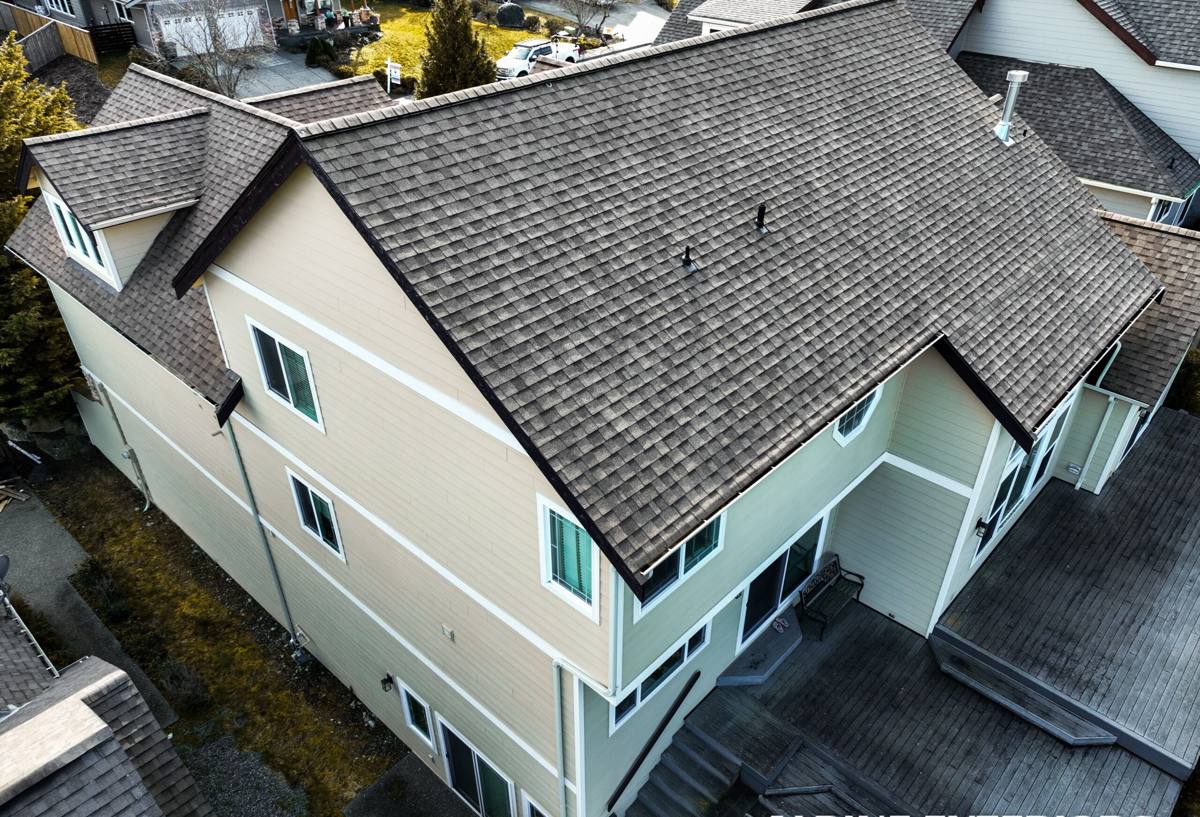
Repair or Replace? Reading the Signs
Not every tired-looking deck needs a full teardown. But a lot of decks that could have been saved with an early repair end up needing full replacement because the underlying problem was ignored too long. Here's what tells us which category a deck falls into.
- Soft or spongy spots in the decking boards, especially near the house or in shaded corners
- Rust streaking around fasteners or visible corrosion on brackets and hangers
- Persistent moss or black-green staining that comes back within weeks of cleaning
- Gaps opening up between the ledger board and the house siding or trim
- Railings that flex or feel loose when you lean on them
- Framing you can probe with a screwdriver and feel it sink in rather than resist
One or two of these on an otherwise solid deck can often be repaired. Several at once, or any sign of rot in the framing or ledger connection, usually means the structure has been compromised long enough that patching it is a short-term fix at best.
What a Correct Deck Replacement Actually Involves
A deck replacement is more than pulling off old boards and screwing down new ones. The parts you don't see are what determine whether the new deck lasts.
Ledger Board and Flashing
The ledger board — where the deck attaches to the house — is the single most common source of hidden rot, because it sits directly against the wall where water runs down every time it rains. A correct replacement includes proper flashing behind and over the ledger, with the flashing lapped correctly under the house's weather-resistive barrier so water sheds outward instead of tracking behind the siding. This detail is invisible once the deck is finished, which is exactly why it gets skipped on lower-bid jobs.
Footings and Framing
Footings need to sit below frost depth and bear on undisturbed or properly compacted soil — not just poured on top of whatever was there. Framing lumber should be rated for ground contact or exterior use where it's within a few inches of soil or persistent moisture, and joist spacing should match the actual decking product being installed, since composite and PVC boards often require tighter spacing than solid wood.
Fasteners and Hardware
In a marine-influenced climate, fastener choice matters more than most homeowners realize. Standard galvanized screws and joist hangers can corrode within a few years when exposed to salt-tinged air and constant moisture cycling. We use stainless or high-grade coated fasteners and connectors rated for this kind of exposure, because replacing a deck's surface twice as often as its hardware defeats the purpose of a rebuild.
Decking Material Options for This Climate
There's no single "best" decking material — there's a best fit for how a household uses the space, how much maintenance they want to do, and what budget they're working with. Here's an honest comparison of the main options for a Pinehurst backyard.
| Material | Upfront Cost | Moss/Moisture Resistance | Maintenance | Realistic Lifespan Here |
|---|---|---|---|---|
| Pressure-treated wood | Lowest | Fair — needs sealing to perform | Annual cleaning and re-sealing recommended | 10–15 years with upkeep |
| Cedar | Moderate | Good natural resistance, but surface still needs care | Periodic cleaning and staining | 15–20 years with upkeep |
| Capped composite | Higher | Very good — resists moisture absorption and moss staining | Occasional washing, no sealing or staining | 25+ years |
| PVC | Highest | Excellent — fully synthetic, doesn't absorb moisture | Lowest — soap and water as needed | 25+ years |
Wood costs less to install but asks more of the homeowner every year in this climate — a deck left unsealed through even one wet Everett winter can start showing moss and gray staining. Capped composite and PVC cost more up front but hold up against the exact conditions that wear wood down fastest here: standing moisture, shade, and repeated wet-dry cycling. We'll walk through the real trade-offs for your specific yard rather than push one product across the board.
Drainage, Moss, and Long-Term Moisture Management
Moss doesn't grow because a deck is old — it grows because moisture has somewhere to sit. That's true whether the deck is wood or composite. Getting drainage right during replacement does more for a deck's lifespan than any single material choice.
That means grading and gapping decking boards so water actually sheds instead of pooling, keeping the space under a low deck ventilated rather than sealed off and damp, and directing downspouts and roof runoff away from the deck footprint instead of letting it sheet across the surface. On shaded lots — common throughout the Pinehurst area under mature tree cover — we also think about board spacing and airflow underneath the structure, since a deck that never fully dries out between rain events will grow moss no matter what it's made of.
Permits and Code in Everett and Snohomish County
Most deck replacements that involve new framing, footings, or a structural rebuild require a permit, whether the project is inside Everett city limits or unincorporated Snohomish County. Requirements can vary depending on deck height, attachment to the house, and whether the footprint is changing, so we handle the permit determination and application as part of the project rather than leaving it for the homeowner to sort out. Skipping a required permit can create real problems later — at resale, with insurance claims, or if the work doesn't hold up to inspection standards that protect the homeowner as much as anyone.
How We Approach a Pinehurst Deck Replacement
Our process is built around not surprising the homeowner, and around not cutting corners on the parts that determine how the deck performs once winter rain sets in.
- On-site assessment — we look at the existing structure, ledger condition, drainage, sun exposure, and how the space actually gets used before recommending anything.
- Honest material conversation — we walk through the real cost and maintenance trade-offs for your situation, not a one-size-fits-all pitch.
- Permit and design — we handle the permit process and finalize framing and layout details before demolition starts.
- Demolition and structural rebuild — old decking, and any compromised framing or footings, come out and get replaced to current standards.
- Decking, railing, and finish work — installed with fasteners and flashing details suited to this climate, not the minimum the material allows.
- Final walkthrough — we go over the finished deck and basic care so it's clear what upkeep, if any, is expected going forward.
Choosing a Contractor Who Actually Works This Neighborhood
A deck built by a crew unfamiliar with this climate tends to show it within a few seasons — usually at the ledger, the fasteners, or the drainage. Before hiring anyone for a deck replacement in Pinehurst, it's worth asking a few direct questions.
- Do they pull permits themselves, or leave that step to you?
- What fastener and hardware grade do they use, and why?
- Can they explain how they'll flash the ledger board against the house?
- Do they have current liability insurance and, if required, bonding?
- Will they put the material, warranty, and scope of work in writing before starting?
- Have they worked on homes in this specific area, with its shade and moisture patterns?
A contractor who answers these clearly and specifically, rather than in generalities, is usually the one who's actually thought through what this climate does to a deck over time.
After the Build: Keeping a New Deck Ahead of Moss Season
Even a well-built deck benefits from a little seasonal attention. Clearing leaves and debris from between boards before the wet months set in keeps moisture from getting trapped. A yearly rinse — plain water and a stiff brush is often enough — knocks back early moss growth before it gets established. Wood decks need periodic sealing to keep performing; composite and PVC decks mostly just need to stay clear of standing debris. None of this is heavy maintenance, but skipping it entirely is how a deck that was built correctly still ends up looking neglected within a couple of winters.
If you're weighing a deck replacement in Pinehurst and want a straight answer on what your specific deck needs, we're happy to take a look and walk you through it. The estimate is free, there's no pressure, and you'll get a clear picture of what the job actually involves before you decide anything — just fill out the form below.