 Everett
 What North Everett Homes Are Actually Up Against
North Everett sits close enough to Port Gardner Bay and the Puget Sound shoreline that salt-tinged air is a real factor on siding, not a theoretical one. Add in Snohomish County's long wet season, driving rain that comes in sideways during winter storms, and mature tree cover that keeps a lot of exterior walls shaded and slow to dry, and you've got a climate that's genuinely hard on the outside of a house. Moss and algae aren't a cosmetic nuisance here — they're a sign that a wall assembly is staying damp longer than it should, and over years that moisture cycling is what actually damages siding, trim, and the sheathing behind it.
None of that means siding is a lost cause in North Everett. It means the material and the installation both have to be matched to the conditions. A product that performs fine in a dry inland climate can struggle here, and even a good product installed with shortcuts — poor flashing, wrong fastener pattern, no drainage path behind the siding — will fail faster in this environment than it would somewhere drier. This page is about what a correct siding installation looks like for this specific neighborhood, not a generic overview of siding in general.
Why We Install James Hardie Fiber Cement Here
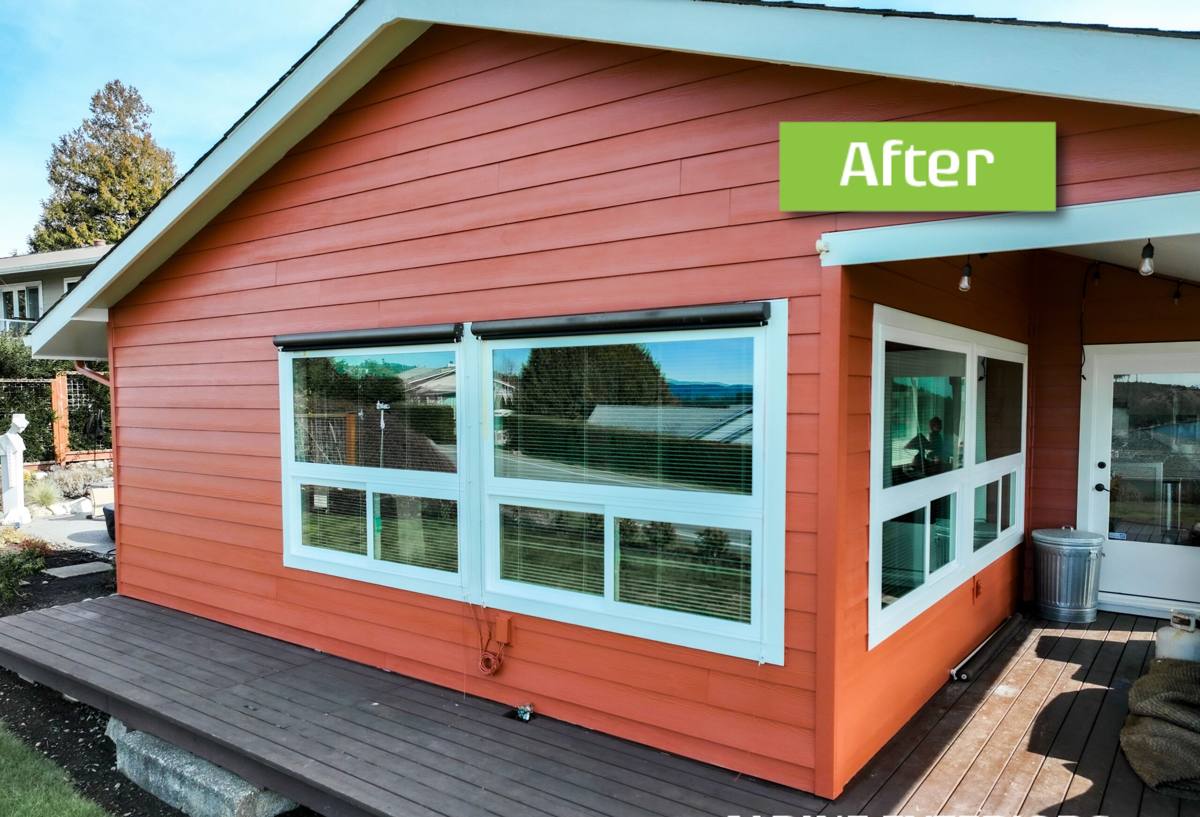
We install James Hardie fiber cement siding exclusively — we don't offer vinyl, LP SmartSide, primed spruce, cedar, or other fiber cement brands. That's not a marketing position, it's a standard we set based on what actually holds up in this climate over the long run. James Hardie's HZ5 product line is engineered specifically for colder, wetter climate zones like the Pacific Northwest, which matters more than it sounds like it should — the board formulation, not just the surface finish, is built to handle the moisture cycling North Everett sees for most of the year.
Fiber cement is also non-combustible, which is worth mentioning even in a wet climate, since it removes a category of risk that wood-based and some engineered siding products carry. On top of the board itself, James Hardie's ColorPlus factory finish is baked on under controlled conditions before the material ever reaches the jobsite, which gives it a real advantage over field-applied paint in a region where you rarely get a long, dry, wind-free stretch to paint in. We'll go into the finish system in more depth below, but the short version is: in this specific climate, the material choice is doing as much work as the installation.
What Correct Installation Actually Involves
Water Management Starts Before the Siding Goes On
The siding itself is the last layer, not the only layer, of a home's water management system. Underneath it there needs to be a properly lapped weather-resistive barrier, correctly integrated flashing at every window, door, and penetration, and — especially in a climate like this one — a drainage gap that lets any moisture that does get behind the siding actually escape instead of sitting against the sheathing. Skipping or rushing this stage is the single biggest reason siding fails early, and it's invisible once the job is done, which is exactly why it's worth asking a contractor about directly before they start.
Fastening, Clearances, and Reveal Consistency
James Hardie publishes specific fastening patterns, nail placement, and clearance requirements — minimum gaps from grade, roof lines, decks, and other siding transitions — and following them isn't optional if you want the manufacturer's warranty to actually apply. Consistent reveal (the exposed portion of each board) is also what makes a finished job look clean instead of wavy, and it only happens with a level starting line and careful layout, not by eyeballing each course as you go.
Caulking and Joint Treatment
Butt joints, corners, and trim intersections are where a lot of avoidable moisture problems start. Correct treatment means the right sealant, applied to the right joints (not every joint needs it — some are designed to be left open as part of the drainage plan), and painted or factory-finished trim that matches the siding's expected service life instead of needing attention again in a couple of years.
Common Problems We See on North Everett Homes
A lot of what we get called out for in this neighborhood traces back to the climate factors above, not just age. Some of the most frequent issues:
- Moss and algae staining on north-facing and heavily shaded walls that stay damp longer between dry spells
- Moisture intrusion at window and door flashing that was never properly integrated with the water-resistive barrier
- Paint failure and chalking on older field-painted siding that never gets a long enough dry window to cure properly
- Soft or delaminating wood-based siding where trapped moisture had nowhere to go
- Caulk that's failed at joints and trim, letting water track behind the siding in the wettest months
Most of these are preventable with correct installation up front and a material that's actually suited to the conditions. They're rarely one-season problems — they build slowly, which is part of why they get expensive if they're not caught early.
Our Installation Process
The process doesn't change dramatically from neighborhood to neighborhood, but the details we pay closest attention to shift based on a home's specific exposure — how much shade it gets, how close it sits to the water, which walls take the worst of the winter storms. In general, here's how a project runs:
- Inspection and assessment — we look at the existing siding, sheathing condition where accessible, and any signs of moisture damage before we ever talk about new material.
- Removal and prep — old siding comes off, damaged sheathing gets addressed rather than covered over, and the wall is prepped for a correct weather-resistive barrier.
- Water-resistive barrier and flashing — properly lapped housewrap and correctly integrated flashing at every opening, before any siding goes up.
- Drainage plane installation — a rainscreen gap where appropriate, so any incidental moisture has a path to drain and dry out.
- Siding installation — James Hardie boards installed to manufacturer fastening and clearance specifications, with consistent reveal throughout.
- Trim, caulking, and finish detail — corners, joints, and transitions finished correctly, not just caulked over to look done.
- Final walkthrough — we go over the finished work with you before calling the job complete.
Cost Factors for North Everett Siding Installation
There's no honest way to quote a siding job without seeing the house, but the factors that move the price up or down are consistent. The table below covers the ones that matter most for a project in this area.
| Factor | Why It Affects Cost |
|---|---|
| Existing siding removal | Tear-off, disposal, and any sheathing repair found underneath add labor and material that can't be estimated until the old siding is off |
| Home size and wall complexity | More corners, dormers, and roof intersections mean more cutting, flashing, and trim detail per square foot |
| Product line and profile | HardiePlank lap, panel, and shingle profiles carry different material and labor costs |
| Access and site conditions | Steep lots, limited driveway access, or dense landscaping near the walls can slow staging and installation |
| Moisture damage found during removal | Rot or delaminated sheathing behind old siding has to be repaired before new siding goes on — this is the most common source of a mid-project cost adjustment |
| Trim and finish scope | Full trim replacement versus reusing sound existing trim changes both material cost and finish time |
Why Hiring a Crew That Already Works North Everett Matters
A crew that's worked this specific area knows which walls tend to hold moisture longest, what the moss and algae patterns typically look like on homes with similar exposure, and how the local permitting process runs with the City of Everett and Snohomish County. That's not a small thing — permits and inspections for siding replacement, especially when sheathing repair is involved, are a real step in the process, and a contractor unfamiliar with local requirements can slow a project down or miss something an inspector catches later.
Beyond permitting, familiarity with the neighborhood means fewer surprises. A contractor who's done several projects nearby has a good sense of what's typically found once old siding comes off in homes of a similar age and construction, which makes for a more accurate estimate and fewer mid-project surprises.
Before You Get an Estimate: A Homeowner's Checklist
- Note which walls of your home stay shaded or damp longest — that context helps a contractor plan drainage and ventilation correctly
- Look for visible moss, algae, or dark staining, and note where it's worst
- Check for soft spots, bubbling paint, or visible gaps at trim and window edges from the ground
- Ask any contractor you're considering whether they're a certified James Hardie installer and what climate-specific product line they'd use
- Confirm licensing and bonding in Washington, and ask who pulls the permit
- Get a clear answer on how moisture-damaged sheathing, if found, would be handled and priced
- Ask what warranty applies to both the material and the labor, and get it in writing
Getting an Estimate
If your North Everett home's siding is showing moss staining, failing paint, or you're just planning ahead for a re-side, we're happy to take a look and walk you through what we'd actually recommend for your home's exposure — no pressure, no obligation. Use the form below to request a free estimate.