 Everett
 North Everett's Siding Problem Isn't Cosmetic — It's Moisture
North Everett sits close enough to Port Gardner Bay and the greater Puget Sound shoreline that homes here deal with a specific combination of stress most siding products were never designed to handle well: salt-laden air, wind-driven rain that hits walls at an angle instead of falling straight down, and a wet season that in Snohomish County can stretch from October well into April. Add the shade from mature evergreens common in older North Everett lots, and you get walls that don't dry out quickly between storms. That combination is what actually damages siding — not one hard rain, but months of walls staying damp, freeze-thaw cycles working into any gap, and moss and algae getting a foothold on surfaces that never fully dry.
Any siding material can look fine in a showroom. The real test is how it performs after its twentieth wet winter on a wall that faces the weather. That's the lens we use when we recommend, and only install, James Hardie fiber cement on North Everett homes.
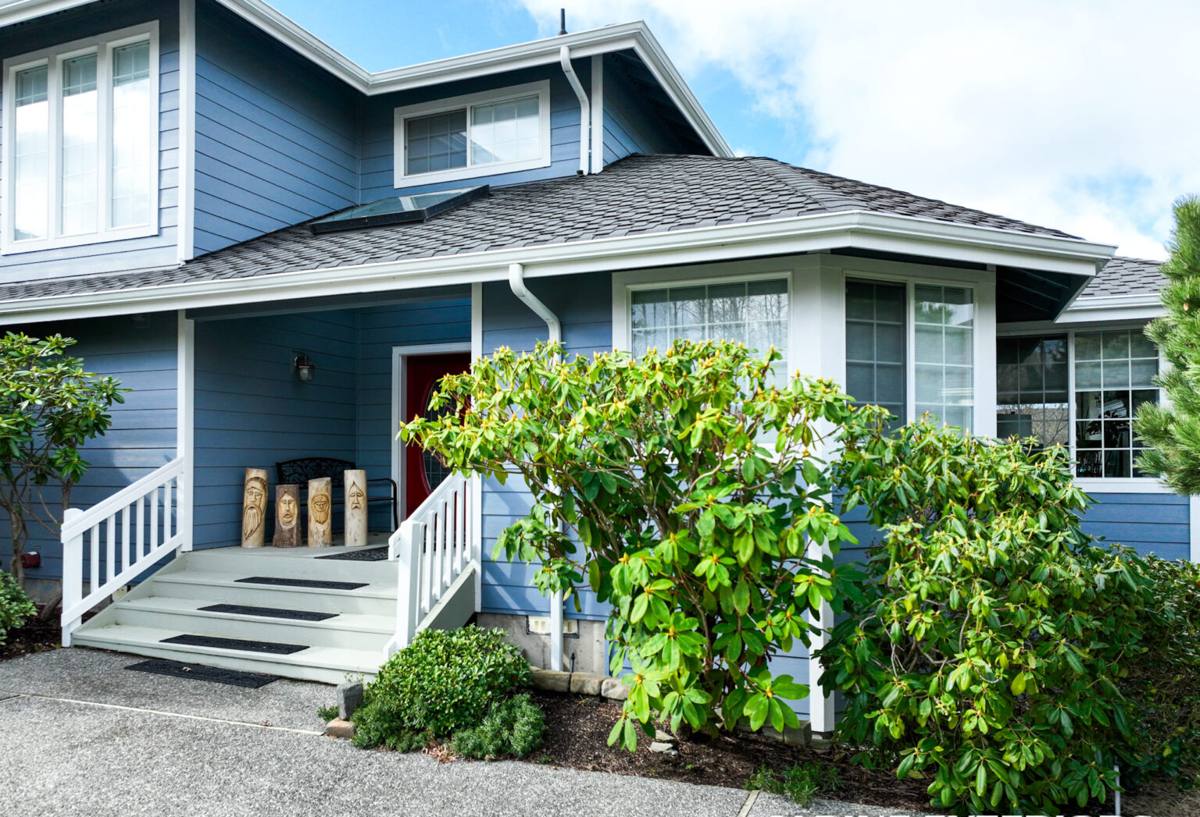
Why We Install James Hardie and Nothing Else
We don't install LP SmartSide, vinyl, Cemplank, Allura, primed spruce, or cedar. That's not a marketing position — it's a standard we set after weighing how each of those products actually holds up against long-term moisture exposure, maintenance burden, and the realities of a coastal-influenced Pacific Northwest climate. James Hardie fiber cement is non-combustible, dimensionally stable in wet-dry cycling, and backed by a real transferable warranty. It also comes factory-finished with ColorPlus technology, which matters more here than in drier climates, because a factory-baked finish resists the peeling and fading that field-applied paint struggles with when it's exposed to salt air and prolonged dampness.
HZ5 Engineering for This Exposure
Hardie manufactures its products in different formulations for different climate zones, and the Pacific Northwest falls under the HZ5 engineering standard, built specifically for high-moisture, freeze-prone regions. That means the board itself is formulated for the exact conditions North Everett homes face, not a generic national product. It's a meaningful distinction: a siding product engineered for a dry Southwest climate and one engineered for a wet Puget Sound climate are not interchangeable, even if they look identical on a sample board.
Product Lines That Fit This Neighborhood
Most North Everett homes work well with HardiePlank lap siding, which gives the traditional horizontal look found throughout the area's older and newer construction alike. For homes with mixed-material facades or accent gables, HardiePanel and HardieShingle siding let us match board-and-batten or shingle-style detailing without stepping outside the Hardie system. Trim, soffit, and fascia are also available in matching Hardie products, which matters for moisture control — mixing brands at these transition points is a common source of the gaps and incompatible expansion rates that let water in.
What Correct Installation Actually Requires Here
James Hardie siding performs the way it's engineered to perform only when it's installed to spec. In a climate like North Everett's, a handful of details separate a job that lasts decades from one that develops rot behind the walls within a few wet seasons.
The Water-Resistive Barrier and Flashing Come First
Before a single board goes up, the wall needs a continuous weather-resistive barrier with properly integrated flashing at every window, door, and penetration. On a home exposed to driving rain off the water, any gap in that barrier becomes the path water takes into the wall assembly. This step is invisible once siding is installed, which is exactly why it's the step most likely to get shortchanged by crews in a hurry.
Clearances and Fastening
Hardie specifies minimum clearances between siding and the ground, roof lines, decks, and other horizontal surfaces to keep the bottom edge of the board from sitting in standing water or snow. It also specifies fastener placement, type, and spacing for the HZ5 zone. Skipping these clearances or fastening off-spec doesn't void the manufacturer warranty in a way homeowners always notice right away — the problems show up years later as swelling, cracking at fastener points, or moisture intrusion at the bottom courses.
Joints, Caulking, and Butt Seams
Every horizontal joint and butt seam is a potential water entry point. Correct installation uses factory-primed cut edges, the right sealant at joints, and proper overlap — details that take longer to do right and are the first things cut when a crew is pricing a job to compete on speed rather than longevity.
Where We See Installation Mistakes Cause Problems
- Siding installed tight to grade, decks, or roofing with no drainage gap
- Cut ends left unsealed, allowing water to wick into the board core
- Missing or incomplete flashing at window and door openings
- Fasteners driven too high or too low, or through the overlap of the board below
- Trim and siding from mismatched product lines creating incompatible expansion joints
How Siding Materials Compare in This Climate
| Factor | James Hardie Fiber Cement | Vinyl | Wood / LP-Type Composite |
|---|---|---|---|
| Moisture behavior | Engineered for wet-dry cycling; won't rot | Doesn't absorb water but traps moisture behind panels | Vulnerable to swelling and rot at cut edges and seams |
| Salt air / coastal exposure | Non-combustible, stable composition | Can become brittle and discolor over time | Finish and substrate both stressed by salt exposure |
| Moss and algae resistance | Factory finish resists staining; cleanable | Textured surfaces can trap growth | Porous surfaces are more prone to moss and mildew |
| Finish longevity | ColorPlus factory-baked finish | Color molded in but can fade/chalk | Field-applied paint or primer needs repainting cycles |
| Fire resistance | Non-combustible | Combustible | Combustible |
This isn't about any one product being universally bad — it's about which material's real-world trade-offs make sense for a home that will sit through many more wet Puget Sound winters. That's the comparison we make with every homeowner before we recommend a full re-side.
Our Process for a North Everett Job
We start with an on-site assessment of the existing siding and wall condition, not just a measurement for a quote. In a neighborhood like North Everett, that includes checking for hidden moisture damage around windows, at deck ledgers, and along north-facing walls that stay shaded and damp longer than the rest of the house. If we find rot or compromised sheathing during tear-off, we address it before any new siding goes up — covering a wet problem with new material just delays the failure.
From there, installation follows Hardie's published specifications for our climate zone: correct weather barrier and flashing detail, proper clearances, correct fastening, and factory-finished trim to match. We do a final walk-through with the homeowner before calling the job complete, so nothing gets missed at the details that matter most — corners, joints, and transitions.
Living With Hardie Siding Through a Long Moss Season
James Hardie siding is low-maintenance, not no-maintenance. In a region where moss season can run half the year, a few habits keep siding performing and looking right:
- Keep gutters clear so overflow doesn't run down and pool against siding at corners
- Trim back vegetation that keeps a wall section shaded and slow to dry
- Rinse siding periodically with a garden hose or soft wash — avoid high-pressure washing, which can force water behind joints
- Check caulking at joints and trim every year or two and recaulk if it's cracked or pulling away
- Address any moss or algae growth early with a gentle cleaner rather than letting it establish
Why Hiring a Crew That Already Works North Everett Matters
Installation quality is the single biggest factor in whether James Hardie siding delivers on its engineering. A crew that regularly works in North Everett and greater Everett already understands the wind exposure, rain patterns, and moss pressure specific to this part of Snohomish County, and builds in the clearances and flashing details that matter here without treating it as an afterthought. They're also familiar with City of Everett permitting requirements and inspection expectations, which keeps a project moving instead of stalling on paperwork. And because Hardie's warranty coverage depends partly on correct installation, working with a crew that installs Hardie exclusively — rather than as one option among several — means the installation details are second nature, not a checklist they're reading for the first time on your roof.
Get a Straight Answer on Your Home
If your current siding is holding onto moss longer each year, showing soft spots near the ground line, or just past its realistic lifespan, it's worth a second look before another wet season sets in. We're happy to walk your home, point out what we actually see, and put together a free, no-pressure estimate for James Hardie siding built for North Everett's climate — no obligation either way.