 Everett
 The Climate North Everett Windows Are Actually Fighting
North Everett sits close enough to Port Gardner Bay and the Sound that salt-laden air is a fact of life, not just a coastal concern. Add Snohomish County's long wet season — months of driving rain pushed sideways by wind off the water — and windows here are under a kind of stress that inland Washington homes rarely see. Add on top of that the north-facing shade patterns and moisture-holding tree cover common in this neighborhood, and you get a moss season that can run nine or ten months out of the year. None of that means windows here are doomed to fail early. It means the materials, seals, and installation details have to be chosen with this specific combination of salt, rain, and shade in mind — not a generic "Pacific Northwest" spec sheet.
Older windows in this part of Everett — especially original aluminum-frame single-pane units or early-generation double-pane replacements from the 1990s — were rarely built with this level of exposure in mind. Aluminum conducts cold straight through the frame, which is why older aluminum windows sweat and frost on the inside during a cold snap. Wood frames without proper cladding or maintenance absorb moisture from driving rain and start to swell, stick, or rot at the sill. Neither problem is really about "energy efficiency" as a marketing term — it's about whether the window is doing its actual job: keeping conditioned air in and weather out.
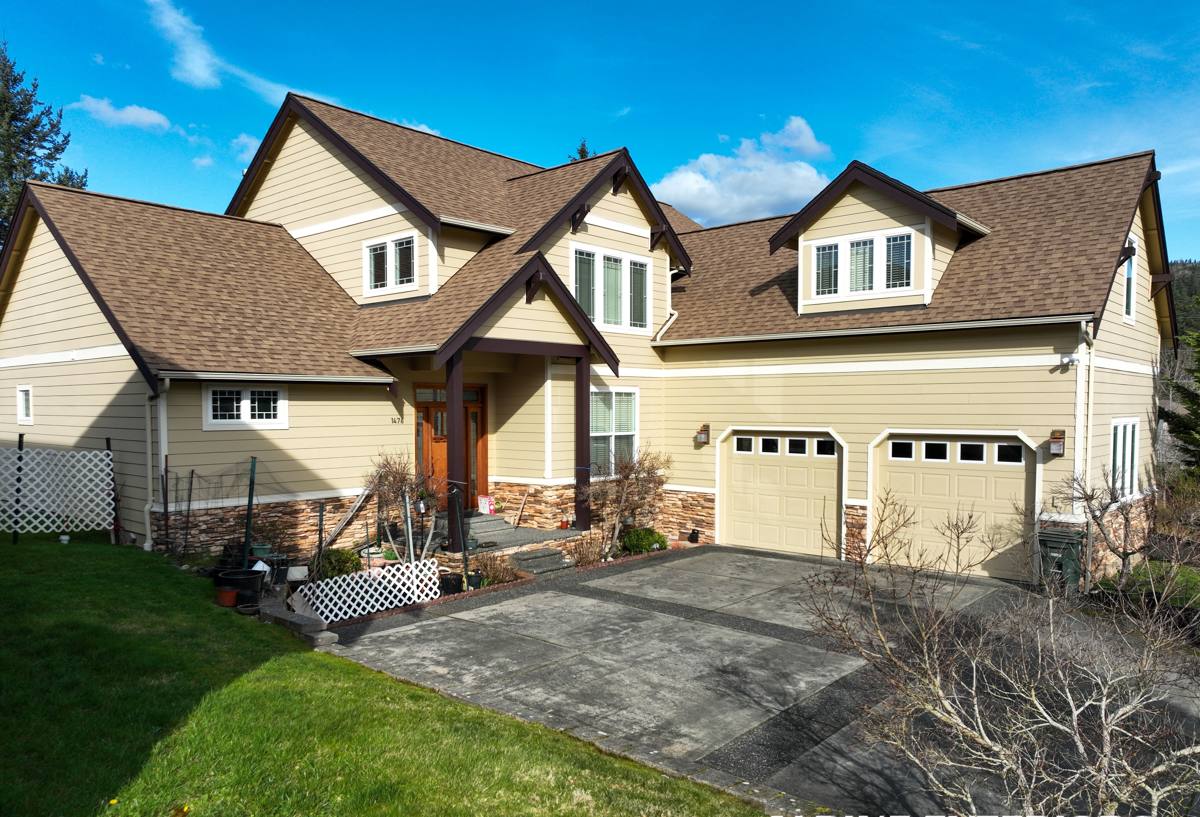
Signs Your Windows Are Already Losing the Battle
Most homeowners don't notice window failure as a single event. It shows up gradually, as a handful of small annoyances that eventually add up to a real energy loss. Worth checking for:
- Fog or a milky haze trapped between the panes of a double-pane window — the seal has failed and the gas fill (or insulating air gap) is gone
- A noticeable draft near the frame on a windy day, even with the window latched shut
- Glass that feels cold to the touch in winter, well below room temperature
- Windows that stick, won't latch flush, or take real effort to open — often swollen wood or a warped vinyl frame
- Cracked, shrunken, or missing exterior caulk where the frame meets the siding or trim
- Moss, algae, or black streaking creeping onto the frame, sill, or the wall directly below the window
- A heating bill that's crept up over a few winters with no other explanation
Any one of these on its own might just mean a caulk touch-up or a hardware adjustment. Several of them together, especially on a home's north or west-facing walls where rain and shade hit hardest, usually mean the windows themselves are the problem.
What "Energy-Efficient" Actually Means Here
U-Factor Matters More Than Solar Heat Gain
Every energy-rated window comes with a couple of core numbers: U-factor (how much heat escapes through the window) and Solar Heat Gain Coefficient, or SHGC (how much solar warmth passes through the glass). In a hot, sunny climate, SHGC gets a lot of attention because you're trying to keep heat out. Everett's climate is heating-dominated for most of the year — the priority is keeping heat in, not blocking sun that shows up in short supply to begin with. That means U-factor is the number we weight most heavily when helping a North Everett homeowner choose glass, without ignoring SHGC entirely on rooms that do get strong afternoon sun.
Low-E Coatings and Gas Fills
A low-emissivity (low-E) coating is a microscopically thin metallic layer on the glass that reflects heat back into the room in winter while still letting visible light through. Combined with an inert gas fill — usually argon — between the panes, it slows heat transfer far more effectively than plain double-pane glass from a couple decades ago. This is the single biggest efficiency upgrade available on a standard window today, and it's not optional on anything we install.
Frame Material Changes the Whole Equation
The glass package only tells half the story. The frame is often the weakest point for both heat loss and water intrusion, especially in a climate with this much driving rain. We work with a few different frame materials depending on the home, budget, and how exposed the window is to weather:
| Frame Material | How It Handles This Climate | Maintenance |
|---|---|---|
| Vinyl | Won't rot or corrode from salt air; performs well against moisture, but can expand and contract with big temperature swings | Low — occasional cleaning, no painting |
| Fiberglass | Very stable in temperature swings, strong resistance to moisture and corrosion, good option for the most exposed walls | Low — durable finish, rarely needs attention |
| Wood-clad | Warm interior look with an exterior shell protecting the wood, but the cladding seams need to be watched in a wet climate | Moderate — periodic inspection of cladding and seals |
| Bare aluminum | Conducts cold directly through the frame and is prone to condensation; not something we recommend for energy-focused replacements here | Low, but poor thermal performance |
We don't install bare aluminum-frame replacement windows as a standard offering — not because the material is inherently bad, but because uninsulated aluminum performs poorly in exactly the conditions North Everett homes deal with all winter, and we'd rather steer a homeowner toward a frame that actually solves the problem they're paying to fix.
Why Installation Matters As Much As the Window Itself
A high-performance window installed carelessly will leak, draft, and fail early — no different from a budget window. In a neighborhood that gets sustained, wind-driven rain, installation quality is arguably the bigger variable. The details that actually matter:
Flashing and drainage. Water that gets behind the frame needs somewhere to go. That means proper flashing tape at the sill and jambs, a sloped sill pan on many installs, and a weather-resistive barrier that's integrated correctly with the house wrap — not just caulked over and hoped for.
Sealing, inside and out. The exterior seal keeps bulk water out; the interior seal keeps conditioned air in and stops warm indoor air from condensing inside the wall cavity. Both matter, and they're not the same seal done twice — they serve different purposes and use different materials.
Fastening and shimming. A window that isn't shimmed level and square will bind, won't seal evenly around the sash, and puts uneven stress on the frame that shows up as leaks or hardware failure within a few years, not decades.
This is also where a lot of the energy loss on a "new" window install actually comes from. The glass package can be excellent and the home can still lose heat through a poorly sealed rough opening. It's the least visible part of the job and the part we spend the most care on.
Our Process, Start to Finish
- On-site assessment. We look at your existing windows, frame condition, and any signs of water intrusion or rot around the openings before recommending anything.
- Product selection. Based on the home's exposure, budget, and which walls take the worst weather, we walk through frame material and glass package options in plain terms — no pressure to upgrade beyond what actually makes sense for that wall.
- Measurement and ordering. Every opening gets measured individually. Older homes in particular are rarely perfectly square, and windows ordered off a rough guess don't seal right.
- Removal and prep. Old windows come out carefully, and we check the rough opening for hidden rot or water damage before anything new goes in — a problem behind the wall doesn't fix itself just because the window in front of it is new.
- Installation. Flashing, sill pan, shimming, and sealing done to the standard described above, not shortcuts to save an hour.
- Cleanup and walkthrough. We clear debris and walk the finished windows with you — opening, closing, and locking each one before we consider the job done.
What Drives the Cost
Window replacement pricing varies more than most home improvement projects because so much depends on what's found once the old window comes out. Broad, honest cost drivers to expect a conversation about:
| Factor | Why It Moves the Price |
|---|---|
| Number and size of openings | More glass and more openings mean more material and labor |
| Frame material | Vinyl is typically the most budget-friendly; fiberglass and wood-clad cost more upfront but bring different durability trade-offs |
| Glass package | Triple-pane and specialty coatings add cost but also add performance in a heating-dominated climate |
| Condition behind the old frame | Rot, hidden water damage, or out-of-square openings mean extra carpentry before the new window goes in |
| Trim and finish work | Matching existing interior or exterior trim adds labor beyond the window itself |
We'd rather give a homeowner a realistic range after actually looking at the openings than a number over the phone that falls apart once we're on site. Hidden rot behind an old window is common enough in this climate that we build the inspection into the estimate, not into a change order later.
Keeping the Efficiency You Paid For
New windows are not maintenance-free, especially in a climate that grows moss on everything that sits still. A little upkeep protects both the seals and the frame:
Rinse pollen, salt residue, and grime off the exterior glass and frames a couple of times a year — salt air left to sit can dull finishes and accelerate wear on hardware over time. Keep gutters and downspouts clear so water isn't sheeting down across the window head. Trim back vegetation and address shaded, damp spots near sills before moss gets a foothold, since moss holds moisture against the frame far longer than open air would. Check exterior caulk lines once a year and touch up anything that's cracked or pulled away before the wet season sets in.
Why Local Experience in North Everett Matters
A window that's rated correctly on paper still has to be installed by someone who understands how weather actually hits a specific wall in a specific neighborhood. A crew that works Snohomish County regularly knows which walls in North Everett take the worst of the wind-driven rain, which older housing stock tends to hide rot behind the trim, and how much moss pressure to expect on a shaded north elevation. That's the kind of judgment that doesn't show up on a spec sheet — it shows up in fewer callbacks and windows that are still sealing tight well after the first few wet winters.
If your windows are drafty, fogged, or just old enough that you're not sure anymore, we're happy to take a look and give you an honest read on what's actually needed — not a sales pitch. Use the form below to request a free, no-pressure estimate.