 Everett
 Roofing for North Everett's Climate
North Everett sits close enough to Puget Sound and the Snohomish River delta that homes here deal with a specific combination of stressors most roofing crews only read about: salt-laden marine air, wind-driven rain that gets pushed sideways under poorly flashed edges, and a moss season that can run eight or nine months out of the year under the area's tree canopy. None of that is dramatic on its own. It's the cumulative, year-after-year exposure that wears out a roof faster than the manufacturer's warranty timeline suggests it should.
A new roof installation in this neighborhood isn't just about swapping old shingles for new ones. It's about building a roof system — decking, underlayment, flashing, ventilation, and the finish material — that's specifically detailed to shed water fast, resist salt corrosion on metal components, and stay clear enough of moisture that moss and algae can't get a foothold. Get any one of those wrong and you're looking at a roof that looks fine for a couple of years and then starts failing from the inside out.
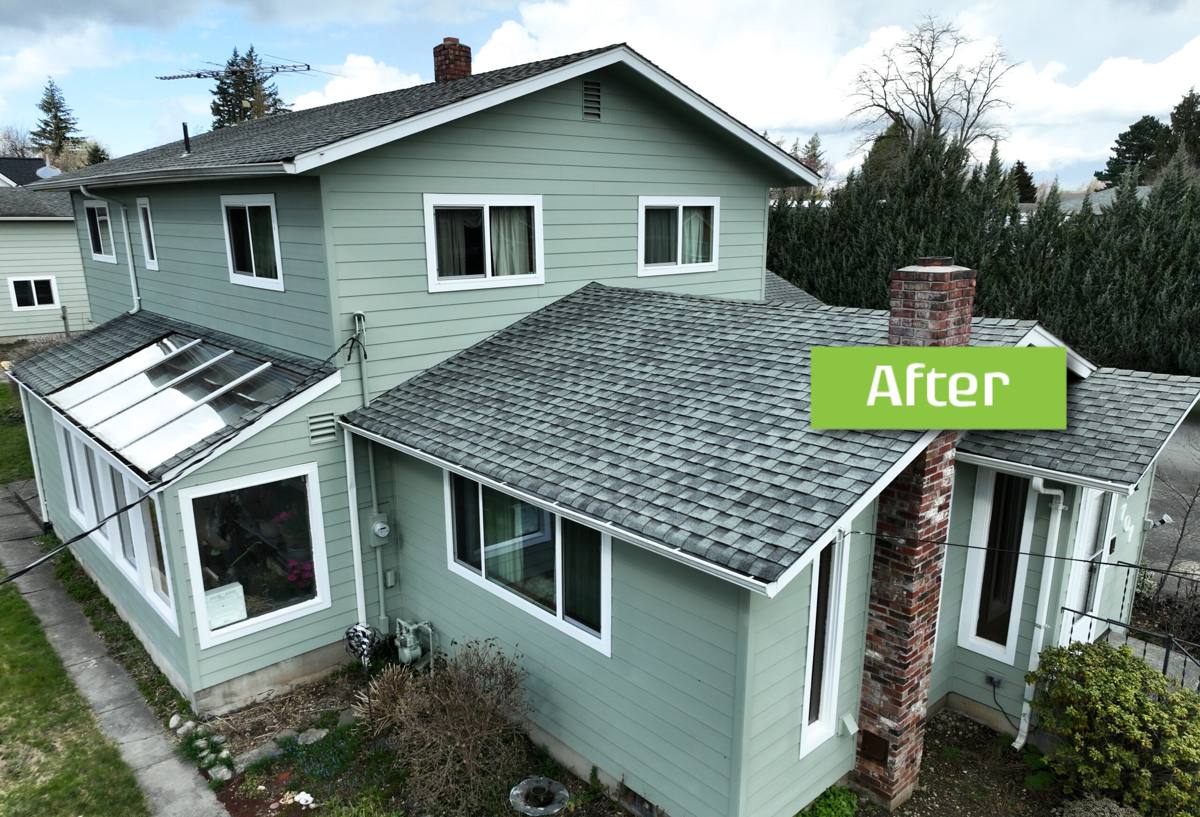
Why North Everett Homes Wear Out Roofs Faster
Salt Air and Metal Fatigue
Proximity to the Sound means airborne salt settles on everything, including roofing. Standard fasteners, flashing, and vent components that aren't rated for coastal exposure corrode faster here than they would twenty miles inland. Once a nail head or flashing seam starts to rust, it's a slow leak waiting to happen — often in a spot that's hard to see from the ground.
Driving Rain and Wind-Driven Water
Everett gets its share of Pacific storm systems, and when rain comes in sideways, it doesn't just run off a roof — it gets pushed under shingle tabs, into exposed nail holes, and behind poorly lapped flashing. A roof that would perform fine in a calmer climate can still leak here if the underlayment and flashing details weren't built for wind-driven moisture specifically.
Moss, Shade, and a Long Wet Season
North Everett's mature tree cover is part of what makes the neighborhood attractive, but it also means shaded, damp roof sections that rarely get a full dry-out between rain events. Moss doesn't just look bad — its root structure lifts shingle edges and holds moisture against the roof deck, which accelerates rot and shortens the life of the material underneath it.
Signs You Need a New Roof, Not Another Repair
Homeowners often call us for a repair and find out the roof has moved past the point where patching makes sense. A few reliable signs:
- Granule loss heavy enough that you're finding shingle grit in gutters every time it rains
- Shingles that are cupping, curling, or cracking, especially on south- and west-facing slopes
- Soft or spongy decking felt underfoot in the attic, even in just one section
- Daylight visible through the roof deck from inside the attic
- Moss growth thick enough that it's lifting shingle edges rather than just sitting on the surface
- Repeated leaks in different spots after past patch jobs — a sign the underlayment has failed broadly, not just at one point
- A roof already past 20-25 years old, regardless of how it looks from the street
Any one of these on its own might still be repairable. Two or three together usually means the roof system as a whole has aged out, and a repair is just delaying a bigger problem — and a bigger bill — down the road.
What a Correct Installation Actually Involves
A roof is only as good as the layers nobody sees once it's finished. For North Everett's climate, we pay particular attention to:
Full Tear-Off and Deck Inspection
We remove the old roofing completely rather than layering over it. That's the only way to actually inspect the decking underneath for rot, soft spots, or delamination — issues that are common on older North Everett homes where a roof may have been sitting under tree cover and moss for years before anyone noticed a problem.
Underlayment Built for Wind-Driven Rain
Synthetic underlayment, properly lapped and fastened, is the layer that saves a roof when wind pushes rain up under the shingle line. We also run self-adhered ice-and-water membrane in valleys, around penetrations, and along eaves — the spots most likely to see water intrusion in a marine climate, even in a region that doesn't get much snow.
Flashing Detailed for Corrosion Resistance
Chimneys, skylights, vent pipes, and wall-to-roof transitions all need flashing that's not just installed correctly but made from materials that hold up to salt air. Cutting corners here is one of the most common causes of "mystery leaks" on coastal-adjacent homes.
Ventilation That Actually Balances
Intake at the eaves, exhaust at the ridge, sized to match the attic volume. Balanced ventilation keeps the underside of the roof deck dry, which matters enormously in a climate where the topside rarely gets a long dry stretch to compensate for trapped moisture inside.
Choosing the Right Roofing Material for North Everett
There's no single "best" roofing material — the right choice depends on your home's exposure, budget, and how much long-term maintenance you're willing to take on. Here's how the common options stack up for this specific climate:
| Material | Moss/Moisture Resistance | Salt Air Durability | Typical Lifespan | Maintenance |
|---|---|---|---|---|
| Architectural asphalt shingle | Good with proper ventilation | Good with corrosion-resistant fasteners | 25-30 years | Periodic moss treatment recommended |
| Standing seam metal | Excellent — sheds moss and debris | Very good with coastal-rated coatings | 40-50+ years | Low |
| Synthetic/composite shake | Very good | Good | 30-40 years | Low to moderate |
| Cedar shake | Fair — needs regular treatment | Fair, sensitive to sustained moisture | 20-30 years with upkeep | High |
We don't push one material on every home. Cedar shake, for example, can look great, but it's a moisture-sensitive product that demands consistent upkeep to perform well in a shaded, damp neighborhood — that's a maintenance commitment worth being honest about upfront, not a defect in the wood itself. For most North Everett homes, a quality architectural shingle with proper ventilation and corrosion-resistant hardware hits the right balance of cost, appearance, and durability. Homeowners looking for the lowest long-term maintenance, and willing to invest more upfront, tend to land on standing seam metal.
Our Installation Process
- On-site inspection and estimate. We walk the roof, check the attic, and give you an honest read on condition — repair versus replacement — with no pressure either way.
- Material selection. We walk through the trade-offs above based on your home's sun/shade exposure, budget, and how much upkeep you want to take on.
- Permitting. We handle the permit process with the City of Everett so you don't have to chase paperwork.
- Tear-off and deck repair. Old material comes off, decking gets inspected, and any soft or rotted sections are replaced before anything new goes down.
- Underlayment, flashing, and ventilation installed to spec — the layers described above, done in the order and overlap pattern that actually keeps water out.
- Final roofing material installed to manufacturer specifications, which matters for both performance and keeping your warranty valid.
- Cleanup and final walkthrough. We clear debris and nails from the property and walk the finished roof with you before calling the job done.
Moss and Algae: Prevention Beats Removal
A new roof gives you a clean slate, but North Everett's tree cover means moss pressure doesn't go away just because the roof is new. A few things make a real difference over the life of the roof: keeping overhanging branches trimmed back so more sunlight and airflow reach the surface, keeping gutters clear so water doesn't pool at the edges, and scheduling gentle moss treatment before growth gets thick enough to lift shingles. Pressure washing is not the answer — it strips granules and shortens shingle life faster than the moss it's removing. We're happy to talk through a maintenance schedule that fits your specific lot and tree cover as part of the installation conversation.
Why Hire a Crew That Already Works North Everett
Roofing code, wind exposure ratings, and inspection expectations aren't identical from one Snohomish County neighborhood to the next, and a crew that installs roofs across a wide radius without local familiarity can miss details that matter here specifically — how much ventilation a shaded, tree-covered lot actually needs, which flashing details hold up against sustained marine moisture, or how the City of Everett's permitting process actually runs day to day. Working in this area regularly means we're not guessing at any of that. It also means when something does come up during tear-off — decking rot found only once the old roof is off, for instance — we can make the right call on the spot instead of stalling the project waiting on someone unfamiliar with local conditions to figure it out.
What a Quality Roof Should Look Like When We're Done
- Straight, consistent shingle or panel lines with no visible fastener heads
- Flashing that's tight, corrosion-resistant, and properly lapped at every penetration
- Balanced ridge and eave ventilation, not just vents added wherever was convenient
- Clean valleys with no exposed underlayment or gaps
- A jobsite free of stray nails and debris before we consider the job finished
- Paperwork in hand — permit sign-off and manufacturer warranty registration, not just a handshake
If your roof is showing its age, or you just want an honest read on how much life it has left, we're glad to come take a look. The estimate is free, there's no pressure to move forward, and you'll walk away with a clear picture of your options — use the form below to get started.