 Everett
 Metal Roofing Built for Mukilteo's Weather, Not Just Sold There
Mukilteo sits right on the water, which means every roof here deals with conditions a few miles inland don't have to worry about as much. Salt-laden air off Possession Sound, wind-driven rain that finds its way under poorly lapped flashing, and a wet season that runs long enough to grow a healthy crop of moss on anything shaded or north-facing. A roofing system that works fine in a drier part of Snohomish County can fail early here if it wasn't specified and installed with those specifics in mind.
We work throughout the Everett area, and Mukilteo is one of the neighborhoods where we spend a lot of time on roofs specifically because of how the local climate treats them. This page is about metal roofing done right for this particular stretch of coastline — what the weather actually does to a roof, what a correct installation looks like, and what to expect when you hire a crew that already knows the area instead of one learning it on your dime.
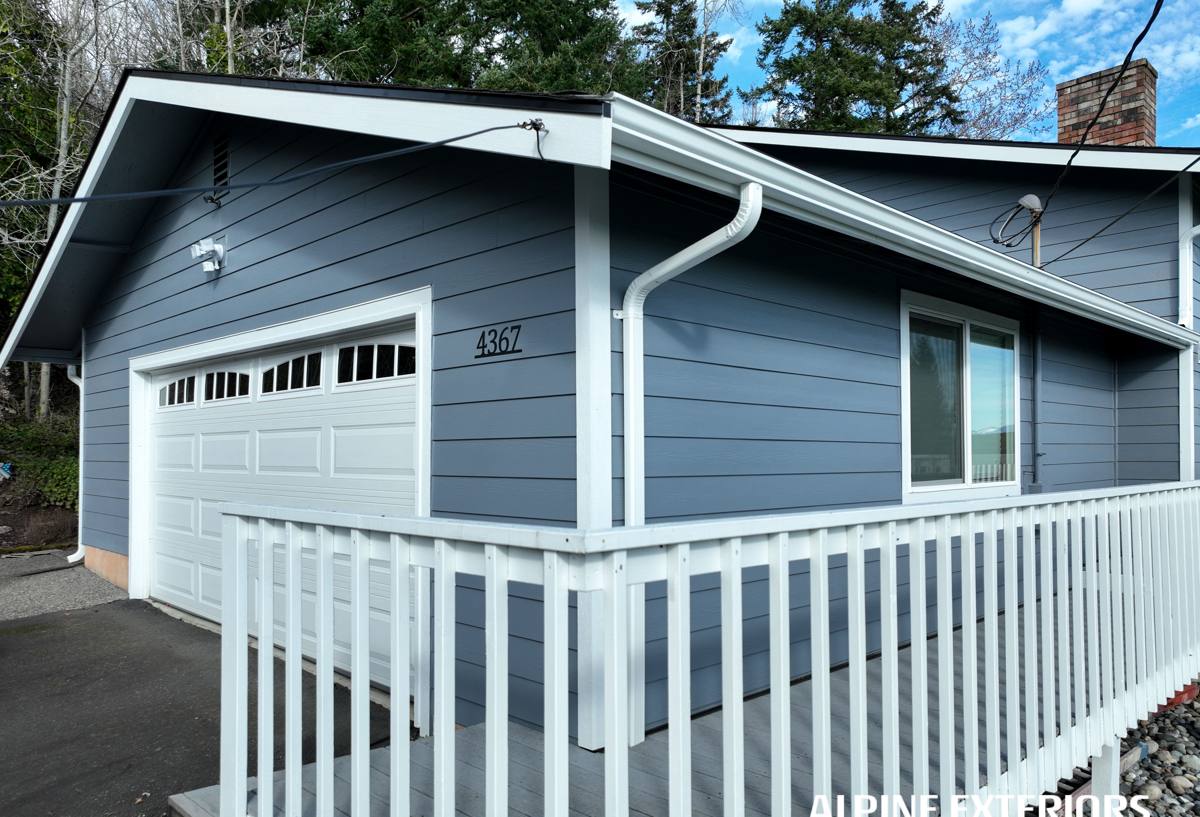
What Salt Air, Rain, and Moss Actually Do to a Roof
Each of these three factors causes a different kind of damage, and understanding them separately is the whole reason metal roofing decisions in Mukilteo look different than they might elsewhere.
Salt Air and Corrosion
Airborne salt from the Sound accelerates corrosion on any exposed metal — fasteners, flashing, panel edges, and cut ends where bare steel has been exposed. It doesn't take a direct ocean view for this to matter; salt travels on wind and settles on roofs blocks away from the water. The practical effect is that fastener quality, coating quality, and how cut edges are treated matter more here than in a landlocked town.
Driving, Wind-Blown Rain
Straight-down rain is easy for almost any roof to shed. The problem is rain that comes in sideways during a winter storm and gets pushed up under laps, around penetrations, and behind poorly sealed flashing. Metal roofing sheds water well when the seams and laps are engineered for it — but a rushed or under-detailed install can let wind-driven rain defeat even a good panel system.
Moss and Sustained Moisture
Long wet stretches, especially on shaded or north-facing slopes and under overhanging trees, keep roof surfaces damp for extended periods. Moss and organic growth take hold in that moisture, and once established they hold water against the roof surface and work into any gap they can find. Metal sheds this better than most materials, but valleys, low-slope sections, and areas where debris collects still need attention.
Why Metal Roofing Holds Up Well Here — When It's Done Right
Metal isn't a magic material, but its physical properties line up well with what Mukilteo roofs face:
- Non-porous surface — nothing for moss to root into the way it can on aging asphalt granules
- Steep effective drainage on standing seam profiles, which limits standing water and ponding
- Factory-applied coatings that resist UV and moisture cycling better than field-applied products
- Long service life when the coating system and fasteners are matched to a coastal environment
- Fire resistance and wind performance that hold up under the gusts that come through during winter storms
None of that happens automatically just because the roof is metal. A cheap panel system with the wrong fasteners, thin coatings, or a rushed install can corrode, leak, and need attention within a handful of years — sometimes faster than a well-installed asphalt roof would have. The material is only as good as the specification and the installation behind it.
Choosing the Right Metal Roofing System for a Coastal Property
Not all metal roofing is built the same, and the differences matter more in Mukilteo than in a drier, inland climate. The two broad categories homeowners choose between are standing seam and exposed-fastener panels.
| Factor | Standing Seam | Exposed-Fastener (Corrugated/Ribbed) |
|---|---|---|
| Fasteners | Concealed under the seam — not exposed to weather | Visible screws through the panel face |
| Coastal durability | Better — fewer penetration points for salt and moisture | Fair — exposed fasteners are the first thing to corrode or back out over time |
| Maintenance | Low — no gaskets to inspect | Moderate — fastener gaskets need periodic checking |
| Upfront cost | Higher | Lower |
| Best fit | Primary residences, homes closer to the water, long-term ownership | Outbuildings, shops, budget-driven projects |
For a home in Mukilteo intended to be lived in long-term, we generally steer clients toward standing seam because concealed fasteners remove the weakest point in a coastal metal roof — the exposed screw. Exposed-fastener panels aren't a bad product, but they carry a maintenance burden that's harder to ignore this close to the water, since every fastener penetration is a potential path for moisture once the gasket ages or a screw backs out slightly.
Coatings and Finish
The coating on a metal panel does most of the work protecting the base metal from salt and moisture. Galvalume and similar coated steel substrates provide the underlying corrosion resistance, while a quality paint finish (PVDF-type coatings are the common high-end standard in the trade) adds UV stability and color retention on top of that. We don't install bare or minimally coated panels on coastal homes — the maintenance burden and shortened service life aren't worth the upfront savings when the alternative is a properly coated system that's built for this environment from the start.
What a Correct Metal Roof Installation Actually Involves
The panels get most of the attention, but on a roof that has to deal with wind-driven rain and salt exposure, the details underneath and around the panels are what actually determine whether it stays watertight.
Underlayment
A high-temperature synthetic or self-adhered underlayment goes down first, giving the roof a second line of defense if wind-driven rain ever gets past the panel laps. This matters more on a coastal roof than an inland one, since the wind events that push rain sideways happen more often here.
Flashing and Penetrations
Every chimney, vent pipe, and wall intersection is a place water can get in if the flashing isn't detailed correctly. On a metal roof, this means matching flashing metal types to avoid galvanic corrosion, sealing laps properly, and not relying on caulk alone to do a flashing detail's job.
Fasteners
Fastener choice is not a place to cut corners on a coastal roof. Coated, corrosion-resistant fasteners matched to the panel material prevent the streaking and premature failure that mismatched or cheap fasteners cause within a few years of salt exposure.
Ventilation
Proper intake and exhaust ventilation keeps moisture from condensing on the underside of the roof deck, which is a separate problem from surface moisture but just as damaging over time in a humid coastal climate.
Panel Layout and Seam Direction
Panel runs and seam laps are oriented to shed prevailing wind-driven rain, not just gravity-fed runoff. This is a judgment call that depends on the specific roof's exposure and slope, which is exactly the kind of detail that gets missed by a crew unfamiliar with how weather actually hits roofs in this location.
How Our Process Works, Working Locally in Mukilteo
We start with an on-site inspection and measurement, not a phone estimate — roof geometry, penetrations, existing decking condition, and exposure to wind and water all factor into the recommendation. From there:
- We walk you through panel type, coating, and color options with honest trade-offs for your specific roof and budget
- We provide a written estimate that spells out materials, scope, and timeline before any work begins
- We handle permitting and coordinate with local building requirements for the project
- Tear-off (if applicable), deck inspection and repair, underlayment, and panel installation follow in sequence, with flashing and penetration details done to the standard described above
- A final walkthrough covers what was done and what maintenance, if any, the roof will need going forward
Because we're already doing roofing work regularly around Everett and the surrounding Snohomish County communities, we're not learning Mukilteo's wind exposure and rain patterns for the first time on your project — that local pattern recognition is part of what you're paying for when you hire a crew that already works this area.
Maintenance: Keeping Salt and Moss From Shortening the Roof's Life
Metal roofing is genuinely low-maintenance compared to most alternatives, but "low" doesn't mean "none," especially this close to the water. A short annual routine goes a long way:
- Clear debris from valleys and low-slope transitions where moisture and organic matter tend to collect
- Rinse off accumulated salt residue and grime, particularly on roofs with a more direct exposure to the water
- Check sealant at penetrations and flashing details for cracking or shrinkage
- Trim back tree limbs that keep sections of the roof shaded and slow to dry
- Watch for early moss growth in shaded areas and remove it before it establishes
- After major windstorms, do a visual check for lifted panel edges or displaced flashing
None of this requires a specialist visit every time — most of it is a homeowner walking the property a couple times a year. When something does need professional attention, catching it early is almost always cheaper than waiting.
What Affects the Cost of a Mukilteo Metal Roof
Costs vary by roof size, complexity, and material choice, but the factors that move the number are consistent from project to project.
| Cost Factor | Why It Matters |
|---|---|
| Panel type | Standing seam runs higher than exposed-fastener due to material and labor |
| Roof complexity | Valleys, dormers, and multiple penetrations add labor and flashing work |
| Tear-off vs. overlay | Removing existing roofing adds cost but allows deck inspection and repair |
| Deck condition | Rotted or damaged sheathing found during tear-off adds repair cost |
| Coating/finish grade | Higher-grade coatings cost more upfront but extend service life in salt air |
| Access and pitch | Steep or hard-to-access roofs increase labor time and safety requirements |
We'd rather walk your roof and give you real numbers than throw out a broad range that doesn't mean much until someone's actually looked at the project. Every estimate we provide is written and itemized so you know what you're paying for.
Why Hiring a Crew That Already Works Mukilteo Matters
A metal roof installed to code will pass inspection almost anywhere. The difference between an adequate install and one that holds up for decades in this specific environment comes down to details that only show up as a pattern when a crew has done enough roofs in this exact climate — how much wind-driven rain a given exposure actually sees, which fastener and coating combinations hold up against the salt air off the Sound, and which shaded slopes need extra attention for moss before it becomes a problem. That's local knowledge, not something that comes from a general specification sheet.
If you're weighing a metal roof for a home in Mukilteo, we're happy to come take a look, walk you through what your specific roof needs, and give you a straight answer — including if metal isn't the best fit for your situation. There's no pressure and no cost to get an estimate; fill out the form below and we'll get in touch.