 Everett
 Metal Roofing in Marysville: A Roof Built for This Specific Climate
Marysville sits close enough to Puget Sound and its sloughs that salt-laden air is a real factor in how a roof ages, not just a talking point. Add in Snohomish County's long wet season, driving rain that comes in sideways off the water during winter storms, and a moss season that can run most of the year on shaded slopes, and you've got a set of conditions that punishes a poorly installed roof fast. Metal roofing, done correctly, handles all three of those stresses better than most other roofing materials — but "done correctly" is doing a lot of work in that sentence, and it's the part that separates a roof that lasts decades from one that starts causing problems in year five.
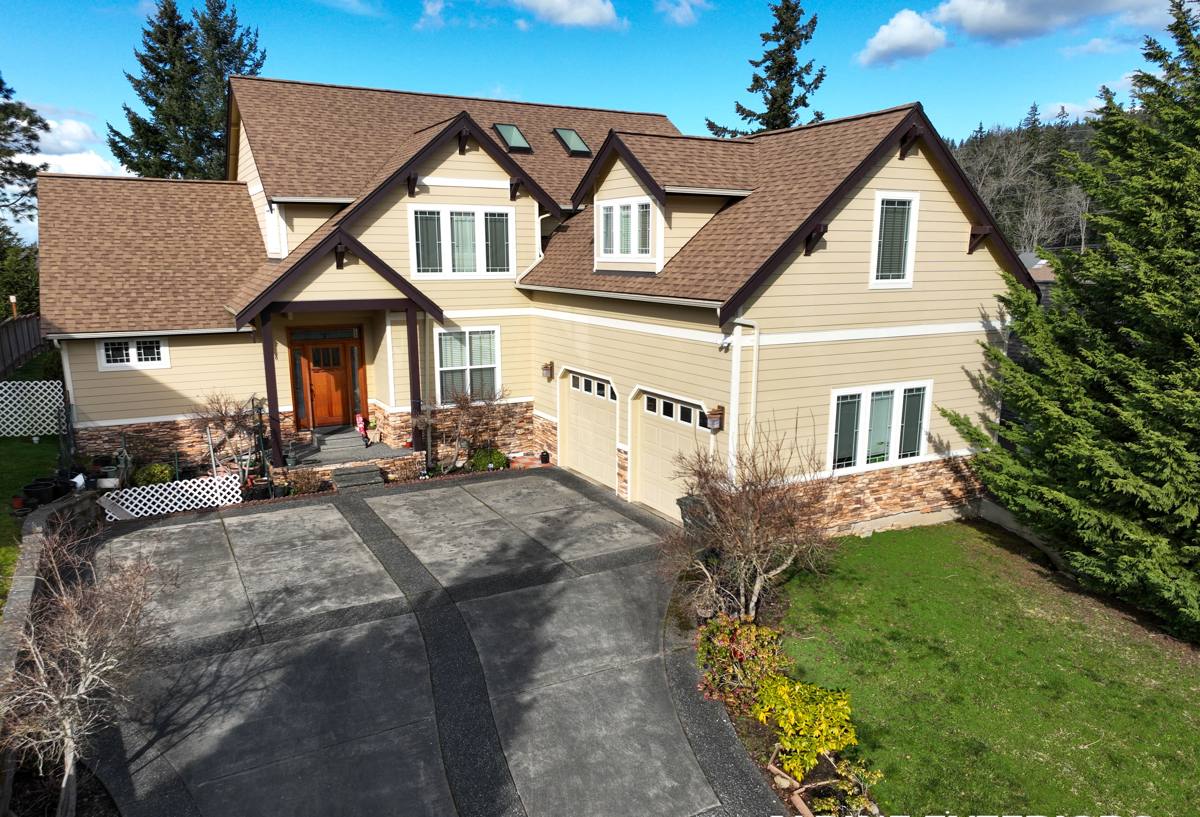
Why Local Conditions Change What a Metal Roof Needs
Salt air and corrosion
Homes closer to the water — including much of Marysville — see more airborne salt than homes further inland. That doesn't rule out metal roofing, but it does mean fastener material, flashing metal, and panel coating all need to be chosen to resist corrosion, and mixed-metal contact (where two dissimilar metals touch and accelerate corrosion on one of them) needs to be avoided at every flashing point and fastener. This is a detail that's easy to get wrong if a crew is used to installing in a drier, inland environment.
Driving rain and wind-driven water
Winter storms here don't always drop rain straight down — wind pushes it sideways and up under laps, at ridge caps, and around any penetration in the roof plane. A metal roof's watertightness depends almost entirely on lap details, sealant placement, and underlayment quality at those pressure points, not on the panel itself. A roof that looks fine on a dry day can still leak during a sideways winter storm if those details were rushed.
Moss season
Shaded, moisture-retaining roof surfaces in this region grow moss for a large part of the year. Metal roofing sheds moss far better than composition shingle or wood shake because there's no rough, granular surface for spores to take hold on — but valleys, low-slope transitions, and areas where debris collects can still hold enough moisture for growth to start, especially under tree cover common in and around Marysville neighborhoods.
Metal Roofing Options for Marysville Homes
Not all metal roofing is the same product wearing different colors. The three systems we install most often here differ in how they handle water, movement, and long-term maintenance:
| System | How It Sheds Water | Best Fit For | Maintenance Load |
|---|---|---|---|
| Standing seam | Raised, mechanically seamed ribs with no exposed fasteners | Homes wanting the longest service life and cleanest look | Low — no exposed fasteners to fail over time |
| Exposed-fastener panel | Screw-down panels with gasketed fasteners through the face | Budget-conscious projects, outbuildings, shops | Moderate — fasteners and washers need periodic checking |
| Stone-coated steel | Interlocking panels with a granule-coated stone finish | Homeowners wanting a shingle or shake look with metal's durability | Low to moderate — coating and fastener points still matter |
Exposed-fastener systems cost less up front but rely on rubber washers at every screw penetration, and those washers are the first thing to degrade under UV and temperature cycling. In a salt-air, high-rain environment, we're honest with clients that this system asks for more attention over the years than a standing seam roof does. That's not a knock on the product — it's a trade-off, and for some buildings it's the right one.
What a Correct Installation Actually Involves
The panels get the attention because they're what you see. The parts that actually determine whether the roof performs are underneath and around them.
- Underlayment: A synthetic or high-temp ice-and-water underlayment, not just felt, especially at eaves and valleys where wind-driven rain and ice-dam-style backup can occur.
- Fastener selection: Fasteners and washers matched to the panel metal to prevent galvanic corrosion — a detail that matters more here than in drier inland areas.
- Flashing: Custom-formed flashing at every valley, wall transition, chimney, and penetration — not universal boots or generic trim stretched to fit.
- Fastening pattern and spacing: Correct spacing lets panels expand and contract with temperature swings without oil-canning or working fasteners loose over time.
- Ventilation: Proper intake and exhaust airflow so moisture doesn't condense against the underside of the panels in our humid, mild winters.
Where Metal Roof Installations Go Wrong in This Area
Most metal roof failures we get called out to inspect trace back to a small number of recurring mistakes:
- Mixed metals at flashing points — copper, aluminum, and steel in contact with each other, which accelerates corrosion on whichever metal is less noble, a problem that shows up faster near salt air.
- Overdriven or under-driven fasteners — either crushes the washer and lets water in, or leaves the panel loose to work and back out over years of wind and thermal cycling.
- Valley and low-slope debris buildup — needles and leaf litter trap moisture against the panel long enough for moss and algae to get a foothold even on metal.
- Underlayment cut corners — using standard felt instead of a proper water-resistant underlayment at eaves and valleys, which only becomes a problem the first time a real storm pushes rain uphill under a lap.
Our Process for a Marysville Metal Roof
We approach every metal roofing project here the same methodical way:
Inspection and roof plan review
We look at slope, existing decking condition, ventilation, and every valley, wall transition, and penetration before recommending a system — not after ordering material.
Tear-off or overlay decision
Metal can sometimes go over an existing roof if the deck and code allow it, but we tell clients honestly when a tear-off is the better call — usually when there's existing moisture damage or when the roof deck needs to be inspected and repaired underneath.
Material and system selection
We walk through standing seam, exposed-fastener, and stone-coated options against the home's exposure, budget, and how the client wants it to look — no default upsell to the most expensive system.
Installation
Correct underlayment, matched fasteners, custom-formed flashing, and proper ventilation, installed by a crew that already knows what this region's rain and salt air demand.
Cleanup and walkthrough
We walk the finished roof and the site with the homeowner before calling the job done, including a clear look at manufacturer warranty terms and what's covered.
Cost Factors for Metal Roofing in Marysville
Metal roofing costs more up front than composition shingle, and the final number depends on several factors specific to the home and system chosen:
| Factor | Why It Matters |
|---|---|
| System type | Standing seam runs higher than exposed-fastener panel or stone-coated steel due to labor and material |
| Roof complexity | More valleys, dormers, and penetrations mean more custom flashing and labor time |
| Tear-off vs. overlay | Removing an old roof adds cost but allows inspection and repair of the deck underneath |
| Panel gauge and coating | Heavier gauge and marine-grade coatings cost more but hold up better against salt air |
| Ventilation upgrades | Adding proper intake/exhaust venting during the project is cheaper than retrofitting later |
We give straightforward, itemized estimates so homeowners can see exactly what's driving the number, rather than a single lump figure.
Maintenance Checklist for Metal Roofs in Snohomish County
A correctly installed metal roof is low-maintenance, not no-maintenance. A short annual routine keeps it that way:
- Clear needles, leaves, and debris from valleys and low-slope transitions before the wet season sets in
- Check for any moss starting in shaded valleys or against roof-to-wall transitions
- Look over exposed fasteners (if that system was used) for backed-out screws or worn washers
- Confirm gutters and downspouts are flowing freely so water isn't backing up under eave flashing
- After any major windstorm, do a visual check for lifted flashing or panel edges
Why a Crew That Already Works Marysville Matters
A lot of what makes a metal roof last here isn't in the manufacturer's install manual — it's knowing which valleys on which slopes trap moisture longest, how much salt exposure a given part of Marysville actually sees, and how local wind patterns drive rain during winter storms. A crew that installs roofs across Everett and greater Snohomish County day to day builds that judgment through repetition. That's the difference between a technically correct install and one that's actually tuned to hold up on your specific roof.
If you're weighing metal roofing for a home in Marysville, we're happy to walk your roof, talk through the real trade-offs between systems, and give you a straightforward, no-pressure estimate. Use the form below to get started.