 Everett
 Why Marysville's Climate Is Hard on Asphalt Shingle Roofs
Marysville sits close enough to the water that salt-laden air is a real factor in how a roof ages, and far enough into Snohomish County's rain belt that wind-driven storms off the Sound hit the roof from angles a lot of installers don't plan for. Add in a moss season that can run most of the year in shaded, north-facing yards, and you have a set of conditions that a generic shingle installation is not built to handle. A roof that would hold up fine in a drier, calmer climate can start showing granule loss, moss colonies, and leaks around year eight or nine here if it wasn't detailed correctly on day one.
Salt Air and Corrosion
Metal components on a roof — flashing, drip edge, nail heads, vent housings — take the brunt of salt exposure. Lower-grade fasteners and thin, uncoated flashing corrode faster near the water, and once a nail head rusts through or flashing pits and thins, water finds a path long before the shingles themselves are worn out. We spec corrosion-resistant fasteners and flashing on Marysville jobs as a baseline, not an upgrade.
Driving Rain and Wind-Driven Water
A lot of roof leaks in this area aren't caused by rain falling straight down — they're caused by rain being pushed sideways and upward under shingle edges, rakes, and valleys during a windstorm. That means valley construction, starter strip placement, and edge sealing matter more here than in calmer climates. A shingle roof that's only detailed for vertical rainfall will eventually leak at the valleys or eaves during the wrong storm.
A Moss Season That Doesn't Really End
Shade, moisture, and mild temperatures are exactly what moss wants, and Marysville's tree cover combined with the region's damp stretch from fall through spring gives moss a long runway. Moss doesn't just look bad — it holds water against the shingle surface, lifts shingle edges as it grows, and works its way under laps over time. On a roof with poor airflow or valleys that stay damp, moss can establish within a couple of seasons.
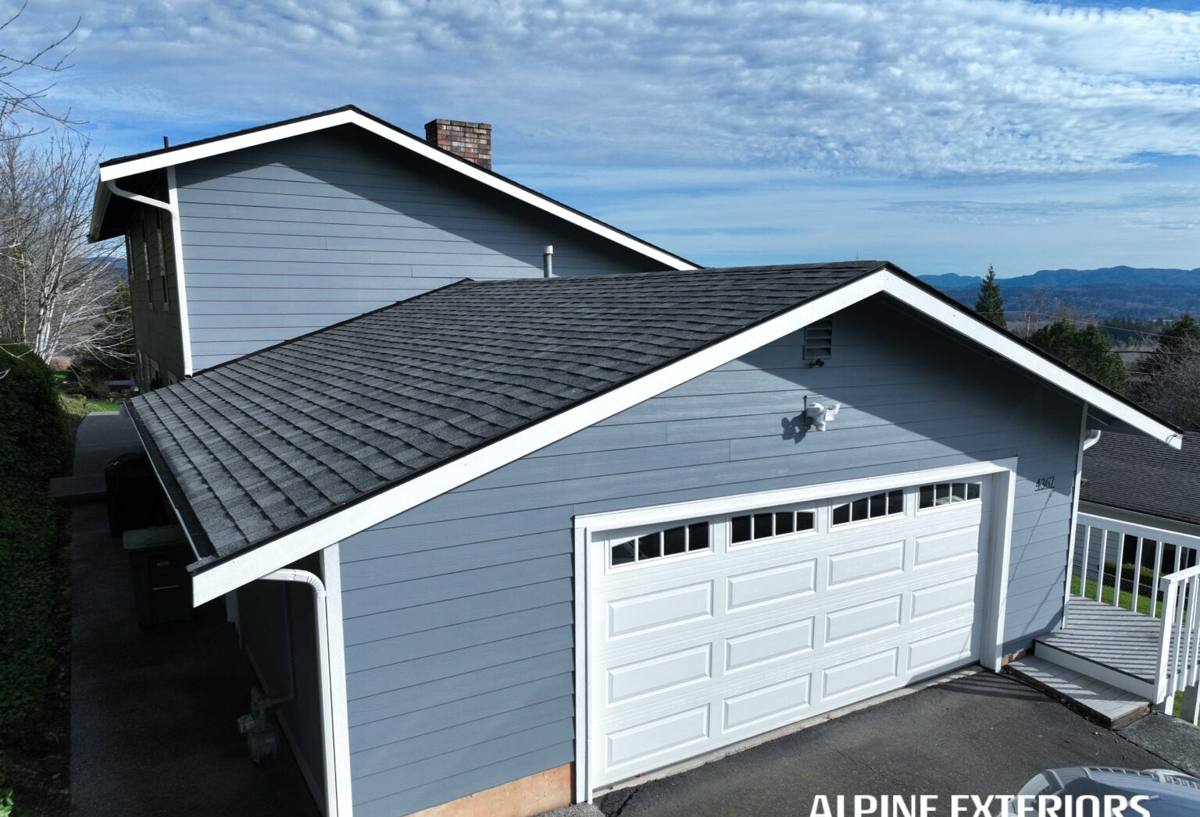
What a Correctly Installed Asphalt Shingle Roof Needs in This Climate
The shingle brand and color matter a lot less than what's underneath and around them. Most of the roof failures we get called out for in Marysville trace back to shortcuts in the layers homeowners never see.
Underlayment and Ice-and-Water Barrier
A synthetic underlayment rated for the full roof field, with self-adhering ice-and-water membrane at eaves, valleys, and any roof-to-wall transitions, gives the roof a real second line of defense when wind pushes water past the shingles. This is where a lot of budget installs cut corners, because it's invisible once the shingles go down — but it's often the difference between a nuisance leak and a dry ceiling during the season's worst storm.
Ventilation That Actually Balances
Intake at the eaves and exhaust at the ridge need to be balanced, not just present. Unbalanced ventilation traps warm, moist attic air against the underside of the roof deck, which accelerates shingle aging from below and creates the exact damp conditions moss and algae thrive on above. We check net free ventilation area on every re-roof rather than assuming the existing setup is adequate.
Flashing Details That Get Skipped
Step flashing at walls, counter-flashing at chimneys, and properly woven or closed-cut valleys all need to be done by hand, correctly, every time — there's no shingle product that compensates for bad flashing. This is the part of the job that separates a roof that lasts from one that leaks at the first hard windstorm.
Choosing the Right Shingle for Marysville Homes
There isn't one "best" shingle for every house — it depends on tree cover, roof pitch, sun exposure, and budget. Here's how the common options actually compare for a home in this climate.
| Shingle Type | How It Handles Moss & Algae | Wind & Rain Performance | Typical Lifespan Here |
|---|---|---|---|
| 3-tab (economy) | No algae-resistant granules; moss and algae take hold faster in shaded areas | Lower wind ratings, more vulnerable at edges in driving rain | Shorter — often shows wear ahead of its rated life in this climate |
| Architectural / laminate | Usually available with algae-resistant (copper- or zinc-infused) granules | Higher wind ratings, thicker profile sheds wind-driven rain better | Longer, especially with algae-resistant granules on shaded roofs |
| Impact-rated (Class 3/4) | Same granule options as architectural, plus added mat durability | Strongest performance in wind and debris impact | Comparable to architectural, with added resistance to physical wear |
For homes with significant tree cover — common in and around Marysville — we generally steer clients toward algae-resistant architectural shingles. The upfront cost difference over 3-tab is modest, and it directly addresses the moss and streaking problem rather than just delaying it.
Our Asphalt Shingle Roofing Process
- Inspection and estimate. We walk the roof (not just the ground), check the deck, ventilation, and flashing condition, and give you a written scope before any work starts.
- Tear-off. Full removal of old roofing down to the deck — we don't install new shingles over old layers, since that traps moisture and voids most manufacturer warranties.
- Deck repair. Any soft, delaminated, or water-damaged sheathing gets replaced before anything new goes down.
- Underlayment and ice-and-water barrier. Installed at eaves, valleys, and roof-to-wall transitions per manufacturer and code requirements.
- Flashing. New step flashing, counter-flashing, and valley metal or closed-cut valleys, hand-formed and fitted to the actual roof rather than reused.
- Shingle installation. Correct nailing pattern and exposure per manufacturer spec — nailing is where wind warranties are won or lost.
- Ventilation check. We confirm intake and exhaust are balanced before calling the job done, adding or adjusting vents where needed.
- Cleanup and magnetic sweep. Full site cleanup, including a nail sweep of the yard and driveway.
- Final walk-through. We go over the completed roof with you before we consider the job finished.
Signs Your Marysville Roof Needs Attention
- Moss or dark streaking building up on shaded slopes or north-facing sections
- Granules collecting in gutters or at the base of downspouts
- Curling, cracking, or lifted shingle edges, especially after a windstorm
- Daylight visible through the attic roof deck or damp insulation after rain
- Rusted or discolored flashing around chimneys, vents, or walls
- Sagging in valleys or along the roofline
- A roof approaching 18-20 years old with original 3-tab shingles
Common Problems We Find on Marysville Roofs
A lot of the repair calls we get in this area trace back to a handful of recurring issues rather than shingle failure itself:
Valleys That Were Never Properly Detailed
Open valleys without correct metal, or closed-cut valleys where the underlayment wasn't extended far enough, are a common source of leaks during wind-driven rain — the exact weather pattern this area gets regularly.
Ventilation Added as an Afterthought
Box vents or ridge vents installed without matching intake at the soffits push the attic further out of balance instead of fixing it. We see this on older re-roofs where ventilation was upgraded without checking the intake side.
Moss Removed the Hard Way
Pressure washing shingles to remove moss strips protective granules and shortens the roof's remaining life. Moss should be treated and gently rinsed, not blasted off.
Maintenance That Actually Helps in a Long Moss Season
Between storms, a little regular attention goes further here than in drier climates:
- Keep overhanging branches trimmed back to let sunlight and air reach shaded roof sections
- Clear gutters and valleys of debris before the fall rains set in
- Have moss treated at the first sign of growth rather than waiting for it to spread
- Schedule a professional inspection after any major windstorm, not just on a fixed calendar
Why Hiring a Crew That Already Works in Marysville Matters
A roofing crew that works Snohomish County regularly already knows which valley and flashing details actually hold up to this area's wind-driven rain, which ventilation setups keep moss from taking over shaded roofs, and which fastener and flashing grades are worth the extra cost near salt air. That's not something you get from a manufacturer spec sheet — it comes from seeing how roofs in this specific climate actually age. Everett Exterior works on homes throughout Everett and the surrounding Snohomish County communities, including Marysville, and we bring that local experience to every estimate and every installation.
If you're dealing with moss buildup, a leak you can't pin down, or a roof that's simply due, we're glad to take a look. There's a free, no-pressure estimate form below — we'll give you a straight assessment of what your roof actually needs, not a sales pitch.