 Everett
 Why Decks in Lynnwood Wear Out Faster Than Homeowners Expect
Lynnwood sits in the same wet, mild, moss-friendly climate belt as the rest of Snohomish County — close enough to Puget Sound to pick up salt-laden air, and shaded enough in many neighborhoods that decks rarely get a full day of drying sun for months at a time. That combination is hard on wood and hardware in ways that don't show up right away. A deck can look structurally sound from the top for years while the framing underneath is quietly failing.
Three things do most of the damage locally: near-constant moisture from driving rain off the Sound, a moss and algae season that can run eight or nine months out of the year, and repeated wet-dry cycling that loosens fasteners and opens up small gaps in the wood where water then collects. None of this is unique to any one Lynnwood block — it's a function of the region's weather, and it means a deck built without that climate in mind is on a shorter clock than the same deck would be in a drier part of the country.
The Failure Point Most Homeowners Never See: Ledger Boards and Flashing
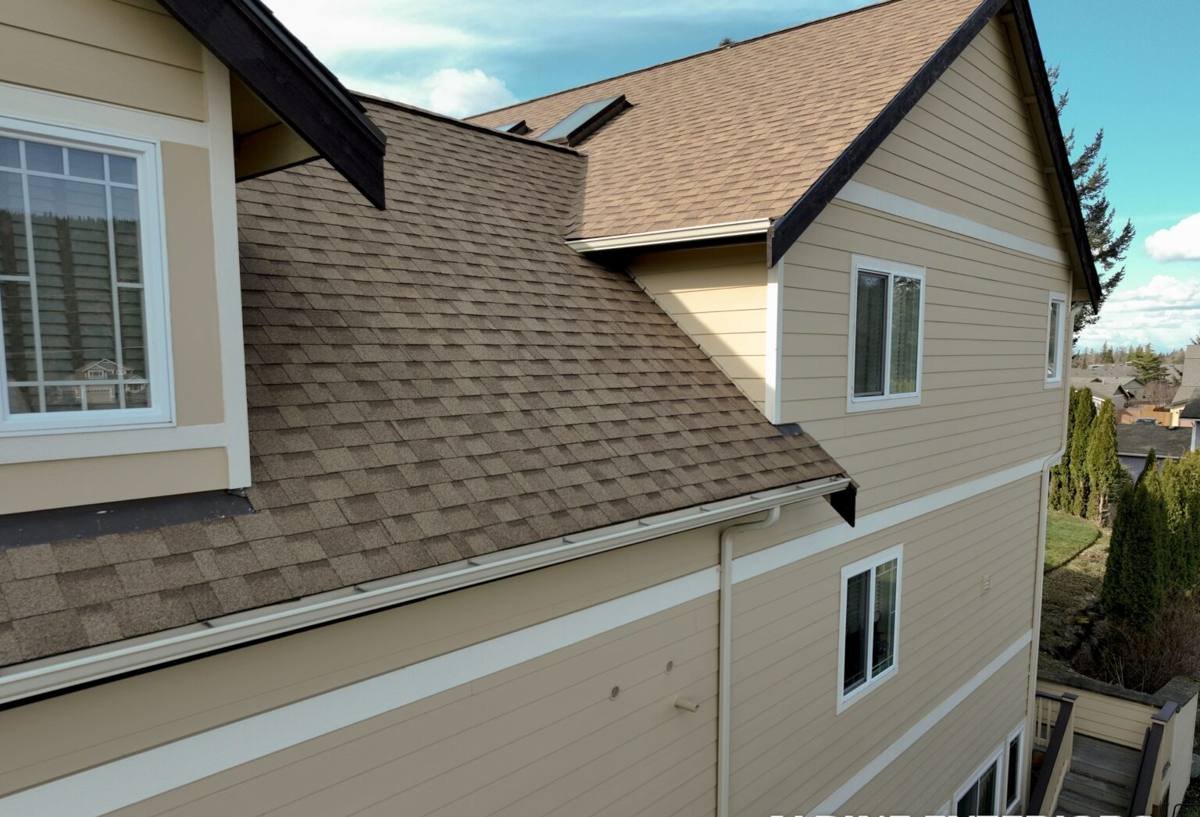
If you ask any experienced deck builder in this region what actually kills decks, the answer is almost always the same: water getting behind the ledger board — the board that attaches the deck framing to the house. When that connection isn't flashed correctly, rain works its way behind the siding and into the rim joist and wall framing. By the time it's visible from inside, the damage is usually already significant.
This is the single biggest reason we treat deck replacement as more than a decking swap. A correct replacement means pulling the old ledger, inspecting the rim joist and sheathing behind it for rot, and installing proper flashing — metal flashing over a water-resistant membrane, with the siding lapped correctly over the top — before a single new board goes down. Skipping this step to save time is the most common shortcut we see on decks that fail early, and it's one we won't take.
Signs Your Existing Deck Already Has This Problem
- Dark staining, soft spots, or a spongy feel along the house wall where the deck attaches
- Visible gaps or missing flashing where the deck meets the siding
- Peeling paint or siding damage directly above or around the ledger connection
- A noticeable dip or bounce in the deck near the house
- Fasteners that are rusted, backed out, or missing
Choosing Materials for a Puget Sound Climate
Every decking material handles Snohomish County's rain-and-moss cycle differently, and the right choice depends on how much maintenance you actually want to do versus what you're willing to spend up front.
| Material | How It Handles Local Moisture | Maintenance | Typical Lifespan Here |
|---|---|---|---|
| Pressure-treated lumber | Resists rot when properly sealed and drained; needs a real drying period between rains | Annual cleaning and periodic sealing | 15-25 years with upkeep |
| Cedar | Naturally moisture- and insect-resistant, but surface graying and moss growth start quickly without care | Regular cleaning, occasional oiling or sealing | 15-20 years with upkeep |
| Composite / PVC boards | Doesn't absorb water or rot, but still needs cleaning where moss and algae collect on the surface | Periodic washing, no sealing required | 25-30+ years, manufacturer-warrantied |
We don't push one material on every homeowner. A shaded, north-facing deck under trees is a different maintenance conversation than a sunny, open deck, and we'll walk through what fits your specific yard and your appetite for upkeep rather than defaulting to whatever is easiest to install.
Permits, Setbacks, and Code in Lynnwood and Snohomish County
Most deck replacements that involve new framing or a deck built above a certain height require a permit, whether your home falls under City of Lynnwood jurisdiction or unincorporated Snohomish County. Requirements differ slightly by jurisdiction and by the specifics of the project — height above grade, attachment to the house, and proximity to property lines can all affect what's required. We handle the permit process as part of the job so you're not the one deciphering which department to call.
Beyond permits, the current residential building code sets specific, non-negotiable requirements for guardrails, stair geometry, and structural connections. These aren't optional upgrades — they're the minimum standard for a deck that's safe to use, and any legitimate replacement should meet them regardless of what the old deck looked like.
What a Correct Deck Replacement Actually Involves
"Deck replacement" gets used loosely in this trade, and it's worth being specific about what a full, correct job includes versus what a resurfacing job leaves untouched.
Structural Work
This is footings, posts, beams, joists, and the ledger connection — the parts that determine whether the deck is actually sound, not just whether it looks new. In our climate, footings need to be set below frost depth and sized for the soil conditions on your lot, and framing lumber needs to be rated for ground contact wherever it's close to grade or exposed to standing water.
Decking and Fasteners
The visible boards, plus the fastening system underneath — hidden fastener clips, coated screws, or face screws depending on the material. Fastener choice matters more here than in drier climates, since standard hardware corrodes faster with the moisture and, closer to the Sound, the salt content in the air.
Drainage and Spacing
Board spacing and any under-deck drainage system need to account for how much rain this area actually gets, so water sheds off the deck instead of pooling on it or dripping straight onto whatever's stored underneath.
Footings and Framing in Wet Snohomish County Soil
Soil in this region holds moisture longer than homeowners often expect, and that affects how footings are set and how framing lumber is chosen. Footings poured without accounting for local frost depth and drainage can shift over time, which is one of the more common causes of a deck that starts feeling uneven or "loose" a few years after it was built. Framing members that sit close to grade need to be rated for ground contact — a detail that's easy to skip and hard to notice until the wood is already compromised.
This is also where a lot of the real cost variation in a deck replacement comes from — not the decking material, but what's found once the old structure comes off.
| Cost Factor | Why It Varies |
|---|---|
| Existing rot or ledger damage | Hidden damage behind the ledger or in framing isn't visible until demolition |
| Footing condition | Undersized or shifted footings may need to be replaced rather than reused |
| Deck size and height | Larger decks and multi-level decks require more framing, railing, and stair work |
| Decking material | Composite and PVC cost more upfront than wood but less in long-term maintenance |
| Permit and inspection scope | Jurisdiction and project scope affect permit requirements and timeline |
Railings, Stairs, and Getting the Details Right
Guardrails, baluster spacing, and stair rise-and-run all follow specific code requirements, and these are also the details most likely to get cut on a rushed replacement. A guardrail that's slightly under height or baluster spacing that's a little too wide might not be obvious to look at, but it matters for safety, especially with kids or older family members using the deck. We build railings and stairs to current code as a baseline, not as an upsell.
- Guardrails at code-required height wherever the deck is elevated enough to require one
- Baluster spacing tight enough that a small child can't pass through
- Consistent stair rise and run — uneven steps are a common trip hazard on older decks
- Secure, properly anchored stair stringers rather than surface-mounted brackets alone
- Post connections rated for the loads they'll actually see
Our Deck Replacement Process
We keep the process straightforward and let you know what we find along the way, especially if demolition turns up something the original quote didn't anticipate.
- On-site assessment of the existing deck, including a check of the ledger connection and visible framing
- Written scope covering materials, structural work, and permit needs based on your jurisdiction
- Permit filing and any required inspections scheduled before work begins
- Demolition of the old deck, with framing and ledger area inspected once it's exposed
- Ledger flashing, footings, and framing addressed to current code before decking goes down
- Decking, railing, and stair installation
- Final walkthrough and any required inspection sign-off
Why Hiring a Crew That Already Works Lynnwood Matters
A deck built without this area's rain, moss, and salt air in mind is a deck that will need attention again sooner than it should. Crews who work Lynnwood and the greater Everett area regularly already know which flashing details actually hold up here, which fastener grades are worth the extra cost, and which local building departments to coordinate with — that familiarity shows up in fewer surprises and a deck that's built for the conditions it will actually sit in, not generic conditions from a manufacturer's spec sheet written somewhere drier.
If your deck is showing its age — soft spots, a bounce near the house, moss that won't stay off the boards, or a railing that doesn't feel as solid as it used to — we're happy to take a look and talk through what a proper replacement would involve for your specific home. Reach out for a free, no-pressure estimate using the form below.