 Everett
 Lake Stevens sits inland from Puget Sound, but the weather that shapes exterior work across Snohomish County doesn't stop at the water's edge. Homes here deal with the same driving rain and long wet season as anywhere else in the region, plus their own local twist: a large lake, heavy tree cover on many lots, and neighborhoods that range from decades-old homes tucked into the trees to newer construction built during the city's rapid growth over the past couple of decades. We install James Hardie fiber cement siding, and only James Hardie, on homes throughout Lake Stevens, and this page walks through what that actually means for a house in this specific place.
What Lake Stevens' Climate Actually Does to Siding
Salt-tinged marine air off the broader Puget Sound region reaches further inland than most homeowners expect, especially during winter storm systems that push weather across the whole county at once. It's a slower, quieter form of wear than a direct waterfront property sees, but it still shows up over the years as corrosion on exposed fasteners, flashing, and hardware that wasn't properly protected during installation. Combine that with Snohomish County's driving rain — wind-driven rather than straight-down, which matters because it finds gaps that vertical rain never reaches — and you have a climate that punishes shortcuts in ways that aren't obvious until a few winters in.
The Lake and the Tree Cover
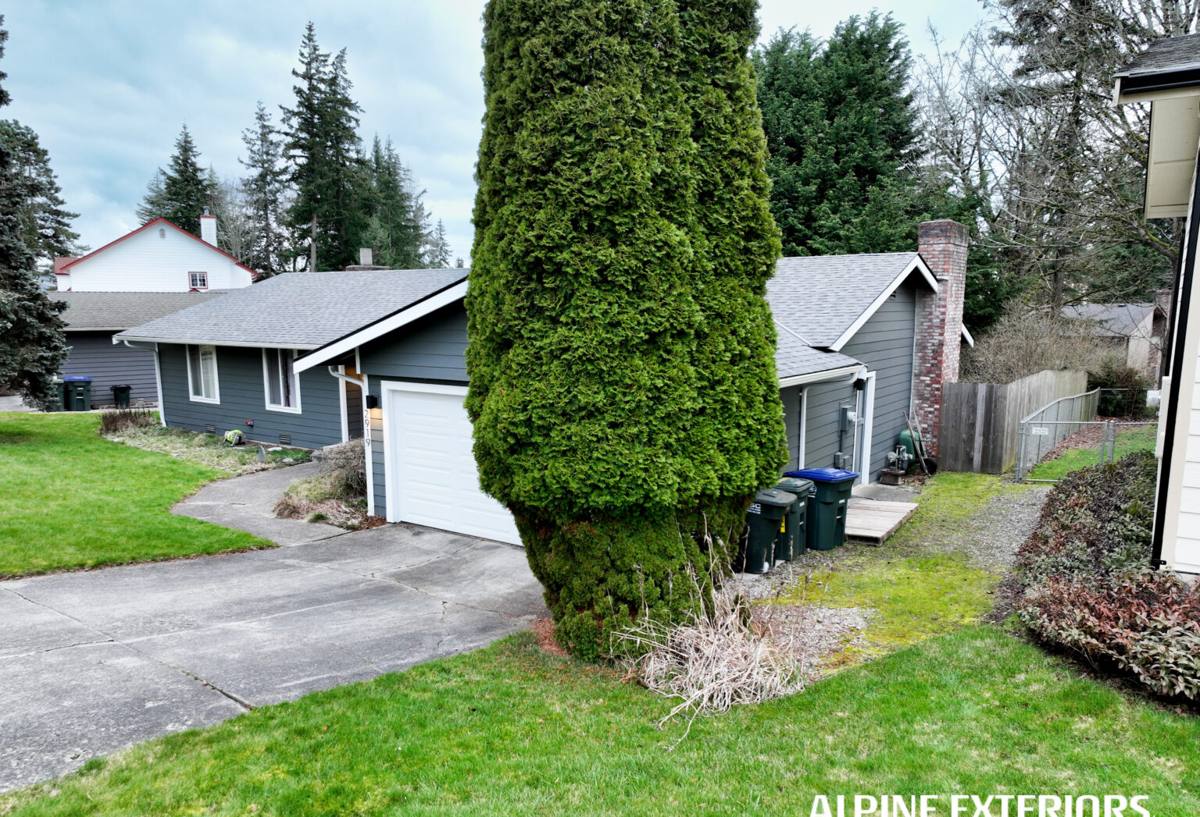
Lake Stevens adds its own layer on top of that regional pattern. Properties near the water and lots with mature tree cover hold humidity longer after a storm than an open, sun-exposed site would, and shaded north and east walls are slow to dry out between rain events. That combination is exactly what drives the long moss season this area is known for — moss doesn't need standing water to take hold, just sustained dampness and a lack of direct sun, and a lot of Lake Stevens properties offer both for a good chunk of the year.
Why This Matters for Material Choice, Not Just Maintenance
None of this makes Lake Stevens a hard place to own a home. It does mean the exterior has to be built to handle sustained moisture exposure rather than just average weather, because a siding system that's marginal in a drier climate tends to show its weaknesses fast once it's dealing with this much wet-dry cycling year after year.
Why James Hardie Is the Product We Put on These Homes
We install James Hardie fiber cement siding exclusively — it's the only siding system we put on a house, in Lake Stevens or anywhere else we work. Fiber cement doesn't have an organic core, so it doesn't absorb and swell the way wood-based products do when they stay damp for extended periods, which matters directly on a shaded, tree-covered lot near the lake. For this region, we install Hardie's HZ5 product line, which is engineered specifically for colder, wetter climate zones rather than a generic formulation meant for a milder or drier part of the country.
ColorPlus Finish vs. Field-Applied Paint
Most Hardie siding we install carries the ColorPlus factory finish — color baked onto the board under controlled conditions before it ever reaches a Lake Stevens jobsite, rather than painted on-site after installation. Field-applied paint depends heavily on weather at the moment of application, and in a climate with this little reliable drying window, that's a real handicap. A factory-cured finish resists fading, chipping, and the chalky look that field paint develops faster under sustained UV and moisture cycling.
The Warranty Behind It
James Hardie backs its products with a strong, transferable warranty on the substrate, separate from the finish warranty on ColorPlus boards. That transferability matters in a growing area like Lake Stevens, where homes change hands more often than in older, more settled neighborhoods — a warranty that follows the house rather than the original owner is a real asset at resale.
What a Correct James Hardie Installation Actually Involves
Hardie siding performs the way it's engineered to only when it's installed the way it's engineered to be installed. A rushed or undertrained crew can put the same boards on a wall and get a materially worse result — not right away, but within a few years, especially in a climate that doesn't give a house many chances to dry out.
Water Management Behind the Boards
Correct installation starts before a single piece of siding goes up: a properly lapped weather-resistive barrier, correctly flashed windows and doors, and a drainage plane that gives any moisture that does get behind the siding a way out instead of a place to sit. On a shaded, humid Lake Stevens lot, this step is arguably more important than the siding itself, because a wall that can't dry out will eventually cause problems no matter what's on the outside of it.
Fastening, Clearances, and Cut Edges
- Fasteners driven correctly and at the manufacturer-specified spacing — overdriven or underdriven nails compromise the board's performance
- Proper clearance between siding and grade, roofing, decks, and hardscape so water doesn't wick up into the bottom edge of the boards
- Factory-primed cut edges resealed on-site, since a raw cut edge left exposed is one of the more common ways moisture gets into a board over time
- Correct panel and joint spacing to allow for expansion without cracking caulk or trim
Trim, Caulking, and Joint Detailing
Every seam, corner, and trim joint is a potential entry point for wind-driven rain if it's not detailed correctly. Quality caulking, properly integrated trim, and attention to how water sheds at every transition point are what separate a Hardie installation that looks the same as the neighbor's but performs very differently ten winters from now.
Our Process for a Lake Stevens Hardie Project
- On-site assessment: we walk the property, look at the existing siding, trim, flashing, and any signs of moisture damage, and account for the specific sun exposure and tree cover on that lot
- Honest scope recommendation: a straight answer on whether the home needs a full re-side, a partial replacement, or targeted repair — we don't push a bigger job than the house actually needs
- Product and color selection: HZ5 Hardie products in the profile and ColorPlus color that fit the home's style and the practical realities of this climate
- Proper tear-off and substrate check: old siding comes off and we inspect the sheathing underneath for any hidden rot or moisture damage before anything new goes up
- Installation to manufacturer spec: correct flashing, fastening, clearances, and joint detailing, not just boards nailed to a wall
- Final walkthrough: we go over the finished work with the homeowner before calling the job complete
Comparing Siding Options Lake Stevens Homeowners Consider
We only install James Hardie, but it's worth understanding what the alternatives actually offer and where they fall short for a property in this climate, since most homeowners are comparing options before they call us.
| Material | How It Handles This Climate | Long-Term Consideration |
|---|---|---|
| James Hardie fiber cement (HZ5) | Engineered for cold, wet climates; non-combustible; doesn't absorb and swell with sustained moisture | Higher upfront cost than vinyl, offset by longevity and a strong transferable warranty |
| Vinyl siding | Sheds surface water but relies entirely on the barrier behind it; can become brittle with age and UV exposure | Lower upfront cost, but shorter realistic lifespan and less resilience under sustained wet-dry cycling |
| LP SmartSide / engineered wood | Wood-strand core is vulnerable if moisture reaches a cut edge, fastener hole, or poorly sealed joint | Real risk in a climate with this much wind-driven rain and slow-drying, shaded walls |
| Cedar or primed wood | Attractive but organic, so it absorbs moisture and is a direct food source for moss and mildew in shaded conditions | Ongoing maintenance — recoating, caulk renewal, moss treatment — that only gets more demanding here |
Signs Your Current Siding Is Already Struggling
A lot of the calls we get in Lake Stevens start with a homeowner noticing one of these and wondering if it's serious. Some are cosmetic, some point to a real moisture problem underneath — worth having a professional take a look either way.
- Persistent moss or algae growth that returns quickly after cleaning, especially on shaded north or east walls
- Paint that's peeling, bubbling, or chalking well ahead of a normal repaint cycle
- Soft or spongy spots when you press on the siding, particularly near the bottom edge or around window and door trim
- Visible warping, cupping, or gaps opening up between boards
- A musty smell near an exterior wall, which can point to moisture trapped behind the siding rather than on the surface
- Rust streaking from fasteners or flashing, a sign the metal underneath is starting to corrode
Why a Crew That Already Works Lake Stevens Matters
A contractor who works this area regularly has already seen how a specific wall orientation behaves on a lakefront lot, how much tree cover a typical property has, and where the local moss and moisture patterns actually show up first. That experience shapes real decisions on install day — where extra flashing attention pays off, which fastening details are worth the added time, and how to sequence work around this area's weather windows so the substrate isn't sitting exposed to rain any longer than it has to be. It also means familiarity with the permitting process for Lake Stevens and unincorporated Snohomish County, and an understanding of how the city's mix of established, tree-covered neighborhoods and newer subdivisions each present slightly different exposure and access considerations.
Maintenance and What to Expect Long-Term
James Hardie siding installed correctly is a low-maintenance product, not a no-maintenance one. A periodic gentle wash to keep moss and organic buildup from taking hold, an occasional check of caulking at trim and joints, and prompt attention to anything that looks off are really the whole list. Compared to the recoating and repair schedule that cedar or primed wood demands in this climate, it's a modest amount of upkeep for siding that's engineered to hold up to what Lake Stevens weather does to a house over the decades ahead.
If you're weighing a full re-side, a partial repair, or just want an honest read on how your current siding is holding up, we're glad to take a look. Reach out using the form below to schedule a free, no-pressure estimate for your Lake Stevens home.