 Everett
 Board & Batten in Glenhaven: A Look That Needs the Right Material Behind It
Board and batten has become one of the most requested siding styles in the Glenhaven neighborhood of Everett, and it's easy to see why. The vertical lines read as clean and modern on newer builds, and they pair naturally with the craftsman and Northwest-contemporary homes common throughout this part of Snohomish County. But board and batten is also one of the least forgiving siding styles to get wrong. Every batten creates a seam, every seam is a place water can try to get behind the wall, and the wrong substrate turns a good-looking design into a maintenance headache within a few winters. We install board and batten in Glenhaven regularly, and we do it with one material system: James Hardie fiber cement. This page covers what the style actually requires in this climate, how we build it, and why the material choice matters more here than almost anywhere else in the house.
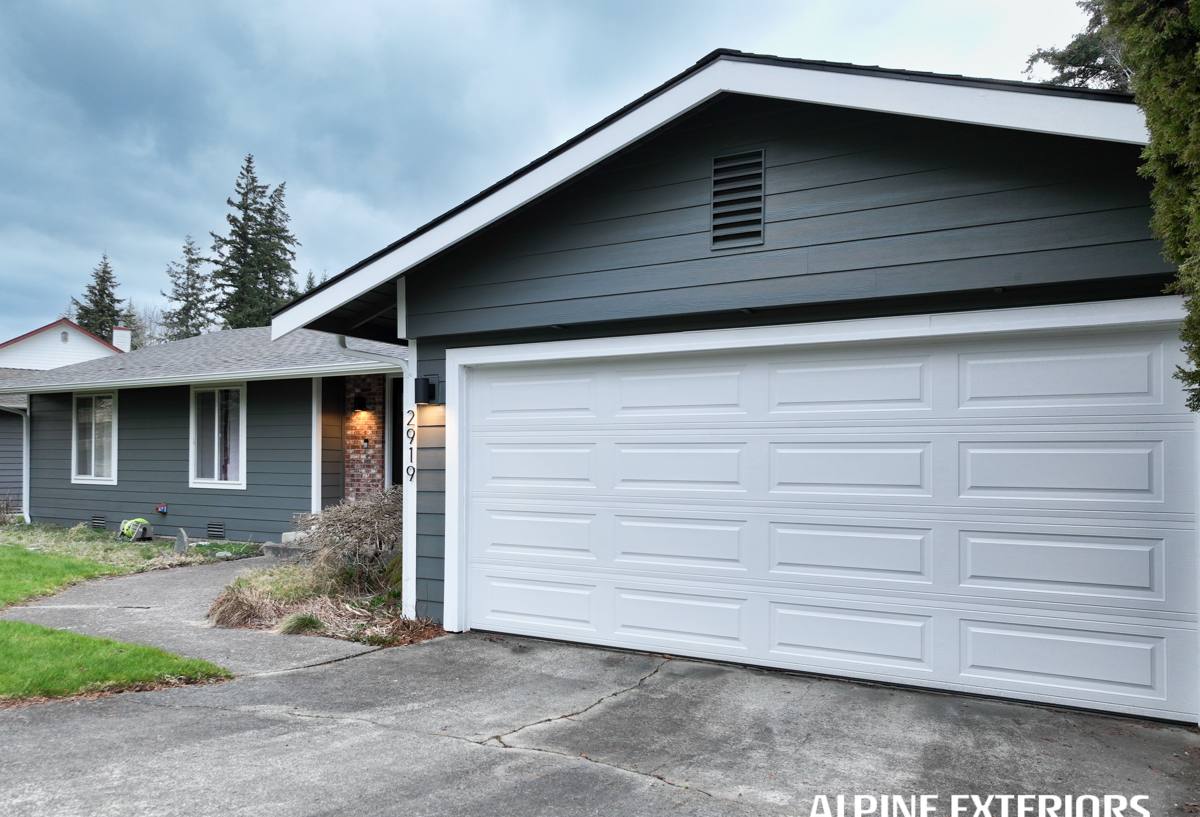
What Everett's Marine Climate Does to Vertical Siding
Glenhaven sits inside the same weather pattern that defines exterior work across Everett and greater Snohomish County: salt-tinged air off Puget Sound, long stretches of driving, wind-blown rain in the fall and winter, and a moss and mildew season that can run for months when temperatures stay mild and surfaces stay damp. Board and batten siding is more exposed to this pattern than standard horizontal lap siding, for a simple reason — vertical battens and panel joints create more edges and more places for wind-driven rain to find a way in, and the flat, vertical run of a batten holds moisture and organic growth longer than a lapped, sloped surface designed to shed water downward.
On a home in Glenhaven, that means the siding has to handle three things at once, year after year: repeated wetting and drying cycles, airborne salt that accelerates corrosion on fasteners and trim, and near-constant shade or damp exposure on north- and west-facing walls where moss gets a foothold fastest. Materials that aren't engineered for this specific combination — humidity, salt exposure, and moss — tend to show it first on board and batten walls, because there's simply more seam and more vertical surface for the problem to start on.
Why We Only Install James Hardie for This Style
We get asked fairly often why we don't offer board and batten in vinyl, LP SmartSide, or cedar, since all three are marketed for this look. Our answer isn't that those products are junk — it's that we've made a professional call about what holds up on Everett homes over decades, not just years, and board and batten is the style where that call matters most.
- Vinyl vertical panel is inexpensive and low-maintenance in the sense that it doesn't need painting, but it's a thin, flexible plastic product. It expands and contracts significantly with temperature swings, which stresses the very seams that board and batten depends on, and it can warp or bow over time — especially on sun-exposed elevations. It isn't rated to carry the same fire performance as fiber cement, either.
- LP SmartSide is an engineered wood product with a resin-treated strand core. It performs reasonably well when installation and caulking are perfect and maintained forever, but wood-based siding is inherently more vulnerable to sustained moisture exposure than fiber cement, and vertical board and batten concentrates exactly the kind of joint-level water exposure that wood products are most sensitive to.
- Cedar is a genuinely beautiful traditional choice for board and batten, and we understand the appeal. But real wood siding in a wet marine climate needs a disciplined recoat and recaulk schedule to keep water out of the end grain and joints, plus ongoing attention to moss and mildew. It's a high-maintenance commitment, not a install-and-forget one.
James Hardie fiber cement is non-combustible, dimensionally stable across our temperature and humidity swings, and its ColorPlus factory finish is baked on to resist fading and chipping far better than field-applied paint. For the Pacific Northwest specifically, Hardie engineers its HZ10 product line for high-moisture, high-humidity regions — which is exactly the environment Everett and Snohomish County sit in. That's the whole reason we standardized on one manufacturer instead of offering several: it lets us install to one proven spec instead of juggling different tolerances, different warranty terms, and different failure modes across products.
What a Correct Board & Batten Job Actually Involves
Board and batten looks simple from the curb — vertical panels, evenly spaced battens — but the assembly behind it is more involved than lap siding, and shortcuts here are exactly what causes moisture problems five or ten years down the road.
Rainscreen and Drainage
Every board and batten installation we do starts with a drainage gap between the siding and the weather-resistive barrier, not siding fastened flat against the wall. In a climate with as much driving rain as Everett gets, that gap is what lets any incidental moisture that gets past the outer surface drain and dry out instead of sitting against the sheathing.
Fastening and Batten Layout
Battens have to land over solid backing and be fastened with corrosion-resistant fasteners rated for the salt-air exposure common near Puget Sound. Batten spacing also needs to match the panel width Hardie specifies — inconsistent spacing isn't just a cosmetic issue, it changes how the assembly sheds water at each seam.
Flashing at Every Transition
Windows, doors, roof lines, and the base of the wall are where board and batten installations most often fail when they're done wrong. Proper head flashing, kick-out flashing at roof-to-wall intersections, and a clean gap off the foundation are non-negotiable details, not upgrades.
Board & Batten Material Comparison
| Material | Moisture Resistance | Salt-Air Durability | Maintenance in This Climate | Fire Rating |
|---|---|---|---|---|
| James Hardie Fiber Cement (HZ10) | Excellent, engineered for high-humidity regions | Strong with corrosion-resistant fasteners | Occasional wash; factory finish resists fade/chip | Non-combustible |
| Vinyl Vertical Panel | Fair; seams can flex and open over time | Moderate; can become brittle | Low, but prone to warping in heat/sun cycles | Combustible plastic |
| LP SmartSide | Good if sealed and maintained continuously | Moderate; dependent on coating integrity | Regular caulk/paint inspection required | Combustible, treated wood substrate |
| Cedar | Fair; vulnerable at end grain and joints | Moderate; needs consistent sealing | High — recoat/recaulk on a fixed schedule | Combustible |
Our Process for Glenhaven Projects
Because we work Glenhaven and the surrounding Everett area regularly, our process is built around the conditions we already know we'll find on these homes — older wall assemblies, mixed exposure levels between shaded and sun-facing walls, and the moss buildup that's common on north sides after a wet winter.
- On-site assessment: We look at existing siding, sheathing condition, and moisture history before quoting anything, not from a photo or a generic estimate.
- Drainage and barrier prep: Weather-resistive barrier and rainscreen furring go on correctly before a single panel is hung.
- Panel and batten install: HardiePanel vertical siding and HardieTrim battens go up to manufacturer spec — fastener pattern, spacing, and clearances all included.
- Flashing and sealant detailing: Every window, door, and roofline transition gets proper flashing before trim is closed up.
- Final walkthrough: We review the finished job with the homeowner and explain what basic upkeep to expect.
Maintenance Checklist for Glenhaven Homeowners
Board and batten in fiber cement is low-maintenance, not no-maintenance. In a climate with this much moisture and moss pressure, a short annual routine keeps the siding performing the way it's designed to for decades.
- Rinse down siding once or twice a year, focusing on shaded, north-facing walls where moss and mildew take hold first.
- Walk the exterior after major fall or winter storms and check for any loose or damaged trim pieces.
- Keep gutters clear so overflow isn't running down siding walls repeatedly.
- Trim back landscaping that keeps siding shaded and damp longer than it needs to be.
- Check caulking at window and door trim every couple of years and have gaps resealed promptly.
Why a Crew That Already Works Glenhaven Matters
Board and batten isn't a style you want a contractor learning on your house. The batten spacing, the flashing sequence, and the drainage details all have to be right the first time, because callbacks on a vertical siding system are more disruptive and more expensive to fix than on standard lap siding. A crew that already installs this style regularly around Everett and Snohomish County has seen how it performs through an actual wet season here — not in a showroom, not in a different climate. That experience shows up in the small decisions: where to add extra flashing attention, which walls in this area tend to need closer moss monitoring, and how to sequence a job around our typical fall and winter weather windows.
If you're considering board and batten for a home in Glenhaven, we're happy to walk the exterior with you, explain what we'd do differently based on your home's exposure, and put together a straightforward, no-pressure estimate. There's a form below to get that conversation started.