 Everett
 Why Forest Park Siding Wears Differently
Forest Park sits in one of Everett's older, more tree-canopied neighborhoods, close enough to Puget Sound to catch salt-laden air and far enough into the tree cover that shaded siding stays damp long after a storm has passed. That combination is harder on exterior walls than most homeowners realize. Salt air accelerates corrosion on fasteners and trim metal. Driving rain off the Sound gets pushed sideways into laps, seams, and butt joints instead of just running down the face of the wall. And the shade from mature trees means a long moss season — sometimes stretching from fall through spring — where organic growth has months to take hold on any surface that stays damp.
None of this is unique to one street or one block. It's a neighborhood-wide pattern in Everett and across Snohomish County wherever tree cover and proximity to water overlap, and it's exactly the kind of exposure that separates a siding job that lasts twenty-five years from one that starts failing at year eight.
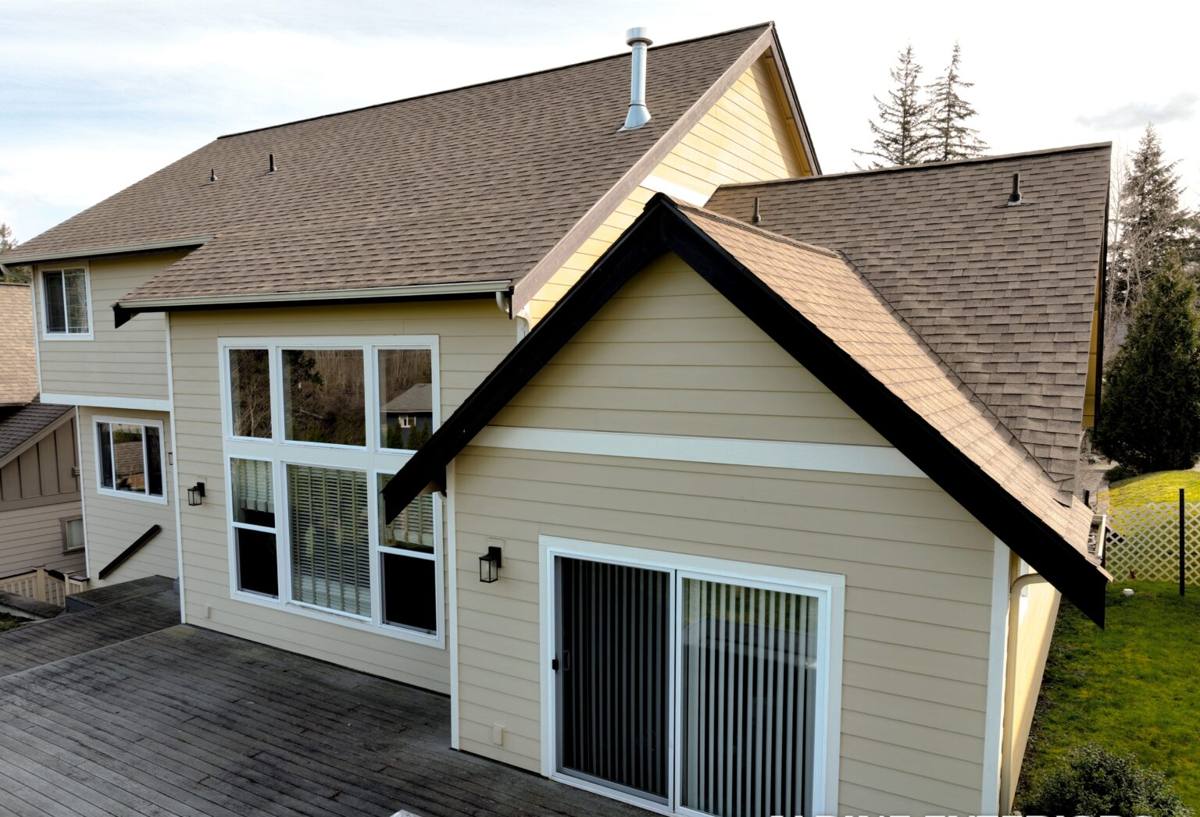
Signs a Forest Park Home Needs Siding Replacement
Visual Warning Signs
- Soft, spongy, or crumbling spots when you press on the siding, especially near the bottom courses and around window trim
- Persistent black or green streaking that comes back within weeks of cleaning — a sign moss and algae have colonized the surface, not just stained it
- Visible gaps opening up at butt joints or around trim, letting wind-driven rain track behind the cladding
- Paint that's bubbling, peeling, or failing in patches rather than fading evenly
- Warping, cupping, or bowing boards, particularly on north- and west-facing walls that get the most shade and weather
Signs You Can't See From the Curb
The damage that actually costs homeowners money is usually behind the siding, not on it. Trapped moisture rots sheathing, invites carpenter ants, and can travel into wall cavities long before it shows up as a soft spot on the outside. If a home in Forest Park is more than 20-25 years old and still has its original siding, it's worth a real inspection — not just a look from the sidewalk — before assuming a coat of paint will buy more time.
What a Correct Siding Replacement Actually Involves
Siding replacement isn't just swapping old boards for new ones. Done right, it's a system, and every layer matters more in a climate like Everett's than it would somewhere drier.
Tear-Off and Inspection
Full removal of the old siding and trim so the sheathing underneath can actually be inspected — not just assumed to be sound. This is where hidden rot, insect damage, or failed old flashing gets found and fixed before anything new goes up. Skipping this step and re-siding over existing damage is one of the most common shortcuts that leads to problems resurfacing within a few years.
Weather-Resistive Barrier and Flashing
A correctly lapped weather-resistive barrier, properly integrated flashing at every window, door, and roofline intersection, and attention to how water is meant to drain — not just be blocked — behind the cladding. In a neighborhood that gets sustained driving rain, this layer is doing more of the actual work than the siding itself.
Fastening and Material
Corrosion-resistant fasteners set to the manufacturer's specified pattern and depth, correct clearances from grade and roof lines, and material that's engineered for the moisture load it will actually see. This is where product choice starts to matter as much as workmanship — a board that absorbs and holds water will fail no matter how well it's installed.
Trim, Caulking, and Finish
Properly detailed trim and joints, minimal reliance on caulk as a primary water seal, and a factory-applied finish rather than a field-painted one wherever possible. Field paint is only as good as the prep and the weather on the day it's applied; a factory finish is consistent and doesn't depend on job-site conditions.
Why We Only Install James Hardie Fiber Cement
We don't install vinyl, LP SmartSide, primed spruce, cedar, or other fiber cement brands. That's a deliberate standard, not a sales pitch, and it comes directly from what holds up in exactly the conditions Forest Park sees.
Fiber cement doesn't absorb and swell the way wood-based products can, which matters directly in a long moss season where surfaces stay damp for extended stretches. It's non-combustible, which carries real weight given wildfire smoke and ember exposure that reach Western Washington in dry summer stretches even without a fire nearby. And James Hardie's ColorPlus factory finish is baked on and warrantied against fading and flaking — it isn't dependent on job-site paint conditions the way field-applied finishes are.
James Hardie also builds its HZ5 product line specifically engineered for the Pacific Northwest's freeze-thaw and moisture cycle, which is a meaningfully different climate than what HZ10 (their hot, humid Southeast line) is built for. That regional engineering, paired with a transferable warranty and a track record we've seen hold up on homes we've serviced ourselves, is why it's the only product we put on a wall.
Our Process for Forest Park Projects
- On-site inspection — we look at the actual siding, trim, and as much of the sheathing as we can access before quoting anything
- Written scope and estimate — what's being removed, what's being replaced, product and color selections, and a realistic timeline
- Tear-off and sheathing check — old material comes off, sheathing gets inspected and repaired as needed before anything new is installed
- Weather barrier and flashing install — the layer that does the real water management work, installed to manufacturer spec
- Hardie siding and trim installation — fastened, spaced, and finished to James Hardie's installation requirements, not shortcuts
- Final walkthrough — we go over the finished work with the homeowner before calling the job done
Cost Factors for Siding Replacement
Every home is different, but these are the variables that actually move the price on a Forest Park siding job:
| Factor | Why It Matters |
|---|---|
| Extent of hidden damage | Rotted sheathing found during tear-off adds repair scope that can't be accurately quoted until the old siding is off |
| Home size and wall complexity | More corners, gables, and trim details mean more labor and material waste |
| Siding profile and accessories | Lap width, trim style, and accent details (shakes, board-and-batten sections) affect both material cost and install time |
| Access and site conditions | Mature trees, tight side yards, or steep grade common in Forest Park can slow staging and require extra care |
| Color and finish selection | ColorPlus factory finishes vary slightly in cost by color family and coating |
Because so much depends on what's found once the old siding comes off, we don't give firm numbers over the phone — an honest quote requires an actual look at the home.
Why a Crew That Already Works Forest Park Matters
A contractor who's already worked this part of Everett knows what a Forest Park inspection tends to turn up before they even pull the first board: how far the moss problem usually extends, which wall orientations take the worst of the driving rain, and what tree cover and drainage patterns around these lots typically do to a wall over time. That's not guesswork — it's pattern recognition built from doing the work locally, and it shows up in fewer surprises mid-project and a scope of work that's realistic from the first estimate.
It also matters for permitting and code familiarity specific to the City of Everett and Snohomish County, and for simply being reachable if a warranty question comes up years down the line rather than being a crew that passed through once and moved on.
Checklist Before You Hire
- Do they inspect in person before quoting, rather than pricing off a phone call or photos alone?
- Is the estimate written and specific about product, scope, and what happens if hidden damage is found?
- Are they a certified installer for the product they're proposing, with manufacturer-backed installation warranty coverage?
- Can they explain their moisture management approach — weather barrier, flashing, drainage — not just "we install siding"?
- Do they have experience with homes in this specific climate zone, not just siding in general?
- Is their bid itemized enough that you understand what you're actually paying for?
Get a Straight Answer About Your Siding
If your Forest Park home is showing any of the warning signs above, or you just want an honest read on how much life is left in your current siding, we're glad to come take a look. There's no pressure and no obligation — just a straightforward inspection and a written estimate you can actually use to make a decision. Use the form below to request your free estimate.