 Everett
 Forest Park's Setting Changes What Your Siding Has to Handle
Forest Park sits among some of the most mature tree canopy in Everett, and that changes the math on exterior siding more than most homeowners expect. Shaded lots dry out slower after rain. North- and east-facing walls under tree cover can stay damp for days after a storm has passed everywhere else in Snohomish County. That's a very different exposure profile than a siding job on an open, sun-exposed lot across town, and it's why we treat siding decisions in Forest Park as a local problem, not a one-size-fits-all product pitch.
The tree cover that gives the neighborhood its character also means more organic debris — leaves, needles, seed pods — collecting in siding laps, behind downspouts, and along trim. That debris holds moisture against the wall longer than bare siding would see on its own, which accelerates the two things that ruin siding in this climate: sustained dampness and moss.
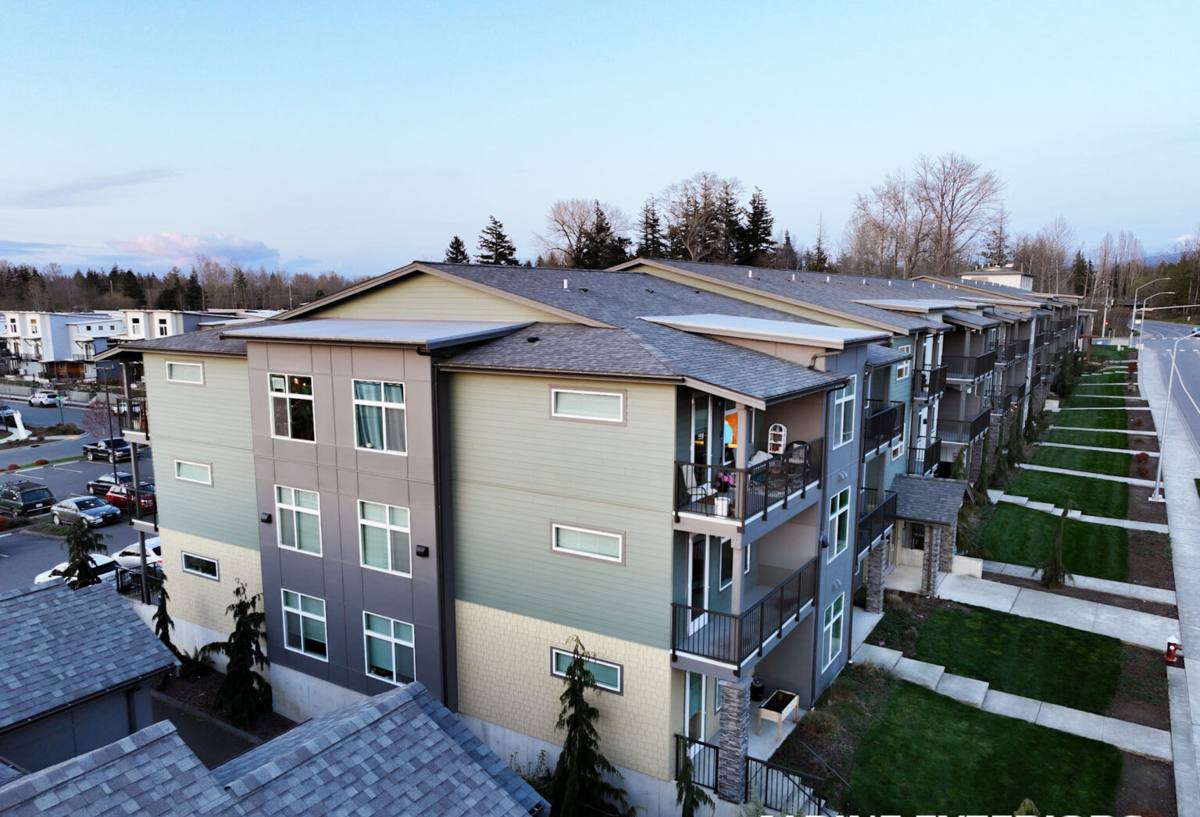
What Everett's Marine Climate Puts Exterior Siding Through
Everett sits on Puget Sound, and that proximity to salt water matters for siding performance. Salt-laden air moves inland with onshore weather, and over years it's harder on fasteners, trim, and any siding material with a factory finish that isn't built to resist it. Add the region's driving, wind-pushed rain — not just vertical rain, but rain that gets pushed sideways into wall assemblies during winter storms — and siding here needs to manage bulk water intrusion at every seam, not just shed water on a calm day.
Then there's moss season, which in this part of Snohomish County runs roughly from October through April. Moss doesn't just grow on roofs. On shaded siding, especially wood-based or wood-look products, moss establishes in lap joints and butt seams, holds moisture directly against the substrate, and can work its way into any spot where caulking has failed or a finish has started to crack. Over a decade or two, that cycle is what quietly takes down siding that looked fine when it went up.
Why We Don't Treat This as a Generic Siding Job
A lot of siding failures we're called out to inspect in shaded, coastal-adjacent neighborhoods like Forest Park aren't failures of the material choice alone — they're failures of installing a material without accounting for the site. The same product installed the same way performs differently on a shaded, moss-prone lot than it does on an open one. That's the piece that gets skipped when a crew treats every job identically.
Why We Install Only James Hardie Fiber Cement
We standardized on James Hardie for every siding job we do, including here in Forest Park, and we don't install LP SmartSide, vinyl, Cemplank, Allura, primed spruce, or cedar. That's not a marketing position — it's a decision based on what holds up under sustained Pacific Northwest moisture exposure and what doesn't.
Fiber cement doesn't rot, doesn't feed moss the way wood-based products can when a finish breaks down, and it's non-combustible. James Hardie's ColorPlus factory finish is baked on and warrantied against fading and flaking in a way that field-applied paint on wood siding generally isn't. On a shaded lot where a wall assembly might stay damp for extended stretches, that difference compounds year over year.
HZ5 Engineering for This Climate Zone
James Hardie makes climate-specific product lines, and the Pacific Northwest falls under their HZ5 engineering — formulated and tested for the freeze-thaw cycling, sustained moisture, and humidity swings common to this region. That's a meaningful distinction from a generic siding product sold the same way in every climate zone in the country. It's part of why we can stand behind the product on a shaded, damp lot in Forest Park with more confidence than we'd have in a wood-based or vinyl alternative in the same spot.
What a Correct Installation Actually Involves
The product is only half the equation. Fiber cement siding installed without attention to the details below will still trap moisture and fail early, regardless of how good the material is. On every Forest Park job, our install addresses:
- Proper clearance between the bottom of the siding and grade, decks, or paved surfaces — Hardie's spec requires a minimum gap, and shaded, damp yards make this more important, not less
- A drainage plane or rainscreen behind the siding so any water that does get past the surface has somewhere to go besides the sheathing
- Correct flashing at every window, door, and penetration — the majority of moisture problems we find start at a flashing detail, not the field of the siding itself
- Fastener placement and spacing that follows Hardie's published installation guide, not a generalized "siding nailing" habit
- Sealed, backer-rod-supported joints at butt seams and trim, using sealants rated for exterior fiber cement movement
- Factory-matched touch-up paint at any field cuts, so cut edges aren't left exposed to moisture
Skip any one of these and you can still end up with moss, staining, or trim rot within a few years — even with the right product on the wall.
Our Process for a Forest Park Job
Assessment and Sheathing Check
We start by looking at what's actually under the existing siding once it's off — sheathing condition, evidence of past moisture intrusion, and how the home's original construction handles water at trim and rooflines. On older homes in established Everett neighborhoods, this step often surfaces issues that were hidden by the old siding for years.
Weather Barrier and Rainscreen
Given the shade and sustained dampness common on Forest Park lots, we pay particular attention to the drainage plane here — making sure water that reaches the back of the siding has a clear path out rather than sitting against the sheathing.
Installation to Spec
Siding, trim, and flashing go in following James Hardie's installation guidelines, not a generic approach. Fastener pattern, clearances, and joint treatment are addressed as the job goes, not corrected after an inspection flags them.
Final Walkthrough
We walk the finished job with the homeowner, checking seams, trim lines, and touch-up work before calling it done.
Cost Factors on a Forest Park Siding Project
Every siding job is priced around the specifics of the home and lot, and we'll always give an honest number after seeing the property. The factors below tend to move the number most in this neighborhood:
| Factor | Why It Matters in Forest Park |
|---|---|
| Existing siding and sheathing condition | Shaded, damp walls are more likely to have hidden moisture damage that needs repair before new siding goes on |
| Tree canopy and site access | Mature trees can limit staging, dumpster placement, and scaffolding setup, affecting labor time |
| Siding profile (lap, shingle, or panel) | More detailed profiles and trim work take longer to install correctly |
| Trim and architectural detail | Older Everett homes often have more trim complexity than newer builds, which adds labor |
| Wall exposure | Shaded, north-facing walls may need extra flashing or drainage attention that sunnier walls don't |
Keeping Moss and Moisture From Winning Long-Term
Correctly installed James Hardie siding is low-maintenance, but "low-maintenance" isn't "no-maintenance," especially on a shaded lot. A few habits go a long way:
- Keep gutters and downspouts clear so overflow doesn't run down the wall face
- Trim back branches and foliage that keep siding in constant shade and reduce airflow along the wall
- Rinse siding periodically to clear moss spores and organic debris before they establish, rather than after
- Have caulked joints and trim checked every few years — sealant is the first line of defense and the first thing to wear out
Why a Crew That Already Works Forest Park Matters
Siding performance here isn't just about the product — it's about installing it with this specific neighborhood's conditions in mind. A crew that's worked Forest Park and similar shaded, established Everett neighborhoods knows what these homes' original construction typically looks like once the siding comes off, understands City of Everett permitting for exterior work, and knows which wall orientations and lot conditions need extra attention to drainage and flashing before a single course of siding goes up. That local familiarity is what keeps a good product from underperforming because of details that only show up once you've worked the area.
If you're weighing a siding project in Forest Park, we're happy to take a look at your home, walk you through what we'd do differently given your specific lot and exposure, and give you a straightforward, no-pressure estimate. There's a form below to get that started.