 Everett
 Lake Stevens Homes Face a Longer Wet Season Than Most People Realize
Lake Stevens sits inland from Puget Sound, but it doesn't escape the marine climate that defines Snohomish County. Moisture-laden air moves in off the Sound and settles over the lake basin, and between that and the lake's own humidity, siding here spends a lot of the year damp. Add driving rain that comes in sideways during winter storms, shaded lots along the water and in the surrounding tree cover, and a moss season that can run from October through April, and you have a climate that is genuinely hard on the wrong siding material — and forgiving of almost nothing that's installed poorly.
This page is about one job: installing fiber cement siding correctly on a Lake Stevens home. Not a general siding overview, not a sales pitch — what this climate actually demands, what a correct installation looks like, and what our process is when we do the work.
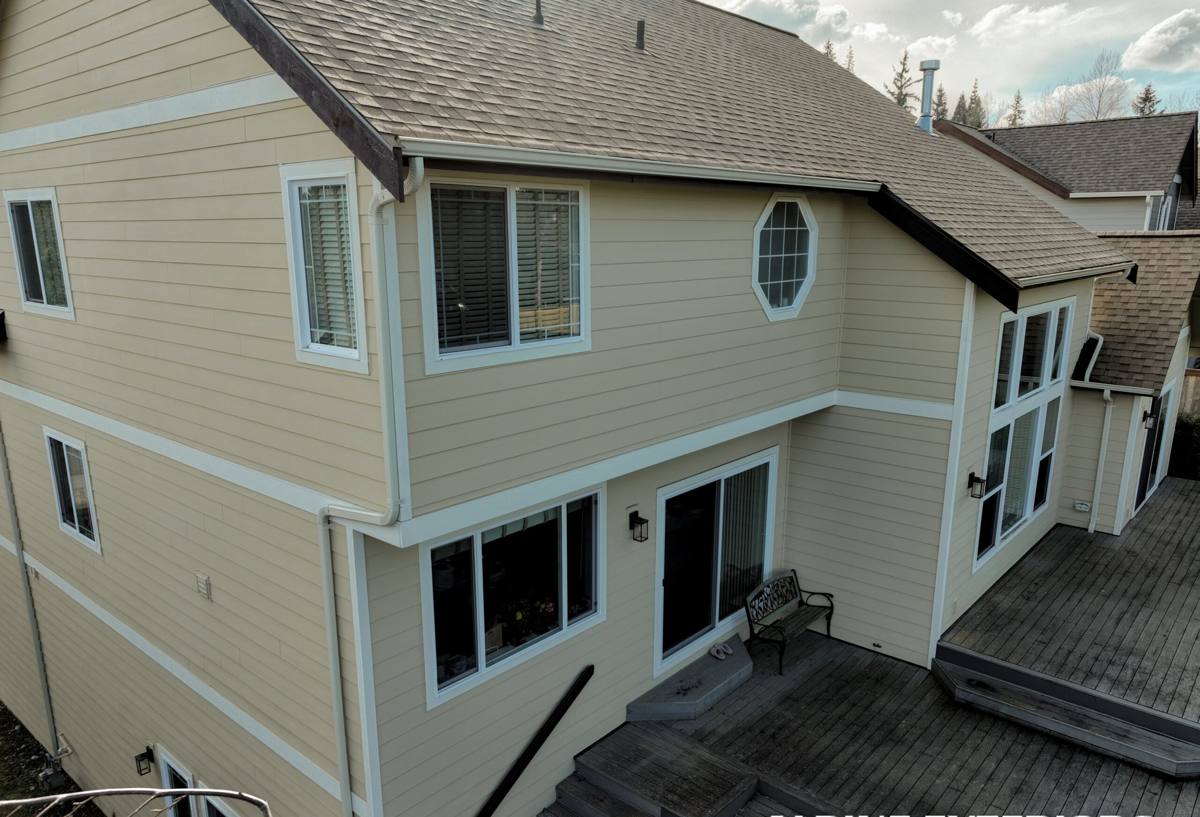
What Driving Rain, Humidity, and Moss Actually Do to Siding
Moisture That Doesn't Dry Out Between Storms
In a lot of the country, siding gets wet, then gets a long dry stretch to fully release that moisture. Around Lake Stevens, storms stack up close together for months at a time, and shaded or lake-facing walls may not see direct sun for days. Materials that absorb water and swell, or that rely on paint film alone to keep moisture out, are working against the calendar here. Fiber cement doesn't swell or rot the way wood-based products can, which is a big part of why it holds up in this specific climate.
Moss, Algae, and Shaded North Walls
Moss needs shade and standing moisture to establish, and Lake Stevens has both in abundance — mature tree canopy, lake humidity, and north- or lake-facing elevations that stay damp longer than the street side of the house. Moss and algae growth on siding isn't just cosmetic. Where it takes hold at butt joints, laps, or trim intersections, it holds water against the material and against fasteners, which is where problems actually start.
Wind-Driven Rain at Joints and Penetrations
Everett-area storms frequently push rain horizontally, not straight down. That means water gets tested at every seam, joint, window, and penetration in the siding system — places a light rain would never reach. A siding job that looks fine in July can fail its first real test in a January windstorm if the water management details underneath weren't done right.
Why We Install Only James Hardie Fiber Cement
Everett Exterior installs James Hardie fiber cement siding exclusively. We don't install vinyl, LP SmartSide, primed wood, cedar, or other fiber cement brands. That's a deliberate standard, not a default. Hardie's HZ5 product line is engineered specifically for the wet, moss-prone climate zones of the Pacific Northwest, the ColorPlus factory finish holds up to UV and moisture without relying on a field-applied paint job to do all the work, and the warranty structure is one we're comfortable standing behind on a home we've installed. Fiber cement is non-combustible, resists moisture-driven swelling and rot, and — installed to spec — is a material we can tell a Lake Stevens homeowner will still be doing its job in twenty years.
What a Correct Fiber Cement Installation Involves
Fiber cement siding is only as good as the water management system behind it. This is the part most homeowners never see, and it's where the difference between a correct job and a fast job actually shows up.
Weather-Resistive Barrier and Drainage Plane
Every wall gets a properly lapped weather-resistive barrier installed shingle-style, so any water that gets past the siding sheds downward and out instead of finding a way behind it. On a house exposed to wind-driven rain, this layer is doing as much work as the siding itself.
Flashing at Every Penetration
Windows, doors, hose bibs, light fixtures, vents — anything that punches through the siding plane needs proper flashing integrated with the weather-resistive barrier, not just caulk over the gap. Caulk is a maintenance item; flashing is the actual water break.
Fastening and Clearances to Manufacturer Spec
James Hardie publishes specific fastener types, spacing, and clearance requirements — including ground clearance and clearance from roof lines, decks, and grade — and those specs exist for a reason in a climate like ours. Ground and roof splash-back is a real moisture source here, and skipping the clearance spec is one of the most common ways installers set a house up for problems.
Caulking and Trim Details
Butt joints, trim edges, and inside corners get sealed with a high-quality, paintable sealant rated for the exposure, applied to a clean, primed surface. In a moss-prone climate, these joints are also where debris collects if they're not detailed cleanly — giving moss somewhere to start.
Choosing the Right Hardie Product for a Lake Stevens Home
Not every Hardie product is the right fit for every part of a house. Part of doing this job correctly is matching the product to the elevation and exposure.
| Product | Best Use on a Lake Stevens Home | Why It Fits |
|---|---|---|
| HardiePlank Lap Siding | Primary field siding, all elevations | Traditional lap profile, widest color range, proven track record in wet climates |
| HardiePanel Vertical Siding | Accent walls, gables, modern-style homes | Clean vertical lines, fewer horizontal laps for water to test |
| HardieShingle | Gable accents, dormers, craftsman-style detailing | Staggered-edge or straight-edge look without the upkeep of real wood shingle |
| HardieTrim | Corners, window and door casing, fascia | Matches siding durability so trim doesn't fail before the field siding does |
Our Process on a Lake Stevens Project
1. On-Site Assessment
We walk the whole exterior, not just the visibly damaged side. On a lake or shaded lot, we're specifically checking north- and water-facing walls, areas under tree canopy, and grade clearance — the places this climate targets first.
2. Written Estimate and Product Selection
You get a clear, itemized estimate and a walkthrough of which Hardie products and colors fit the house and the site conditions — not a generic package.
3. Tear-Off and Substrate Check
We remove the old siding and inspect the sheathing underneath before anything new goes on. In a climate that's been feeding moisture behind siding for years, this step catches problems that would otherwise get sealed in.
4. Weather Barrier, Flashing, and Installation
Weather-resistive barrier, flashing, and Hardie siding go on to manufacturer spec, with the fastening, clearance, and joint details this climate requires.
5. Final Walkthrough
We walk the finished job with you, elevation by elevation, before we consider it done.
What Drives Cost on a Lake Stevens Siding Job
Every home is different, so we don't publish flat prices — but these are the factors that actually move the number on a fiber cement job in this area.
| Factor | Why It Matters Here |
|---|---|
| Extent of substrate repair | Sheathing damage from years of trapped moisture adds labor before new siding can go on |
| Wall complexity | Multiple gables, dormers, and accent walls mean more cutting, flashing, and trim work |
| Product mix | Combining lap siding with panel or shingle accents costs more than a single product on flat walls |
| Site access | Lakefront lots, steep grades, and mature landscaping can slow staging and tear-off |
| Color and finish | Standard ColorPlus colors versus premium or custom finishes |
Maintaining Fiber Cement Siding Through a Wet, Mossy Winter
Correctly installed Hardie siding is genuinely low-maintenance, but "low" isn't "none" in this climate. A short seasonal check goes a long way.
- Rinse shaded and lake-facing walls in fall before moss season sets in, and again in early spring
- Trim back tree branches and shrubs holding shade and moisture against the siding
- Check that gutters and downspouts are clear and directing water away from the wall, not down it
- Look at caulked joints once a year for cracking or separation and have them touched up before they fail
- Confirm sprinklers and irrigation aren't spraying directly onto the siding
- Watch ground-contact areas after grading, mulching, or landscaping work for reduced clearance
Why Hiring a Crew That Already Works in Lake Stevens Matters
A siding crew that mostly works drier inland climates will still build a technically sound wall — but they're not thinking about which elevation loses sun the longest, how close a lakefront lot pushes humidity into the equation, or how aggressively moss establishes on a shaded gable within a few miles of the water. A crew that works Snohomish County regularly has already seen what fails here and why, and builds every layer of the installation — barrier, flashing, fastening, clearance — around that. That local pattern recognition is worth more than it sounds like on paper, and it's usually invisible until the first real storm season after the job's done.
If you're weighing a siding replacement or new construction project in Lake Stevens, we're happy to walk the exterior with you and put together a straightforward, no-pressure estimate — just fill out the form below.