 Everett
 Storm Damage Roofing in Edmonds: What Makes This Coastline Different
Edmonds sits right on the water, and that changes what a roof goes through compared to homes even a few miles inland. Between the salt air coming off Puget Sound, the driving rain that blows in sideways during a real winter storm, and a moss season that can run eight or nine months out of the year, roofs here age differently than roofs in drier parts of the state. We're based in Everett and work this stretch of Snohomish County regularly, and the storm damage calls we get from Edmonds tend to follow a pattern: wind-lifted shingles near the eaves and ridges, flashing that's worked loose from years of freeze-thaw cycling, and moss-driven moisture damage that was quietly getting worse long before a storm finally exposed it.
This page is specifically about storm damage roof repair for Edmonds homes. If you had a windstorm come through, noticed a leak after a heavy rain event, or found shingles in the yard after a night of gusts, this is what we'd actually do and why it matters to hire a crew that already knows this area.
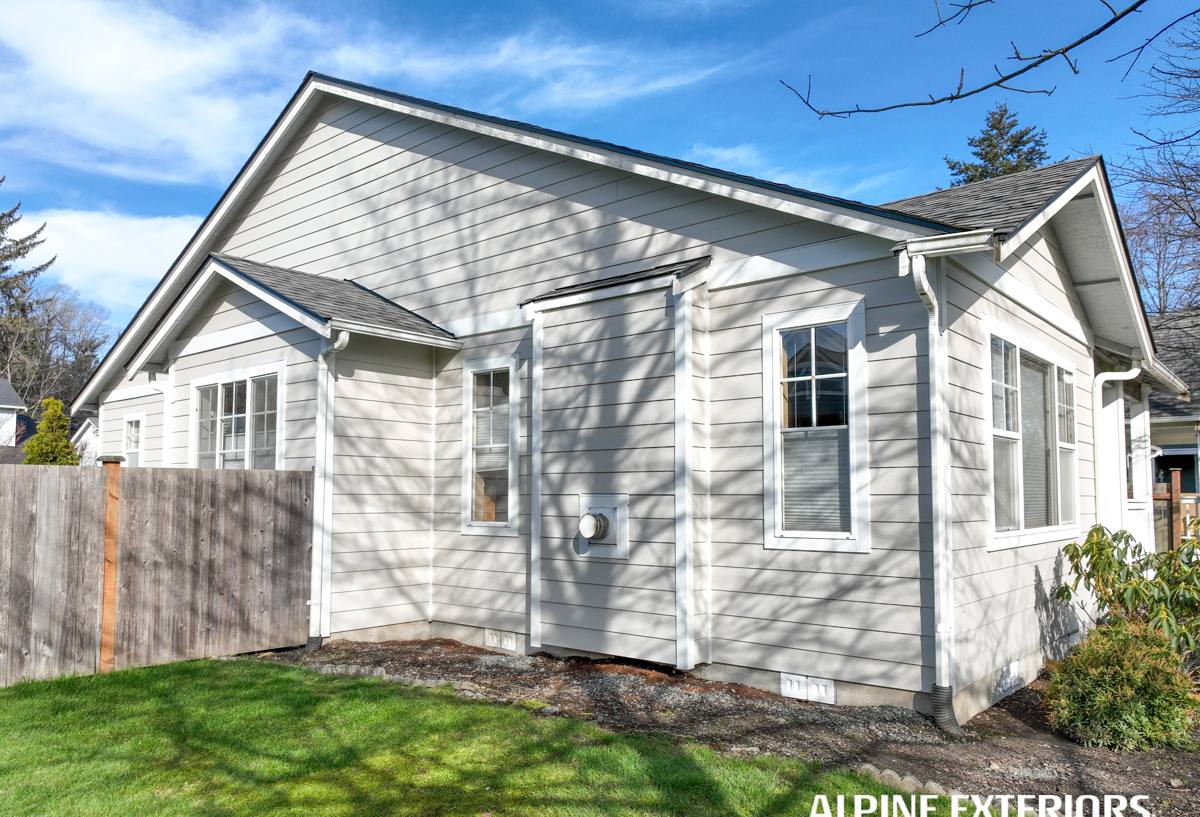
How Coastal Weather Actually Damages a Roof
Wind
Puget Sound storms don't usually bring the straight-line wind you'd see in the Midwest, but they bring persistent, gusty wind off the water that finds every weak seam in a roof system. Shingle tabs that were sealed down fine in August can be marginal by January after repeated flex-and-release cycles. The most common wind failure point is the roof edge — the first few courses along eaves and rakes take the brunt of uplift because they have the least surrounding shingle holding them down.
Driving rain
Rain that comes in at an angle behaves differently than rain falling straight down. It gets pushed up and under shingle tabs, into step flashing around chimneys and dormers, and along any spot where the roof plane changes direction. A roof that would shed a normal rain shower without issue can still leak in a wind-driven storm if the underlayment, flashing, or shingle overlap isn't in good shape.
Moss
Edmonds gets enough shade, moisture, and mild temperatures for moss to establish itself on north-facing slopes and anywhere debris collects, and once it's established it holds water against the shingle surface almost year-round. Moss doesn't just look bad — it lifts shingle edges as it grows, holds moisture that accelerates granule loss, and often hides the early signs of a leak until the damage has spread into the decking underneath.
What "Storm Damage" Actually Looks Like on an Edmonds Roof
- Shingles missing entirely, or lying in the yard or gutters after a windy night
- Shingle tabs that are cracked, curled, or lifted but still attached
- Flashing pulled away from chimneys, skylights, or sidewalls
- Granules collecting in gutters or at downspout outlets (a sign of accelerated wear, not always storm-specific)
- Water staining on ceilings or in the attic that appeared or worsened after a storm
- Soft or discolored roof decking visible from the attic side
- Moss mats that tore loose and pulled shingle granules or tabs with them
Some of this damage is obvious from the ground. A lot of it isn't — wind damage in particular can be nearly invisible from the driveway and only show up as a leak weeks later, once enough rain has found the opening. That's why we always do a hands-on roof inspection rather than a drive-by look before writing up a repair scope.
Our Storm Damage Inspection and Repair Process
1. Inspection
We get on the roof (weather permitting) and check the field of the roof, all flashing points, ridge and hip lines, and the attic from the inside where accessible. We're looking for the actual extent of the damage, not just the piece that's visibly missing, because storm damage almost always extends beyond the one obvious spot.
2. Documentation
We photograph what we find and write up a plain-English scope: what's damaged, what caused it, and what needs to happen to fix it correctly. If you're planning to file an insurance claim, this documentation is what your adjuster will want to see, and having it organized before the adjuster visits tends to make that conversation go smoother.
3. Repair scope options
Depending on what we find, the fix might be a targeted repair — replacing a section of shingles and re-sealing flashing — or, if the damage is spread across a large portion of the roof or the roof is already near the end of its service life, a full replacement may genuinely be the more cost-effective route. We'll tell you honestly which situation you're in rather than defaulting to whichever is more work for us.
4. The repair itself
Matching existing shingles as closely as possible, replacing damaged underlayment (not just the shingle layer — if water got past the shingles, the underlayment beneath is often compromised too), and re-flashing any point where the original flashing was disturbed. We don't consider a wind-damage repair complete until the flashing detail is right, because a shingle patch over bad flashing is the single most common cause of a "fixed" roof leaking again in the next storm.
5. Cleanup and follow-up
Full magnetic sweep for nails, debris hauled off, and a walk-through so you know exactly what was done and what to watch for going forward.
Repair vs. Replacement: How We Help You Decide
| Factor | Leans toward repair | Leans toward replacement |
|---|---|---|
| Age of roof | Under 12-15 years | Nearing or past typical shingle lifespan |
| Extent of damage | Isolated to one slope or area | Spread across multiple slopes |
| Shingle match | Discontinued shingle still available or close match exists | No reasonable match; patch would look obviously different |
| Decking condition | Solid, dry decking under the damaged area | Soft or water-stained decking found in multiple spots |
| Moss coverage | Light, localized moss on one section | Heavy moss coverage across most of the roof |
| Prior repair history | First repair on this roof | Multiple past repairs in different spots |
None of these factors decide things alone — we look at the whole picture and give you a straight recommendation, including telling you when a repair is the right call even though a replacement would be a bigger job for us.
Insurance Claims for Storm Damage
Wind and storm damage is one of the more common roof claims homeowners file, and having a contractor who documents damage clearly and can walk an adjuster through the roof helps the claim move faster. A few things worth knowing:
- Photograph what you can see from the ground yourself (safely) as soon as you notice damage, and note the date of the storm
- Don't wait too long to report — insurers often have windows for filing storm-related claims
- We provide our inspection documentation directly to you or your adjuster; we don't handle the claim itself, but we make sure the roof-condition part of it is accurate and complete
- Get the repair done once the scope is approved — a delayed repair after storm damage lets moisture keep working on exposed decking and framing
Preventing Repeat Storm Damage
Moss management
Since moss is a near-constant issue in this part of Snohomish County, we recommend periodic moss removal and, where appropriate, zinc or copper strip installation along the ridge to slow regrowth. This isn't a one-time fix — it's ongoing maintenance that meaningfully extends the life of the roof between storms.
Flashing checks
Flashing is a mechanical seal, not a permanent one, and it's worth a visual check after any major windstorm, especially around chimneys, skylights, and roof-to-wall intersections.
Gutter and drainage upkeep
Clogged gutters back water up under the lowest courses of shingle, which is a completely preventable cause of "storm damage" that's really a drainage problem. Keeping gutters clear ahead of the winter storm season removes one of the most common leak triggers we see.
Attic ventilation
Good attic airflow keeps roof decking drier and more resistant to the freeze-thaw and moisture cycling that makes shingles more brittle and prone to wind damage in the first place.
Quick Checklist: After a Storm, Before You Call
- Check the yard and gutters for shingle pieces or granules
- Look at ceilings and attic spaces for new water stains or damp spots
- Note the date and general conditions of the storm for your records
- Avoid getting on the roof yourself, especially if it's wet or the damage isn't obvious
- Call for an inspection sooner rather than later — exposed decking degrades quickly in this climate
Why an Everett-Based Crew That Knows Edmonds Matters
Roofing knowledge that works in Spokane or Yakima doesn't automatically transfer to a saltwater-adjacent roof in Edmonds. We work Snohomish County's coastal weather patterns regularly, which means we're not guessing at how moss behaves on a shaded north slope here, or how flashing holds up under years of salt-tinged, wind-driven rain. We show up knowing the questions to ask and the failure points to check first, which means a faster, more accurate inspection and a repair that's built for the conditions your roof will actually face again next winter.
If you've got storm damage — or you're not sure whether what you're seeing is storm damage or ongoing wear — we're glad to come take a look. The estimate is free, there's no pressure to sign anything on the spot, and you'll get a straight answer about what your roof actually needs. Use the form below to get a visit scheduled.