 Everett
 Deck Repair Built for Edmonds' Climate
Decks in Edmonds take a different kind of beating than decks further inland. Sitting along Puget Sound puts homes here in a corridor of salt-laden air, wind-driven rain that gets pushed sideways under railings and into ledger connections, and a moss season that can run eight months or longer in a wet year. None of that is dramatic on its own, but stacked together, year after year, it's exactly the combination that shortens the life of a deck's structure and finish. A deck that would coast along for two decades in a dry inland climate can develop real structural problems in Edmonds in half that time if it isn't built and maintained with this environment in mind.
We repair decks throughout Edmonds and the surrounding Snohomish County area, and the patterns we see here are consistent enough that we can usually tell a homeowner what we expect to find before we even climb the stairs. That familiarity matters — it's the difference between a repair that patches the symptom and one that fixes the actual cause.
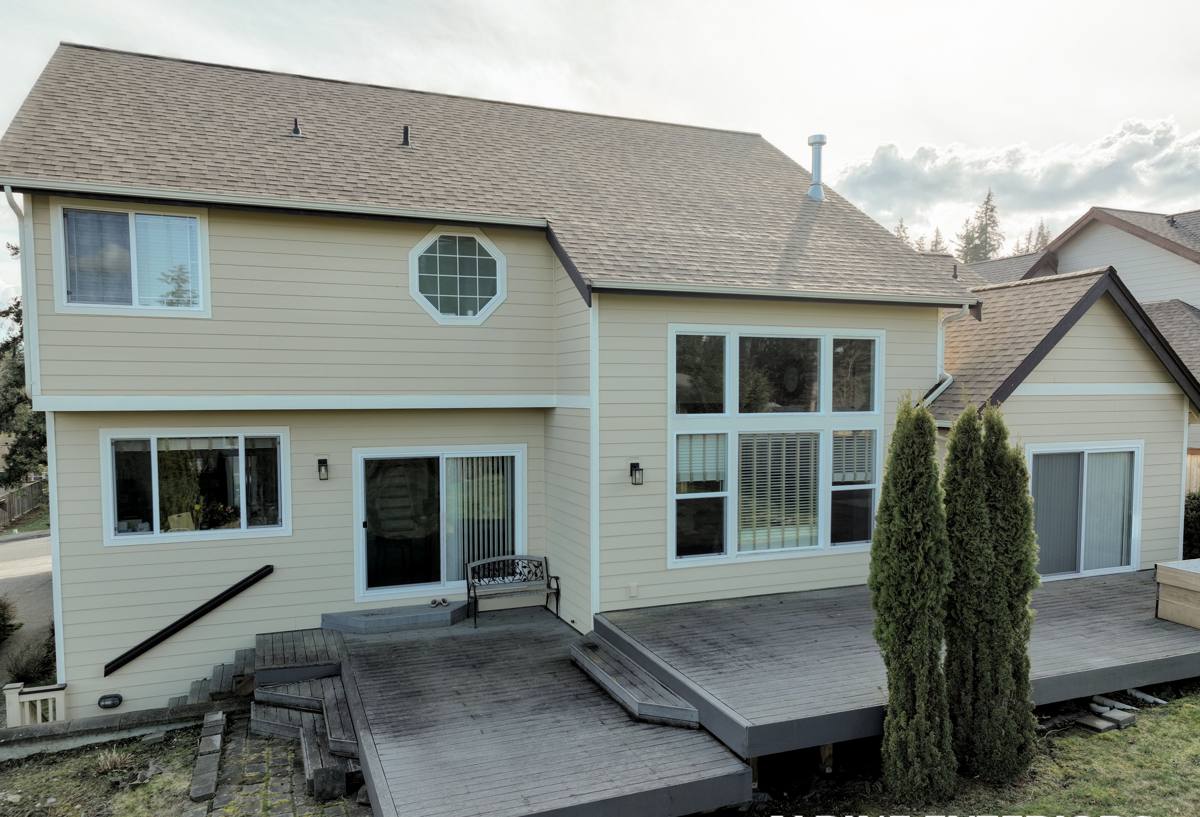
Common Deck Problems We See in Edmonds Homes
Ledger Board and Rim Joist Rot
The ledger board — where the deck attaches to the house — is the single most common failure point we find on decks in this area. Wind-driven rain gets forced up and behind the ledger flashing, or the flashing was never installed correctly in the first place, and water tracks down behind the siding and into the framing where nobody can see it. By the time it shows up as soft decking near the house or a slight sag at the rim joist, the rot has usually been progressing for years.
Post Bases and Footings
Posts that sit in or near standing water, or that were installed without a proper standoff base, wick moisture up into the end grain. Combined with our long wet season, that's a slow but steady path to a soft, spongy post base — often the first thing we find soft when we walk a deck's perimeter.
Moss and Algae on the Decking Surface
Shaded, north-facing, or tree-covered decks in Edmonds grow moss and algae readily, especially through fall and winter. Beyond looking bad, a mossy deck surface holds moisture against the wood or composite longer, and it's genuinely slippery — we treat moss and algae buildup as a safety issue, not just a cosmetic one.
Fastener Corrosion
Salt air accelerates corrosion on lower-grade fasteners and hardware. We regularly find rusted-through joist hangers, bleeding screw heads, and corroded bolts on decks that are otherwise in decent shape structurally — the metal failed before the wood did.
Guardrails and Stair Stringers
Guardrail posts take constant load and constant weather exposure at the same time, which makes them a frequent repair item. Stair stringers, especially where they meet grade or a concrete pad, are another spot where trapped moisture does its damage out of sight.
Repair or Replace? How We Actually Decide
Not every deck problem means a full rebuild, and not every "just replace a board" job is actually that simple underneath. We look at the framing, the connections, and the extent of the damage before recommending anything. Here's roughly how that thinking breaks down:
| Situation | Typical Recommendation | Why |
|---|---|---|
| Isolated soft boards, sound framing underneath | Board replacement | The structure is fine — only the wearing surface failed |
| Rot at the ledger connection | Ledger and flashing repair | This is a structural safety issue and the root cause of many deck failures |
| One or two soft posts, rest of frame solid | Post and footing repair | Targeted fix is faster and less costly than a full rebuild |
| Widespread rot across joists, posts, and ledger | Full or near-full rebuild | Piecemeal repair on a deck this far gone rarely holds up |
| Sound structure, tired or moss-stained surface | Resurfacing, cleaning, refinishing | No structural work needed — this is a maintenance and appearance fix |
We'll always tell you honestly which category your deck falls into, including when a repair is the right call and a rebuild isn't necessary — and the reverse, when patching a deck with failing framing would just be spending money to delay the inevitable.
What a Correct Deck Repair Actually Involves
A repair that only replaces what's visible from the top often misses the cause. A correct repair in this climate typically includes:
- Pulling decking near suspected problem areas to inspect the framing underneath, not just patching the surface
- Checking ledger board flashing and correcting it if it's missing, damaged, or improperly lapped
- Probing posts, joists, and beams for soft spots with an awl, not just a visual check
- Replacing corroded fasteners and hardware with stainless or hot-dip galvanized rated for exterior and coastal exposure
- Confirming post bases have proper standoff from standing water and concrete
- Checking guardrail post attachment for the play and looseness that signals hidden rot
- Verifying stair stringer connections at both the deck and the ground or landing pad
Skipping any of these steps is how a deck ends up needing the same repair again in a few years, in the same spot.
Our Deck Repair Process
1. On-Site Inspection
We walk the entire deck — surface, framing where accessible, posts, railings, and stairs — and probe anywhere moisture damage is likely given the deck's age, orientation, and exposure.
2. Clear Scope and Estimate
You'll get a plain-English explanation of what we found, what needs to be fixed now, what to keep an eye on, and a written estimate before any work starts. No surprise add-ons mid-project without a conversation first.
3. The Repair Itself
We replace what's actually failed — framing, posts, decking, railings, or flashing — using fasteners and hardware suited to a marine-influenced climate, not just whatever's cheapest at the yard.
4. Cleanup and Surface Treatment
Where moss or algae has taken hold on the surrounding decking, we clean it as part of the job so the repair doesn't look patched into a dirty deck, and we'll talk through what keeps it from coming back as fast.
Wood or Composite: An Honest Comparison
Both materials work in Edmonds; both have real trade-offs, and we'll tell you both sides rather than pushing whatever's easiest for us to install.
| Factor | Wood | Composite |
|---|---|---|
| Upfront cost | Generally lower | Generally higher |
| Maintenance | Needs periodic cleaning, sealing, and moss treatment | Less frequent maintenance, but still needs regular cleaning to prevent moss and algae growth |
| Moisture behavior | Can rot if not sealed and maintained | Won't rot, but poor-quality boards can fade, stain, or delaminate over time |
| Repairability | Individual boards are easy to replace and match | Matching older composite colors and profiles can be difficult after a few years |
| Feel underfoot in wet weather | Can get slick if not cleaned | Varies by product — some grip better wet than others |
For repairs specifically, we often recommend matching the existing material rather than mixing wood framing with composite decking arbitrarily, since the two expand, contract, and age differently. If you're considering switching materials during a repair, we'll walk through what that means for the framing underneath, not just the surface.
Maintenance That Actually Extends Deck Life Here
A lot of what we get called out to repair could have been caught earlier with a few basic habits. For Edmonds homeowners specifically, we recommend:
- Clear leaves and debris from between boards before wet season sets in, especially in shaded corners
- Clean moss and algae off the surface at least once a year — more often on shaded or north-facing decks
- Check the ledger board area at the house for any staining, gaps, or soft trim once a year
- Keep gutters and downspouts near the deck clear so runoff isn't dumping directly onto framing or posts
- Reseal or refinish wood decking on the manufacturer's recommended schedule, not just when it looks bad
- Give guardrail posts a firm push test annually — looseness is often the first sign of a problem underneath
Why Hire a Crew That Already Works in Edmonds
Deck repair isn't a one-size-fits-all trade. A contractor who mostly works dry-climate builds may not think twice about ledger flashing details or fastener grade, because in their market it simply doesn't matter as much. In Edmonds and the rest of Snohomish County, it matters a lot. We work on decks in this exact climate regularly, which means we're not guessing at what's failing or why — we've seen the same salt air corrosion, the same moss patterns, and the same driving-rain ledger problems on enough decks in this area to know where to look first and what a durable fix actually requires.
If you've got a deck in Edmonds that's showing soft spots, loose railings, persistent moss, or you just haven't had it looked at in a while, we're happy to come take an honest look. There's no pressure and no obligation — just a straight answer about what's going on and what it would take to fix it. Use the form below to request a free estimate.