 Everett
 Why Roofs in Delta Wear Down Differently
Delta sits close to the water, and that changes what a roof has to survive. Homes here deal with a combination that inland Snohomish County neighborhoods don't see as intensely: salt-laden air off the Sound and the Snohomish River estuary, wind-driven rain that doesn't just fall straight down, and long stretches of shade and dampness that keep moss and moss spores active for most of the year. None of that means a roof here is doomed to fail early — it means the roof has to be built and maintained with those specific stresses in mind. A roofing approach that works fine in a drier, more sheltered part of the county can come up short in Delta.
Salt Air and Metal Fatigue
Salt in the air accelerates corrosion on anything metal — flashing, fasteners, vent boots, gutter hardware. Standard galvanized fasteners can start showing rust streaks and weakening well before a roof's shingles are due for replacement. It's a slow process, but it's a real one, and it's one of the reasons material and hardware selection matters more here than it does twenty miles inland.
Driving Rain and Wind-Driven Water
Storms coming off the water often bring rain sideways, not straight down. That kind of wind-driven rain finds weaknesses that vertical rain never would — under shingle tabs, around chimney flashing, at valleys and roof-to-wall transitions. A roof that's only detailed for straight-down rain will eventually leak in exactly these spots, even if the shingles themselves look fine from the ground.
A Moss Season That Doesn't Really End
Shaded lots, tree cover, and persistent damp conditions mean moss and algae growth is close to a year-round concern in Delta rather than a seasonal one. Moss holds moisture against the roof surface, works its way under shingle edges, and lifts material over time. On a roof that's already aging, it can shorten the remaining service life considerably.
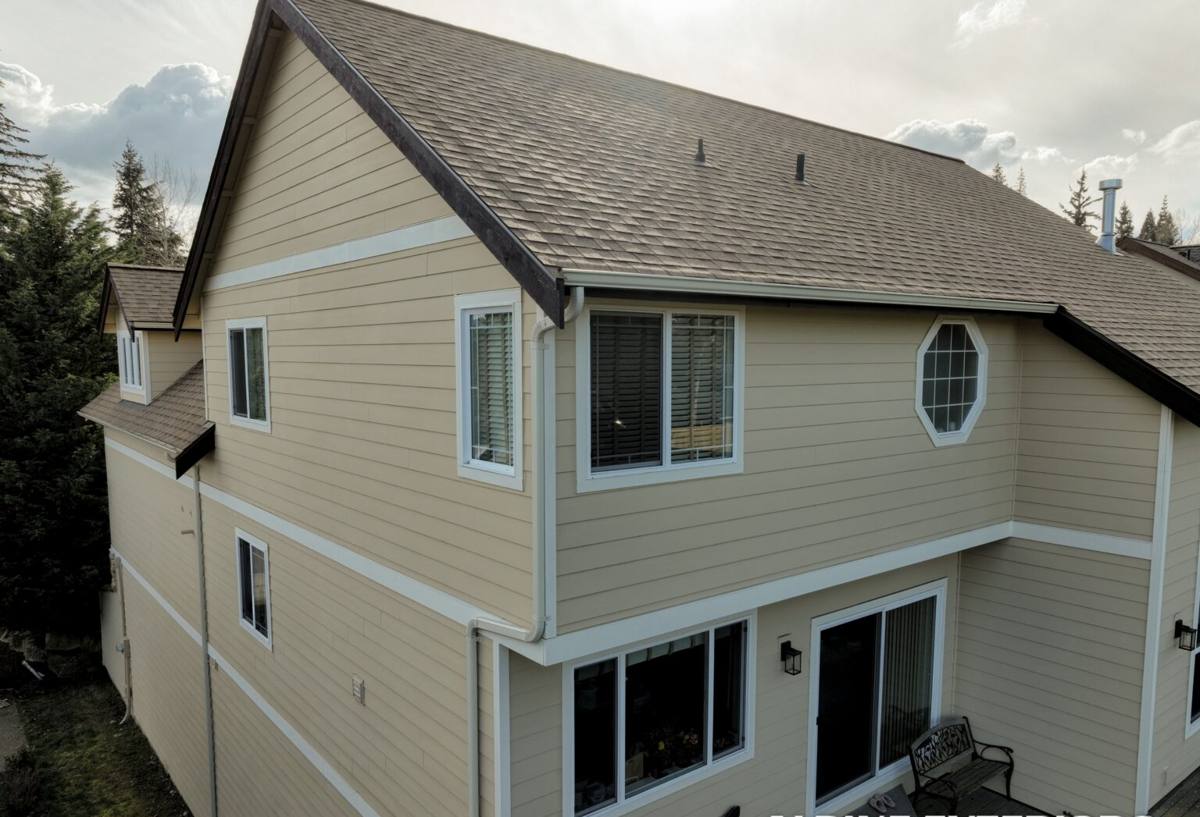
Repair or Replace: Reading the Signs on a Delta Roof
Not every roofing problem here calls for a full tear-off. But given how the local climate compounds small issues, it's worth being honest about when repair stops making sense.
- Granule loss heavy enough that shingles look bald or blotchy, especially on south- and west-facing slopes
- Shingles that are cupping, curling at the edges, or cracking when walked on
- Moss or algae established across large sections rather than isolated patches
- Flashing around chimneys, skylights, or vent pipes that's rusted, lifted, or gapped
- Soft spots or sagging when the roof deck is walked or inspected
- Daylight visible through the attic decking, or staining/damp insulation in the attic
- A roof already past 18–20 years old with recurring repair calls
- Interior ceiling stains that reappear after repairs, suggesting the leak path isn't fully solved
If a roof is showing two or three of these at once, replacement usually ends up cheaper over a five-year horizon than chasing repairs on a roof that's already breaking down.
What a Correct Replacement Involves in This Area
Full Tear-Off and Deck Inspection
We remove existing roofing down to the deck rather than layering over it. That's the only way to actually see what's underneath — soft or delaminated sheathing, rot around old flashing, or gaps in the deck that no one would catch from above. Any damaged decking gets replaced before anything new goes down; skipping this step is the most common reason a "new" roof fails early.
Underlayment and Flashing Built for Wind-Driven Rain
Given how often rain here arrives at an angle, underlayment strategy matters as much as the shingle brand. That typically means synthetic underlayment across the field plus self-adhered ice-and-water membrane at the eaves, valleys, and any roof-to-wall or chimney transition — the spots where wind-driven rain actually gets in. Flashing is formed and lapped correctly rather than caulked over gaps, which is a shortcut that fails within a few years near the water.
Fasteners and Metal Chosen for Salt Exposure
We use corrosion-resistant fasteners and flashing rather than standard-grade galvanized hardware, since the difference in cost is small compared to the difference in how long it lasts against salt air. This is one of the details that's easy to skip and hard to notice until it's already failing.
Choosing Roofing Material for a Delta Home
There's no single "best" roofing material — the right choice depends on the home's roof pitch, budget, and how much upkeep the owner wants to do. Here's how the common options stack up against Delta's specific conditions.
| Material | Moss/Moisture Behavior | Salt Air Performance | Maintenance |
|---|---|---|---|
| Asphalt composition shingle (standard) | Moderate — benefits from algae-resistant granules | Good with corrosion-resistant fasteners/flashing | Low to moderate |
| Asphalt composition shingle (algae-resistant, copper/zinc granules) | Better resistance to moss and algae staining | Good with corrosion-resistant fasteners/flashing | Low |
| Standing-seam metal | Sheds moisture fast, moss struggles to establish on smooth panels | Requires marine-grade coatings/fasteners near the water | Low |
| Cedar shake | Holds moisture, needs regular treatment to resist moss and rot in this climate | Fasteners need to be corrosion-resistant | Higher — periodic treatment and cleaning |
We don't push cedar shake as a default choice for Delta roofs. It can look great, but it's the material most sensitive to exactly the conditions that define this neighborhood — sustained dampness and shade. If a homeowner wants that look, we'll talk through the maintenance commitment honestly rather than downplay it.
Ventilation: The Step Homeowners Rarely See
A new roof surface doesn't mean much if the attic underneath can't breathe. Balanced intake and exhaust ventilation controls moisture buildup in the attic, which affects both the roof deck from underneath and how much condensation collects during our wetter months. Poor ventilation shortens shingle life, promotes deck rot, and can undo a lot of the value of an otherwise well-installed roof. We check and correct ventilation as part of every replacement, not as an upsell after the fact.
Our Roof Replacement Process
- On-site inspection and estimate — we look at the current roof, attic, and any trouble spots, and give a clear written estimate with no pressure to decide on the spot
- Material selection — we walk through the trade-offs above based on the home's pitch, budget, and how it's exposed to wind and water
- Tear-off and deck inspection — old roofing removed, deck inspected and repaired as needed
- Underlayment, flashing, and ventilation install — the details that determine whether the roof actually holds up to local weather
- New roofing installed — to manufacturer specification, with attention to the transitions and penetrations most likely to leak
- Site cleanup — full cleanup including magnetic sweep for nails and debris removal
- Final walkthrough — we review the finished roof with the homeowner before calling the job done
What Roof Replacement Costs Depend On
We don't publish flat prices because roof cost genuinely varies by house, but these are the factors that move the number most:
| Factor | Why It Matters |
|---|---|
| Roof size and number of planes | More square footage and more complex geometry mean more material and labor |
| Roof pitch | Steeper roofs take longer and require more safety setup |
| Deck condition | Rotted or soft sheathing found during tear-off adds material and labor to repair |
| Material choice | Standing-seam metal and cedar cost more upfront than standard asphalt shingle |
| Layers to remove | Tearing off multiple existing layers takes more labor than a single layer |
| Ventilation and flashing upgrades | Bringing intake/exhaust venting and flashing up to standard adds some cost but protects the investment |
Keeping Moss From Coming Back After Replacement
A new roof buys time, but Delta's shade and dampness don't go away. A few habits keep moss from re-establishing quickly: keep overhanging branches trimmed back so more sun and airflow reach the roof surface, clear gutters and valleys of debris each fall before the wet season sets in, and have the roof looked at every couple of years rather than waiting for visible problems. None of this requires aggressive pressure washing, which can strip granules and shorten a roof's life faster than the moss it's meant to remove.
Why Hire a Crew That Already Works in Delta
Roofing crews who mainly work drier, more sheltered parts of Snohomish County don't always default to the underlayment coverage, fastener grade, or ventilation approach that a salt-air, high-rainfall neighborhood like Delta actually needs. A crew that already works this area knows which details aren't optional here — corrosion-resistant hardware, ice-and-water membrane at every vulnerable transition, and ventilation that accounts for how damp the air stays. That's less about a sales pitch and more about not having to relearn the same lessons on your roof.
If you're weighing repair versus replacement, or just want an honest read on where your roof stands, we're happy to take a look. The form below gets you a free estimate with no pressure — just a straight assessment of what your Delta home actually needs.