 Everett
 Siding Built for Delta's Version of Everett Weather
Delta sits close to the water and the rail corridor on Everett's north side, which means homes here take on a specific mix of weather stress: salt-laden air drifting in off Port Gardner Bay and the Snohomish River delta, driving rain that comes in sideways during fall and winter storms, and a moss and algae season that can run eight months or longer under the Pacific Northwest's gray-sky stretch. Siding that works fine in a drier inland climate often struggles here. This page is about one thing specifically: what it takes to get fiber cement siding right on a Delta home, and why the material and the installation both matter as much as each other.
We're not going to give you a generic rundown of siding options. Our company installs James Hardie fiber cement exclusively — no vinyl, no LP SmartSide, no cedar, no primed spruce — and this page explains what that means for a house in this specific neighborhood, in this specific climate.
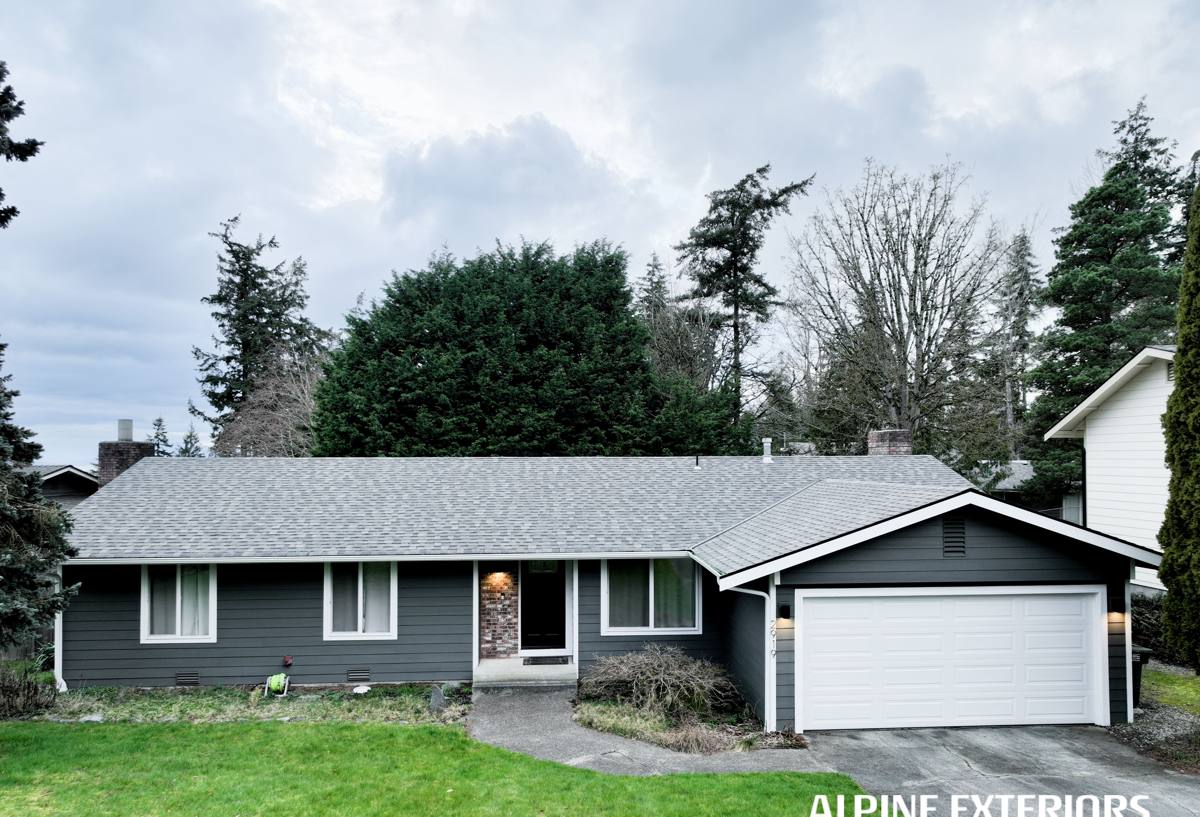
What Salt Air, Driving Rain, and Moss Actually Do to Siding
Salt Air and Fastener Corrosion
Homes near Puget Sound and its inlets sit inside a slow, constant corrosion environment. Salt-bearing air doesn't just affect metal roofing and gutters — it degrades unprotected or under-spec fasteners, flashing, and trim over time. Siding systems that rely on face-nailing with the wrong fastener grade, or trim details that trap moisture against bare metal, show rust streaking and failure years before they should. This isn't dramatic, it's cumulative — a slow erosion of the details that were supposed to protect the wall.
Wind-Driven Rain and Water Intrusion
Everett gets rain that doesn't fall straight down. Storms moving through Snohomish County frequently push rain sideways against west- and south-facing walls, which puts real pressure on every seam, joint, and penetration in a siding system. A siding material can be technically water-resistant and still fail on a house if the water-resistive barrier, flashing, and lap details underneath it aren't installed correctly. Most siding failures we get called out to inspect aren't material failures — they're installation failures that let wind-driven rain find a way behind the cladding.
Moss, Algae, and the Long Wet Season
Shaded, north-facing, and tree-covered walls in Delta hold moisture longer than open, sun-exposed elevations. Combined with our long wet season, that creates ideal conditions for moss and algae to establish on siding surfaces, especially near ground level, under eaves, and anywhere airflow is restricted. Some materials handle this better than others — porous or wood-based products give organic growth something to root into, while a dense fiber cement surface with a durable factory finish gives it far less to hold onto.
Why We Only Install James Hardie Fiber Cement Here
James Hardie's fiber cement is engineered specifically for climate zones like ours — the company's HardieZone system includes an HZ5 product line built for regions with damp, temperate conditions and the freeze-thaw and moisture cycling the Pacific Northwest sees. That's not marketing language we're repeating; it's the actual reason we standardized on this product over the alternatives.
- Non-combustible core: fiber cement doesn't feed a fire the way wood-based siding can, which matters more every year as wildfire smoke and dry-season risk creep into western Washington summers.
- ColorPlus factory finish: a baked-on finish applied under controlled conditions, which holds up to UV and moisture far better than field-applied paint and doesn't need repainting on the schedule cedar or primed wood siding does.
- Dimensionally stable: fiber cement doesn't swell, cup, or warp with moisture the way wood-based products can, which keeps joints and caulk lines intact longer.
- Manufacturer warranty backing: a transferable warranty structure that adds real value if the home is ever sold, something buyers and their inspectors increasingly ask about.
We'll be direct about the trade-off: fiber cement costs more up front than vinyl, and it's heavier and less forgiving to install than LP SmartSide's engineered wood system. We think that trade-off is worth it on a Delta home given what the climate does to lesser materials over a 20- or 30-year ownership window — but it's a real trade-off, and homeowners should understand it going in.
What a Correct Fiber Cement Siding Installation Involves
Fiber cement is only as good as the installation underneath it. The material itself is durable, but nearly every siding failure we're called out to look at traces back to a shortcut taken during install, not a defect in the boards. A correct installation, particularly on a house exposed to wind-driven rain, includes:
- A continuous water-resistive barrier installed and lapped correctly, with all penetrations (vents, hose bibs, light fixtures, outlets) properly flashed before a single piece of siding goes up
- Correct clearance gaps at the foundation line, roofline, and any horizontal trim so water has somewhere to go instead of wicking into the board edge
- Manufacturer-specified fastener type, length, and placement — not whatever's fastest, since under-driven or over-driven nails are one of the most common causes of premature siding failure
- Properly caulked and sealed joints using a sealant rated for the exposure, not general-purpose caulk that dries out and cracks within a few seasons
- Z-flashing or head flashing above every horizontal trim board and window, not just decorative trim with no drainage path behind it
- Kickout flashing at roof-to-wall intersections, a detail that's easy to skip and is one of the single biggest causes of hidden water damage on homes in wet climates
None of this is visible once the job is finished, which is exactly why it matters who's doing the work. A siding job can look identical from the curb whether it was flashed correctly or not — the difference shows up five or ten years later, usually as a repair bill.
Our Process for Delta Siding Projects
We approach every Delta project the same structured way, because skipping steps is how the details above get missed:
- On-site assessment: we look at the home's exposure — which walls take the worst wind-driven rain, where moss and algae are already established, where the existing siding or trim shows early failure signs.
- Tear-off and sheathing check: removing old siding lets us actually see the sheathing and framing underneath. If there's hidden moisture damage from a prior installation, we address it before covering it back up, not after.
- Water-resistive barrier and flashing: this is the step that determines whether the siding performs for 30 years or 10. We install and inspect this layer before any Hardie board goes up.
- Fiber cement installation: siding, trim, and any HardieShingle or panel accent work goes up to manufacturer spec, with attention to fastening pattern and joint sealing.
- Final detailing and walkthrough: caulking, touch-up, and a walkthrough where we point out what maintenance to expect and answer questions before we consider the job done.
Fiber Cement vs. Other Siding Materials in This Climate
| Factor | James Hardie Fiber Cement | Vinyl | LP SmartSide (Engineered Wood) | Cedar |
|---|---|---|---|---|
| Salt air / coastal exposure | Strong — dense, non-organic composition | Fair — can chalk and become brittle over time | Fair — depends heavily on maintaining the factory finish | Weak — organic material, needs regular sealing |
| Wind-driven rain resistance | Strong when installed to spec | Moderate — seams and panels can flex and gap | Moderate — vulnerable if edges aren't sealed | Moderate — vulnerable at joints and end grain |
| Moss / algae resistance | Strong — dense surface, less to root into | Moderate — smooth surface but can trap grime | Moderate — wood-based core is more hospitable to growth | Weak — highly organic, moss-prone in shade |
| Fire resistance | Non-combustible | Combustible, can melt/deform near heat | Combustible | Combustible |
| Repainting needs | Rare — factory ColorPlus finish is long-lasting | Never painted, but fades and can't be color-matched easily | Field-applied finish needs earlier attention | Regular repainting or staining required |
| Typical lifespan installed correctly | 30+ years | 20-30 years | 20-30 years | 15-25 years with upkeep |
This table reflects general, honest trade-offs rather than a knock on any single product — vinyl and LP SmartSide are legitimate materials with their own advantages, particularly on upfront cost. We simply concluded, after years of installation and repair work, that fiber cement gives Delta homeowners the best long-term match for this specific climate, and it's the only product we stand behind enough to install.
Why Hiring a Crew That Already Works Delta Matters
Siding installation standards don't change by neighborhood, but the conditions a crew needs to plan around do. A crew that regularly works Delta and the surrounding Everett area already knows which elevations tend to take the worst of the wind-driven rain off the water, how long moss and algae take to re-establish on shaded walls in this specific microclimate, and what Snohomish County's permitting and inspection process looks like for exterior work. That familiarity shows up in small decisions — where to add extra flashing attention, how to sequence a job around our wet-season weather windows, what to flag during a pre-installation walkthrough — that a crew unfamiliar with the area might not catch until it's a callback.
It also matters for accountability. A local crew is still local next year and the year after, which is a straightforward but important reason to hire someone who plans to still be working in this area if a warranty question ever comes up.
Maintenance to Expect After Installation
Correctly installed James Hardie siding is low-maintenance, not no-maintenance. In Delta's climate, homeowners should plan on:
- An occasional gentle rinse to clear salt residue and general grime, particularly on walls facing prevailing weather
- Periodic visual checks of caulk lines and trim joints, especially after major windstorms
- Keeping gutters clear so overflow isn't running down the siding face and feeding moss growth at ground level
- Trimming back vegetation and tree cover where it's keeping a wall shaded and damp longer than necessary
None of this is heavy upkeep — it's the same basic attention any exterior surface benefits from — but it's worth setting expectations honestly rather than pretending any siding material is entirely maintenance-free in this climate.
Get a Free, No-Pressure Estimate
If you're weighing a siding replacement or repair for your Delta home, we're happy to take a look, walk the exterior with you, and give you a straight assessment of what your house actually needs. There's no pressure and no obligation — just fill out the form below to get started.