 Everett
 Why a Deck in Delta Needs More Than a Good-Looking Board
Delta is a quieter, established part of Everett, and a lot of the decks here were built years ago under a different set of expectations — treated lumber, a coat of stain every couple of summers, and a shrug when the boards started to cup or gray out early. That approach never really worked well in Snohomish County, and it works even less well now that homeowners expect a deck to look good and stay structurally sound for decades, not just a few seasons between refinishing jobs.
Composite decking was built to solve exactly this problem, but the category is broad, and not every composite product or installation approach is built for what a Delta lot actually deals with: salt-tinged air moving off Port Gardner Bay, driving rain that comes in sideways more often than straight down, and a moss season that runs a good chunk of the year. This page covers what a composite deck in this specific neighborhood actually needs, what a correct build looks like, and why hiring a crew that already works Delta regularly changes the outcome.
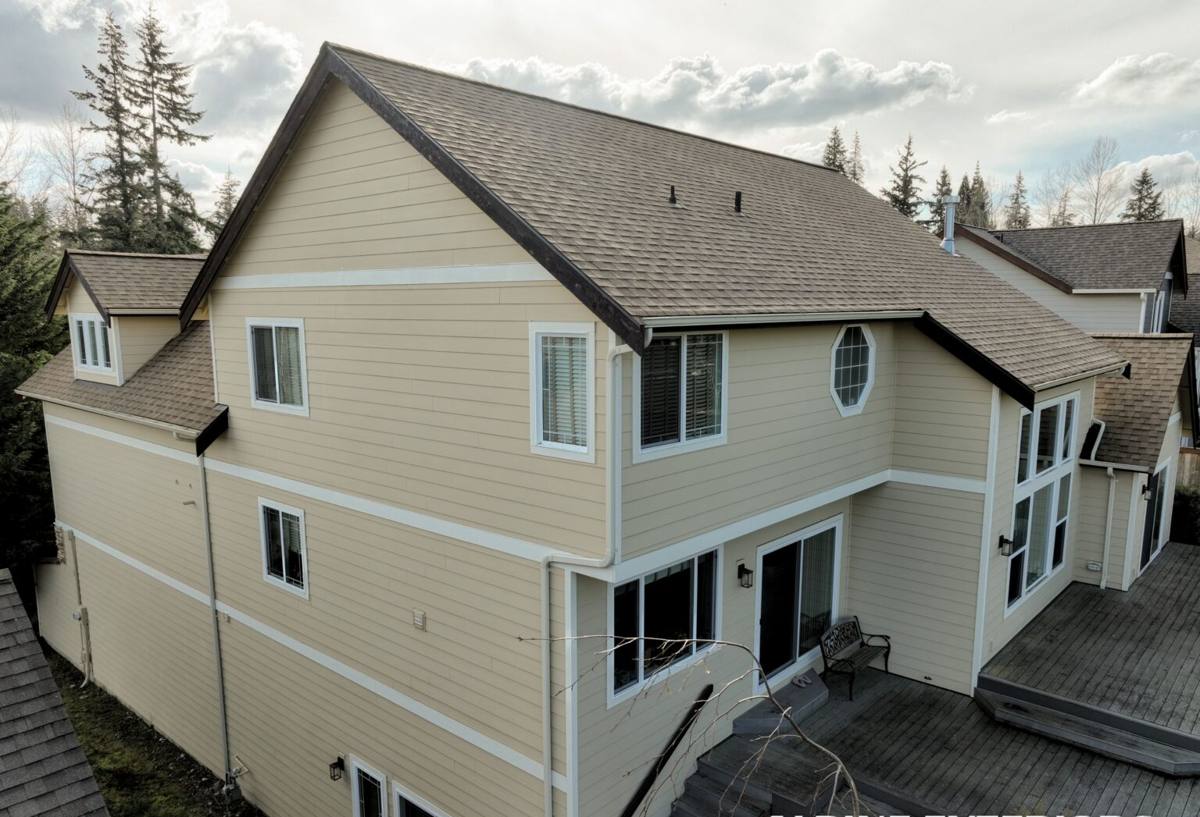
What Everett's Climate Actually Does to a Deck
Salt Air and Slow Corrosion
Homes throughout Everett, including Delta, sit close enough to Port Gardner Bay that salt-laden air is a real factor even on lots that aren't waterfront. Salt doesn't just sit on the surface of a deck — it works into any exposed metal, and corrosion in a fastener or bracket starts long before it's visible from the surface. A deck can look fine on top while the hardware holding it together is already losing strength underneath, which is part of why fastener grade isn't a place to save a few dollars on this kind of build.
Driving Rain, Not Just Rain
Western Washington rain is rarely gentle and straight down. Wind-driven rain gets pushed under railings, into board gaps, and against the ledger where the deck ties into the house — the same connection point that causes the most expensive failures when it's flashed or fastened incorrectly. A deck built for a drier climate, or built without accounting for wind direction on a specific lot, ends up dealing with moisture in places it was never designed to handle.
The Long Moss Season
Snohomish County's moss season isn't a few weeks in early spring — on shaded lots and north-facing decks, it can run most of the year. Moss and algae hold moisture against whatever surface they're growing on, and on a deck that means constant dampness right where people walk, plus a surface that gets genuinely slick when wet. Tree cover, which is common on many Delta lots, makes this worse by keeping decks shaded and slow to dry between rain events.
Freeze-Thaw Cycling
Everett doesn't see extreme cold most winters, but it does see enough freeze-thaw cycling that moisture trapped in the wrong material or the wrong spot can do real damage over time. Water that gets into a joint, a fastener hole, or an uncapped composite edge and then freezes expands and works that damage wider with every cycle, which is a slow process but a cumulative one.
What "Composite Decking" Actually Means
Composite decking is generally a blend of wood fiber and plastic, but the ratio, the plastic type, and how the board is finished vary considerably between manufacturers. Two distinctions matter most for a wet, shaded climate like Delta's:
Capped vs. Uncapped Composite
Capped composite has a plastic shell wrapped around the wood-plastic core, which keeps moisture from soaking into the board and resists staining and mold growth on the surface. Uncapped composite — the older style of the product — is exposed wood-plastic blend on all sides, which means it absorbs moisture more readily and shows mold, mildew, and fading faster. In a climate with this much sustained dampness and shade, that difference shows up in years, not decades, which is why we standardize on capped composite for decks in this area.
Cellular PVC as an Alternative
Some manufacturers also make fully cellular PVC decking with no wood fiber at all. PVC resists moisture absorption completely and some lines run a bit cooler underfoot, but it can flex more under concentrated point loads and typically costs more than capped composite. Whether capped composite or PVC is the better fit for a given deck usually comes down to budget, sun exposure, and how the space gets used — we'll talk through that specific to your lot rather than defaulting to one answer.
What a Correct Composite Deck Build Involves Here
The visible decking boards get most of the attention, but in a climate like this, the substructure and fastening details are what actually decide whether the deck holds up. A build done right for Delta conditions includes:
- Pressure-treated framing rated for ground contact and sustained moisture, since western Washington doesn't give framing lumber much of a dry season
- Coastal-grade or stainless fasteners throughout, not standard hardware that corrodes faster in salt-tinged air
- Hidden fastener systems on the deck surface where the product allows, reducing exposed metal and giving a cleaner, more slip-resistant surface
- Correct board gapping for expansion, contraction, and drainage — composite still moves with temperature and moisture, just on a different curve than wood
- Proper ledger board flashing where the deck attaches to the house, since this is the most common failure point in wind-driven rain
- Joist spacing matched to the specific composite product's span rating rather than a generic wood-framing layout
- Airflow and drainage built into the substructure so moisture doesn't sit trapped against the framing on shaded or tree-covered lots
- Surface texture and layout choices that account for moss and algae risk on the shadiest parts of the property
Skip any one of these and the deck usually still looks fine at first. The problem shows up years later, as a soft spot in the framing, a loosening railing post, or fastener corrosion staining the boards around it — all things that are far cheaper to prevent during the build than to repair afterward.
How Our Process Works
We start with a site visit rather than a phone quote, because the details that matter most — existing framing condition on a replacement, drainage and grade around the deck footprint, how much sun versus shade the space actually gets through the day, and how exposed the lot is to prevailing wind and rain — can't be assessed from a photo. From there we walk through composite product options that fit your budget and how the space will actually be used, whether that's a low-key deck off the kitchen or a larger space built for entertaining.
Permitting in Everett and unincorporated Snohomish County generally depends on the deck's height, size, and whether it's attached to the house, and we handle that process as part of the job rather than leaving it for the homeowner to sort out separately. Once permitted, the build follows the sequence above — substructure and fastening decisions made for the site's actual exposure first, then the composite surface, railing, and any fascia or trim work. We finish with a walkthrough covering what the specific product you chose actually needs for upkeep, which is modest, but not nothing.
Composite Decking Compared to the Alternatives
| Material | How It Handles Rain, Salt Air & Moss | Maintenance | Typical Lifespan Here |
|---|---|---|---|
| Capped composite | Strong — cap layer resists moisture absorption, staining, and mold growth | Occasional washing; no sealing or staining | Long-term, backed by manufacturer warranty |
| Cellular PVC | Excellent — fully moisture-resistant, no wood fiber to absorb water | Occasional washing; no sealing or staining | Long-term, generally at a higher upfront cost |
| Uncapped composite | Moderate — absorbs some moisture, more prone to mold and fading in shade | Regular cleaning to manage mold and staining | Shorter than capped products in a wet, shaded climate |
| Pressure-treated wood | Weak over time — absorbs moisture, accelerates fastener corrosion, prone to moss | Regular sealing or staining, ongoing moss removal | Shortest, with the most upkeep |
| Cedar | Naturally moisture-resistant but still needs finish upkeep and moss management | Periodic oiling or staining to prevent graying | Moderate if maintained; degrades faster if neglected |
What Composite Decking Still Needs From You
Composite is genuinely low-maintenance compared to wood, but "low-maintenance" isn't "no-maintenance," especially in a climate this wet and shady. A little routine attention keeps you from losing years off the deck's usable life:
- Rinse or wash the surface periodically to clear pollen, needle drop, and organic debris before it feeds moss and mildew
- Keep gaps between boards clear so water and airflow can move through the way the system was designed to drain
- Check railing posts and fastener points once a year for early corrosion or loosening, particularly after the wetter winter months
- Trim back landscaping or overhanging branches that keep sections of the deck shaded and slow to dry
- Deal with any soft spots or standing water in the substructure right away — that's a structural issue, not a cosmetic one, and it doesn't improve with time
Why It Matters That We Already Work Delta
A contractor who mostly builds inland, drier-climate decks can still put a composite deck together competently, but a neighborhood like Delta has variables that don't show up as often elsewhere — sustained moisture and shade on tree-covered lots, salt exposure from proximity to the bay even without a waterfront view, and a permitting process specific to the City of Everett or Snohomish County depending on exactly where the property sits. Working this neighborhood regularly means we're not learning those requirements on your project. We know what framing and fastener grade actually holds up through a full Puget Sound winter, and we're upfront about what a deck here really needs versus what's just an upsell.
That familiarity also shows up in the smaller decisions — which composite lines actually resist mold and mildew in a shaded Snohomish County backyard versus which ones just look good in a showroom, and how to lay out a deck so the shadiest, dampest corners aren't the ones that end up growing moss within a year.
Get a Straight Answer About Your Deck
Whether you're replacing an aging wood deck, planning a new build, or just want an honest read on what composite decking would take on your Delta property, we're glad to walk the site with you and lay out the options plainly — no pressure, no upsell script. Reach out below for a free estimate.