 Everett
 Decks in South Everett Face a Tougher Climate Than the Brochures Admit
South Everett sits close enough to Puget Sound that salt-laden air, long wet winters, and near-constant shade in some yards all show up in how a deck ages. A deck built the same way you'd build one in a dry inland climate will fail faster here — not because the wood or composite is bad, but because the details that matter in a marine, high-rainfall environment were skipped. Fasteners corrode faster near the water. Moss and algae take hold on any surface that stays damp and shaded for weeks at a time. Driving rain finds its way behind ledger boards and under poorly flashed rim joists. None of this is exotic knowledge, but it does mean a deck built for South Everett needs to be built with this climate in mind from the first footing to the last board.
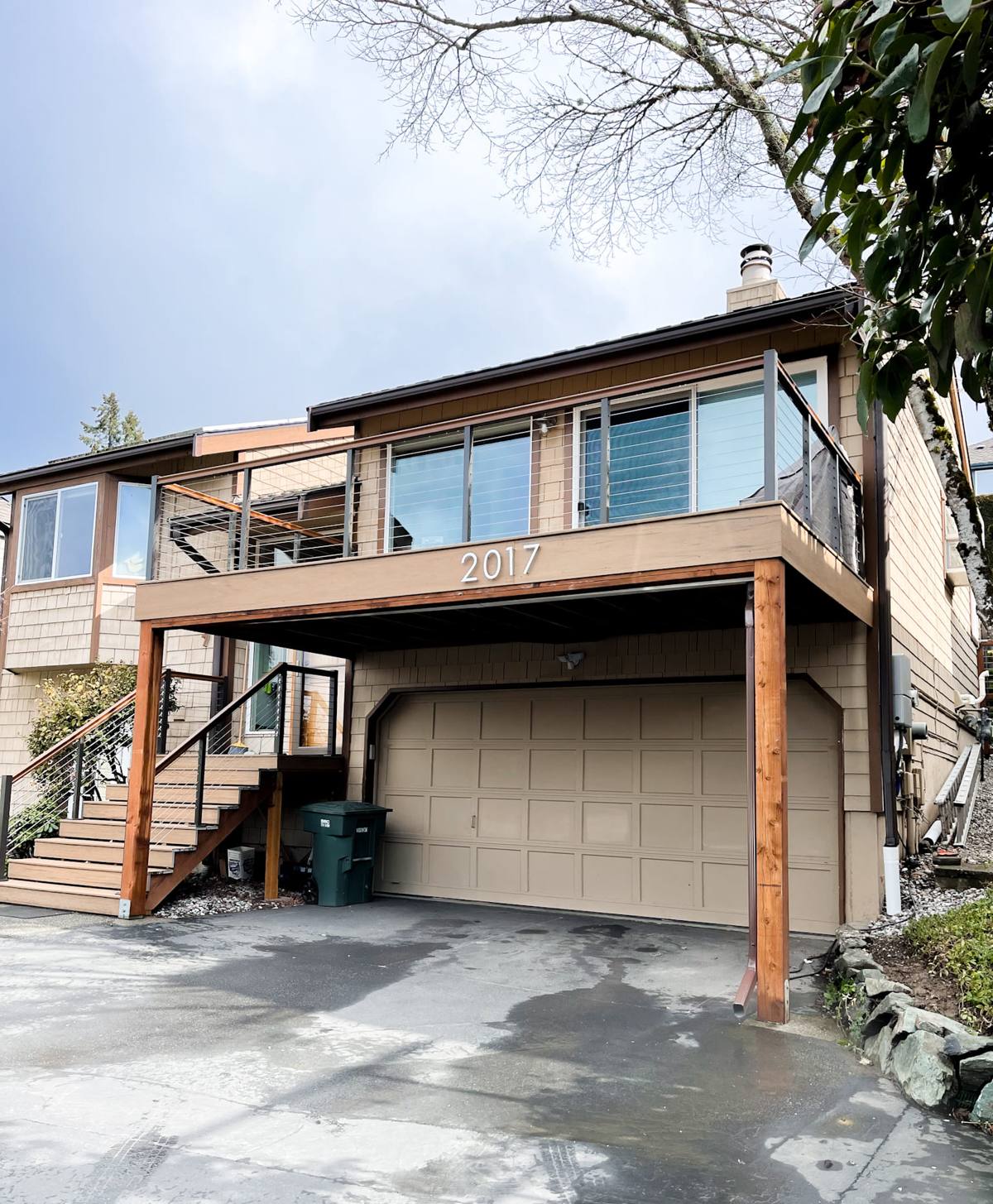
What South Everett Homes Actually Need From a Deck
Most of the deck problems we get called out for in this part of Snohomish County trace back to a handful of recurring issues, not bad luck. Understanding these upfront helps homeowners ask better questions and make better material choices.
Moisture Management, Not Just Waterproofing
A deck doesn't need to be waterproof — it needs to shed water and dry out quickly between storms. That means correct board spacing, proper slope away from the house, and joist protection that keeps standing water from sitting on structural wood for days at a time during our wet stretches.
Moss and Algae Resistance
Any deck surface in a shaded South Everett yard, or one that sits under overhanging trees, will grow moss if it isn't designed to dry out and isn't cleaned periodically. Board choice, gapping, and airflow underneath the deck all affect how fast this happens.
Corrosion-Resistant Hardware
Salt air corrodes standard fasteners faster than most homeowners expect, especially on decks with any western or southern exposure toward the Sound. Using the wrong grade of screw or joist hardware is one of the most common shortcuts we see on older decks, and it's usually the reason ledger connections or joist hangers fail early.
Choosing a Decking Material for This Climate
There's no single "best" decking material — there's a best fit for your budget, your yard's sun and shade pattern, and how much maintenance you're willing to do. Here's how the common options actually compare once you factor in our local conditions.
| Material | Moisture & Moss Behavior | Maintenance | Typical Lifespan Here |
|---|---|---|---|
| Pressure-treated wood | Absorbs moisture, prone to moss in shaded spots without regular cleaning | Annual cleaning, periodic staining/sealing | 10–15 years with upkeep |
| Cedar | Naturally rot-resistant but still needs sealing to resist moss and graying | Sealing every 1–2 years | 15–20 years with upkeep |
| Capped composite | Sheds water well, resists moss better than wood but can stay slick when algae does form | Periodic washing, no staining/sealing | 25+ years |
| PVC decking | Fully synthetic, least prone to moisture absorption | Occasional washing | 25+ years |
We install all of these depending on what a homeowner wants, but we're upfront about trade-offs. Wood costs less up front and can look great, but in a shaded, damp yard it demands real maintenance discipline or it will gray and moss over faster than expected. Composite and PVC cost more initially and installation is less forgiving of mistakes — hidden fastener systems and proper joist spacing matter more, and errors show up as squeaking or buckling — but they hold up with far less yearly work, which matters if you don't want to be out there scrubbing and sealing every spring.
What a Correctly Built Deck Involves
A deck is a structure first and a surface second. Most deck failures we're called to look at started underneath, not on top.
Footings and Framing
Footings need to be set below frost depth and sized for the soil conditions on your lot — clay-heavy soil common in parts of Snohomish County drains differently than sandy or loamy soil, and footing depth and diameter should account for that. Joists should be spaced to match the decking manufacturer's specifications, not stretched to save material.
Ledger Attachment and Flashing
Where a deck attaches to the house is the single most common source of long-term water damage. Correct flashing — installed so water sheds out and away from the house wall, not just tucked in — is non-negotiable in a climate with as much driving rain as we get here.
Joist Protection
Wrapping joist tops with a moisture barrier tape before decking goes down dramatically slows rot at the top of each joist, which is where water sits longest after a storm. It's a small material cost that pays for itself many times over.
Fastener and Hardware Grade
Structural hardware, screws, and connectors should be rated for the type of decking and framing lumber used, and upgraded for coastal exposure where corrosion risk is higher. This is one of the easiest things to underspec and one of the hardest things to fix after the fact.
Our Process, Start to Finish
- On-site assessment: We look at your yard's drainage, sun/shade pattern, existing structure (if it's a rebuild), and how the deck ties into the house.
- Material and layout discussion: We walk through decking options honestly, including maintenance expectations, so you're choosing based on how you actually want to live with the deck, not just the sample board.
- Permitting: We handle the permit application and coordinate inspections required by the local jurisdiction for structural work of this scope.
- Demolition (if applicable): Old decking, framing, and any compromised ledger material is removed and hauled off.
- Framing and structural work: Footings, posts, beams, and joists go in to code, with attention to the flashing and hardware details above.
- Decking and finish work: Boards, railing, stairs, and any trim are installed per manufacturer spacing and fastening requirements.
- Final walkthrough: We go over the finished deck with you, including basic care and what to watch for over the first year.
Living With a Deck in a Marine, Moss-Prone Climate
Even the best-built deck needs some seasonal attention here. This is the honest maintenance rhythm that keeps a South Everett deck looking and performing the way it should:
- Sweep off leaves, needles, and debris regularly, especially in fall — trapped organic matter is what feeds moss and algae growth.
- Rinse or lightly scrub the deck surface once or twice a year, more often in shaded areas prone to moss.
- Check that gaps between boards haven't filled with debris that blocks drainage.
- Inspect ledger flashing and any visible framing each year for signs of moisture intrusion.
- Reseal or restain wood decking on the manufacturer-recommended schedule — don't wait until it looks obviously weathered.
- Keep gutters and downspouts near the deck clear so runoff isn't draining directly onto or under the structure.
- Trim back overhanging vegetation where practical to improve airflow and sun exposure on shaded sections.
Repair, Rebuild, or Replace?
Not every aging deck needs to be torn out. The right call depends on what's actually failing.
| Situation | Likely Approach | Key Factor |
|---|---|---|
| Surface boards worn, graying, or splintering but framing is sound | Resurface/replace decking only | Framing inspection confirms no rot at joists or posts |
| Soft spots, rot, or movement at the ledger or posts | Partial or full rebuild | Structural integrity can't be patched safely |
| Deck predates current code (railing height, footing depth, attachment method) | Rebuild recommended | Bringing structure up to current code for safety |
| Persistent moss/slickness despite cleaning | Material change plus drainage/airflow improvements | Underlying moisture or shade issue, not just a cleaning problem |
We'll always tell you honestly if a repair is a reasonable option rather than pushing a full rebuild you don't need. But if the framing has moisture damage, patching the surface just hides the problem for a season or two.
Permits and Local Requirements
Most new decks and significant deck rebuilds in and around Everett require a building permit, particularly when the deck is attached to the house, elevated above a certain height, or involves structural changes. Requirements can vary by exact location within Snohomish County, so we confirm what applies to your property before work starts rather than assuming. Skipping permitted inspections on a deck that clearly needed one can create real problems later — at resale, with insurance, or if there's ever a structural issue.
Why It Matters to Hire a Crew That Already Works in South Everett
Building codes, soil behavior, drainage patterns, and the way a shaded yard collects moisture all vary block to block in a place like South Everett. A crew that already works this specific area has seen how footings perform in the local soil, knows which flashing details actually hold up through a wet Pacific Northwest winter, and isn't guessing at how much moss resistance a given material really needs for your yard's sun exposure. That local pattern recognition is the difference between a deck that needs attention every year and one that quietly does its job for two decades.
If you're weighing repair versus rebuild, comparing decking materials, or just want an honest read on what your current deck needs, we're happy to take a look. Reach out for a free, no-pressure estimate using the form below.