 Everett
 Decking Built for South Everett's Weather, Not Against It
South Everett sits close enough to Puget Sound and Port Gardner Bay that salt-laden air, wind-driven rain, and long stretches of gray, damp weather are just part of owning a home here. Add in the moss and algae bloom that Snohomish County's mild, wet winters practically guarantee on any north-facing or shaded deck, and you've got a climate that's genuinely hard on outdoor living spaces. Composite decking exists to handle exactly this kind of weather, but only when it's specified and installed correctly for the conditions. A composite deck built to a generic national spec, with no attention to local drainage, ventilation, or fastening, will still grow moss, still trap moisture, and still disappoint the homeowner who paid a premium expecting to avoid exactly that.
This page covers what a composite deck actually needs to hold up in South Everett, what a correct installation involves, and how our process is built around the realities of this specific area rather than a one-size-fits-all approach.
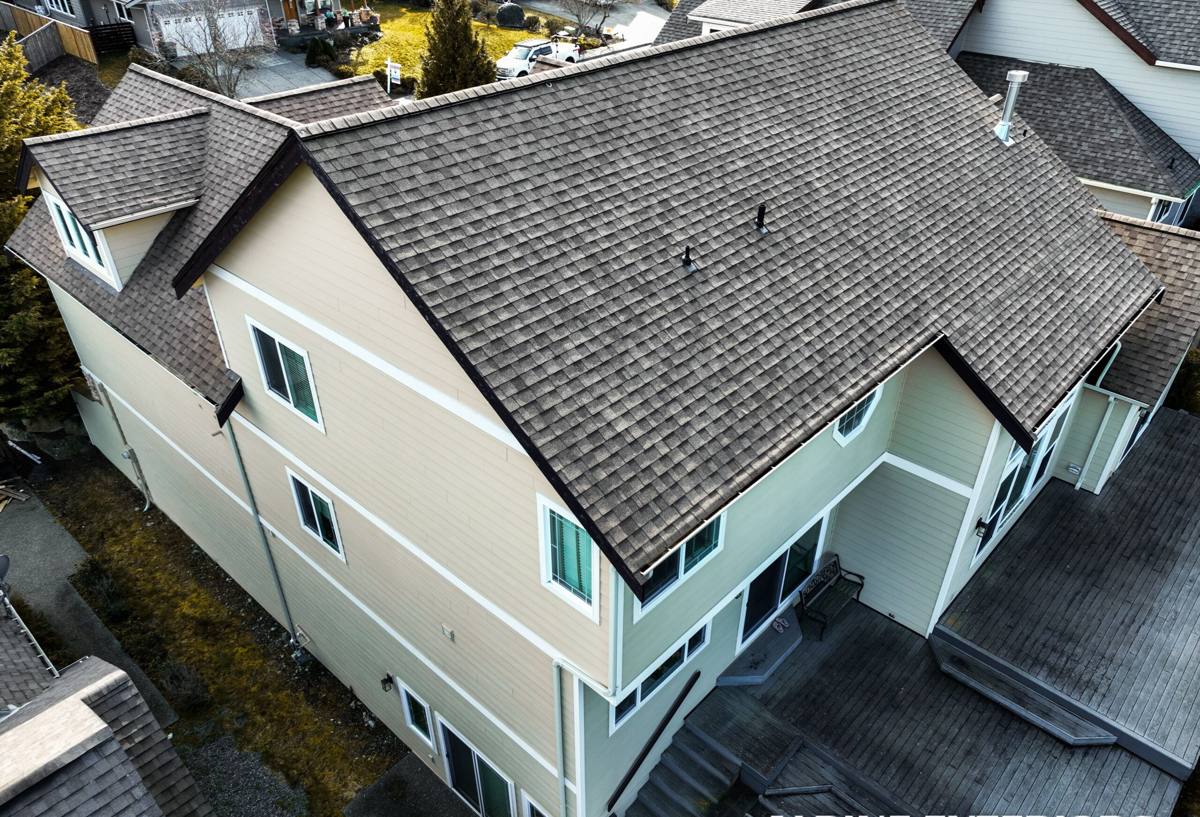
Why South Everett's Climate Changes the Job
Salt Air and Metal Fasteners
Proximity to the water means airborne salt settles on everything, including the metal hardware holding a deck together. Cheap or mismatched fasteners corrode faster here than they would further inland, and corroding hardware is one of the more common causes of deck failures we get called out to inspect. Fastener selection isn't a detail to skip past — it's one of the first things we spec differently for homes in this part of Everett versus, say, a job further east in the county.
Driving Rain and Water Management
Storms coming off the Sound often bring rain sideways, not straight down. That means water gets driven up under boards, into end grain, and along ledger connections in ways a calmer climate wouldn't test. A deck's drainage plan — slope, gapping, and how water is directed away from the house — has to account for wind-driven moisture, not just rainfall totals.
Moss, Algae, and Shade
Snohomish County's damp, mild winters are ideal moss-growing conditions, especially on decks that sit in shade for large parts of the day or back up to trees and landscaping. Moss and algae aren't just cosmetic — they hold moisture against the deck surface and make boards slick and dangerous underfoot. The composite products and surface treatments we favor are chosen partly for how they perform against organic growth, not just for looks.
What Correct Composite Decking Actually Involves
"Composite decking" describes the board material, not the whole job. The board itself is usually the most durable part of a deck; the substructure, fastening, and drainage details underneath it are what determine whether that durability actually gets delivered. A correct installation includes:
- A substructure — joists, beams, and ledger — rated and spaced for the specific composite board being used, since composite boards flex differently than wood and have manufacturer-specific span requirements
- Proper joist spacing tightened up for boards installed at an angle or in a pattern, which increases structural demand
- Corrosion-resistant fasteners and hardware suited to a coastal-adjacent, high-moisture environment
- A ledger board connection to the house that's properly flashed to keep water from migrating into the wall structure
- Consistent board gapping for drainage and material expansion, since composite boards expand and contract with temperature more than solid wood
- Airflow underneath the deck so the substructure and board undersides can dry out between rain events
- Hidden fastening systems where appropriate, which reduce surface penetrations that can become moss and grime traps
Choosing the Right Composite Product
Not all composite decking is built the same, and the differences matter more in a wet, shaded climate than they would somewhere dry. We look at a few things before recommending a specific line to a South Everett homeowner:
| Factor | Why It Matters Locally |
|---|---|
| Capped vs. uncapped composite | A full polymer cap sheds moisture and resists mold/algae growth far better than uncapped composite, which is more porous and prone to staining in a damp climate |
| Surface texture | Deeper wood-grain texturing can trap moisture and organic debris; a slightly smoother, textured-but-shed-friendly surface is often the better call for shaded yards |
| Color | Darker boards show less algae staining short-term but run hotter and can highlight moss more once it establishes; lighter tones show growth sooner but are easier to keep visibly clean |
| Warranty structure | Look closely at what's covered — fading, staining, and structural warranties are often separate, and mold/mildew coverage varies significantly between manufacturers |
| Board profile | Grooved-edge boards paired with hidden fasteners drain differently than solid-edge boards with face screws — profile affects both appearance and moisture handling |
We don't push one brand as universally "best." We'll walk through the realistic trade-offs for your specific yard — sun exposure, tree cover, and how the deck ties into your home — and recommend a product that matches those conditions, not just a catalog page.
Our Process for a South Everett Composite Deck
1. On-Site Assessment
We look at sun and shade patterns through the day, existing drainage around the foundation, tree cover, and how the deck will tie into the house — ledger connection, door thresholds, and grading. This is also when we check for any existing moisture damage on decks being replaced, since a rotten or improperly flashed ledger board is a common hidden problem on older Everett homes.
2. Substructure and Drainage Plan
Before any composite board goes down, we confirm the framing is sound, properly spaced for the chosen board, and pitched to shed water away from the house. If the existing substructure isn't up to the job, we address that first — composite boards installed over a compromised frame will fail regardless of how good the boards themselves are.
3. Installation
Boards are installed with consistent gapping, corrosion-resistant or hidden fasteners, and attention to ventilation underneath. We flash all connections to the house and treat any end cuts per manufacturer spec to prevent water intrusion at cut edges, which is one of the more overlooked failure points in composite installs.
4. Walkthrough and Care Guidance
We go over basic seasonal maintenance with every homeowner — composite decking is genuinely low-maintenance compared to wood, but "low-maintenance" isn't "no-maintenance" in a moss-prone climate. A simple periodic rinse and occasional cleaning in shaded areas goes a long way.
Composite vs. Wood in This Climate
Homeowners in South Everett often ask whether wood decking is still worth considering given the lower upfront cost. It's a fair question, and the honest answer depends on how much upkeep you want to take on.
| Composite | Wood | |
|---|---|---|
| Moisture resistance | High — capped boards resist water absorption and rot | Requires regular sealing/staining to resist rot in a wet climate |
| Moss and algae resistance | Better on capped, textured products; still needs occasional cleaning in shade | Porous surface holds moisture, often needs more frequent cleaning and treatment |
| Upfront cost | Higher material cost | Lower material cost |
| Long-term maintenance cost | Lower — no staining/sealing cycle | Higher — ongoing sealing, staining, and repair |
| Lifespan in this climate | Typically longer with proper install and care | Shorter without diligent, consistent maintenance |
Composite generally wins for homeowners who want to spend time on the deck, not maintaining it. Wood can still make sense for a specific aesthetic or a tighter budget, as long as the maintenance commitment is realistic.
Signs Your Existing Deck Needs Attention
- Persistent moss or algae that returns quickly after cleaning
- Boards that feel spongy, soft, or that flex more than they used to
- Visible staining or discoloration around fasteners, often a sign of corrosion
- Water pooling on the surface instead of draining off
- Gaps or separation where the deck meets the house, which can point to ledger flashing failure
- Musty smell coming from underneath the deck, which usually means poor airflow and trapped moisture
Any of these are worth a look before they turn into a structural issue rather than a cosmetic one.
Why Hiring Locally Matters for This Job
A crew that regularly works in South Everett and the surrounding Snohomish County area has already seen how composite decks perform here over multiple wet seasons — which products hold up against moss, which fastener choices age well against salt air, and where drainage problems tend to show up on this area's typical lots. That kind of pattern recognition doesn't come from a spec sheet; it comes from callbacks and repeat inspections in this exact climate. It also means someone accountable and reachable if a warranty question or maintenance question comes up two or three years down the line, not a crew that installed once and moved on to the next region.
Get a Straightforward Estimate
If you're planning a new composite deck or replacing one that hasn't held up to South Everett's weather, we're happy to take a look and walk you through honest options — no pressure, no upsell on products you don't need. Use the form below to request a free estimate.