 Everett
 Board & Batten Siding for the Snohomish Area
Board and batten is one of the most requested looks for homes in and around Snohomish, whether it's a full exterior, a gable accent, or a mix with lap siding on the rest of the house. The vertical lines read as clean, modern farmhouse, or classic Pacific Northwest depending on the trim and color choices around it. But the look is only half the story. In this part of Snohomish County, board and batten has to perform through wet winters, mossy shaded lots, and long stretches of moisture that never fully dries between storms. A siding style chosen purely for appearance and installed without the local climate in mind is a callback waiting to happen.
This page covers what board and batten actually needs to hold up here, what a correct installation involves, and why we only install it in James Hardie fiber cement rather than the wood or engineered-wood versions that are also on the market.
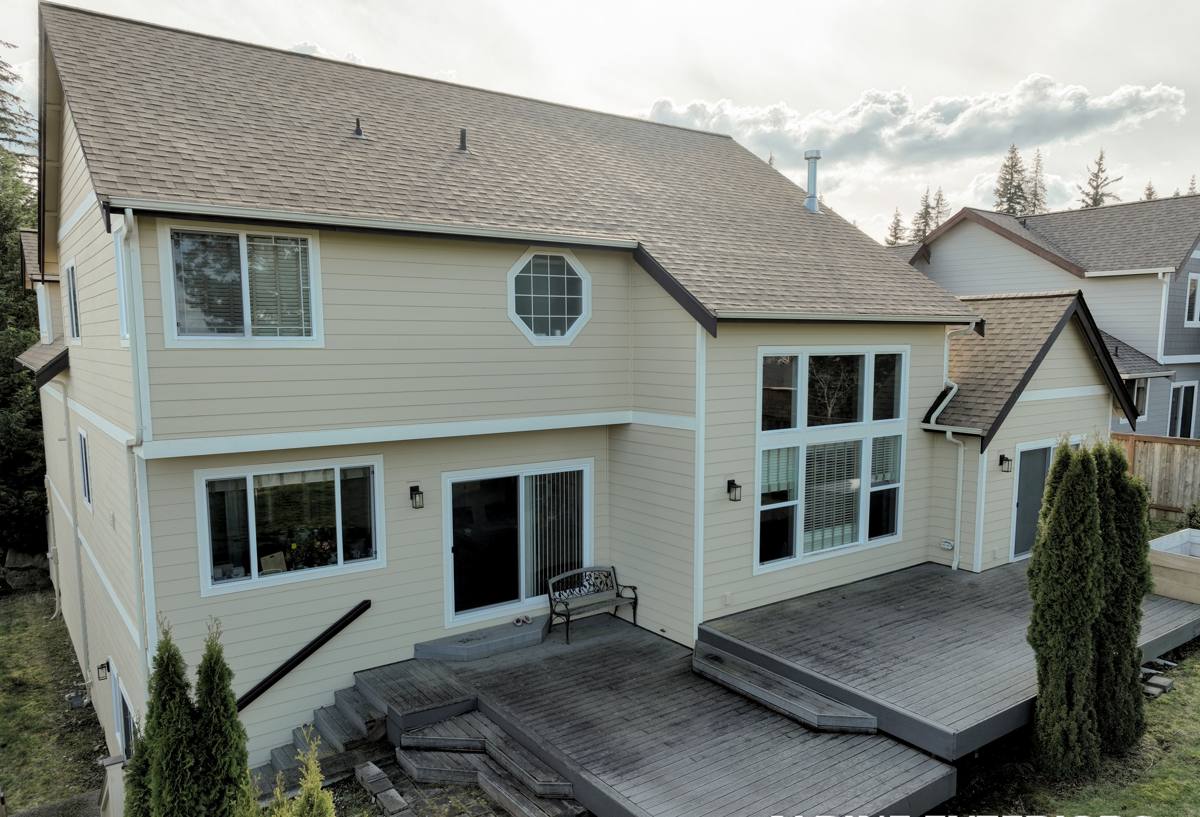
Why Snohomish's Climate Is Hard on Vertical Siding
Board and batten siding is inherently more joint-heavy than horizontal lap siding — every batten strip creates a seam, and every seam is a potential path for water if it's not detailed correctly. That matters more here than in a dry climate because of a few specific local conditions:
- Driving rain: Storms coming off Puget Sound and the Sound-adjacent lowlands often carry wind-driven rain that hits siding at an angle instead of just running straight down. That pushes water sideways into seams and fastener lines that a calm, vertical rain would never reach.
- Salt-influenced air: Proximity to Puget Sound means siding, fasteners, and trim in this area deal with a more corrosive air environment than inland siding does. Cheap or exposed fasteners rust faster here.
- Long moss season: Shaded lots, mature trees, and the region's extended damp season give moss and algae a long runway to establish on any siding surface that holds moisture, especially in north-facing or tree-shaded sections common on Snohomish lots.
- Slow drying cycles: Between storms, the air stays damp long enough that siding materials with poor moisture tolerance don't get a real chance to dry out before the next rain arrives.
None of this means board and batten is a bad choice for a Snohomish home. It means the material behind the look and the installation details around every seam matter more here than they would in a milder or drier region.
What a Correct Board & Batten Job Requires
Material That Doesn't Absorb Water
The batten strips and the base panels or boards behind them need to be dimensionally stable and resistant to moisture absorption. Wood-based products swell, cup, and eventually rot at the seams if they're taking on water every wet season. Fiber cement doesn't absorb water the way wood or wood-composite products do, which is a big part of why it holds a clean, straight batten line year after year in this climate.
Correct Fastening and Flashing
Board and batten needs to be fastened into structural framing, not just sheathing, and every horizontal transition — window heads, trim boards, the base of the wall — needs proper flashing so water is directed out and away rather than trapped behind the boards. This is where a lot of poorly installed board and batten fails: it looks right for a year or two, then the flashing details that were skipped start showing up as staining, soft spots, or paint failure.
Ventilated Rainscreen Assembly
Because the batten strips create a heavier, more textured surface than flat lap siding, an air gap behind the siding (a rainscreen) matters even more. It lets any moisture that does get past the outer surface dry out instead of sitting against the wall assembly. In a climate with as much sustained dampness as Snohomish sees, skipping this detail shortens the life of the whole system.
Factory-Applied Finish
A factory-cured, baked-on finish resists fading, chalking, and moisture intrusion at the surface far better than a field-applied paint job. That matters most on board and batten because the vertical battens catch more direct weather exposure than a shingled lap surface does, and any weak point in the finish shows up fast as streaking or moss growth.
Why We Install Board & Batten in James Hardie Only
We install James Hardie fiber cement exclusively — we don't run board and batten in vinyl, LP SmartSide, primed spruce, cedar, or other engineered wood siding, even though all of those are available on the market. That's a deliberate standard, not a lack of options.
| Material | How It Behaves in Snohomish's Climate |
|---|---|
| Cedar / primed wood boards | Attractive but absorbs moisture at every seam; needs repainting and caulk maintenance on a tight cycle to avoid rot in a wet, mossy climate |
| Engineered wood (LP SmartSide-type) | More stable than raw wood but still wood-based; edge and seam moisture management is critical, and damage compounds if water gets behind the panel |
| Vinyl board and batten | Low maintenance but can warp or fade with UV and temperature swings, and doesn't offer the crisp, deep-shadow-line look board and batten is chosen for |
| James Hardie fiber cement | Non-combustible, dimensionally stable, factory ColorPlus finish resists moss and fade, engineered for Pacific Northwest moisture (HZ5 product line) |
Hardie's fiber cement is cement, sand, and cellulose fiber — it doesn't swell, rot, or feed moss the way wood-based sidings can when they're staying damp for weeks at a time. The HZ5 climate-engineered formulation is built specifically for wetter regions like ours, and the ColorPlus factory finish holds color and resists the streaking that shows up fast on board and batten in shaded, damp yards. It also carries a strong transferable warranty, which matters on a siding style where the seams are the part most likely to be blamed if something goes wrong down the line — a warranty backed by correct installation protects the homeowner, not just the material.
Our Board & Batten Installation Process
- On-site assessment: We look at wall exposure, roof overhangs, tree cover, and drainage around the home to identify the areas most exposed to driving rain or shaded moss growth.
- Water management plan: We map out flashing at every window, door, and horizontal trim transition before a single board goes up — this is the step that determines whether the job holds up in year five, not just year one.
- Rainscreen installation: A ventilated gap goes in behind the siding so any incidental moisture can dry rather than sit against the wall.
- Board and batten layout: We lay out spacing and batten width to match the home's proportions — window and door alignment, corner details, and consistent reveal lines.
- Fastening to code: Fasteners go into structural framing at the spacing and depth Hardie's install specs call for, not just wherever is fastest.
- Final trim and caulk detailing: Corners, transitions, and penetrations get sealed correctly the first time, which is where a lot of shortcut installations start failing within a couple of wet seasons.
Homeowner Checklist Before Committing to Board & Batten
- Ask what's behind the boards — is there a ventilated rainscreen gap, or is siding going straight over the sheathing?
- Confirm the material is dimensionally stable in wet, shaded conditions, not just attractive on a spec sheet.
- Ask how window heads, door heads, and horizontal trim transitions will be flashed.
- Get the manufacturer's fastening spec in writing, not just "we'll nail it up."
- Ask about the finish — is it factory-cured, or will it need repainting on a maintenance schedule?
- Confirm what the warranty actually covers, and whether it's contingent on installation method.
Maintenance Once It's Installed
Even the right material benefits from basic upkeep in this climate. A yearly rinse-down helps knock back the start of moss or algae on shaded walls before it takes hold, especially on north-facing sections that don't get much direct sun. Keeping gutters clear and downspouts directed away from the wall reduces the amount of water running down or splashing back onto lower courses. Trimming back tree cover that keeps a wall shaded and damp longer than the rest of the house also helps. None of this is heavy maintenance — it's the difference between siding that still looks sharp in ten years and siding that's fighting moss and staining by year three.
What This Looks Like on a Snohomish Home
Board and batten works well as a full exterior treatment or as an accent — a gable end, a porch surround, a dormer — paired with horizontal Hardie lap siding on the rest of the house. That combination is common on homes throughout Snohomish and the greater Everett area because it adds visual interest without turning the whole exterior into one flat texture. Color choice matters too: darker colors on shaded, tree-covered lots will show any moss growth faster than lighter tones, so we talk through exposure and color together rather than treating them as separate decisions.
Get a Straight Answer for Your Home
If you're weighing board and batten for a home in Snohomish or elsewhere around Everett, we're glad to walk the property, talk through exposure and drainage, and give you a straightforward estimate — no pressure, no upsell to a product we wouldn't put on our own homes. Fill out the form below and we'll get back to you.