 Everett
 South Everett's Climate Is Hard on Asphalt Shingle Roofs
South Everett sits close enough to Puget Sound that salt-laden air is a constant, even on days that feel calm. Add in the driving, wind-pushed rain that comes through Snohomish County most of the year, plus a moss season that can run from fall through spring under our tree cover and cloud ceiling, and you've got a combination that finds every weak point in a shingle roof faster than drier climates ever would. A roof that would last three decades in Eastern Washington can show real wear here in twenty years or less if it wasn't installed with this exact climate in mind.
None of that means asphalt shingles are a bad choice for this area — they're still the most practical, cost-effective option for the vast majority of South Everett homes. It means the installation details matter more here than almost anywhere else in the state. A roof that's "close enough" in a dry climate is a roof that leaks, grows moss, and needs early replacement in ours.
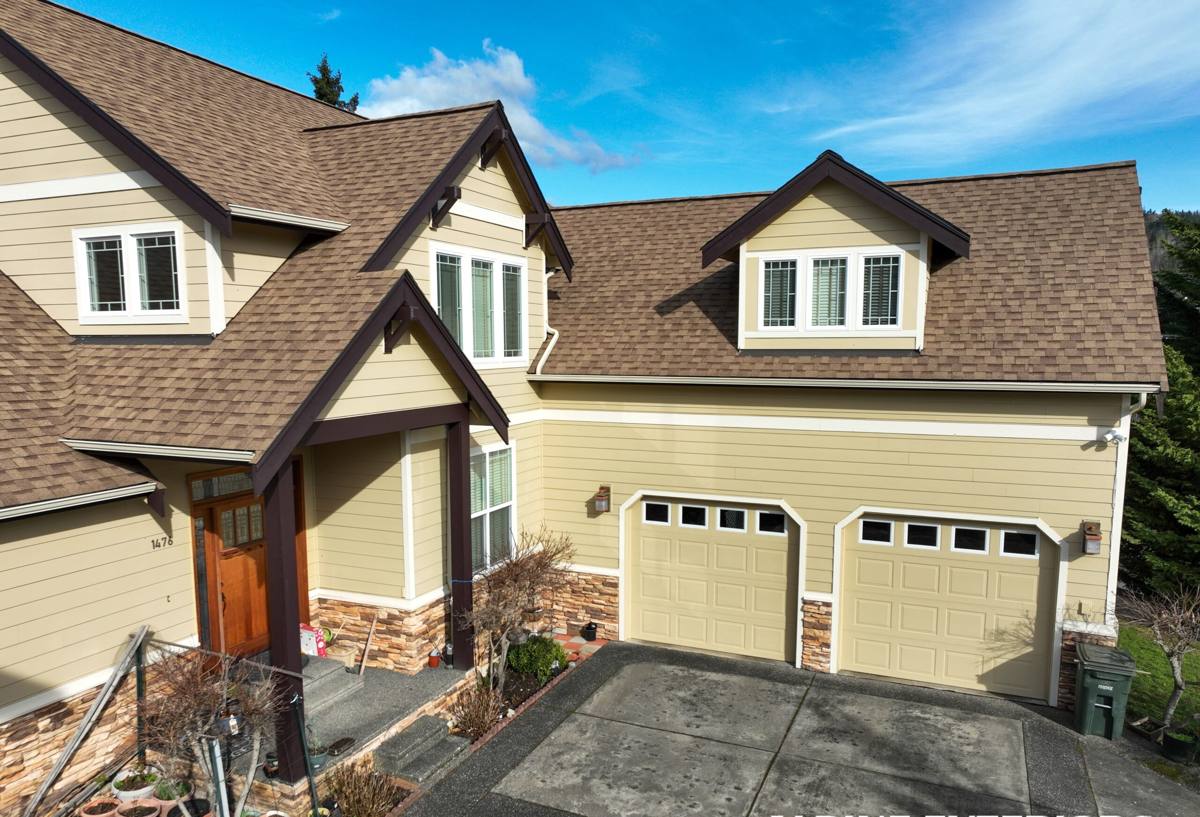
What a Correctly Installed Asphalt Shingle Roof Actually Includes
Underlayment and Ice-and-Water Barrier
The shingles are what you see, but the underlayment is what actually keeps water out when wind drives rain sideways under the shingle tabs — which happens regularly during winter storms off the Sound. We use synthetic underlayment across the full roof and add self-adhered ice-and-water barrier at eaves, valleys, and any low-slope transitions, since these are the spots where standing water and wind-driven rain cause the most damage.
Flashing Details
Most roof leaks in this region don't come from the shingles failing — they come from flashing that was reused, undersized, or poorly sealed around chimneys, skylights, sidewalls, and pipe penetrations. We install new step flashing, counter-flashing, and pipe boots on every replacement rather than reusing old metal, because corroded or loose flashing is one of the most common failure points we find on South Everett homes.
Nailing and Fastening
Asphalt shingles have a manufacturer-specified nailing pattern for a reason — nail placement and fastener count directly affect wind resistance. Given the exposure many South Everett properties have to storm winds funneling off the water, we nail to the manufacturer's high-wind specification, not just the minimum code requirement, which also keeps the shingle warranty intact.
Signs a South Everett Roof Needs Attention
Because moss and moisture damage build slowly, a lot of roof problems here get missed until there's an active leak. Watch for:
- Granules collecting in gutters or at downspout outlets
- Shingle edges that are curling, cupping, or look brittle
- Dark streaking or green-black growth, especially on north-facing slopes that stay shaded and damp longer
- Moss forming at butt joints or ridges, which lifts shingles and lets water track underneath
- Sagging in the roof deck, visible from the ground or the attic
- Daylight visible through the roof boards from inside the attic
- Rusted or lifting flashing around chimneys, vents, or skylights
- Interior ceiling stains, even faint ones, after a heavy rain event
Any one of these on its own might just need a repair. Several at once, or moss combined with granule loss, usually means the roof's protective layer is wearing out faster than it should.
Choosing the Right Asphalt Shingle for This Climate
Not every asphalt shingle is built the same way, and the differences matter more in a wet, moss-prone climate than they would somewhere drier. Here's how the common options compare for a South Everett home:
| Shingle Type | Typical Lifespan Here | Best For | Trade-Offs |
|---|---|---|---|
| 3-Tab (standard) | 15–20 years | Budget-conscious rentals or resale flips | Lower wind rating, less algae resistance, flatter look |
| Architectural / Dimensional | 25–30 years | Most owner-occupied South Everett homes | Higher upfront cost, but far better wind and moisture performance |
| Algae-Resistant (copper/zinc granules) | 25–30 years, slower moss/algae onset | Shaded lots, north-facing roofs, heavy tree cover | Slightly higher cost; doesn't eliminate moss, just slows it |
| Impact-Resistant (Class 4) | 25–30+ years | Homes wanting insurance discounts, added durability | Higher material cost; savings vary by insurer |
For most South Everett properties, we recommend a mid-to-upper-tier architectural shingle with algae-resistant granules. The moss-slowing granules don't make moss removal unnecessary, but they buy real time between cleanings, which matters given how much of the year this area stays damp.
Ventilation and Moisture: The Part Homeowners Don't See
A shingle roof doesn't fail in isolation — it fails alongside whatever is happening in the attic underneath it. Poor attic ventilation traps moisture, which condenses on the underside of the roof deck, softens the wood over time, and shortens shingle life from below while moss and rain attack it from above. Before we quote a replacement, we check intake ventilation (soffit vents) and exhaust ventilation (ridge or box vents) to make sure air is actually moving through the attic space, not just present in name. On older South Everett homes, especially, we often find ventilation that was undersized or blocked by insulation, and correcting it is part of doing the roof right rather than an upsell.
Our Installation Process
- On-site inspection. We walk the roof (or use a drone where access or pitch makes that safer) and check the attic, not just the shingles, to understand the full picture.
- Written estimate. You get a clear scope — tear-off, decking repair allowance if needed, underlayment type, shingle selection, flashing, and ventilation plan — with no vague line items.
- Scheduling around weather. Given how much rain this area sees, we schedule tear-off and dry-in carefully so your home isn't left exposed longer than necessary.
- Tear-off and deck inspection. We remove old roofing down to the deck and repair any soft or damaged sheathing before anything new goes down.
- Underlayment, flashing, and shingle installation. Installed to manufacturer spec, not just code minimum, as covered above.
- Cleanup and magnetic sweep. Your yard, driveway, and gutters are cleared of debris and stray fasteners.
- Final walkthrough. We go over the finished roof with you before calling the job done.
Maintenance That Actually Extends the Life of Your Roof Here
Asphalt shingles are low-maintenance compared to most roofing materials, but "low-maintenance" isn't "no-maintenance" in a climate like this one. A short annual routine goes a long way:
- Clear gutters and downspouts each fall before the heavy rains set in
- Have moss physically removed (not just chemically killed) before it builds up enough to lift shingles
- Trim back overhanging branches to reduce shade, debris, and moss-friendly moisture
- Check flashing and pipe boots every couple of years for cracking or lifting
- Address small leaks immediately — a small flashing fix is inexpensive; the wood rot from ignoring it isn't
- Confirm attic vents stay clear of insulation or debris blocking airflow
What Affects the Cost of an Asphalt Shingle Roof in South Everett
Pricing depends on your specific roof, but the main factors are consistent from house to house:
| Factor | Why It Matters |
|---|---|
| Roof size and number of layers to remove | More tear-off labor and disposal, especially on older homes with multiple layers |
| Roof pitch and complexity | Steep or cut-up rooflines with many valleys and penetrations take longer and need more flashing work |
| Deck condition | Rotten or soft sheathing found during tear-off adds repair cost, usually as a per-sheet allowance |
| Shingle tier chosen | 3-tab, standard architectural, and algae-resistant/impact-resistant lines carry different material costs |
| Ventilation upgrades | Adding or correcting soffit and ridge ventilation is a modest add-on that protects the whole roof |
| Access and site conditions | Tight lots, tall trees, or difficult staging areas can affect labor time |
Most full asphalt shingle roof replacements in this area land in a broad mid-four-figure to low-five-figure range, with the specifics above moving that number up or down. We break all of this out in writing so you know what you're paying for and why, rather than a single lump sum.
Why Hiring a Crew That Already Works South Everett Matters
Roofing crews based outside this immediate area sometimes install correctly for a generic climate and miss the details that matter specifically here — under-flashing valleys for wind-driven rain, skipping algae-resistant granules on shaded lots, or underestimating how much attic ventilation a damp, tree-covered property actually needs. A crew that regularly works South Everett roofs already knows which slopes hold moss longest, which flashing details fail first in this weather, and how to schedule tear-off around our rain patterns so your home isn't sitting exposed. That local familiarity isn't a marketing point — it shows up directly in how long the roof lasts.
If you're dealing with an aging roof, active moss growth, or just want an honest read on where your current roof stands, we're glad to take a look. The estimate is free, there's no pressure attached to it, and you can use the form below to get started.