 Everett
 Why Port Gardner Roofs Wear Differently
Port Gardner sits close to the water, and that proximity changes how a roof ages. Homes a few miles inland in Snohomish County deal with normal Pacific Northwest rain and moss. Homes here deal with that plus salt-laden air coming off Port Gardner Bay, wind that has a clear run at the roofline, and a moss season that stretches longer than most homeowners expect. None of that is a reason to panic about your roof — it's just a reason to make sure it was built correctly for this specific spot, not for a generic subdivision roof three towns over.
Salt air is corrosive to exposed metal — nail heads, flashing, gutter hardware, and vent stacks all take more of a beating here than they would further from the water. Driving rain, especially when it comes in sideways during a fall or winter storm, tests every seam, lap, and penetration on a roof rather than just sitting and draining off it. And moss doesn't need much encouragement in a climate this damp — north-facing slopes and shaded valleys can start growing a mat of it within a year or two if the roof wasn't detailed to shed water and dry out between storms.
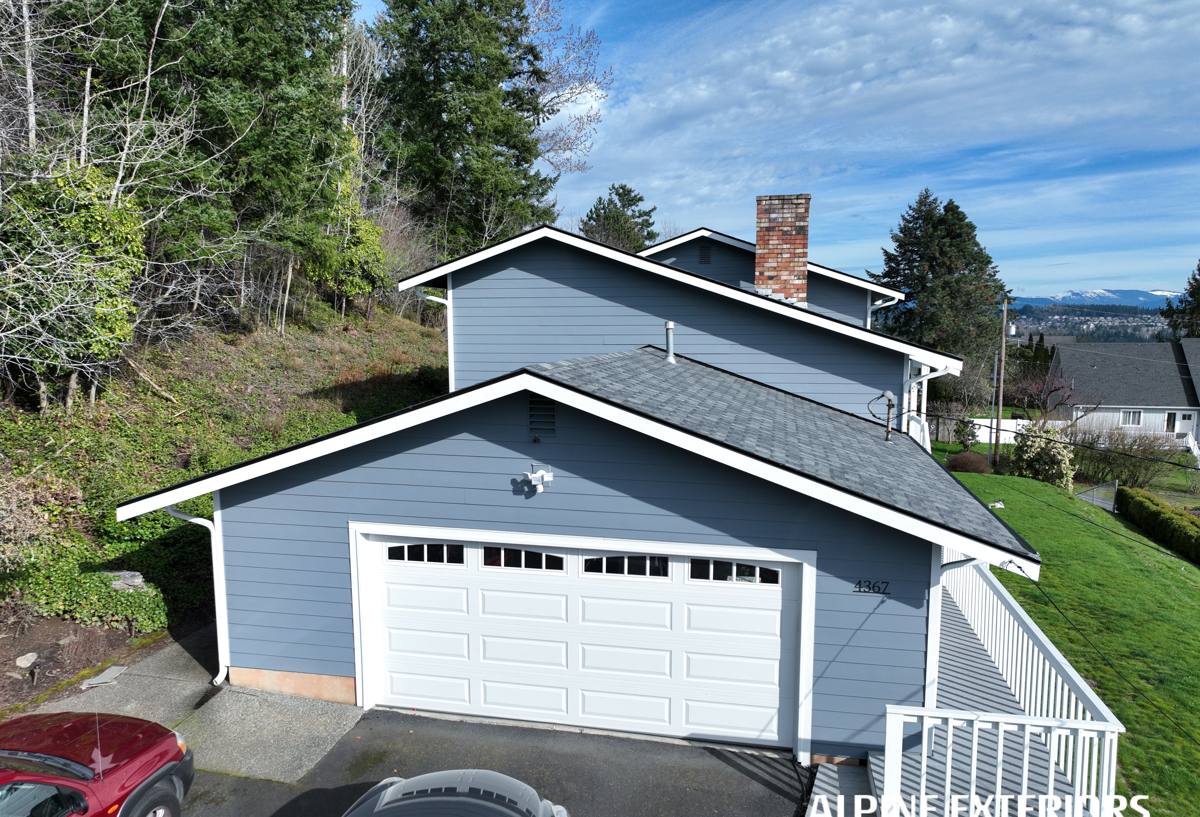
What "Correct" Actually Means for This Neighborhood
It Starts Below the Shingles
A shingle roof is a system, not a single product. The shingles themselves get the attention, but the underlayment, flashing, ventilation, and fastening pattern underneath them are what actually determine whether the roof holds up to salt air and wind-driven rain. A roof that looks fine from the street can still be failing underneath if those layers were rushed or skipped.
Details That Matter More Here Than Inland
- Ice-and-water shield at eaves, valleys, and around every penetration — not just where code minimums require it, but everywhere wind-driven rain is likely to push water uphill under the shingle
- Corrosion-resistant fasteners and flashing metal, since standard galvanized hardware degrades faster this close to salt air
- Balanced intake and exhaust ventilation, so the attic can actually dry out between storms instead of staying damp and feeding moss and mold from underneath
- Wind-rated shingle installation with the correct nailing pattern — six nails per shingle in exposed areas is common practice here rather than the four-nail minimum some crews default to
- Properly lapped and sealed step flashing at every wall intersection and chimney, since a poorly flashed transition is the single most common source of leaks we find on older Port Gardner roofs
Shingle Options for a Marine Climate
Not every shingle product performs the same way in salt air and constant moisture. We steer homeowners toward products with proven algae resistance and a wind rating that matches this exposure, and we're upfront about the trade-offs of each tier.
| Shingle Type | Typical Lifespan Here | Moss/Algae Resistance | Wind Performance |
|---|---|---|---|
| Standard 3-tab | 15-20 years | Fair without algae-resistant granules | Lower wind rating, more prone to edge lift |
| Architectural (laminated) | 25-30 years | Good, especially with algae-resistant (AR) granules | Higher wind rating, better nail-line engineering |
| Premium/designer architectural | 30+ years | Best, thicker granule coverage | Highest wind rating available in shingle roofing |
For most Port Gardner homes we recommend algae-resistant architectural shingles as the baseline, not the upgrade. The extra cost over standard 3-tab is modest, and the combination of better wind performance and copper- or zinc-infused granules that resist algae growth pays for itself in fewer service calls over the life of the roof.
Our Installation Process
The process itself isn't unusual — what changes for a waterfront property is how carefully each step gets done and which details we won't skip.
Tear-Off and Deck Inspection
We remove the old roofing down to the deck rather than laying new shingles over old. That's the only way to actually see the condition of the sheathing, check for soft or delaminated spots from years of moisture exposure, and confirm the deck can take fasteners properly. On older Port Gardner homes, this step often reveals areas of hidden moisture damage around chimneys or old vent penetrations that wouldn't show up any other way.
Underlayment and Flashing
Synthetic underlayment goes down first, with self-adhering ice-and-water membrane in the vulnerable spots — eaves, valleys, and penetrations. New flashing goes in at every wall, chimney, and skylight intersection rather than reusing old flashing, since flashing that's been exposed to salt air for a decade or more is usually past the point of being trustworthy even if it looks intact.
Shingle Installation and Ventilation
Shingles go on with the manufacturer's high-wind nailing pattern, and we check that intake vents at the eaves and exhaust vents at the ridge are balanced and unobstructed. Poor ventilation is one of the quieter causes of premature roof failure in this climate — it traps moisture in the attic, which shortens the life of the shingles from underneath while doing nothing visible from the ground.
Cleanup and Final Walkthrough
We magnet-sweep the property for stray nails, clear debris from gutters and downspouts, and walk the roof with you (or send photos, if you'd rather not have someone on a ladder) to confirm the finished work before we consider the job done.
Moss and Algae Aren't Just a Cosmetic Problem
It's tempting to think of moss and black streaking as an appearance issue. They're not. Moss holds moisture against the shingle surface, works its way under tabs as it grows, and can lift shingles enough to let wind-driven rain in underneath. Algae streaking is less structurally harmful but is a sign that granule coverage is degrading, which is what actually protects the asphalt layer from UV and weather.
Building moss resistance into the roof from the start — algae-resistant shingles, proper ventilation, and keeping overhanging branches trimmed back so shaded areas of the roof get more sun and airflow — does more than any treatment applied after the fact. We'll flag shaded, moss-prone areas of your roof during the estimate so you know what to expect and what, if anything, can be done to reduce it going in.
Maintenance That Actually Matters in This Climate
A well-installed roof still needs periodic attention here, more than it would in a drier inland climate. This is the short list we give homeowners:
- Clear gutters and downspouts at least twice a year — clogged gutters back water up under the shingle edge, which is one of the most common causes of eave rot we see
- Have moss physically removed (not just chemically treated) before it spreads past a thin layer, since a mat of established moss can lift and damage shingles as it's cleared
- Check flashing around chimneys, vents, and skylights every year or two, since these are the first spots to show wear in salt air
- Trim back tree limbs that shade the roof or drop debris into valleys and gutters
- Have the roof inspected after any major windstorm, even if nothing looks obviously wrong from the ground
What a Roof Runs, Roughly
Every roof is different, but these are the main factors that move the price up or down on a typical Port Gardner home. We'll give you exact numbers after we've actually looked at your roof — this is just so you're not walking into an estimate blind.
| Factor | Effect on Cost |
|---|---|
| Roof pitch and accessibility | Steeper or harder-to-access roofs require more labor and safety setup |
| Number of layers to remove | Tearing off multiple old layers adds disposal and labor time |
| Deck repair needed | Rotted or soft sheathing found during tear-off adds material and time |
| Shingle tier chosen | Standard 3-tab vs. architectural vs. premium changes material cost directly |
| Number of penetrations and valleys | More chimneys, skylights, and valleys mean more flashing labor |
Why It's Worth Hiring a Crew That Already Works This Area
A roofing crew that mostly works dry, inland neighborhoods can still do competent work, but they may not think to spec corrosion-resistant fasteners, upgrade ventilation as a default, or flag which slopes are going to be moss-prone before they've seen a winter here. A crew that regularly works Port Gardner and the surrounding Everett waterfront has already made those calls on other roofs nearby and knows which shortcuts don't hold up once the salt air and storm season get to them. That's not a knock on any particular contractor — it's just the difference between general roofing experience and roofing experience specific to this stretch of Snohomish County.
If you're weighing a repair against a full replacement, or just want an honest read on how much life is left in your current roof, we're happy to take a look. Reach out for a free, no-pressure estimate using the form below.