 Everett
 Asphalt Shingle Roofing for Lynnwood Homes
Lynnwood sits close enough to the water that salt-laden air reaches rooftops, close enough to the foothills that moss finds a home on every shaded slope, and squarely in a stretch of Snohomish County that gets driving, wind-blown rain for months at a stretch. Asphalt shingle roofing is still the right choice for most homes here — it's affordable, it's proven, and it handles this climate well when it's installed correctly. The problem isn't the material. It's how often shingle roofs in this area get installed or repaired without accounting for what the local weather actually does to a roof over twenty or thirty years.
This page covers what a correct asphalt shingle roof looks like for a Lynnwood home, what goes wrong when shortcuts get taken, and how we approach the work differently because we're already working in this area every week.
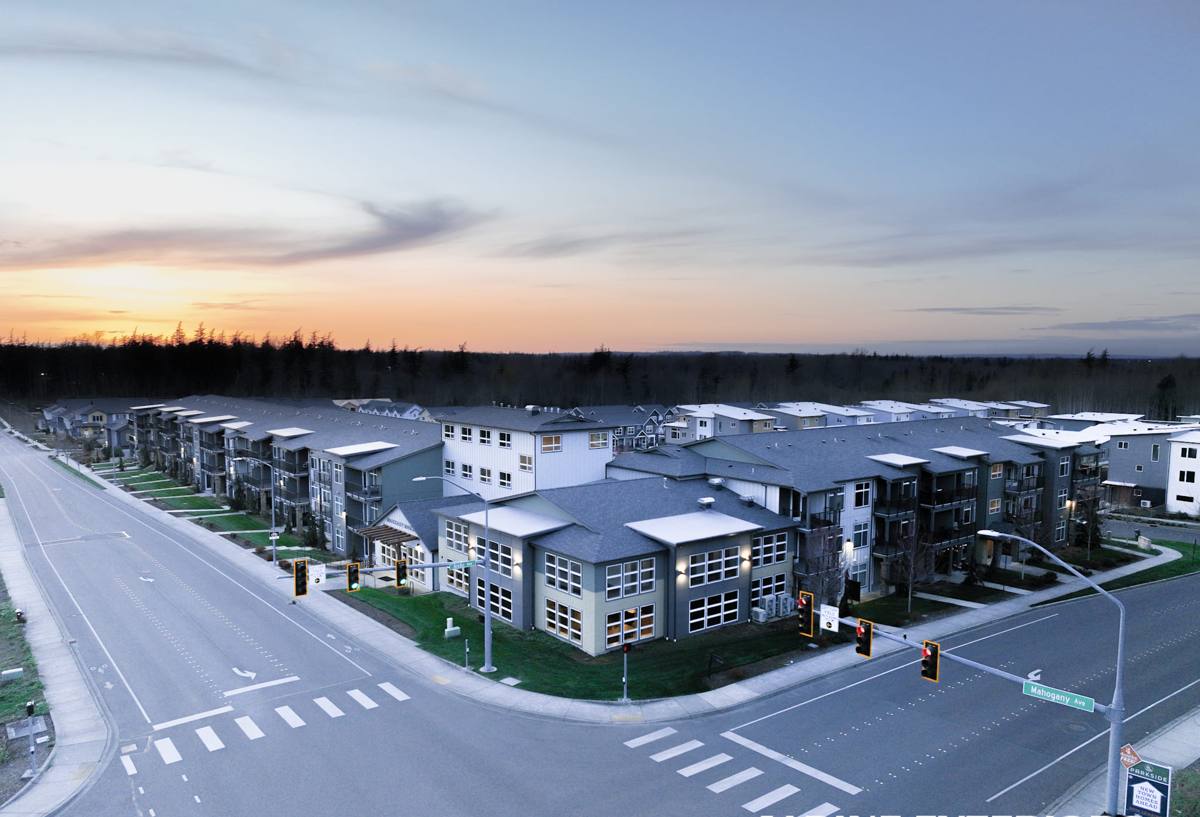
Why Lynnwood Roofs Take a Different Kind of Beating
Three things work against a roof here at the same time, and most generic roofing advice only addresses one of them.
Salt Air
Proximity to Puget Sound means airborne salt settles on exposed metal — flashing, fasteners, gutter hardware, vents. Over years, untreated or low-grade metal corrodes faster here than it would inland. That corrosion often shows up first at flashing seams, which is exactly where a roof is supposed to be watertight.
Driving Rain
Lynnwood doesn't just get rain, it gets rain pushed sideways by wind off the Sound and through the valley. That matters because a shingle roof isn't just shedding water straight down — it's resisting water being driven up and under shingle edges, around chimneys, and along roof-to-wall transitions. A roof that would perform fine in a calmer climate can leak here if the underlayment and flashing details weren't built for wind-driven rain specifically.
A Long Moss Season
Shade, moisture, and moderate temperatures are exactly what moss wants, and this area supplies all three for most of the year. Moss isn't just cosmetic. It holds moisture against the shingle surface, lifts shingle edges as it grows, and works its way into granule loss over time. A roof that would last 25 years in a dry climate can lose meaningful life to moss damage here if it's never addressed.
What a Correctly Installed Asphalt Shingle Roof Involves
A shingle roof is a system, not a single product. Every layer has to do its job for the roof to hold up in this climate.
- Deck inspection and repair — any soft, delaminated, or water-damaged sheathing gets replaced before anything new goes down.
- Ice and water shield at vulnerable areas — eaves, valleys, and roof-to-wall transitions get a self-adhering waterproof membrane, not just standard felt.
- Synthetic underlayment across the field — a water-resistant barrier under the shingles that still performs even if wind-driven rain gets past the shingle surface.
- Corrosion-resistant flashing — step flashing, valley flashing, and chimney flashing in materials suited to a salt-air environment, not the cheapest stock option.
- Correct nailing pattern — proper nail count and placement per shingle, which is one of the most commonly skipped details and one of the biggest causes of wind-related shingle loss.
- Balanced attic ventilation — intake at the eaves and exhaust at the ridge, sized to the attic, not installed as an afterthought.
Skip any one of these and the roof may still look fine for a year or two. The failures that show up later — leaks at valleys, curling shingles, premature granule loss — almost always trace back to one of these steps being shortened or skipped.
Choosing the Right Shingle for This Climate
Not every asphalt shingle product is built the same way, and in a marine climate with a long moss season, the differences matter more than they would somewhere drier.
| Shingle Type | Typical Lifespan | Best Fit for Lynnwood |
|---|---|---|
| 3-tab shingles | 15–20 years | Lower upfront cost, but less wind resistance and no algae-resistant granule option in most lines — a tougher sell on shaded, moss-prone roofs |
| Architectural (dimensional) shingles | 25–30 years | Heavier, better wind rating, and available with algae-resistant copper or zinc granules — our standard recommendation locally |
| Premium/designer shingles | 30+ years | Best wind and impact ratings, longest warranty structures, worth considering on exposed or high-visibility roof planes |
Our default recommendation for most Lynnwood homes is an architectural shingle with algae-resistant granules. The granule treatment specifically slows the blue-green algae staining that's common on shaded, north-facing roof slopes in this area, and the added weight and adhesive strip give better resistance to wind-driven rain than a 3-tab product.
Ventilation and Moisture: The Part Homeowners Rarely See
Attic ventilation doesn't get much attention because it's invisible from the ground, but it has a direct effect on how long a shingle roof lasts in a wet climate. Without balanced intake and exhaust airflow, moisture from daily living gets trapped in the attic, condenses against the roof deck, and slowly degrades it from underneath — regardless of how good the shingles on top are. In a climate with this much ambient humidity, an under-ventilated attic will shorten a roof's life even when everything above the deck was installed correctly. Checking and correcting ventilation is a standard part of how we approach every reroof, not an upsell.
Moss, Algae, and Ongoing Roof Care
Moss control is a maintenance issue, not just an installation issue. Even a well-installed roof will need periodic attention in a climate that supports moss growth for most of the year.
What we recommend
- Soft-wash treatment rather than pressure washing, which can strip granules and shorten shingle life
- Zinc or copper strips at the ridge on shaded roofs, which release trace metals that discourage moss regrowth over time
- Keeping gutters and valleys clear so moss and debris don't hold standing moisture against shingle edges
- Periodic visual inspection of north-facing and tree-shaded slopes, where moss establishes first
None of this replaces a correctly installed roof, but it meaningfully extends the life of one in an area where moss pressure never really lets up.
Our Asphalt Shingle Roofing Process
- On-site inspection — we assess the existing roof, deck condition, ventilation, and any moss or moisture damage before recommending repair versus full replacement.
- Written estimate — a clear scope of work and material selection, so there's no ambiguity about what's included.
- Deck and structure check — sheathing is inspected once old roofing is removed, and any damaged sections are replaced before new roofing goes down.
- Installation to manufacturer and code specification — underlayment, flashing, ventilation, and shingle installation following the steps outlined above.
- Final walkthrough — we review the completed work with the homeowner and go over basic maintenance expectations for the climate.
What Affects the Cost of a Shingle Roof in Lynnwood
| Factor | Why It Matters Here |
|---|---|
| Roof size and pitch | Steeper pitches and multiple planes take longer to install and require more safety setup |
| Deck condition | Moisture-related deck repair is more common in this climate and adds material and labor |
| Shingle tier chosen | Architectural and premium shingles cost more upfront but hold up better against wind-driven rain and moss |
| Ventilation upgrades | Adding or correcting intake/exhaust venting is a smaller cost during a full reroof than as a standalone repair later |
| Flashing and metal work | Salt-air-appropriate flashing materials cost more than basic stock but resist corrosion far longer |
| Access and site conditions | Landscaping, roof height, and staging space affect labor time |
Every roof and every budget is different, which is why we walk the roof in person before giving a number rather than quoting off a phone call.
Signs Your Lynnwood Roof Needs Attention
- Granules collecting in gutters or at downspout outlets
- Shingles that look curled, cupped, or cracked, especially on south- or west-facing slopes exposed to sun and wind
- Visible moss or dark algae streaking on shaded slopes
- Water stains on interior ceilings, particularly near chimneys or valleys after a windy rainstorm
- Daylight visible through the attic roof deck
- A roof approaching or past the 20-year mark that has never been inspected
Catching these early is almost always cheaper than waiting for an active leak, especially given how much moisture this area sees during the wetter months.
Why Local Experience in Lynnwood Matters
A crew that works this area regularly already knows which roof details tend to fail here — the flashing that corrodes faster near the water, the north slopes that need moss treatment sooner, the attic ventilation gaps that show up in older Snohomish County housing stock. That's not something a contractor coming from a drier or more inland market necessarily accounts for by default. We're already doing this work in Lynnwood and the surrounding communities, which means the recommendations we make are based on what actually holds up here, not a generic installation standard.
If you're weighing a repair against a full replacement, or just want an honest read on how much life is left in your current roof, we're happy to take a look. Fill out the form below for a free, no-pressure estimate.