 Everett
 West Everett's Siding Takes a Different Kind of Beating
West Everett sits close enough to Puget Sound and the Snohomish River delta that homes here deal with a specific combination of stresses most inland neighborhoods don't: salt-laden air off the water, wind-driven rain that comes in sideways off winter storms, and a moss season that can stretch from late fall through spring in shaded, north-facing yards. None of these on their own is unusual for Western Washington. Together, on an older or under-maintained siding system, they compound fast — and that's usually when we get the call.
Siding repair in this part of Everett is rarely about one dramatic failure. It's almost always a slow accumulation: a cracked panel that let moisture behind the wall for a season, fasteners that corroded faster than expected because of salt exposure, or a shaded north wall where moss and algae held moisture against the surface long enough to start breaking it down. Understanding that pattern is the first step to fixing it correctly instead of just patching what's visible.
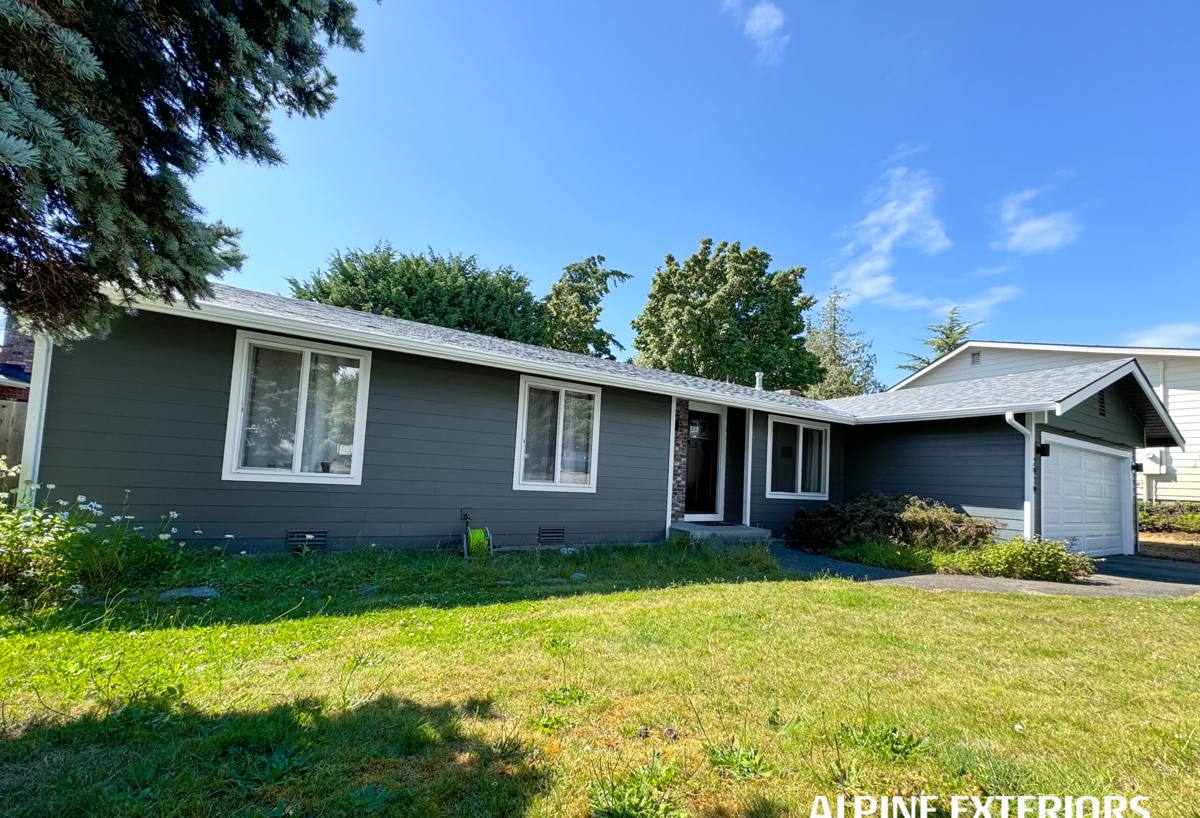
What Siding Repair Actually Covers
"Siding repair" gets used loosely, so it's worth being specific. A real repair job addresses:
- Cracked, split, or impact-damaged panels and boards
- Failed or missing caulking at joints, trim, and penetrations (vents, hose bibs, light fixtures)
- Water-stained or soft sheathing behind siding where moisture has intruded
- Corroded or backed-out fasteners
- Isolated moss, algae, or mildew staining tied to a specific moisture path
- Trim and corner detail failures where two materials meet
Repair is different from a full re-side. If the damage is contained to a wall section, a few panels, or a trim run, and the sheathing underneath is sound, targeted repair is the right call. If moisture has traveled behind multiple sections, if the siding is an older material that's failing system-wide, or if the home has never had house wrap or flashing done to current standards, a repair can turn into throwing good work after bad. Part of our job on the first visit is telling you honestly which situation you're in.
What's Actually Going Wrong Behind West Everett Siding
Wind-driven rain intrusion
Everett's storms don't just fall straight down — they come in at an angle, and repeated wind-driven rain finds any gap in flashing, caulking, or panel overlap. Over years, water working into those gaps rots sheathing and framing long before the siding itself looks obviously bad from the street. This is the failure mode we find most often on homes that "look fine" until you pull a panel.
Salt air and fastener corrosion
Homes closer to the water deal with airborne salt that accelerates corrosion on metal fasteners, flashing, and trim hardware. Once a fastener corrodes and loosens, the panel it's holding starts to move, which opens gaps for water — a slow feedback loop that's easy to miss until a panel is visibly loose.
Moss and sustained moisture
Shaded walls, especially north- and west-facing exposures common on tree-lined West Everett lots, stay damp longer after each rain. During a long moss season, that constant dampness can hold against siding surfaces and joints, softening caulking and, on moisture-sensitive materials, breaking down the surface itself over time.
Impact and settling damage
Cracked panels from incidental impact, or hairline cracks from a home settling, seem cosmetic but are functionally the same problem as a flashing gap — they're an entry point for water once the surface coating is breached.
How We Diagnose a Repair Before We Touch Anything
We don't quote repairs off a driveway look. A proper diagnosis includes:
- Full exterior walk, noting every wall exposure separately (south/west walls weather differently than shaded north walls)
- Moisture meter readings at suspect panels, corners, and penetrations
- Checking behind a sample of removed panels where damage suggests deeper intrusion
- Inspecting flashing at windows, doors, and roof-to-wall transitions — the most common source of hidden leaks
- Assessing fastener condition, especially on walls with more direct exposure to weather and salt air
- Confirming whether the existing siding material and the repair material can be matched or need to be addressed differently
That last point matters more than most homeowners expect. If your home has an older material — cedar, primed spruce, an aging fiber cement product, or vinyl — a "repair" sometimes means replacing a damaged section with a different, better material rather than trying to match something that's already failing as a system.
Repair or Replace: How We Help You Decide
| Situation | Usually a repair | Usually points to replacement |
|---|---|---|
| Damage location | Isolated to one wall or a few panels | Spread across multiple walls or exposures |
| Sheathing condition | Dry, solid underneath | Soft, stained, or rotted in multiple spots |
| Siding material | Sound James Hardie panels, minor damage | Aging or failing vinyl, LP, cedar, or spruce system-wide |
| Flashing and house wrap | Intact, up to current standard | Missing, outdated, or improperly installed |
| Age of siding | Well within expected service life | At or past the material's realistic lifespan |
We'll walk this table with you in person, specific to your home, rather than defaulting to whichever job is bigger. A well-targeted repair is often the right call, and we say so.
Our Repair Process
- Assessment and moisture check — the diagnosis steps above, in writing, with photos of anything we find behind the surface.
- Scope and estimate — a clear explanation of what's damaged, why, and what it takes to fix it correctly (not just cosmetically).
- Careful removal — pulling damaged panels and trim without disturbing sound material around them.
- Sheathing and framing repair — if water has reached the wood underneath, that gets addressed before anything new goes back on. Covering rot with new siding is how small problems become expensive ones.
- Flashing and house wrap correction — if the original flashing detail was the actual cause of the failure, we fix that detail, not just the panel it damaged.
- Panel replacement with James Hardie fiber cement — matched to your existing ColorPlus finish where possible, or transitioned cleanly where a full color match isn't practical.
- Fastener and caulk detail — corrosion-resistant fasteners and proper sealant at every joint and penetration, since this is where the next failure would start if it's done sloppily.
- Final inspection — walking the repaired area with you before we call it done.
Why We Only Repair and Install James Hardie Fiber Cement
When we're patching a wall in West Everett, we don't reach for vinyl, LP SmartSide, primed spruce, or cedar — even for a small repair. Vinyl expands and contracts with temperature swings and doesn't hold up structurally the way fiber cement does; a patched section rarely blends or performs like the rest of the wall over time. Engineered wood products like LP SmartSide and traditional wood siding like cedar or primed spruce are organic materials at their core — they depend on flawless caulking and finish maintenance to keep moisture out, and in a climate with this much sustained dampness and a long moss season, that maintenance margin is thin.
James Hardie fiber cement is non-combustible, dimensionally stable, and engineered specifically for climates like ours through its HZ5 product line, which is built to handle freeze-thaw cycling and sustained moisture exposure better than wood-based alternatives. The factory-applied ColorPlus finish is baked on rather than field-painted, which means a repaired section holds its color and resists the fading and moisture streaking that plague field-painted materials. It's also backed by a real transferable warranty — useful if you sell the home before the repair's service life is up.
We don't install anything else, which means every repair we do is built to the same standard as new construction, not a stopgap.
Signs Your West Everett Home Needs Siding Repair
- Visible cracks, splits, or holes in panels or trim
- Caulking that's cracked, shrunk, or pulled away from joints
- Soft or spongy spots when you press on the siding near the base of a wall
- Persistent moss, algae, or dark staining on a specific wall or section that keeps coming back
- Paint or finish bubbling, peeling, or discoloring in one localized area
- Musty smell or visible staining on interior walls that back up to exterior siding
- Loose panels or trim that move or rattle in wind
- Visible daylight or gaps at corners, window trim, or wall penetrations
Any one of these on its own might be minor. Two or more on the same wall usually means water has already found its way behind the surface, and it's worth getting a real inspection before the next storm season.
Why Hire a Crew That Already Works West Everett
A siding repair is only as good as the diagnosis behind it, and diagnosing correctly depends on knowing how a specific neighborhood's exposure actually behaves — which walls take the worst wind-driven rain, which yards hold shade and moisture long enough to grow moss year-round, and how salt air closer to the water accelerates fastener wear compared to homes further inland. A crew that regularly works West Everett has already seen these patterns repeat across dozens of similar homes, so we're not guessing at what caused the damage — we're confirming what we've already seen work, and what hasn't, on houses just like yours.
That local pattern recognition also shows up in timing. Scheduling repair work between the wettest stretches of the year and ahead of moss season gives caulking and sealant proper cure time, which matters more here than it would in a drier climate.
Getting It Right the First Time
The most expensive siding repairs are the second ones — a patch job that covers up rot instead of fixing it, or a mismatched material that starts failing on its own timeline a few years later. Our approach is to diagnose fully, be honest about repair versus replacement, and use one material system across every job so there's no guesswork about how it will hold up in Everett's climate over the next decade.
If you're seeing cracked panels, persistent moss, loose trim, or any sign that water has found its way behind your siding, we'll come take a real look — no pressure, no upsell script, just a straight answer about what your home actually needs. Reach out below for a free estimate.