 Everett
 Why West Everett Roofs Wear Differently
West Everett sits close enough to Port Gardner Bay and the broader Puget Sound that salt-laden air is a real factor in how roofing materials age here, not just a talking point. Add in Snohomish County's long, wet fall-through-spring stretch of driving rain off the water, and a moss season that can run eight months or more in shaded, tree-lined yards, and you've got a climate that's genuinely harder on a roof than the marketing materials for most shingles were written to handle. None of this means West Everett homes need exotic materials. It means the installation details — fastening, flashing, ventilation, and moss control — have to be done correctly the first time, because this climate finds every shortcut eventually.
We're not describing a worst-case scenario. This is the normal weather pattern for the neighborhood, year after year, and it's the baseline we design every replacement around.
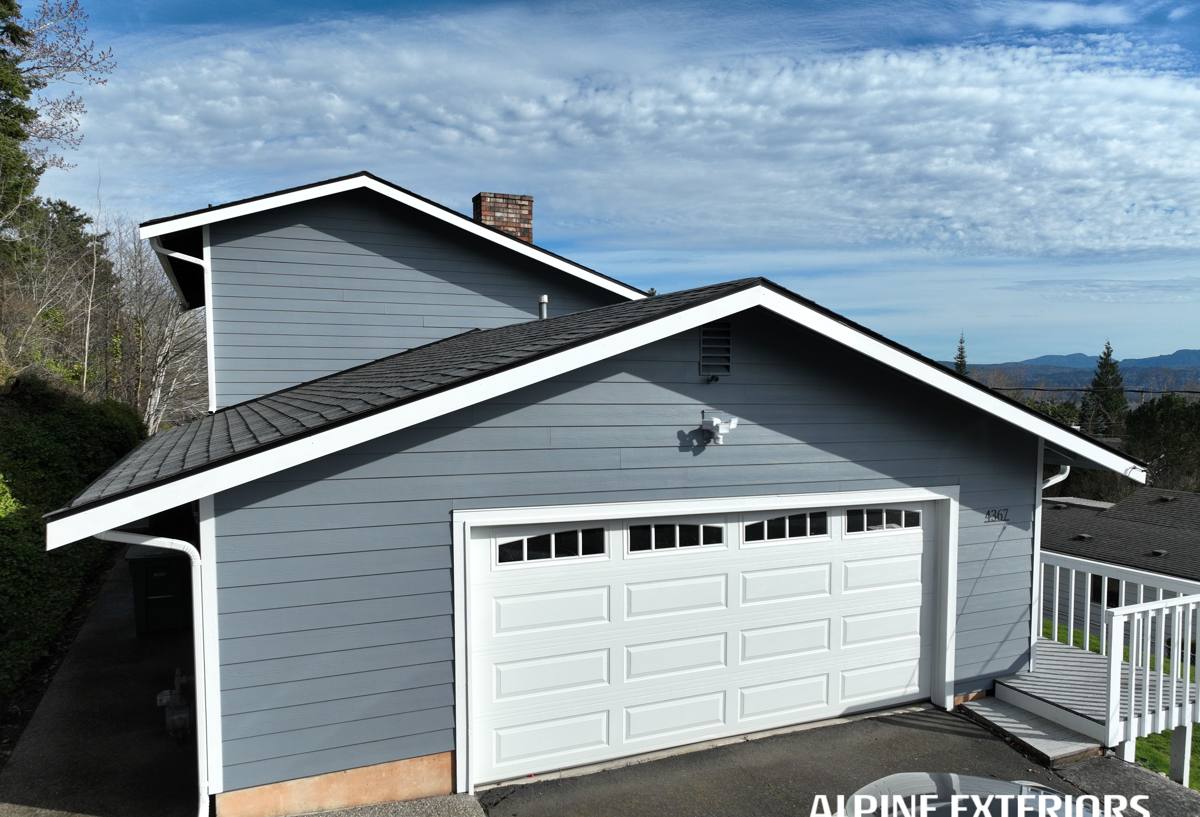
What Salt Air, Rain, and Moss Actually Do to a Roof
Salt Air
Airborne salt accelerates corrosion on exposed metal — nails, flashing, vent stacks, gutter hardware. Roofs installed with standard-grade fasteners or bargain flashing tend to show rust streaks and premature metal failure years before the shingles themselves are worn out. Once flashing corrodes and pinholes, water finds its way under the roof covering long before anyone notices a leak inside.
Driving Rain
Wind-driven rain off the water doesn't just fall straight down — it gets pushed sideways and upward under shingle edges, around chimneys, and into valleys. A roof that would be fine in a calmer climate can leak here if the underlayment, valley metal, and flashing laps aren't installed with that wind direction in mind.
Long Moss Season
Moss doesn't just look bad. It holds moisture against the roof surface, lifts shingle edges as it grows, and works its way under tabs and around fasteners. On north-facing slopes and anywhere tree canopy keeps a roof shaded and damp, moss can establish itself within a couple of seasons on an untreated roof and shorten its useful life significantly.
What a Correct Replacement Involves Here
A roof replacement done right in West Everett isn't just stripping old shingles and nailing down new ones. The parts that actually determine how long the roof lasts are mostly invisible once the job is finished:
- Full tear-off and deck inspection — soft, delaminated, or water-stained sheathing gets identified and replaced before anything new goes down. Covering over a compromised deck just hides the problem.
- Ice-and-water shield at vulnerable points — eaves, valleys, and roof penetrations get self-adhering waterproof membrane, not just standard felt, given how much wind-driven rain this area sees.
- Corrosion-resistant flashing and fasteners — given the salt air exposure this close to the water, we don't cut corners on metal quality around chimneys, skylights, and roof-to-wall transitions.
- Balanced intake and exhaust ventilation — proper airflow keeps the underside of the deck dry, which matters as much for moss and mold resistance as it does for energy efficiency.
- Valley and penetration detailing built for sideways rain — laps and overlaps oriented and sized for wind-driven moisture, not just gravity.
Material Options: What Actually Makes Sense in This Climate
There's no single "right" roofing material for every West Everett home — it depends on your roof's exposure, slope, budget, and how long you plan to stay in the house. Here's how the common options compare for this specific climate:
| Material | How It Handles Salt Air & Rain | Moss Resistance | Typical Lifespan Here |
|---|---|---|---|
| Architectural asphalt shingle | Good, with quality flashing and fasteners | Moderate — benefits from zinc/copper strips | 20–30 years |
| Standing seam metal | Excellent when coated and detailed correctly; needs marine-grade fasteners near the water | Very good — sheds moss and debris easily | 40–50+ years |
| Synthetic/composite shingle | Good; resists moisture absorption better than wood | Good | 30–50 years |
| Cedar shake | Requires diligent maintenance in this rainfall pattern | Higher risk without regular treatment | Varies widely with upkeep |
We'll walk you through the real trade-offs for your specific roof rather than pushing whatever's easiest to install. If we steer you away from a particular material, it's because of how it performs against this climate over decades, not because of the brand.
Dealing With Moss Before It Becomes a Structural Problem
Given how long the moss season runs here, moss control isn't an optional add-on — it's part of a properly planned roof replacement. A few things make a real difference:
Zinc or Copper Strips
Installed just below the ridge, these release trace metal ions with every rain that inhibit moss and algae growth on the slopes below. It's a low-cost, low-maintenance line of defense that pays for itself over the life of the roof.
Tree Canopy and Sun Exposure
We'll flag north-facing or heavily shaded sections during the estimate, since those areas need the most attention — sometimes that means recommending limbing back overhanging branches, which is a conversation worth having before the moss becomes a leak.
Routine Debris Clearing
Needles and leaf litter trap moisture even on a well-installed roof. A roof that's easy to walk and inspect gets maintained; one that's ignored eventually needs earlier replacement than it should.
Repair or Replace? A Practical Checklist
Not every aging roof needs full replacement right away, but here are the signs that usually mean it's time to stop patching:
- Shingles are curling, cupping, or losing granules in visible patches
- Moss has established itself under tabs, not just on the surface
- Flashing around chimneys, vents, or skylights shows rust or has pulled away
- You've had more than one roof leak in the past couple of years
- The roof is at or past the manufacturer's expected lifespan for its material
- Daylight is visible through the attic decking
- Energy bills have crept up with no other explanation, suggesting failed ventilation or insulation
If you're only seeing one or two of these, a targeted repair may still make sense. If you're seeing several at once, replacement is usually the more cost-effective path — repeated repairs on a roof past its service life rarely save money in the long run.
Our Replacement Process
- On-site inspection — we look at the whole system: decking, ventilation, flashing, and the specific exposure of your roof to wind and rain direction.
- Written estimate — a clear breakdown of materials, scope, and cost, with the trade-offs explained in plain language.
- Tear-off and deck assessment — old roofing comes off, and any compromised sheathing is identified before new material goes down.
- Underlayment and flashing — waterproof membrane at vulnerable points, corrosion-resistant metal throughout.
- Material installation — done to manufacturer spec, with fastening patterns suited to wind exposure this close to the water.
- Ventilation check — intake and exhaust balanced for the size and shape of the roof.
- Cleanup and walk-through — the property is cleared of debris and nails, and we walk the finished roof with you.
What Drives the Cost of a Replacement Here
| Factor | Why It Matters in West Everett |
|---|---|
| Roof size and pitch | Steeper roofs take longer and need more safety setup |
| Deck condition | Water-damaged sheathing found during tear-off adds material and labor |
| Material choice | Asphalt, metal, and composite carry very different upfront costs and lifespans |
| Flashing and ventilation scope | Salt air exposure means we don't downgrade metal quality to cut cost |
| Moss/algae protection | Zinc strip installation is inexpensive but adds a line item |
| Access and property layout | Tree cover, driveway access, and roof height all affect labor time |
We give honest, itemized estimates so you know what you're paying for and why — no vague lump sums, and no pressure to upgrade beyond what your roof actually needs.
Why It Matters That We Already Work West Everett
A crew that only occasionally works this side of Everett will treat your roof like a generic project. A crew that's regularly out in West Everett homes understands, without having to relearn it each time, how the wind comes off the water, how quickly moss sets up on shaded slopes, and how salt air chews through cheap flashing over a few winters. That familiarity shows up in the details — the flashing gauge we choose, the fastener grade we use, where we recommend zinc strips versus where they're not worth the cost. It's also faster to schedule and communicate with a crew that isn't driving across the county for every job.
If your roof is showing its age, or you just want a second, honest opinion on whether repair or replacement makes more sense, we'll come take a look. The estimate is free, there's no pressure, and you'll get a straight answer either way — just fill out the form below to get started.