 Everett
 Decking Built for West Everett's Weather, Not Just Its Looks
West Everett sits close enough to the water and open enough to the weather that decks here work harder than decks inland. Homes in this part of Snohomish County take on salt-tinged marine air, long stretches of driving rain through fall and winter, and a moss season that can run half the year in shaded yards. A deck that looks fine in a showroom photo can start showing problems within a couple of seasons if it wasn't built — or maintained — with this specific climate in mind.
Composite decking has become the go-to choice for a lot of West Everett homeowners precisely because it handles moisture and organic growth better than wood, but "composite" isn't a single product with one set of rules. How it's installed matters as much as which brand you choose. This page covers what a correct composite deck build looks like for this area, the trade-offs worth understanding before you buy, and what our process looks like from first estimate to finished project.
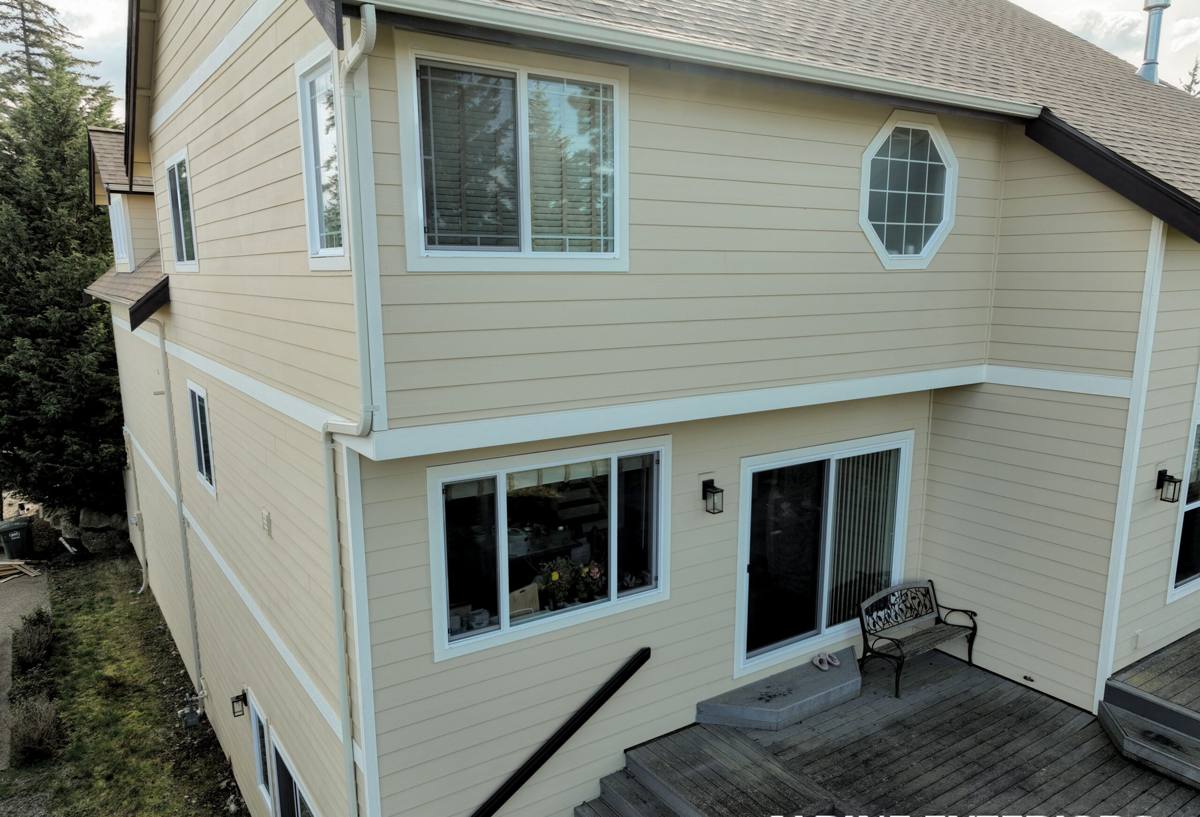
Why This Climate Is Hard on Decks
Salt Air and Metal Fasteners
Proximity to Puget Sound means a steady low-level exposure to salt-laden air, even for homes that aren't waterfront. Over years, that air accelerates corrosion on unprotected or poorly rated fasteners, brackets, and ledger hardware. A deck can look structurally sound on the surface while the metal holding it together is quietly degrading underneath.
Driving Rain and Water Intrusion
Everett gets a lot of rain, and a good portion of it arrives sideways during fall and winter storms. That means water doesn't just fall on a deck's surface — it gets driven into ledger connections, stair stringers, railing posts, and any gap where flashing or sealant is thin. Composite boards themselves don't rot, but the framing, ledger board, and hardware underneath them absolutely can if water management wasn't part of the design.
Long Moss Season
Shaded lots, tree cover, and consistent moisture give moss and algae a long runway to establish themselves on any decking surface, composite included. Moss holds moisture against the board surface and can make a deck genuinely slick and unsafe underfoot, on top of being unsightly. Board texture, drainage gaps, and sun exposure all affect how much of a moss problem a given deck will develop.
What a Correct Composite Deck Installation Actually Involves
The composite boards are the part homeowners see and choose, but most of what determines whether a deck lasts happens underneath and around them.
Substructure and Framing
Composite boards are heavier than wood and behave differently under load and thermal movement, so joist spacing and framing need to match the manufacturer's specifications for that specific product — not just "what we did on the last job." Pressure-treated or otherwise rot-resistant framing lumber is standard here given how much moisture the substructure sees over a Pacific Northwest winter.
Ledger Attachment and Flashing
Where the deck attaches to the house is the single most common source of hidden water damage. Proper flashing — installed so water sheds away from the house rather than behind the siding — is not optional in a climate that delivers driving rain for months at a time. This is also where corrosion-resistant fasteners rated for coastal or high-moisture exposure earn their keep.
Drainage and Airflow Underneath
A deck built tight to grade or without any airflow underneath traps moisture, which speeds up hardware corrosion and gives moss and mildew a head start on the boards themselves. Height above grade, gapping between boards, and any under-deck drainage system should all be planned with this area's rainfall in mind, not treated as an afterthought.
Fasteners and Hardware
Stainless steel or coated fasteners rated for coastal exposure cost more than standard hardware, but replacing corroded structural connectors on a five-year-old deck costs far more than the difference would have. This is one of the few places on a deck build where cutting corners doesn't save real money over time — it just moves the cost later and makes it bigger.
Composite vs. Other Decking Materials for This Area
There isn't one right decking material for every home, but here's how the common options stack up against West Everett's specific conditions.
| Material | Moisture/Moss Behavior Here | Maintenance Load | Typical Lifespan Trade-off |
|---|---|---|---|
| Composite (capped) | Resists moisture absorption well; moss grows on surface but doesn't cause rot | Periodic cleaning to control moss/algae; no staining or sealing | Long service life; higher upfront cost than wood |
| Composite (uncapped) | More prone to surface moisture absorption and fading than capped boards | More frequent cleaning; some products need occasional treatment | Shorter lifespan than capped composite; lower cost |
| Pressure-treated wood | Absorbs water readily; prone to warping, splintering, and moss buildup in shade | Regular staining/sealing needed to hold up to this climate | Shortest maintenance-free window; lowest upfront cost |
| PVC decking | Fully moisture-resistant; can still grow surface moss/algae without cleaning | Low; similar cleaning needs to capped composite | Long lifespan; premium pricing, different look/feel than wood-grain composite |
For most West Everett homes, capped composite hits the balance point: it handles the rain and moss pressure well without the ongoing maintenance wood demands, and it costs less than full PVC systems while giving a similar wood-look finish. We'll walk through the honest trade-offs for your specific deck and budget rather than push one product line.
Our Process, Start to Finish
1. On-Site Evaluation
We look at the existing structure (if there is one), grade and drainage around the deck footprint, sun/shade exposure, and how the deck ties into the house. This tells us what the framing and water management actually need to be, not just what the finished boards will look like.
2. Product and Layout Selection
We go over composite board options, color and texture choices, railing systems, and any structural changes (stairs, multi-level layouts, built-in seating) based on how you actually use the space.
3. Permitting
Deck projects in Everett and unincorporated Snohomish County frequently require permits depending on size, height, and attachment to the structure. We handle that process so the finished deck is built to code and won't create problems if you sell the home later.
4. Framing and Water Management First
Before a single composite board goes down, we get the framing, ledger flashing, fastener selection, and drainage right. This is the part of the job that determines whether the deck is still solid in fifteen years.
5. Decking, Railing, and Finish Work
Boards are installed per manufacturer spec for gapping and fastening, railing systems are set, and any trim or fascia work is completed to a clean finish.
6. Final Walkthrough
We walk the finished deck with you, cover basic care for your specific board and railing products, and answer questions before we consider the job done.
Design Choices That Reduce Moss and Water Problems Long-Term
A few decisions made at the design stage make an outsized difference in how much moss and moisture trouble a deck develops over the years in this climate:
- Orienting board direction and gapping to encourage water runoff rather than pooling
- Choosing board textures with less moss-trapping grain detail in heavily shaded yards
- Adding under-deck drainage systems on elevated decks to keep the space below usable and dry
- Keeping vegetation and irrigation heads from spraying directly onto deck surfaces
- Selecting railing and post-base hardware rated for coastal/high-moisture exposure
Signs an Existing Deck in West Everett Needs Attention
Composite boards themselves rarely fail outright, but the structure and connections around them can develop problems that are worth catching early:
- Persistent green or black staining on boards that cleaning doesn't fully remove
- Soft or spongy spots near the ledger board or stair stringers
- Visible rust staining around fasteners, brackets, or post bases
- Boards that feel noticeably slick even when dry, suggesting moss or algae buildup below the surface texture
- Gaps opening up between the ledger board and the house siding
- Railings or stairs that feel less rigid than they used to
Any of these is worth a look before it turns into a bigger repair. Catching a corroded fastener or a flashing gap early is a small fix; catching it after a winter of driving rain has gotten behind it is not.
Maintenance Composite Decking Actually Needs Here
One of the appeals of composite is that it doesn't need staining or sealing, but "low maintenance" doesn't mean "no maintenance" in a climate with this much moisture and moss pressure. A periodic wash to clear pollen, debris, and early moss growth keeps boards from developing the kind of surface buildup that becomes slick and harder to remove. Keeping gutters and downspouts clear so they aren't dumping extra water onto or near the deck also goes a long way, since a lot of moisture problems on decks in this area come from water that was never supposed to land there in the first place.
Why Hiring a Crew That Already Works West Everett Matters
The physics of building a deck are the same everywhere, but the details that make a deck last in West Everett — flashing details for driving rain, fastener grade for salt-tinged air, drainage and board choice for moss pressure — come from working on homes in this specific area repeatedly, not from a generic install checklist. A crew that already understands local permitting, typical lot drainage patterns, and how houses in this part of Everett are built can spot the details that matter before they become problems, rather than after.
If you're considering a new composite deck, a replacement, or repairs to an existing one, we're happy to come take a look and give you a straightforward, no-pressure estimate — just fill out the form below.