 Everett
 Snohomish Roofs Work Harder Than the Brochure Suggests
Snohomish sits close enough to Puget Sound and the Snohomish River valley that homes here deal with a specific combination of weather stress: salt-laden air moving in off the water, long stretches of wind-driven rain, and short, low-angle winter sun that leaves north-facing roof slopes damp for days at a time. None of that is dramatic on its own. It's the combination, repeated year after year, that shortens the life of a roof that wasn't built or installed with this climate in mind.
An asphalt shingle roof is still the right call for the vast majority of homes in this area — it's durable, cost-effective, and easy to repair in sections when something does go wrong. But "asphalt shingles" covers a wide range of products and installation quality, and what holds up on a dry-climate roof isn't automatically what holds up here. This page is about what actually matters for a shingle roof on a Snohomish home, not a generic rundown of shingle types.
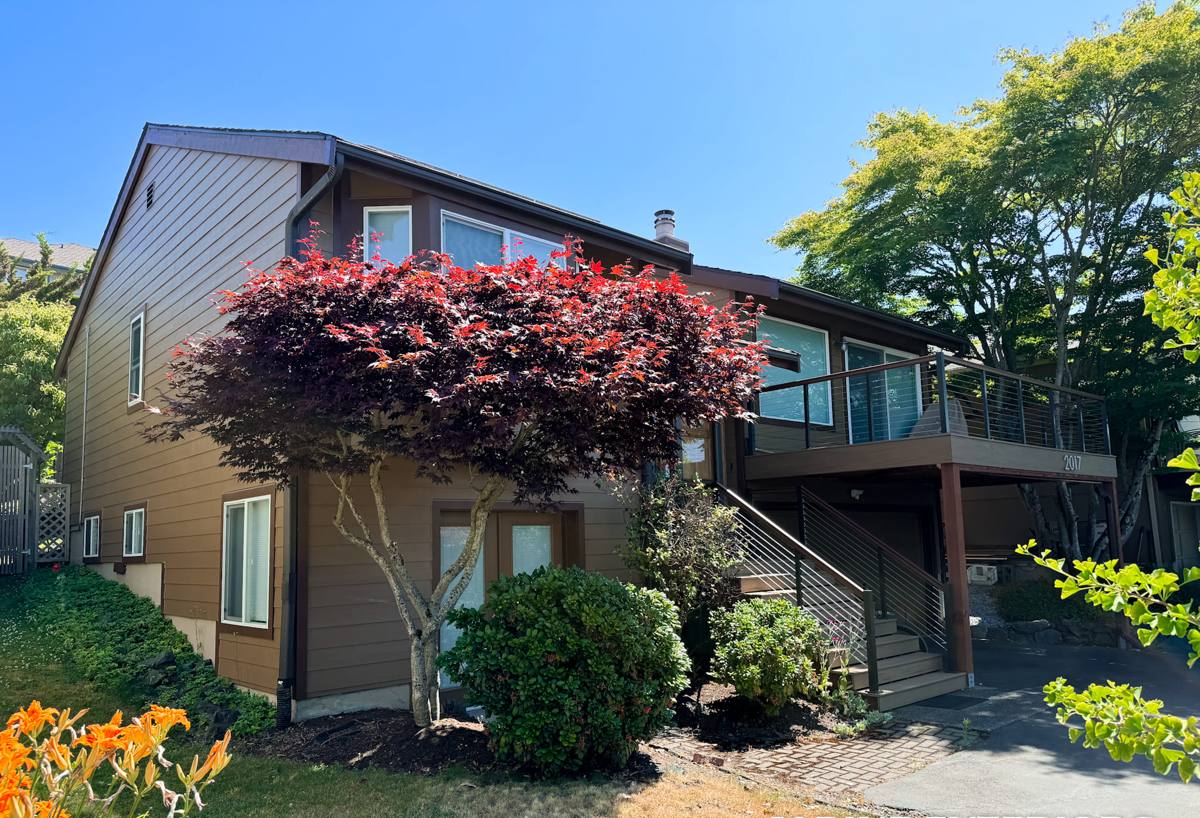
What This Climate Actually Does to a Shingle Roof
Salt Air and Slow Corrosion
Homes closer to the water pick up airborne salt that settles on roofing metal — flashing, nail heads, vent stacks, gutter hardware. Over time this accelerates corrosion on anything that isn't rated for it. A roof can look fine from the ground while the fasteners and flashing underneath are already rusting, which is exactly the kind of failure that shows up as a leak with no obvious cause.
Driving Rain, Not Just Rain
Snohomish gets rain that comes in sideways during winter storms, pushed by wind off the Sound. That matters because a roof only needs to shed water that falls straight down to look adequate in a quick inspection — but wind-driven rain gets pushed up under shingle tabs, into exposed nail heads, and along valleys and edges where the underlayment does the real work. A roof built for calmer weather often skips underlayment upgrades that this area genuinely needs.
Moss Season Is Long, Not Occasional
Shade from mature trees, cooler temperatures, and consistent moisture mean moss and algae have a long growing window here — often most of the year on north- and west-facing slopes. Moss isn't just cosmetic. It holds moisture against the shingle surface, lifts tabs as it grows under the edges, and speeds up granule loss, which is the layer that actually protects the shingle from UV and water.
What a Correctly Installed Roof Includes Around Here
A shingle roof is a system, not a single product. On a home in this area, the parts that get skipped on a cut-rate job are usually the parts that matter most for local weather:
- Ice-and-water shield membrane at eaves, valleys, and around penetrations — not just the minimum code strip, but coverage sized for wind-driven rain, not just snowmelt
- Synthetic underlayment across the full roof, properly lapped, rather than felt that degrades faster under sustained moisture
- Corrosion-resistant flashing and fasteners at chimneys, walls, and vent stacks, given the salt exposure closer to the water
- Balanced intake and exhaust ventilation, so the attic doesn't trap moisture that feeds moss growth from underneath and shortens shingle life from below
- Proper nailing pattern and placement — high-nailing or underdriving fasteners is one of the most common causes of early shingle failure and is invisible until a shingle blows off
- Starter strip and drip edge sized to actually direct water off the roof edge and away from fascia, not just meet minimum code
Any one of these being wrong won't necessarily cause a visible leak in year one. But on a roof exposed to this much sustained moisture, shortcuts compound — a weak point that would take a decade to fail in a dry climate can fail in three or four years here.
Choosing a Shingle for a Snohomish Roof
Not every shingle product performs the same way under wind-driven rain and long moss seasons. The table below covers the practical differences, not marketing claims.
| Shingle Type | Wind Rating (typical) | Realistic Lifespan Here | Best Fit |
|---|---|---|---|
| 3-tab asphalt | 60-70 mph | 15-20 years | Budget-conscious re-roofs, secondary structures |
| Architectural / dimensional | 110-130 mph | 25-30 years | Most Snohomish homes — better wind and impact resistance for the price |
| Algae-resistant (AR) shingles | Same as base product | Adds years of appearance life | North/west-facing roofs, shaded lots, homes near trees |
| Impact-rated (Class 4) | Same as base wind rating | 25-30+ years | Homes wanting insurance discounts or extra hail/debris protection |
Algae-resistant granules matter more here than in most parts of the country. They're treated with copper or zinc compounds that slow the growth of the algae responsible for the dark streaking people usually blame on "dirt." On a shaded, north-facing slope in this area, a non-AR shingle can show visible streaking within a few years — it's not a defect, it's just the wrong product choice for the exposure.
Cost Factors Homeowners Should Actually Understand
Roofing quotes vary for real reasons, not just markup. These are the factors that most affect price on a Snohomish shingle job:
| Factor | Why It Changes the Price |
|---|---|
| Roof pitch and access | Steeper roofs need more safety setup and take longer to work safely |
| Number of existing layers | Tear-off of two layers costs more than one and may reveal deck damage |
| Decking condition | Moisture damage from a long-standing leak often means replacing plywood sections, which isn't visible until tear-off |
| Ventilation changes | Adding or correcting intake/exhaust vents is worth the cost here but adds labor |
| Valley and flashing complexity | More roof planes and penetrations mean more flashing detail work, which is where leaks start if rushed |
Be cautious of quotes that are dramatically lower than others for the same square footage — it's usually a sign that underlayment upgrades, proper flashing, or ventilation work have been left out of the scope, not that the crew found a way to work more efficiently.
How We Approach a Shingle Roof Job
The process is straightforward, but the details are where quality shows up:
- On-site inspection — we look at the existing roof, attic ventilation, and any signs of moisture damage before quoting anything
- Honest scope and shingle recommendation — based on your roof's exposure (sun, shade, wind direction), not a one-size-fits-all pitch
- Tear-off and deck inspection — old material comes off and the decking gets checked for soft spots or rot before anything new goes down
- Underlayment and flashing installation — sized for this area's rain, not just code minimums
- Shingle installation — correct nailing pattern, proper overlap, and attention to valleys and edges
- Ventilation check — intake and exhaust balanced so the attic isn't trapping moisture
- Final walkthrough — we show you what was done and what to watch for going forward
Repair or Replace? How to Tell
Not every roof issue means a full replacement, and a contractor who always recommends replacement isn't doing you any favors. Some general guidance:
Repair is usually reasonable when: the damage is localized (a few missing or lifted shingles, one damaged valley, a single flashing failure), the roof is under roughly 15 years old, and the decking underneath is sound.
Replacement is usually the honest recommendation when: granule loss is widespread, multiple areas are leaking independently, the roof has moss damage across several slopes, or the roof is already near or past its expected lifespan and a repair would just be delaying an inevitable full job.
Maintenance That Actually Extends a Shingle Roof's Life Here
Given how long moss season runs in this area, a little seasonal attention goes further than in drier climates:
- Clear gutters and downspouts at least twice a year so water isn't backing up under the shingle edge
- Treat or gently remove moss on shaded slopes before it spreads under shingle tabs — pressure washing damages granules and should be avoided
- Trim back overhanging branches to reduce shade and debris buildup on north-facing slopes
- Have flashing around chimneys, skylights, and vent stacks checked periodically, especially on homes closer to the water where corrosion is faster
- Check attic ventilation isn't blocked by insulation, since trapped moisture works against the roof from underneath
Why It Matters That We Already Work in Snohomish
A roofing crew that mainly works drier, inland areas will often spec the same underlayment, flashing, and ventilation package everywhere, because it's what holds up where they usually work. That's not a knock on the work — it's just a mismatch for this specific mix of salt air, driving rain, and long moss seasons. A crew that already works Snohomish roofs regularly knows which slopes on which home orientations tend to hold moss, where wind-driven rain actually gets in, and which details are worth the extra material cost versus which are optional. That local pattern recognition is hard to replace with a generic spec sheet.
If you're weighing a repair, a full replacement, or just want a straight answer on what condition your roof is actually in, we're happy to take a look and walk you through it. Use the form below to request a free, no-pressure estimate — we'll tell you what we'd actually recommend for your roof, not just what's easiest to sell.