 Everett
 South Everett's Roofs Work Harder Than People Think
South Everett sits close enough to Puget Sound that salt-laden air is a real factor in how roofing materials age here, and it combines with two other stresses that define roofing in this part of Snohomish County: long stretches of driving rain in fall and winter, and a moss season that can run most of the year on shaded or north-facing slopes. None of these three things alone is unusual for Western Washington. Together, on the same roof, year after year, they shorten the life of fasteners, flashing, and shingle granules faster than a homeowner moving from a drier climate would expect.
That's the context we bring to every roof repair call in South Everett. A crack or a soft spot that would be a minor cosmetic issue in a dry climate can be an active leak path here within one wet season, because the roof rarely gets a real chance to dry out between storms. Repairs done without accounting for that reality tend to fail again within a year or two.
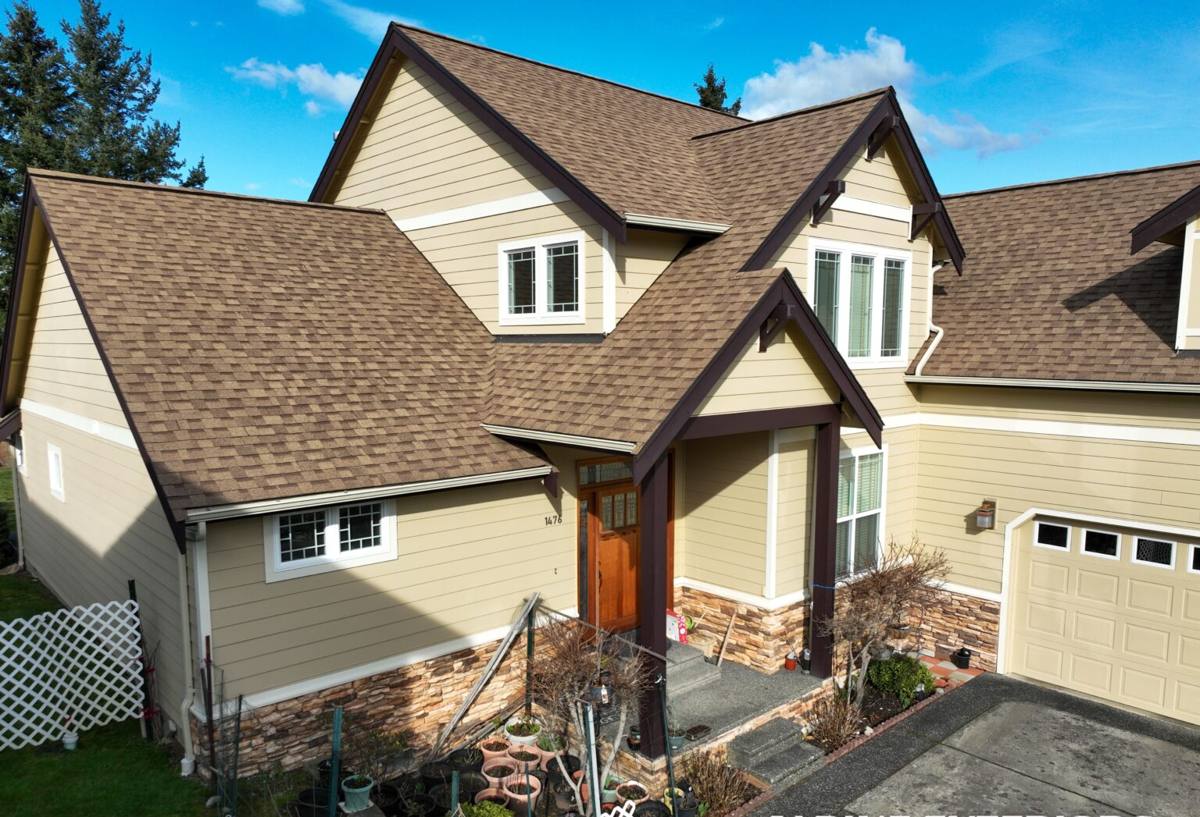
What Salt Air, Rain, and Moss Actually Do to a Roof
Salt Air and Corrosion
Proximity to Puget Sound means airborne salt settles on roofing metal — flashing, fasteners, gutter hardware, vent caps — and accelerates corrosion compared to inland areas. Galvanized fasteners and lower-grade flashing show rust and pitting sooner near the water, and once a fastener head corrodes and loses its seal, water has a direct path under the roofing material.
Driving Rain and Wind-Driven Water
Everett's weather pattern brings rain that often arrives at an angle, pushed by wind off the Sound rather than falling straight down. Wind-driven rain finds weaknesses that vertical rain never would — it works up under shingle edges, through marginal flashing laps, and into any gap around penetrations like vent pipes and chimneys. A repair that only addresses the visible damage and ignores how water actually moves during a real Everett storm will leak again the next time the wind shifts.
Moss and Trapped Moisture
Shaded lots and tree cover are common in South Everett, and moss thrives in exactly that combination of shade and consistent moisture. Moss doesn't just look bad — it holds water against the roofing surface long after the rain stops, works its root structure under shingle tabs and lifts them, and traps debris that clogs valleys and gutters. Left alone, a moss-covered slope stays wet nearly year-round, which is a major reason we see rot in roof decking on roofs that otherwise look intact from the ground.
Signs a South Everett Roof Needs Repair
Most roof problems here don't announce themselves with an obvious hole. They show up as small, easy-to-dismiss signs first. Worth checking for:
- Granules collecting in gutters or at downspout outlets — a sign shingles are wearing thin
- Dark streaks or green-black patches, especially on north-facing or shaded slopes
- Curling, cupping, or lifted shingle edges, particularly on older sections of roof
- Rust staining below metal flashing, vent caps, or exposed fasteners
- Soft or spongy spots underfoot on a roof walk, or sagging visible from the ground
- Water stains on interior ceilings, especially near chimneys, skylights, or where two rooflines meet
- Daylight visible through the roof deck from inside the attic
- Debris buildup or standing water in valleys after a rain
Any one of these on its own doesn't necessarily mean a full replacement is coming. But ignoring them through another wet season usually turns a straightforward repair into a much larger one.
Common Repair Issues We See Around South Everett
| Issue | Typical Cause Locally | What the Repair Involves |
|---|---|---|
| Lifted or missing shingles | Wind-driven rain, age, moss root intrusion | Remove damaged shingles, inspect underlayment and decking, replace with matched material, reseal |
| Flashing leaks (chimney, valley, skylight) | Corrosion from salt air, thermal movement, poor original installation | Remove and replace flashing, reset counterflashing, verify proper lap direction for water flow |
| Rotted decking | Prolonged moisture from moss or a slow leak left unaddressed | Cut out and replace affected decking sections before new roofing goes down |
| Clogged or damaged valleys | Moss, needle debris, undersized valley flashing | Clear debris, repair or replace valley metal, correct water pathway |
| Fastener backout / rust streaking | Salt air corrosion, freeze-thaw cycling | Replace corroded fasteners with corrosion-resistant hardware, reseal penetrations |
What a Correct Roof Repair Actually Involves
A patch that only covers the visible symptom is the most common shortcut in roof repair, and it's the one that costs homeowners the most in the long run. A repair done right starts with figuring out how water actually got in — not just where it's showing up inside the house, since water can travel sideways along decking or rafters before it drips somewhere visible.
That means pulling back roofing material around the damaged area, checking the underlayment and decking underneath for saturation or rot, and confirming the actual entry point before anything gets replaced. Flashing gets special attention, since the majority of leaks we trace back on repair calls originate at a flashing detail — a valley, a chimney, a sidewall, a vent boot — rather than in the open field of the roof.
Materials matter here too. On a roof exposed to salt air and constant moisture, we use corrosion-resistant fasteners and flashing rather than the cheapest available hardware, because the labor to redo a repair costs far more than the small difference in material price up front. And any repair section gets matched to the existing roofing as closely as possible — mismatched shingle color or profile is a cosmetic issue, but mismatched material weight or type can also mean mismatched water-shedding performance.
Our Roof Repair Process
- Inspection. We walk the roof (weather permitting) and check the attic from inside, tracing the leak or damage back to its actual source rather than just the point where it's visible.
- Honest assessment. We tell you what we find in plain terms — including if a repair isn't the right long-term answer and a section or the full roof should be considered instead.
- Written scope and estimate. You get a clear description of the work and the cost before anything starts, with no pressure to decide on the spot.
- Repair. Damaged material comes out, decking is checked and replaced where needed, and new material and flashing go in matched to your existing roof.
- Cleanup and check. We clear the work area of debris and fasteners and do a final check of the repair before we consider the job done.
Repair or Replace? Cost Factors to Weigh
Homeowners often want a simple yes-or-no on repair versus replacement, but the honest answer depends on a few factors specific to the roof in question.
| Factor | Favors Repair | Favors Replacement |
|---|---|---|
| Age of roof | Well within expected lifespan for the material | Near or past the material's typical service life |
| Extent of damage | Isolated to one section or detail | Multiple areas failing, or damage spread across slopes |
| Decking condition | Solid, dry decking under the damaged area | Widespread rot or soft decking found during inspection |
| Moss/algae history | Minor, manageable with cleaning and prevention | Long-term moss growth with evidence of trapped moisture damage |
| Repair history | First repair, or an isolated one-off issue | Repeated repairs to the same area over recent years |
Broadly speaking, a straightforward repair on an otherwise healthy roof is a modest expense measured in the low hundreds to low thousands of dollars depending on scope, while a full replacement is a much larger investment. We'll always start with the least invasive fix that actually solves the problem — we don't push replacement on a roof that doesn't need it.
Preventive Maintenance for South Everett Roofs
Given how much moss and moisture drive roof problems in this area, a little regular maintenance goes a long way toward avoiding repair calls in the first place. Keeping gutters and valleys clear of debris, having moss treated or removed before it establishes a root structure under shingles, and trimming back tree limbs that keep a roof shaded and damp all reduce the conditions that lead to the issues in the table above. A roof that dries out between storms simply ages slower than one that doesn't.
We're also glad to flag small issues during a repair visit — a fastener starting to rust, a flashing lap that's marginal but not yet failing — so you can decide whether to address it now or keep an eye on it, rather than finding out the hard way during the next big storm off the Sound.
Why It Matters to Hire a Crew That Already Works South Everett
Roofing knowledge that applies in a dry climate, or even in a different part of Western Washington away from the water, doesn't always transfer directly to South Everett. Knowing that salt air shortens the service life of certain fasteners and flashing here, that wind-driven rain off the Sound attacks roof details differently than straight-down rain, and that moss season in shaded Snohomish County neighborhoods is a near-constant maintenance factor rather than an occasional nuisance — that's the kind of local knowledge that shapes how a repair should actually be done, not just what it should look like when it's finished.
A crew that works this area regularly also knows what "normal" looks like on a South Everett roof at a given age, which makes it easier to tell you honestly whether a repair is enough or whether you're looking at something bigger — instead of guessing based on assumptions from a different climate.
If you've noticed any of the signs above, or just want an honest read on your roof's condition, we're happy to take a look and give you a straightforward, no-pressure estimate using the form below.