 Everett
 Roof Replacement Built for the Snohomish Climate
Homes in and around Snohomish deal with a specific combination of weather that a lot of roofing crews never have to think about: salt-tinged air drifting in off Puget Sound, long stretches of driving rain that come in sideways more often than straight down, and a moss season that can run nine or ten months out of the year under our tree cover and cloud ceiling. None of that is exotic or unusual for anyone who has lived here a while — but it does mean a roof that was designed and installed for a drier, calmer climate will wear out faster here, sometimes years before its rated life is up.
A roof replacement in this area isn't just "put new shingles where the old ones were." It's an opportunity to correct whatever the original roof got wrong — usually ventilation, underlayment choice, or moss control — so the next roof actually holds up for its full service life instead of fighting the same problems all over again.
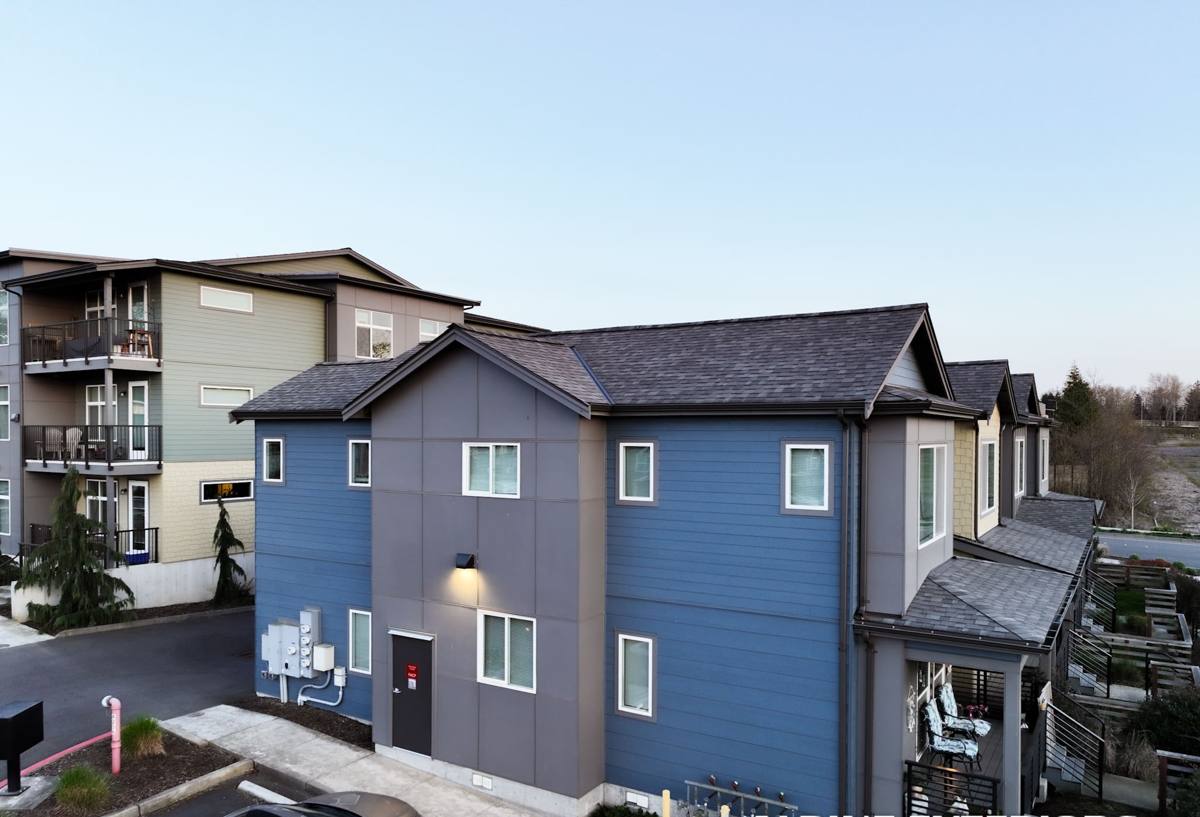
What Snohomish-Area Roofs Are Actually Up Against
Moss and Organic Growth
Moss doesn't just sit on top of shingles looking bad. It holds moisture against the roofing material, works its way under shingle tabs and into fastener lines, and over time it lifts and separates layers that are supposed to stay tight. On a roof with poor airflow or too much shade, moss can shorten the usable life of asphalt shingles noticeably. Replacement is the right time to deal with the root causes — tree coverage, ventilation, and roof pitch — not just scrape it off and hope.
Driving Rain and Wind-Driven Moisture
Storms coming off the Sound don't always drop rain straight down. Wind-driven rain gets pushed sideways and upward under eaves, around valleys, and into any gap in flashing that a calmer climate could get away with. Roofs here need underlayment and flashing details sized for that reality, not the minimum a manufacturer spec sheet allows for a dry climate.
Salt Air and Metal Components
Everett and the surrounding Snohomish County shoreline get enough marine air that unprotected or poorly coated metal — flashing, fasteners, vents — corrodes faster than it would inland. That corrosion is often the first failure point on an otherwise sound roof, and it's cheap to prevent with the right materials up front.
Freeze-Thaw and Temperature Swings
We don't get brutal winters here, but we do get enough freeze-thaw cycling on cold, damp mornings to stress roofing materials that are already saturated from weeks of rain. Materials that handle constant moisture well tend to handle our winters better too.
Signs a Snohomish-Area Roof Needs Replacing, Not Patching
- Granule loss heavy enough that you're finding grit in gutters and downspouts every time it rains
- Moss established in the shingle mat itself, not just sitting loosely on the surface
- Shingles curling, cupping, or losing their tab seal, especially on south- and west-facing slopes
- Soft spots or sagging when walked on, which usually means deck-level moisture damage
- Daylight visible through the roof deck from the attic, or damp insulation below the roofline
- Repeated leaks in different spots each winter rather than one recurring, fixable location
- A roof that's 18-25+ years old (asphalt) and has never had a full tear-off
If you're only seeing one or two of these, a repair may still make sense. If you're seeing several at once, or the roof is past its expected age and already needed patches this past winter, replacement is usually the more honest recommendation — and cheaper over a five-year horizon than another round of patch-and-hope.
What a Correct Roof Replacement Involves Here
Full Tear-Off, Not Overlay
In our climate, overlaying new shingles on top of old ones traps moisture that's already working its way into the deck and hides the deck condition entirely. A full tear-off lets us actually see the plywood or OSB underneath, replace any sections that have soaked through, and start the new roof on a dry, sound base.
Ice-and-Water Membrane at Vulnerable Points
Eaves, valleys, and any low-slope transitions get a self-adhering membrane underneath the main underlayment. This is standard practice for a reason in a climate with this much sustained wet weather — it's the backup layer for the spots where wind-driven rain and ice dams (on the rare cold snap) are most likely to find a way in.
Ventilation That Matches the Roof
Balanced intake and exhaust ventilation is one of the biggest factors in how long a roof lasts here, and it's also the piece most often done wrong on the original build. Proper ventilation keeps the deck dry from underneath, which matters just as much as keeping rain out from above, and it directly slows moss regrowth.
Flashing and Fastener Materials Suited to Marine Air
We spec corrosion-resistant flashing and fasteners on Snohomish-area jobs as standard, not as an upsell. Given how much of the county sits within reach of salt-laden air, using standard-grade metal here is a maintenance problem waiting to happen.
Moss Prevention Built In
Zinc or copper strips along the ridge, proper attic ventilation, and — where the property allows it — recommending selective tree trimming to improve sun exposure are all part of a roof replacement done for this climate rather than a generic one.
Material Options and Trade-Offs
| Material | Typical Lifespan Here | How It Handles Moss/Moisture | Trade-Offs |
|---|---|---|---|
| Architectural Asphalt Shingle | 20-30 years | Good with proper ventilation and moss-resistant granules; needs periodic cleaning | Most affordable, widest color range, proven install methods |
| Standing Seam Metal | 40-50+ years | Excellent — sheds moss and moisture faster than any shingle | Higher upfront cost; installation quality matters even more in wind-driven rain |
| Synthetic/Composite Shingle | 30-40 years | Strong moisture resistance; less organic-friendly surface than asphalt | Cost sits between asphalt and metal; fewer local installers experienced with it |
| Cedar Shake | 20-30 years with upkeep | High moss risk in our climate without diligent maintenance | Traditional look but the highest ongoing maintenance burden here; we're upfront that this is a real commitment, not a set-it-and-forget-it roof |
We'll walk through these options honestly for your specific roof, budget, and how much upkeep you actually want to sign up for. There's no single "best" material — there's a best fit for your house and how long you plan to be in it.
Our Replacement Process
- On-site inspection — we get on the roof, check the deck condition where accessible, look at current ventilation, and assess moss/moisture damage before quoting anything
- Written estimate — clear scope, material options, and a real price range, no vague allowances buried in fine print
- Scheduling around weather windows — we plan tear-off and dry-in around Snohomish County's rain patterns so your home isn't exposed longer than necessary
- Full tear-off and deck inspection — old roofing removed, deck checked and repaired as needed, all documented before we cover it back up
- Underlayment, flashing, and ventilation install — the parts that determine whether this roof still looks and performs well in year fifteen
- Final walkthrough — we go over the finished roof with you, including care and moss-prevention basics specific to your property's sun and tree exposure
Why a Crew That Already Works Snohomish Matters
Roofing crews unfamiliar with this specific pocket of Washington often under-spec ventilation, skip moss-resistant details, or use standard-grade metal components because that's what works fine where they usually build. None of those shortcuts show up as a problem on day one — they show up two or three winters in, as premature moss, corroded flashing, or a leak in a spot that should never have leaked. A crew that regularly works Everett and the surrounding Snohomish communities builds these details in as standard practice, because we've seen what happens when they're skipped on roofs just like yours.
What Affects Your Roof Replacement Cost
- Roof size and number of facets, valleys, and penetrations (chimneys, skylights, vents)
- Current deck condition and how much plywood/OSB replacement is needed once we open it up
- Material selected — asphalt, synthetic, or metal carry meaningfully different price points
- Pitch and accessibility — steep or hard-to-access roofs take longer and require more safety setup
- Extent of ventilation and flashing upgrades needed to bring an older roof up to current standards
- Tree cover and moss remediation work, if the property needs it addressed as part of the job
We give straight, itemized numbers after an actual inspection — not a phone-quote guess — because two roofs of the same square footage can have very different scopes once you're standing on them.
If your roof is showing its age, or you just want an honest read on whether it's a repair year or a replacement year, we're glad to come take a look. Fill out the form below for a free, no-pressure estimate on your Snohomish-area home.