 Everett
 Siding Repair in Silver Lake: A Different Set of Problems Than a New Build
Silver Lake is one of the more established residential pockets on the south side of Everett, and that means a lot of the siding we get called out to repair here has been on the house for fifteen, twenty, even thirty-plus years. Repair work is different from new-construction siding. It's diagnostic first, technical second — you have to figure out what actually failed, why it failed, and whether the damage you can see is the whole story or just the part that finally became visible.
The homes around Silver Lake sit under a mix of mature tree cover and open yard, with the lake itself adding ambient humidity to certain lots and the broader Snohomish County marine climate pushing damp, salt-tinged air through the whole area most of the year. That combination — shade, moisture, and a wet season that runs long — is exactly the environment that finds every weak point in a siding system. Repair calls in this neighborhood tend to cluster around the same handful of root causes, and knowing what those are is most of the battle.
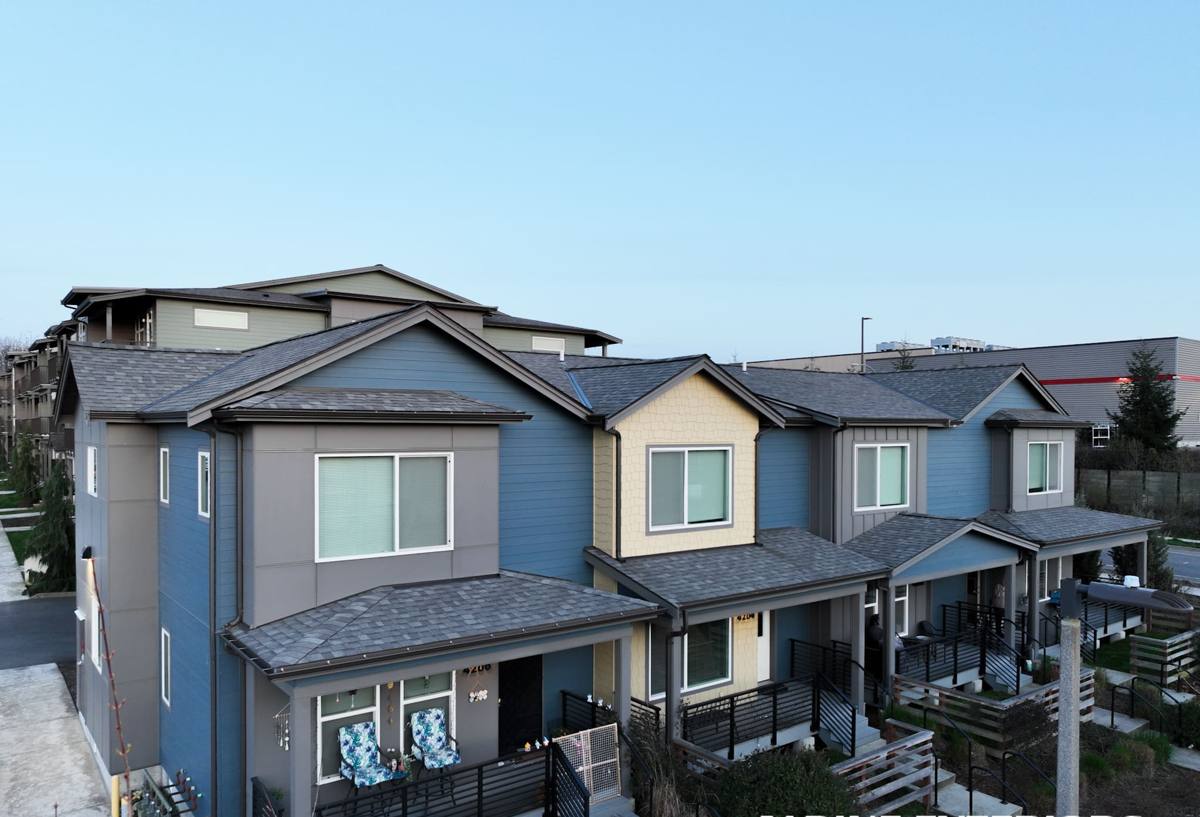
What Silver Lake's Climate Does to Siding Over Time
Driving Rain and Wind-Driven Moisture
Everett gets its share of storms that don't just fall straight down — wind pushes rain sideways into wall assemblies, corner boards, and anywhere two siding pieces meet. Over years, that wind-driven moisture finds every gap in caulking, every under-flashed window, and every spot where siding was face-nailed too tight or too loose. Repair work here is as much about fixing water paths as it is about replacing damaged boards.
Shade and a Long Moss Season
Tree-lined lots around Silver Lake hold moisture longer than open, sun-exposed properties. Moss and algae get a real foothold on north-facing walls and anywhere siding stays damp between rain events, which in this climate can be most of the year. Moss isn't just cosmetic — it holds water against the siding surface and, on the wrong substrate, accelerates rot underneath.
Salt Air and Coastal Influence
Everett sits on Puget Sound, and that marine influence — salt-laden air, higher ambient humidity, more freeze-thaw swing days than homes further inland — reaches Silver Lake too. It's harder on fasteners, caulking, and any siding material that relies on a factory coating to keep moisture out. Repairs that don't account for this environment tend to fail again within a few seasons.
Signs Your Siding Needs Repair, Not Just a Look
Most homeowners don't call about siding until something is visibly wrong, but a lot of damage starts small and stays hidden behind trim or under overlapping courses. Here's what we look for, and what you should look for too:
- Soft or spongy spots when you press on siding near the bottom courses or below windows
- Visible cracking, buckling, or warping, especially on sun-and-shade transition walls
- Peeling or bubbling paint, which usually means moisture is trapped underneath
- Dark streaking, moss, or persistent green growth that comes back after cleaning
- Gaps opening up at butt joints, corner boards, or around window and door trim
- Siding that feels loose or has visible nail pops
- A musty smell or visible staining on interior walls that back up to exterior siding
- Damage after a wind or storm event — cracked, dented, or missing sections
Any one of these can be a simple fix. Several of them together, especially on an older house, usually means the underlying water-resistive barrier or sheathing needs a look before we just patch the surface.
What a Correct Siding Repair Actually Involves
A repair that just swaps a damaged board for a new one, caulks the edges, and calls it done is a repair that's likely to fail again. Doing it right means treating the damaged area as a window into the wall assembly, not just a cosmetic patch:
Step One: Find the Actual Water Path
Visible damage is the symptom. We trace it back — is water getting in above the damaged section, through a flashing gap, a failed sealant joint, or a penetration like a hose bib or light fixture? Replacing siding without fixing the water path just delays the next repair call.
Step Two: Check What's Behind the Siding
Once damaged siding is removed, we look at the sheathing and house wrap underneath. If there's rot, soft wood, or a compromised weather barrier, that gets addressed before anything new goes back on. This is the step that gets skipped by crews trying to move fast, and it's the step that determines whether a repair lasts.
Step Three: Match or Transition the Material Correctly
On an existing James Hardie home, a repair should tie in with the correct HZ5 product, matched profile, and ColorPlus-finished boards where possible, so the patch doesn't stand out or behave differently than the surrounding wall. On a house with older or different siding, we'll talk honestly about whether a patch is workable or whether the smarter long-term move is transitioning that section — or the whole elevation — to fiber cement.
Step Four: Seal, Fasten, and Finish to Spec
Correct fastening pattern, proper joint treatment, and manufacturer-approved caulking and touch-up paint — not just whatever's on the truck. Small details here are the difference between a repair that holds for a decade and one that reopens after one wet winter.
Common Silver Lake Siding Repair Scenarios
| What We See | Likely Cause | Typical Fix |
|---|---|---|
| Soft, crumbling siding near ground level | Splash-back moisture, poor grading, or missing kickout flashing | Replace damaged sections, correct drainage path, address flashing |
| Persistent moss on shaded walls | Long moisture retention under tree cover | Clean, treat, and improve airflow or drainage where possible; assess substrate for hidden rot |
| Cracked boards after a storm | Wind-driven debris or impact damage | Section replacement matched to existing profile and color |
| Gaps and separation at joints | Original installation with tight-nailed or unsealed joints | Re-fasten to spec, re-seal joints with proper sealant |
| Paint peeling in sheets | Trapped moisture behind an older paint system | Investigate moisture source, dry out assembly, refinish or replace as needed |
Repair or Replace? An Honest Look
Not every damaged wall needs a full re-side, and we're not going to tell you it does. But there's a point where patch repairs stop making financial sense. Here's how we walk homeowners through that decision:
- Isolated damage on an otherwise sound wall — repair is usually the right call, especially if the siding is James Hardie and matching material is straightforward.
- Damage concentrated in one problem area (a chronically wet corner, a bad flashing detail) — repair that area properly, including the water path, not just the siding.
- Widespread soft spots, multiple elevations affected, or repeated failures in the same spots — this is usually a sign the whole wall assembly or siding material is at the end of its service life, and repair dollars are better put toward replacement.
- Older vinyl, LP SmartSide, or untreated wood siding with recurring rot — these materials have known failure patterns in a wet marine climate, and repeated repair can cost more over time than a planned transition to a better-performing material.
We'll always tell you honestly which category your house falls into. A good contractor doesn't upsell a repair into a replacement — but they also shouldn't patch a wall they know is going to fail again in two years without saying so.
Why We Repair — and Replace — With James Hardie Fiber Cement Only
We made a deliberate decision to install and repair with James Hardie fiber cement siding exclusively. We don't install vinyl, LP SmartSide, Cemplank, Allura, or primed wood siding, and when we're called for a repair on a house with one of those materials, we'll say so plainly rather than pretend it's not relevant.
Here's why that standard matters, especially in a climate like this one: Hardie's fiber cement is non-combustible and doesn't feed moisture into the wall the way some engineered wood products can once a coating or seal is compromised. The ColorPlus factory finish is baked on to resist the fading and peeling that plagues field-painted siding in a climate with this much sun-shade cycling and moisture. And the HZ5 product line is engineered specifically for wetter, colder climates like ours — it's not a generic product retrofitted for the Pacific Northwest.
When we repair a Hardie-sided home, we can match the exact plank profile and, in many cases, the factory color, because Hardie's product lines are consistent and well-documented. When we repair or transition a home with a different siding material, we're honest that a perfect match may not be possible, and that if the house is heading toward a full re-side eventually, fiber cement is the material we'd put on it and stand behind with a strong transferable warranty.
Our Process for a Silver Lake Repair Call
- On-site assessment. We look at the visible damage and probe the surrounding area — most damage is bigger below the surface than above it.
- Honest scope and estimate. You get a clear explanation of what's damaged, why, and whether this is a targeted repair or a sign of something larger.
- Correct removal. We take off only what needs to come off, but we don't stop at the first layer if there's reason to check what's underneath.
- Fix the cause, not just the symptom. Flashing, sealant, drainage, or fastening issues get corrected as part of the repair, not left for the next call.
- Match and finish. Repaired sections are fastened, sealed, and finished to match the surrounding wall as closely as the existing material allows.
- Walkthrough. We show you what we found and what we did about it before we call the job done.
Why a Crew That Already Works Silver Lake Matters
Siding repair isn't a one-size job. A crew that regularly works this part of Everett has already seen how this specific mix of tree cover, lake-adjacent humidity, and Snohomish County's storm patterns plays out on real houses — which walls tend to hold moisture, which original installation habits from a couple decades ago cause recurring problems, and which fixes actually hold up through a full wet season rather than just looking good on repair day. That local pattern-recognition is worth more than it sounds like, because it's the difference between a repair that solves the problem and one that just delays the next call.
If you've got damaged, aging, or failing siding on a home in or near Silver Lake, we're happy to take a look, tell you honestly what we find, and give you options — repair, targeted replacement, or a broader plan — with no pressure either way. Reach out for a free estimate using the form below.