 Everett
 Why Glenhaven Siding Wears Differently Than Siding Inland
Glenhaven sits close enough to Puget Sound that homes here take on a different kind of weathering than a house forty miles east of Everett. It's not one big storm that does the damage — it's the daily grind. Moist salt-laced air works into seams and fastener holes. Driving rain off the Sound hits siding at an angle, not straight down, which pushes water into laps and joints that were never designed to shed water sideways. And then there's the long gray stretch from late fall through spring when siding barely gets a chance to dry out between rain events, which is exactly the kind of environment moss and algae need to take hold.
Snohomish County's climate isn't harsh in the way a hailstorm or a hard freeze is harsh. It's harsh in a slow, cumulative way. Siding that's rated for a generic climate zone often isn't rated for this specific combination of salt, sustained moisture, and mild temperatures that never quite dry things out. That's the gap a lot of Glenhaven homeowners don't find out about until their siding is already failing.
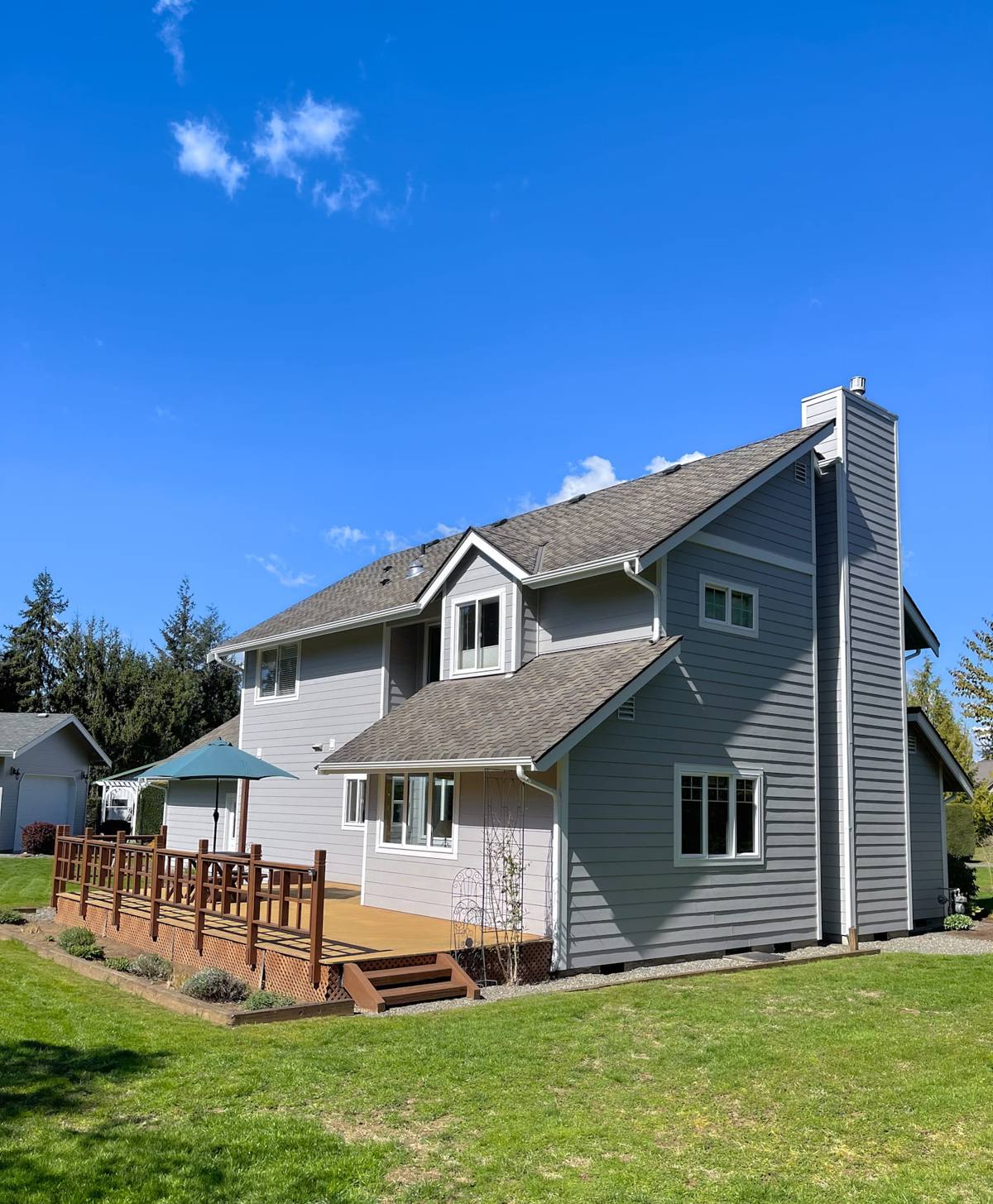
Signs a Glenhaven Home Needs Replacement, Not Another Patch
Moisture damage
Look for soft or spongy spots when you press on siding near the bottom courses, around window trim, and at inside corners. Bubbling or peeling paint, especially on the north and west-facing walls that catch the most wind-driven rain, is often a sign that water is getting behind the siding rather than just weathering the surface.
Moss, algae, and mildew
Some surface growth is normal for this climate and doesn't mean the siding has failed. But moss that keeps coming back within weeks of cleaning, or dark streaking that spreads across a whole wall section, usually means the siding material itself is holding moisture rather than shedding it — that's a material problem, not a cleaning problem.
Movement and structural signs
Cracking at panel seams, siding that's visibly bowed or separated from the wall, and boards that have warped out of plane are signs the material is past patching. On older homes in the area, this shows up most on walls that get the least sun exposure to dry out after storms.
Why We Install Only James Hardie Fiber Cement
We get asked why we don't offer vinyl, LP SmartSide, cedar, primed spruce, or other fiber cement brands like Cemplank or Allura. It's a fair question, and the honest answer is that we've made a standard for ourselves and we stick to it.
Vinyl is inexpensive and low-maintenance, but it's a thin plastic product that expands and contracts with temperature swings, and in driving rain it relies almost entirely on lap geometry — not sealed seams — to keep water out. That works fine in a lot of climates. In a climate with this much sustained wind-driven moisture, we've seen it fall short. LP SmartSide is an engineered wood product with an OSB core; treated and installed correctly it performs well, but wood-based cores are inherently more sensitive to sustained moisture exposure than a cement-based product, and that's a real trade-off in a marine climate. Cedar and primed spruce look great when new but demand ongoing maintenance — sealing, painting, moisture monitoring — that most homeowners underestimate until they're several years in.
James Hardie fiber cement is non-combustible, dimensionally stable across temperature and humidity swings, and Hardie engineers specific product lines (their HZ5 line, for example) for exactly the wet, coastal-influenced climates that Western Washington sits in. The factory-applied ColorPlus finish is baked on under controlled conditions, which gives it better adhesion and color retention than most field-applied paint — meaning less repainting over the life of the siding. Combined with a strong transferable warranty, it's the product we're comfortable standing behind on a Glenhaven home for the long haul. We don't say other brands of fiber cement are bad products — we simply standardized on Hardie because it's the one we trust enough to install exclusively.
What a Correct Siding Replacement Actually Involves
Tear-off and what's underneath
Removing the old siding is also when the sheathing gets its real inspection. Any soft, delaminated, or water-damaged sheathing found underneath needs to be addressed before new siding goes up — covering damaged sheathing with new siding just hides the problem for a few more years.
Weather-resistive barrier and flashing
A correctly lapped weather-resistive barrier, properly integrated window and door flashing, and correct kick-out flashing at roof-to-wall intersections matter more in this climate than almost anywhere else in the state. These details are what stop wind-driven rain from reaching the sheathing in the first place — the siding itself is the second line of defense, not the first.
Installation to manufacturer spec
Hardie siding has specific requirements for fastener placement, panel gaps, ground clearance, and joint treatment. Installed to spec, it performs the way it's engineered to. Installed with shortcuts — panels butted too tight, fasteners overdriven, clearance from grade ignored — it can trap moisture and fail well before its expected lifespan, regardless of how good the product itself is.
Finish
Most Glenhaven jobs use factory ColorPlus finish, which comes cured and doesn't need field painting. Where a custom color or specific trim detail calls for field-applied paint, we use products and application methods suited to a marine climate.
| Cost Factor | Why It Matters in Glenhaven |
|---|---|
| Sheathing condition | Hidden moisture damage found at tear-off adds repair scope before new siding can go on correctly |
| Home size and wall complexity | More corners, dormers, and trim details mean more flashing and cut work |
| Siding profile | Lap, shingle, and panel styles vary in material and labor cost |
| Finish choice | Factory ColorPlus vs. field-applied paint affects both upfront cost and future maintenance |
| Access and site conditions | Grade, landscaping, and setbacks common on Glenhaven lots can affect staging and labor time |
Our Process for Glenhaven Homeowners
We start with a walk-around assessment of the current siding, trim, and any visible moisture issues, and give you a straight answer on whether replacement is actually the right call or whether a repair will hold. If replacement makes sense, we scope the tear-off, sheathing inspection, flashing details, and Hardie product line together so there are no surprises mid-project. We also plan around the rain calendar as much as possible — scheduling tear-off and dry-in work during better weather windows is part of doing this job right in this climate, not an afterthought.
What to Ask Before You Hire a Siding Contractor
- Do they carry current WA state contractor licensing and insurance, and will they show it without being asked twice?
- Do they inspect and address sheathing damage, or just install over what's there?
- Do they detail how they handle window, door, and roof-to-wall flashing — not just "we install siding"?
- Are they installing to the manufacturer's published fastening and clearance specs, or their own shortcuts?
- Do they have experience with homes in coastal-influenced neighborhoods, or mostly inland work?
- Is the warranty from the manufacturer transferable if you sell the home?
Why a Crew That Already Works Glenhaven Matters
A contractor who works this area regularly has already seen how homes here weather — which walls take the worst of the wind-driven rain, how fast moss comes back on north-facing siding, what sheathing damage typically looks like on homes of a certain age in this part of Everett. That's not something you can fully substitute with a generic checklist. It shows up in small decisions on the job: where to pay extra attention to flashing, which details are worth the extra time given what this climate does to a house over the years.
Caring for Your New Siding Through Moss Season
Correctly installed Hardie siding needs far less upkeep than wood or vinyl, but it's not zero-maintenance. A gentle rinse once or twice a year — before moss season sets in and again partway through — keeps growth from getting established. Keep gutters clear so overflow isn't running down siding faces, and keep landscaping trimmed back so walls get some airflow and sun exposure to dry out between storms. Small maintenance habits like these go a long way toward getting the full lifespan out of the material.
If you're weighing a siding replacement for a Glenhaven home, we're happy to take a look and give you a straight, no-pressure estimate — no obligation, just an honest read on what your home actually needs.