 Everett
 Why Lynnwood Roofs Wear Out Differently Than Roofs Inland
Lynnwood sits close enough to Puget Sound and the Snohomish County lowlands that roofs here deal with a specific combination of stressors: salt-tinged marine air, long stretches of driving rain off the water, and a shaded, damp climate that keeps moss and algae active for most of the year. None of these factors are dramatic on their own, but stacked together over ten or fifteen years, they shorten the useful life of a roof faster than homeowners expect, especially on properties with mature trees or north-facing slopes that never fully dry out between storms.
A roof replacement here isn't just about swapping old shingles for new ones. It's about accounting for how this specific climate attacks a roof system — at the granule layer, at the fasteners, at the underlayment, and at the ventilation path — and building back a system that's actually suited to it.
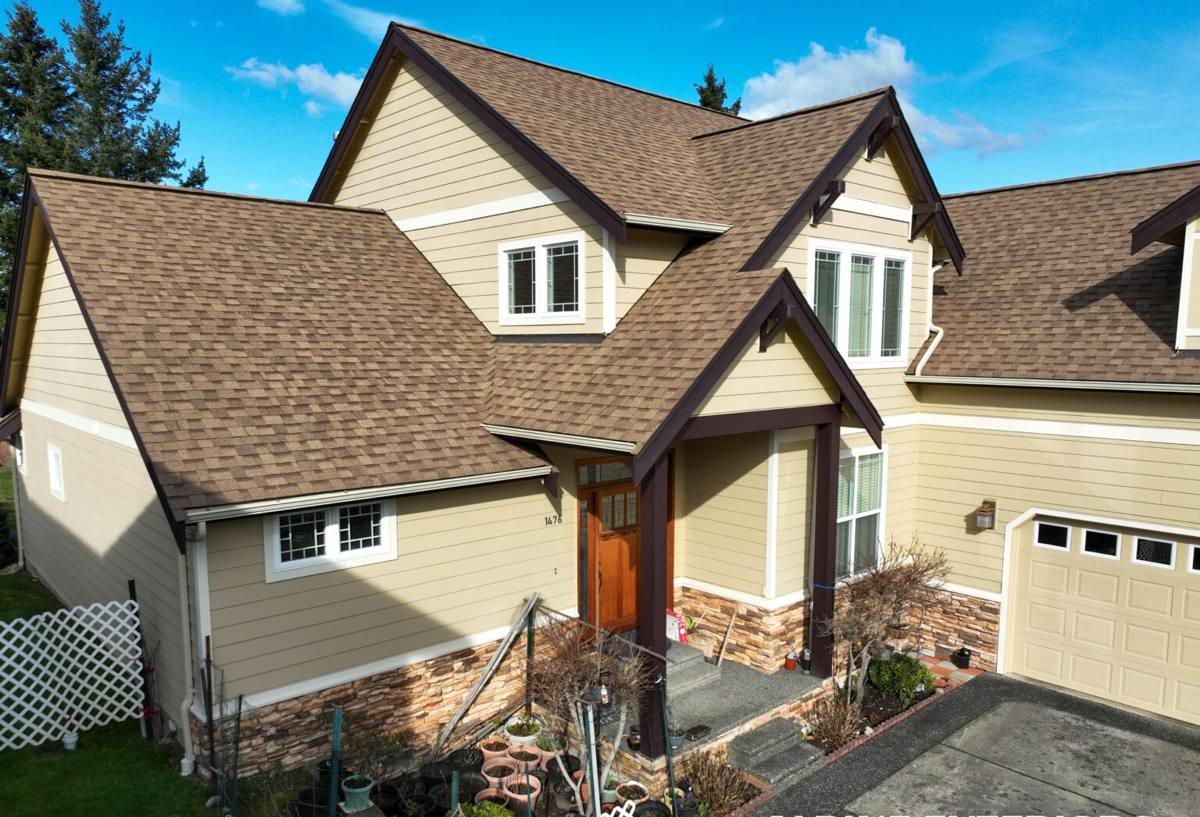
Signs a Lynnwood Roof Has Reached Replacement Age
Repair makes sense when a roof has isolated damage and years of usable life left. Replacement makes sense when the roofing material itself has degraded broadly, even if it isn't leaking yet. In this climate, we typically see a few consistent warning signs:
- Heavy granule loss showing up in gutters after every rain, leaving bare, shiny patches on the shingle surface
- Moss colonies established along shaded edges, ridgelines, or valleys, not just surface algae staining
- Shingles that have curled, cupped, or gone brittle enough to crack when lifted for inspection
- Soft spots or visible sagging in the roof deck, often a sign moisture has been getting past the surface layer for a while
- Recurring leaks around the same penetration or valley even after prior repairs
- A roof at or past 20-25 years old on standard composition shingle, which is a realistic ceiling in this climate rather than the 30-year mark quoted on the packaging
If a roof is showing two or more of these at once, patch repairs tend to become a cycle of chasing new leak points rather than solving the underlying problem.
Moss Is a Symptom, Not Just an Eyesore
Moss on a Lynnwood roof usually means moisture is sitting on the shingle surface longer than it should, often due to shade, low slope, or debris buildup. As moss roots work into the shingle mat, it lifts tabs, holds water against the surface, and accelerates granule loss underneath the growth. By the time moss is heavy enough to be visible from the ground, it has typically been doing quiet damage for a season or two already.
Choosing a Roofing Material Built for This Climate
Every roofing material has trade-offs. In a marine, moss-prone climate like Snohomish County, the deciding factors usually come down to moisture behavior, moss resistance, and how the material handles repeated wet-dry cycling rather than pure upfront cost.
| Material | Moisture & Moss Resistance | Typical Lifespan Here | Notes |
|---|---|---|---|
| Standard 3-tab asphalt shingle | Fair — prone to moss and granule loss in shaded areas | 15-20 years | Lowest upfront cost, shortest realistic lifespan locally |
| Architectural (dimensional) asphalt shingle | Good, especially with algae-resistant granules | 22-28 years | Best balance of cost and durability for most Lynnwood homes |
| Standing seam metal | Excellent — sheds water and resists moss growth well | 40-50+ years | Higher upfront cost, lower long-term maintenance |
| Cedar shake (untreated) | Poor in shaded, damp conditions | 15-20 years with heavy upkeep | We generally steer homeowners away from untreated cedar on shaded lots here — the maintenance burden and moisture retention are difficult to manage long-term, not because the material is inherently bad, but because this specific climate is unusually hard on it |
| Synthetic composite shake/slate | Very good — engineered to resist moisture uptake | 30-50 years | Gives the cedar or slate look without the moisture sensitivity |
For most Lynnwood homes, we recommend algae-resistant architectural asphalt shingle as the practical default, with metal or synthetic composite as the upgrade path for homes with heavy shade, low-slope sections, or owners planning to stay long-term and minimize future moss treatment.
What a Correct Roof Replacement Actually Involves
A roof replacement is only as good as the layers nobody sees once it's finished. In this climate, cutting corners on any of the following is where premature leaks and moss come back within a few years instead of a couple decades.
Full Tear-Off and Deck Inspection
We remove the existing roofing down to the deck rather than layering over it. That's the only way to actually inspect the sheathing for soft spots, rot, or delamination caused by long-term moisture — problems that are common on older Lynnwood roofs and invisible from above.
Ice and Water Shield in Vulnerable Areas
Valleys, eaves, and roof penetrations get a self-adhering waterproof membrane underneath the shingles. With the amount of driving, wind-blown rain this area sees, these are the spots where water gets pushed backward under standard felt underlayment if it isn't properly protected.
Synthetic Underlayment Across the Field
A quality synthetic underlayment resists moisture absorption far better than old-style felt paper, which matters on a roof that may sit under damp conditions for extended stretches between dry spells.
Proper Flashing at Every Penetration
Chimneys, vents, skylights, and wall transitions are common leak points regardless of climate, but the constant moisture cycling here makes sloppy flashing work fail faster than it would in a drier region.
Ventilation and Moisture Control
Roof ventilation is easy to overlook because it's invisible from the ground, but it directly affects both roof lifespan and moss regrowth. A roof deck that can't breathe traps moisture from below, which shortens shingle life from the underside even if the surface looks fine. Balanced intake and exhaust ventilation also helps keep the underside of the deck drier, which reduces the conditions that let moss and algae take hold on the surface above it. During a replacement, we evaluate existing ventilation and correct undersized or blocked intake and exhaust as part of the job rather than as a separate upsell.
Our Roof Replacement Process for Lynnwood Homes
- On-site inspection and honest assessment — we look at the current roof, attic ventilation, and any moisture or moss patterns before recommending replacement over repair.
- Material selection based on the specific property — shade level, roof slope, and how long the owner plans to stay in the home all factor into the recommendation.
- Written estimate with a clear scope — what's being torn off, what underlayment and flashing details are included, and what the ventilation plan looks like.
- Permitting and scheduling — handled around realistic weather windows rather than squeezed in during the wettest stretches of the year when possible.
- Tear-off and deck repair — any rotted or soft sheathing found during tear-off is addressed before new material goes down, with the homeowner informed first.
- Installation — underlayment, ice and water shield, flashing, and the new roofing material installed to manufacturer specification.
- Cleanup and magnetic sweep — full site cleanup including a nail sweep of the yard and driveway.
- Final walkthrough — reviewing the finished roof and ventilation work with the homeowner before closing out the job.
Timing a Replacement Around Snohomish County Weather
Roofing can be done in the Pacific Northwest for most of the year, but late spring through early fall generally offers the most predictable dry windows for tear-off and installation. That said, roofs don't always wait for ideal weather — a failing roof heading into the long wet season is a legitimate reason to move sooner rather than wait for a calendar month. We plan around forecasted weather windows and stage materials to minimize how long a deck is exposed during any given work day.
Why Hiring a Crew That Already Works in Lynnwood Matters
A roofing crew based outside the region can install a technically correct roof and still miss the local details that matter most here — how much ventilation a shaded, moss-prone lot actually needs, which valleys tend to take the worst of the wind-driven rain, or how local permitting works. Crews who work Snohomish County regularly have already seen how different materials and details perform after a few Puget Sound winters, not just on paper.
When vetting any roofing contractor for a replacement, it's worth checking for:
- Current Washington state contractor licensing and liability insurance
- A written estimate that spells out underlayment, flashing, and ventilation details, not just "tear off and reroof"
- A manufacturer-backed warranty on materials in addition to a workmanship warranty from the contractor
- Willingness to explain why they're recommending one material over another for your specific roof, rather than a single default pitch
- Local references or a track record of jobs in the same general area
Protecting the Investment After Replacement
A new roof still needs basic upkeep in this climate to hit its full lifespan. Keeping gutters clear, trimming back overhanging branches that keep sections of roof shaded and damp, and having moss growth addressed early rather than left to spread all go a long way toward protecting a replacement that's meant to last decades, not years.
If your roof is showing its age or you're just trying to figure out whether repair or replacement makes sense for your Lynnwood home, we're happy to take a look and give you a straight answer. Reach out for a free, no-pressure estimate using the form below.