 Everett
 North Everett Roofs Take a Different Kind of Beating
North Everett sits close enough to the water that salt-laden air is a constant factor in how roofing materials age, and Snohomish County's wet season isn't a once-in-a-while event — it's months of low-angle, wind-driven rain that finds every weak seam a roof has. Add in the tree cover common to older North Everett neighborhoods, and you get a long moss season that runs from fall through spring. None of this means a roof is doomed. It means a roof here needs different attention than the same roof would need somewhere drier and more exposed to open sun.
Repair work in this part of Everett is rarely about one dramatic failure. More often it's a handful of smaller issues — a cracked flashing seal, a patch of lifted shingles, moss holding moisture against the deck — that compound over a wet winter into a leak that shows up somewhere unexpected inside the house. Catching and correcting those issues early is what keeps a repair a repair, instead of turning it into a full re-roof.
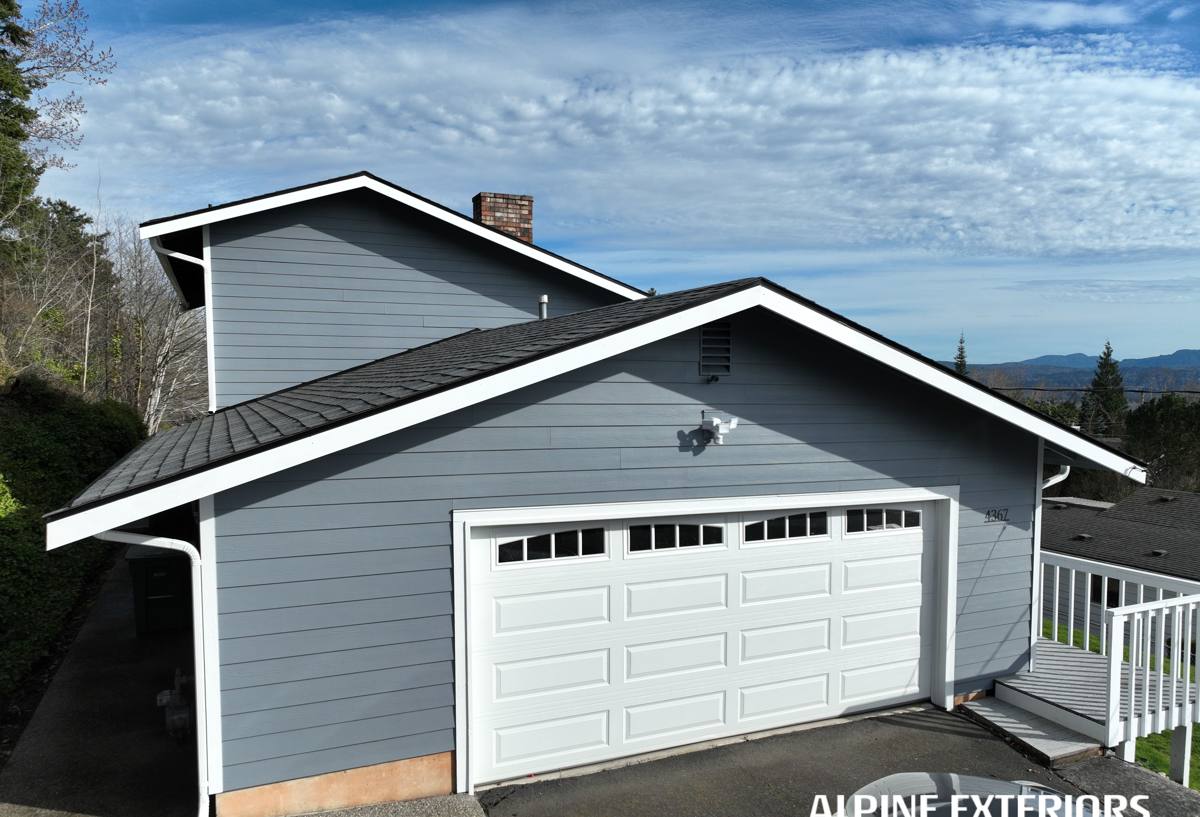
What Roof Repair Actually Means for This Area
The Failure Points We See Most
In North Everett, repair calls tend to cluster around a few recurring problems: flashing around chimneys, skylights, and roof-to-wall transitions that has separated or corroded; shingles that have curled or lost granules from years of moisture cycling; valleys where debris and moss collect and slow drainage; and ventilation issues that trap humid air in the attic, which speeds up deck rot from the underside. Driving rain makes flashing failures worse than they'd be in a calmer climate, because wind pushes water sideways and uphill under laps that would otherwise shed it fine.
When Repair Is the Right Call — and When It Isn't
A roof is usually a good repair candidate when the underlying deck is sound, the damage is localized, and the rest of the roofing material still has useful life left. It's a different conversation when moss has been left unaddressed long enough that moisture has worked into the sheathing, when multiple layers of past patchwork have made the roof harder to seal correctly, or when the shingles are past the point where matching material is even possible. Part of an honest inspection is telling you which situation you're actually in, not defaulting to the more expensive answer.
Moss: The Slow-Motion Problem Specific to This Climate
Moss doesn't just look bad — it changes how a roof sheds water. A mat of moss holds moisture against the shingle surface long after the rain has stopped, which accelerates granule loss and, over time, lets water migrate under shingle edges and laps. In a drier climate this would be a cosmetic issue. In North Everett's long wet season, with shaded roof sections that never fully dry out between rains, moss is one of the more common root causes behind repair calls that started as "just a small leak."
Treating moss correctly means removing it without damaging the shingle surface underneath — pressure washing a shingle roof is a fast way to strip granules and shorten its remaining life, so the right approach is a gentler physical removal followed by a treatment that discourages regrowth. Zinc or copper control strips near the ridge are a reasonable long-term deterrent in a climate where moss is a recurring issue rather than a one-time nuisance.
Signs a North Everett Homeowner Should Have a Roof Looked At
- Water stains on ceilings or upper interior walls, especially after a stretch of heavy or wind-driven rain
- Visible moss or dark streaking concentrated on shaded slopes or north-facing sections
- Granules collecting in gutters or at downspout discharge points
- Shingles that look curled, cupped, or lifted at the edges rather than lying flat
- Daylight visible through the attic roof deck, or damp insulation near the eaves
- Flashing around chimneys, skylights, or wall transitions that looks separated, rusted, or resealed with visible caulk patches
- Sagging in a valley or along a ridge line, which points to deck-level moisture damage rather than a surface issue
What a Correct Repair Job Actually Involves
Matching and Prepping the Area
A repair that holds up starts with matching material as closely as possible to what's already on the roof — same shingle type and, where it matters for appearance, a close color match — and pulling back enough of the surrounding area to work on sound material, not just the visibly damaged patch. Patching over a still-wet deck section just seals the moisture in.
Flashing and Ventilation Get Fixed Too
Given how much of the damage in this area traces back to flashing and moisture cycling, a repair worth doing addresses those root causes, not just the shingles on top of them. That means re-flashing transitions properly rather than caulking over old flashing, and checking that attic ventilation is actually letting moisture escape rather than trapping it against the deck — a detail that matters more here than in a drier climate because there are fewer dry stretches to let a damp deck recover on its own.
Materials That Make Sense for This Exposure
For a salt-air, high-moisture environment, corrosion-resistant flashing and fasteners are worth the modest upcharge over standard hardware, since standard galvanized components can show premature rust here compared to inland installations. Self-adhering underlayment at vulnerable transitions — valleys, eaves, and around penetrations — gives an extra layer of protection in the spots where wind-driven rain is most likely to get past the surface layer.
Cost Factors for Roof Repair in North Everett
Every roof and every repair scope is different, so a real number only comes from an on-site look. What follows are the factors that most influence where a job lands on the cost range, not a quote.
| Factor | Why It Matters Here |
|---|---|
| Extent of moss and moisture damage | Long-neglected moss can mean deck repair, not just shingle replacement |
| Number and condition of flashing points | Chimneys, skylights, and wall transitions are where driving rain does the most damage |
| Roof pitch and accessibility | Steeper or harder-to-access sections take longer and require more safety setup |
| Material match availability | Older or discontinued shingle lines can require a larger repair area to blend properly |
| Attic ventilation condition | Poor ventilation found during the repair may need addressing to prevent a repeat issue |
| Underlying deck condition | Soft or rotted sheathing adds material and labor beyond the surface repair |
How Our Process Works
1. Inspection First, Not a Sales Pitch
We look at the whole roof, not just the spot you called about — a leak inside often shows up in a different location than where the water is actually getting in, especially with wind-driven rain.
2. A Straight Answer on Scope
You get a clear explanation of what's actually wrong, whether it's a contained repair or something bigger, and why — in plain language, not a scare tactic.
3. The Repair Itself
Matching materials, correct flashing work, and attention to ventilation and moisture — not just a patch over the visible symptom.
4. A Look at What Caused It
If moss, poor drainage, or a ventilation issue contributed to the problem, we'll tell you, so you're not back in the same spot next wet season.
Why a Local Everett Crew Matters for This Job
Roofing crews that work across a wide region see a mix of climates and don't always calibrate for the specific combination North Everett homes deal with: salt air accelerating hardware corrosion, driving rain testing every flashing seam, and a moss season long enough to do real damage if ignored. A crew that works this part of Snohomish County regularly sees the same failure patterns often enough to know what to check first, and what shortcuts don't hold up here even if they'd be fine somewhere drier.
That familiarity also shows up in smaller ways — knowing which shingle lines are actually available for a reasonable match, understanding how local permitting works for roof work when it applies, and having a realistic sense of how weather windows affect scheduling in a region where a dry stretch long enough to work safely isn't guaranteed every week.
If you're seeing any of the warning signs above, or just want an honest read on where your roof stands, we're happy to take a look. The estimate is free, there's no pressure attached to it, and you'll get a straight answer about what your roof actually needs — use the form below to get started.