 Everett
 Windows in Port Gardner Face a Tougher Environment Than Most of Everett
Port Gardner sits close to the water, and that proximity shapes what happens to a home's exterior over time. Homes here deal with salt-laden air coming off the bay, wind-driven rain that hits window assemblies at an angle rather than straight down, and the long gray stretch of fall through spring when surfaces rarely get a chance to fully dry out. That combination is harder on window systems than what you'd see a few miles inland in Snohomish County, and it's worth understanding before you replace or install windows in this part of Everett.
Salt air is corrosive to certain metals and hardware over years of exposure. Driving rain finds gaps that a light shower never would, pushing water sideways into flashing details and trim joints. And the region's long moss season means anything that stays damp — a sill, a sash track, a poorly flashed head — becomes a place where organic growth gets a foothold, which traps even more moisture against the building. None of this means Port Gardner homes need exotic materials. It means the installation details that are easy to skip elsewhere are not optional here.
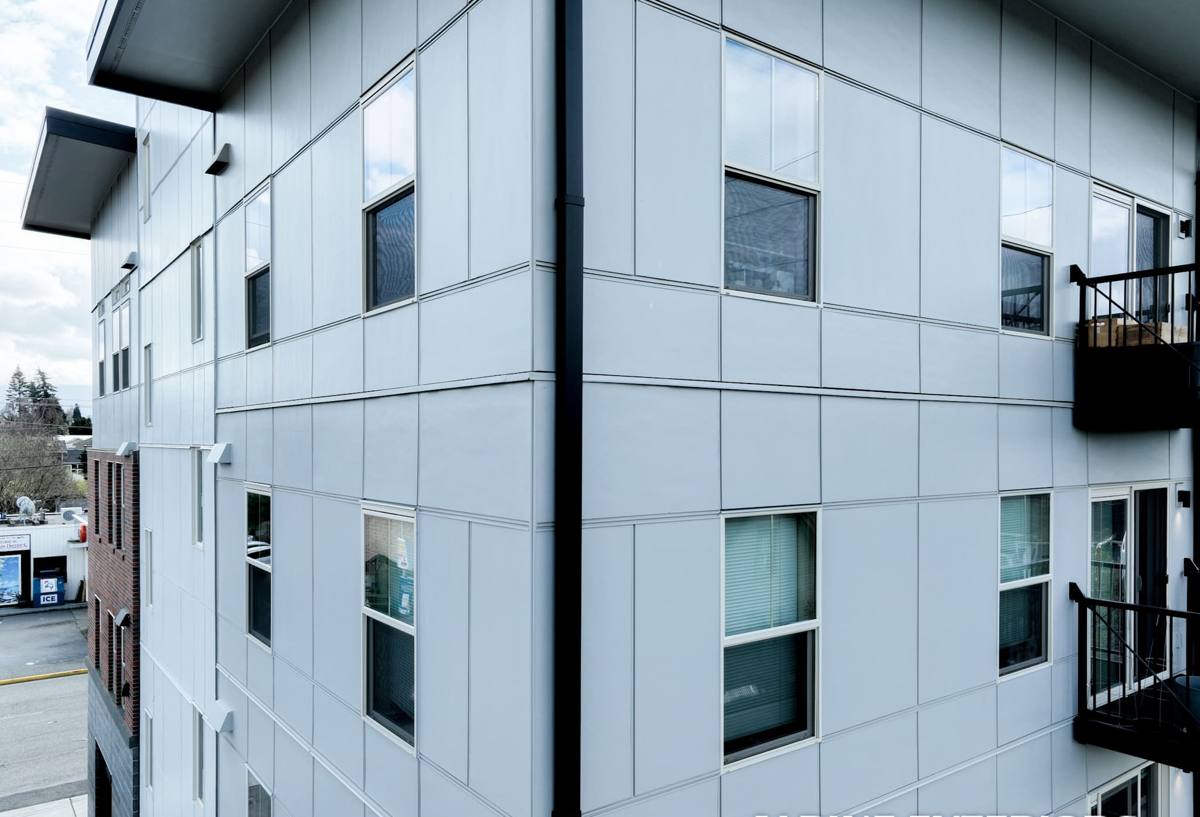
What a Correct Window Installation Actually Involves
Window installation is often talked about like it's just "put the window in the hole," but the work that determines whether a window performs for twenty years happens around the window, not inside the frame. A correct installation in a coastal-influenced area like Port Gardner includes:
- Removing the old window and inspecting the rough opening for rot, soft framing, or prior water damage before anything new goes in
- Correcting any framing issues found — installing over a compromised opening just seals the problem behind new material
- Installing a sloped sill pan so any water that gets past the window sheds outward instead of pooling
- Applying flashing tape and house wrap integration in the correct shingle-lap order, so water is always directed down and out, never trapped behind a layer
- Setting the window level, plumb, and square, with proper shimming so the sash operates smoothly and the seal isn't stressed unevenly
- Insulating the gap between the frame and rough opening with a low-expansion foam or backer rod, not just caulk alone
- Sealing the exterior perimeter with a quality sealant rated for the exposure, while leaving the correct weep points open so the assembly can still drain
- Finishing interior and exterior trim so water is shed away from the wall assembly, not channeled toward it
Skip the sill pan or get the flashing lap order backward, and a window can look perfect for a year or two while water is already working its way into the wall framing behind it. In a driving-rain environment, that mistake shows up as rot, not as an obvious leak — which is why it often goes unnoticed until the damage is significant.
Why Product Quality Alone Isn't Enough
A high-end window installed poorly will fail before a mid-grade window installed correctly. We say this because it's the single most common misunderstanding homeowners have about window replacement: the product matters, but in a climate like this one, the installation detail matters more. Our standard is to treat every window as if it's going into a wall that will take direct, wind-driven rain — because in Port Gardner, that's a realistic expectation, not a worst-case scenario.
Choosing the Right Window Type for a Waterfront-Influenced Home
Not every window style holds up the same way to salt air and driving rain. Some general trade-offs worth knowing:
| Window Type | How It Handles This Climate | Maintenance Consideration |
|---|---|---|
| Vinyl | Good moisture and salt-air resistance; won't corrode | Low maintenance; verify weep holes stay clear |
| Fiberglass | Very stable in temperature and moisture swings; strong long-term performance near the water | Low maintenance; higher upfront cost |
| Aluminum | Durable but more prone to corrosion in salt air over time unless properly coated | Watch hardware and finish for pitting or oxidation |
| Wood (unclad) | Attractive but the most vulnerable to driving rain and prolonged dampness | Higher maintenance burden — regular refinishing and moisture checks needed |
| Wood, clad exterior | Combines interior wood appearance with a more weather-resistant exterior shell | Moderate maintenance; cladding integrity matters at joints |
We don't push homeowners toward one brand or material across the board — the right choice depends on your home's exposure, your budget, and how much upkeep you actually want to do. What we will say plainly: an unclad wood window facing the prevailing weather in Port Gardner is going to demand more attention than a vinyl or fiberglass unit in the same spot. That's not a knock on wood — it's a maintenance reality worth factoring into the decision up front.
Hardware and Glass Considerations for Salt Air
Two details get overlooked more than they should in coastal-influenced installations: hardware and glass sealant integrity.
Window hardware — locks, hinges, balance systems, cranks — is exposed to airborne salt whether the window is a few blocks from the water or right along it. Lower-grade hardware finishes can start showing corrosion years before the window itself has any issue. When we spec windows for homes in this area, we pay attention to hardware finish quality, not just the headline features of the window line.
Insulated glass units rely on a sealed edge seal to keep the gas fill and moisture barrier intact between panes. That seal is under more stress in an environment with constant humidity swings and temperature differences between a cold pane and a warm interior. A failed seal shows up as fogging or condensation between the panes — it's not repairable, only replaceable — so we're careful to install glass units correctly seated and properly supported in the frame, since poor setting is one of the more common causes of premature seal failure.
Moss, Algae, and Long-Term Window Performance
The extended damp season in this region doesn't just affect roofs and siding — it affects windows too. Sills, tracks, and the bottom edges of sashes are the areas most likely to hold moisture and develop moss, algae, or mildew growth if they're not designed and installed to drain properly. This is another reason the sloped sill pan and correct weep hole placement matter as much as they do: a window that can't shed water fully will stay damp longer, and anything that stays damp during a Pacific Northwest fall and winter becomes a place where growth takes hold.
Simple habits help too — keeping weep holes clear of debris, not letting landscaping grow up against window sills, and rinsing visible salt buildup off exterior surfaces periodically in exposed locations.
Our Process for Port Gardner Window Installations
We approach window jobs in this neighborhood the same deliberate way every time:
- On-site assessment — we look at existing window condition, framing, and any signs of past water intrusion before quoting anything
- Product recommendation — based on your home's specific exposure to wind and rain, not a one-size-fits-all default
- Removal and opening inspection — old windows come out, and we check the rough opening before anything new goes in
- Correction of any framing or water damage found — addressed before installation, not covered over
- Installation with full flashing and drainage detailing — sill pan, shingle-lapped flashing, correct weep points
- Interior and exterior finish work — trim, sealant, and touch-up done to match the rest of the home
- Final walkthrough — operation check on every window, sealant inspection, and a clear explanation of any maintenance specific to what was installed
We don't skip steps to save time on a job in this area, because the cost of a shortcut here isn't cosmetic — it's water damage that surfaces months or years later inside a wall you can't see.
Why Local Installation Experience Matters
A crew that regularly works in Port Gardner and the surrounding Everett waterfront area has already seen how homes in this specific setting age — which sills fail first, which orientations take the worst of the driving rain, where moss tends to establish itself. That's different knowledge than general window installation experience. It shapes decisions like how aggressively to flash a particular elevation, or which sealant products hold up given the salt exposure, in ways that aren't obvious from a manufacturer's install guide alone.
Snohomish County's building requirements and typical framing conventions also come into play, particularly on older Port Gardner homes where original construction may not match current expectations for water management. Knowing what to look for in older framing — and how to correct it without over-scoping the job — comes from doing this work locally and repeatedly, not from a generic checklist.
A Practical Checklist Before You Hire
- Ask what happens if the crew finds rot or damage once the old window is removed — get this answered before work starts, not during
- Confirm a sloped sill pan and proper flashing lap order are standard practice, not an upgrade
- Ask which window materials the contractor recommends for a home exposed to salt air and driving rain, and why
- Check that weep holes and drainage paths are explained as part of the install, not left as an afterthought
- Get written scope of work covering removal, framing correction, flashing, insulation, sealant, and trim finish
- Ask about warranty coverage on both the product and the labor/installation separately
If your windows in Port Gardner are drafty, fogging between the panes, difficult to operate, or you're simply planning ahead for a home that holds up to what this stretch of Everett's waterfront weather brings, we're glad to take a look. Reach out for a free, no-pressure estimate — we'll walk the exterior, answer your questions honestly, and give you a straightforward assessment of what your home actually needs.