 Everett
 Port Gardner's Roofs Work Harder Than Most
Port Gardner sits close to the water, which means the homes here take a different kind of beating than roofs a few miles inland. You've got salt-laden air coming off the Sound, wind-driven rain that doesn't just fall straight down but gets pushed sideways under flashing and shingle edges, and a long stretch of the year — often October through April — where shaded roof sections stay damp long enough for moss and algae to take hold. None of that is unusual for Snohomish County, but it does mean a roof installed without those conditions in mind will age faster than it should, regardless of how good the shingles looked on the sample board.
We install new roofs across Everett, and Port Gardner's mix of older homes, waterfront-adjacent lots, and mature tree cover comes up often enough that we've settled on a set of installation habits specifically for it. This page covers what a correctly installed roof looks like here, what our process involves, and what to actually pay attention to when you're comparing bids.
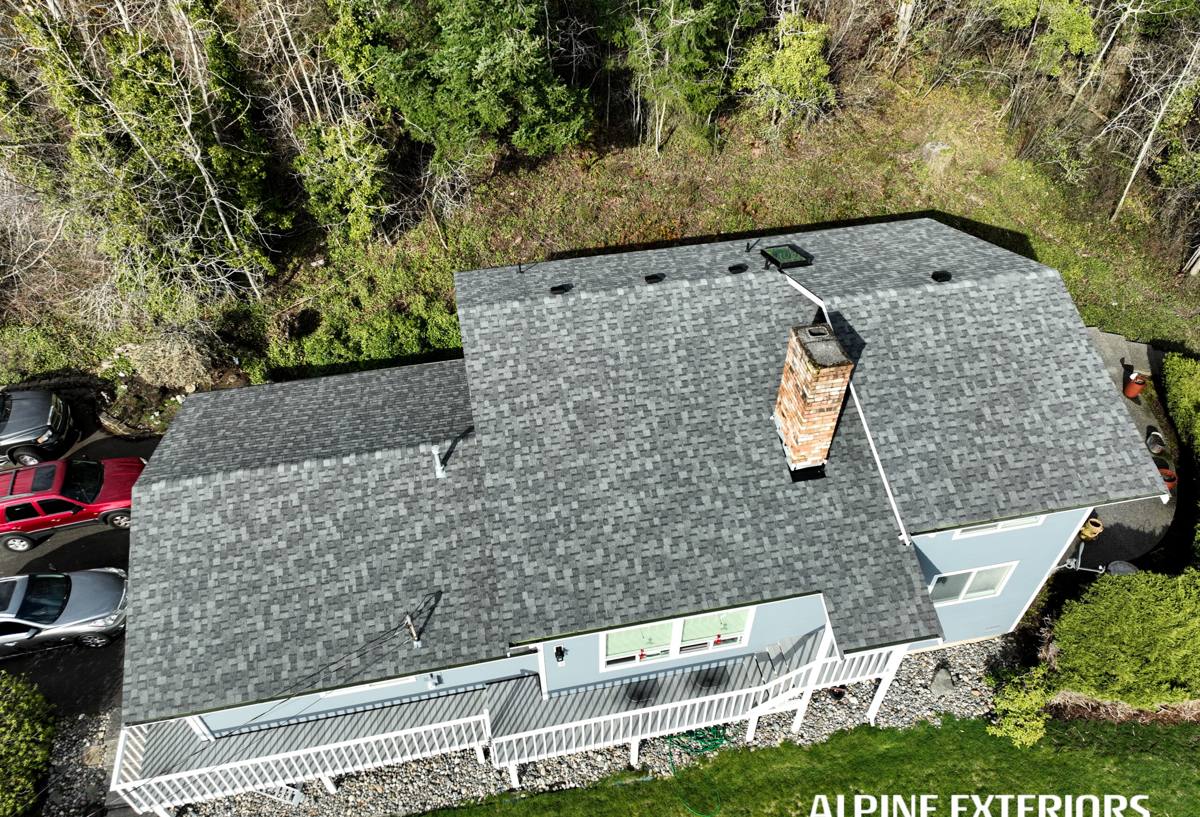
What Salt Air and Driving Rain Actually Do to a Roof
Salt Air and Metal Components
Salt air accelerates corrosion on any exposed metal — flashing, fasteners, vents, and drip edge. It's not a dramatic failure; it's a slow one. Bare or poorly coated fasteners can start streaking and weakening years before a homeowner would think to check them. This is why fastener and flashing material selection matters more near Port Gardner's waterfront-facing streets than it would on a roof further from the Sound.
Wind-Driven Rain
Rain that comes in at an angle looks for any gap in a roofing system — under shingle tabs, along step flashing at walls, around vent boots, and at valleys. A roof that would hold up fine under vertical rainfall can leak under sideways rain if the underlayment, flashing laps, and fastening pattern weren't installed with that in mind. This is a detail-level issue, not a materials issue — it's about how the layers are put together, not just what they're made of.
Moss and Algae Season
Shaded roof planes, north-facing slopes, and areas under tree canopy stay wet longer after every rain. Over a full Pacific Northwest wet season, that moisture supports moss growth that lifts shingle edges and holds water against the roof deck. Left long enough, moss doesn't just look bad — it shortens the roof's life by trapping moisture where it shouldn't be.
What a Correct New Roof Installation Includes
A roof is a system, not a single product. Skipping or under-spec'ing any one layer undermines the rest, even if the shingles themselves are top quality. A properly installed roof includes:
- A sound, inspected roof deck — soft or delaminated sheathing gets replaced before anything goes on top of it
- Ice-and-water shield at eaves, valleys, and around penetrations, where wind-driven rain and moss-related moisture concentrate
- A synthetic or felt underlayment across the full deck, lapped correctly for water shedding
- Corrosion-resistant flashing and fasteners at all walls, chimneys, and roof-to-roof transitions
- Balanced intake and exhaust ventilation so the attic can dry out between wet spells
- Proper drip edge at eaves and rakes to control water flow off the roof edge
- Correct fastening pattern and nail placement for the specific shingle or panel manufacturer's wind rating
Every one of these steps is inspectable. If a contractor can't walk you through what's happening at each layer, that's worth asking about before signing anything.
Choosing Materials for This Climate
There's no single "best" roofing material for Port Gardner — it depends on the home's exposure, roof pitch, budget, and how much shade the roof gets. Here's how the common options actually perform under local conditions:
| Material | Typical Lifespan | Moss/Algae Resistance | Salt Air / Wind Performance | Cost Factor |
|---|---|---|---|---|
| Asphalt composition shingle (standard) | 20–30 years | Moderate — benefits from algae-resistant granules | Good with correct fastening and flashing | Lower |
| Asphalt composition shingle (algae-resistant, heavier-weight) | 25–35 years | Better — copper or zinc granules resist algae staining | Good, higher wind rating available | Moderate |
| Standing seam metal | 40–60 years | Very good — sheds moss more easily due to slick surface and no exposed nail heads | Excellent when fasteners and coatings are marine-grade | Higher |
| Synthetic/composite shingle | 30–50 years | Good, varies by product line | Good | Moderate to higher |
We steer most Port Gardner homeowners with shaded or north-facing roof sections toward algae-resistant shingles at minimum, and toward metal where budget allows and the home's style suits it — mainly because moss removal and the moisture damage it causes is the single most common reason we get called out to a roof that's under 15 years old.
Our Installation Process
1. Assessment and Estimate
We walk the roof, check the deck condition where accessible, note ventilation, flashing points, and any shaded or moss-prone sections, and put together a written estimate that spells out materials, scope, and what's included — not just a per-square price.
2. Tear-Off and Deck Inspection
We remove the existing roofing down to the deck rather than installing over it. This lets us actually see the sheathing condition and catch soft spots or rot before they're buried under a new roof — a problem that's more common on older Port Gardner homes than people expect.
3. Deck Repair
Any damaged sheathing gets replaced, not patched over. This is priced as a line item, not folded into a vague allowance.
4. Underlayment and Water Protection
Ice-and-water shield goes down first at vulnerable areas, followed by underlayment across the full roof, with attention to correct overlap given the wind-driven rain this area gets.
5. Flashing, Vents, and Fastening
New flashing at all walls, chimneys, and penetrations — we don't reuse old flashing on a new roof. Fastening follows the manufacturer's spec for the wind exposure of the specific roof plane.
6. Ventilation Check
We confirm intake and exhaust are balanced before calling the job done. A new roof with poor attic ventilation will trap moisture and shorten its own lifespan, regardless of the shingle quality.
7. Final Walkthrough
We walk the finished roof and the site with the homeowner, confirm cleanup, and go over warranty paperwork.
Permits and Inspections in Everett
New roof installations in Everett typically require a permit through the city, and Snohomish County has its own process for properties outside city limits. Permit requirements can depend on the scope of work and whether structural elements are involved. We handle the permit application as part of the job rather than leaving it to the homeowner, and we build any required inspection into the project timeline so it doesn't catch anyone off guard partway through.
Ventilation and Moisture Control Matter as Much as the Shingles
A well-installed roof surface with poor attic ventilation is still a roof that will fail early. In a climate with this much sustained moisture, trapped attic humidity condenses on the underside of the deck, promotes rot, and can void manufacturer warranties that require documented ventilation. When we install a new roof, we check soffit intake, ridge or box vent exhaust, and make sure insulation isn't blocking airflow at the eaves. This is a step that's easy to skip and hard to notice from the ground — which is exactly why it gets missed on rushed jobs.
Signs Your Roof Needs Replacement, Not Another Repair
Repairs make sense for isolated issues. A full replacement makes sense when the underlying system is compromised. Signs it's time to stop patching:
- Granule loss heavy enough that shingles look bald in patches or gutters are full of granules
- Multiple layers of moss regrowth even after cleaning, especially on shaded slopes
- Soft spots or noticeable sag when walking the roof or viewing the deck from the attic
- Repeated leaks in different locations rather than one recurring spot
- Shingles curling, cracking, or lifting at the edges — a common wind-driven-rain entry point
- Flashing that's visibly corroded, especially around chimneys and wall transitions
- The roof is approaching or past its material's expected lifespan and repair costs are climbing
Why a Local Port Gardner Crew Matters
A roof installed by a crew unfamiliar with this specific stretch of Everett is more likely to default to generic specs — standard fastener coatings, standard underlayment coverage, standard ventilation assumptions — that hold up fine in drier or more sheltered parts of the county but underperform here. Working in Port Gardner regularly means we already know which roof orientations tend to hold moss, which flashing details tend to leak first under wind-driven rain, and which fastener and flashing grades are worth the upgrade this close to the water. That's not a marketing point — it changes which materials we recommend and how we detail the flashing before we ever get on the roof.
If you're planning a new roof in Port Gardner, we're glad to come take a look and put together a straightforward, no-pressure estimate — no upsell script, just what your roof actually needs. Use the form below to get started.