 Everett
 Why North Everett Decks Wear Out Faster Than You'd Expect
A deck in North Everett doesn't fail because the homeowner neglected it. It fails because of what it sits under and next to every single day. This part of Snohomish County gets a long, wet fall-through-spring stretch, marine air drifting in off Puget Sound, and tree cover that keeps decks shaded and damp long after a storm has passed. None of that is unusual for the area — but it's exactly the combination that shortens the life of fasteners, ledger boards, and decking material if a deck isn't built or maintained with those conditions in mind.
Salt-laden air corrodes metal connectors and fasteners faster than it would further inland. Driving rain finds its way into any gap in flashing or decking seams and doesn't dry out quickly under our cloud cover. And moss — which needs shade and moisture to take hold — gets both, for months at a time, on north-facing and tree-shaded decks all over this neighborhood. Individually, none of these are dramatic. Together, over several winters, they're the reason a deck that looked fine two summers ago now has soft boards, rusted screws, or a railing that flexes more than it should.
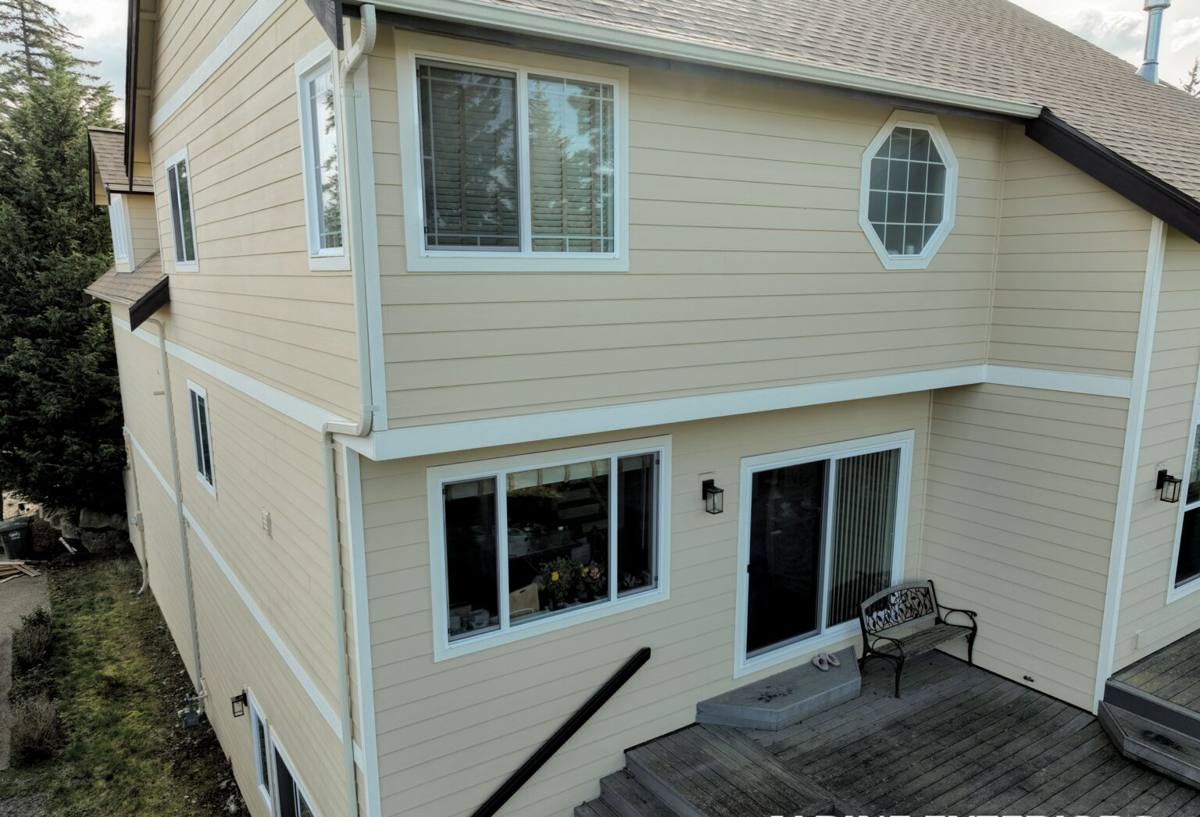
Signs Your Deck Needs Repair, Not a Full Rebuild
Most decks we're called out to in North Everett don't need to be torn out — they need targeted repair to specific components that have taken the brunt of the weather. Knowing the difference matters, because it's the difference between a manageable repair bill and an unnecessary full replacement.
- Boards that feel spongy, springy, or visibly cupped when you walk on them
- Green or black staining that doesn't scrub off, especially on boards that stay shaded most of the day
- Rust streaks running down from screw heads or metal brackets
- A railing or stair stringer that has more give than it used to
- Gaps opening up where the deck meets the house, or dark staining on the siding above the ledger board
- Nails backing out or screw heads stripped and no longer holding tight
Any one of these on its own is usually a repair job. It's when several show up together — especially soft framing combined with a compromised ledger connection — that a section of the deck may need to be rebuilt rather than patched.
What a Correct Deck Repair Actually Involves
Structure First
The framing underneath — joists, beams, posts, and especially the ledger board where the deck attaches to the house — carries the load. Surface repairs mean little if the structure underneath is compromised. Any repair worth doing starts with checking these components for rot, checking that post bases aren't sitting in standing water, and confirming the ledger connection is still solid and properly flashed. This is also where we look for undersized or missing structural connectors, which was common on decks built before current code requirements.
Surface and Decking
Individual board replacement is straightforward when the framing underneath is sound. The harder part is matching material — weathered cedar or composite decking doesn't always match new stock perfectly, and we'll talk through that honestly before starting rather than surprise you with a mismatched patch.
Fasteners and Hardware
This is the piece that gets skipped most often in a quick patch job, and it's the one that matters most in our climate. Standard zinc-coated screws and brackets corrode faster near the Sound. Repairs should go back together with fasteners and connectors rated for the exposure — hot-dip galvanized or stainless, depending on the wood species and application — not whatever was on the shelf.
Flashing and Water Management
Most of the serious rot we find traces back to water getting into a joint that wasn't flashed or sealed correctly — usually where the deck meets the house, or around post bases sitting in soil or mulch. A repair that doesn't fix the water path just delays the same failure.
Repair vs. Replacement: How We Help You Decide
| Factor | Favors Repair | Favors Replacement |
|---|---|---|
| Framing condition | Joists and ledger are solid, damage is localized | Widespread soft or rotted framing |
| Deck age | Under 15-20 years, built to a reasonable standard | Older deck nearing the end of its practical life |
| Ledger connection | Properly flashed and structurally sound | Missing flashing or signs of chronic water intrusion behind it |
| Extent of damage | A few boards, a rail section, isolated fasteners | Damage spread across multiple structural components |
| Budget goals | Extend usable life at lower cost | Ready to upgrade material or layout anyway |
Deck repair costs vary a lot based on scope — a handful of board and fastener replacements is a modest job, while structural framing work or a full re-decking is a bigger investment. We'd rather give you a specific number after actually looking at the deck than a broad estimate that doesn't mean much either way.
Our Deck Repair Process
1. On-Site Inspection
We walk the full deck, check the framing from underneath where accessible, test boards and railings by hand, and inspect the ledger connection and flashing. This is where most of the honest scoping happens — we tell you what's actually wrong, not just what's visible from the top.
2. Clear Scope and Estimate
You get a written breakdown of what needs to be repaired, what materials and fasteners we're using, and why. No vague line items.
3. The Repair
We replace what needs replacing, correct any flashing or water-path issues we find along the way, and upgrade fasteners to hardware suited for our marine climate — even if that wasn't the original scope, we'll flag it rather than reinstall the same weak point.
4. Walkthrough
Before we consider the job done, we walk it with you so you can see and test the repair yourself.
Materials: What We Use for Repairs and Why
Matching or upgrading material is a judgment call on every repair. Pressure-treated lumber remains the most practical choice for structural framing repairs because it handles our moisture exposure well and it's what most existing framing is already built from. For visible decking boards, the right call depends on what's already there — cedar can often be matched and blended, while composite decking usually needs manufacturer-matched replacement boards to avoid an obvious patch. We'll always tell you honestly when a perfect match isn't realistic so you can decide whether to patch, replace a full run of boards, or wait and budget for a broader refresh.
On fasteners, we don't cut corners to save a few dollars. A repair is only as good as the hardware holding it together, and re-using standard-grade screws on a shaded, damp North Everett deck just sets up the next repair call in a few years.
Living With a Deck in This Climate: Maintenance Between Repairs
A repaired deck still needs some upkeep to get the most life out of it, especially in a shaded or north-facing yard where moss and moisture linger longest.
- Sweep leaves and debris off the deck surface regularly through fall — trapped organic matter holds moisture against the boards
- Clean moss and algae off with a proper deck cleaner rather than a pressure washer set too aggressively, which can damage wood fibers
- Check that gutters and downspouts aren't dumping water directly onto or near the deck
- Keep an eye on the area where the deck meets the house — that's the most common spot for hidden water damage to start
- Re-seal or re-stain wood decking on the schedule appropriate for the product, not just when it looks faded
- Trim back overhanging branches where practical to let more light and air reach shaded sections
None of this prevents every issue, but consistent basic maintenance is the single biggest factor in how long a repair lasts before the next one is needed.
Why a Crew That Already Works North Everett Makes a Difference
Deck repair isn't complicated in concept, but doing it right in this specific area means understanding how Snohomish County's rain patterns, tree cover, and marine air actually behave against a structure over years, not just what a repair looks like the day it's finished. We've seen how quickly moss returns on shaded North Everett decks, which fastener grades actually hold up near the Sound, and where ledger and flashing problems tend to start on homes in this area. That local pattern recognition is what separates a repair that lasts from one that's back on the schedule in two winters.
If you're noticing soft boards, rust, moss buildup, or a railing that doesn't feel as solid as it should, we're happy to take a look and give you a straightforward, no-pressure assessment of what's actually going on and what it would take to fix it. Use the form below to request a free estimate.