 Everett
 Mukilteo's Waterfront Climate Puts Real Stress on Siding
Mukilteo sits right on Puget Sound, and that waterfront location cuts both ways. The views are part of why people love living here, but the same marine exposure that makes the setting so appealing also makes it one of the tougher environments in Snohomish County for exterior siding. Salt-laden air drifts off the water and settles on exposed wall surfaces, wind-driven rain gets pushed sideways into seams and joints that would stay dry in a more sheltered location, and the long gray stretch of fall through spring keeps siding damp for days at a time. That combination accelerates whatever weaknesses a siding product already has.
Moss and algae are the most visible symptom. Given consistent moisture and shade — common on the north and west-facing walls of many Mukilteo homes — organic growth gets a foothold fast. It's not just cosmetic. Moss holds moisture against the wall surface long after the rain has stopped, which is exactly the condition that leads to rot, delamination, and paint failure on siding that isn't built to handle it.
None of this means Mukilteo homes need anything exotic. It means the siding material and the installation details both have to be chosen with this specific climate in mind, not a generic Pacific Northwest average.
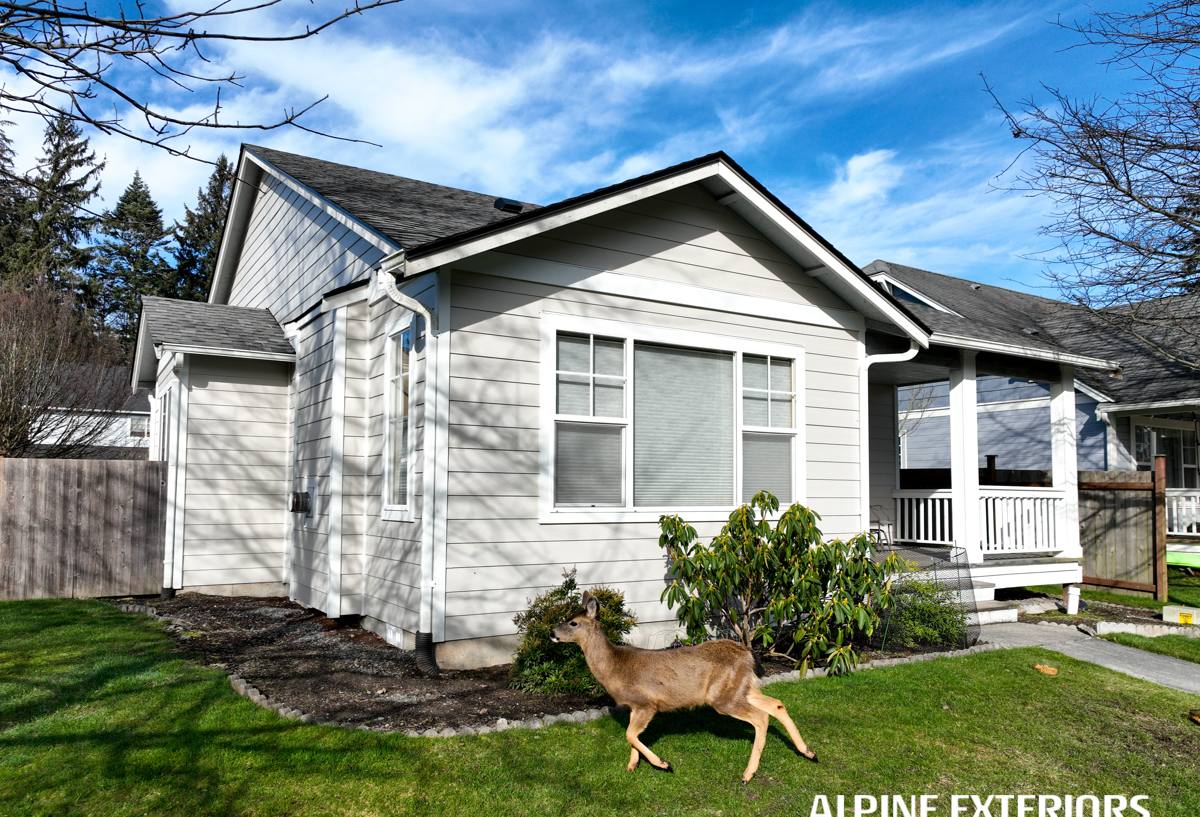
What "Correct" Siding Installation Actually Involves Here
A lot of siding problems we get called out to inspect aren't material failures — they're installation shortcuts that a drier climate might have tolerated for a while. On a Mukilteo lot exposed to Sound-driven wind and rain, those shortcuts show up faster.
The details that matter most in this environment
- A continuous weather-resistant barrier behind the siding, lapped correctly so water is directed out and down, never trapped behind the panel
- Properly flashed windows, doors, and any wall penetrations, since these are the first places wind-driven rain finds a way in
- Correct fastener type, spacing, and depth — panels that are over-driven or under-fastened work loose and open gaps over time
- Adequate clearance between the bottom of the siding and grade, decks, or roof lines, so splashback and ponding water don't sit against the material
- Factory-finished or properly primed and sealed cut edges, especially at corners and butt joints where raw material is most vulnerable
Get these details right and a quality siding product will perform for decades in this climate. Skip even one or two, and even a good product will underperform.
Why We Install Only James Hardie Fiber Cement
We don't install every siding product on the market. We install James Hardie fiber cement, exclusively, and that's a deliberate standard rather than a limitation. In a salt-air, high-rainfall environment like Mukilteo, the material itself needs to tolerate sustained moisture exposure without swelling, delaminating, or feeding rot — and it needs a factory finish that isn't the first thing to fail once the marine air starts working on it.
Fiber cement is non-combustible, dimensionally stable when wet, and Hardie's ColorPlus finish is baked on at the factory under controlled conditions, which gives it better adhesion and UV resistance than most field-applied paint systems. Hardie also engineers regional HZ5 product lines specifically for wetter climates, which matters more here than it would in a drier part of the state.
How the common alternatives compare in this climate
| Material | Behavior in salt air / driving rain | Long-term maintenance burden |
|---|---|---|
| James Hardie fiber cement | Dimensionally stable, factory-sealed finish, engineered HZ5 lines for wet climates | Low — occasional wash, repaint only when the homeowner chooses to change color |
| Vinyl siding | Can warp or become brittle with UV and temperature cycling; seams are a moisture entry point | Low upfront, but limited repair options and shorter realistic lifespan near the water |
| Cedar / primed spruce | Absorbs moisture readily; prone to rot and moss growth without diligent upkeep | High — regular refinishing, caulking, and moisture monitoring required |
| LP SmartSide / other engineered wood | Better than raw wood, but still wood-based and sensitive to sustained moisture at cut edges and seams | Moderate — edge sealing and finish maintenance matter more here than in drier climates |
We're not going to tell you those other products are junk — plenty of them have a place. But we've made a professional decision that on the homes we're responsible for, especially in a climate like Mukilteo's, fiber cement is the material that holds up with the least ongoing hassle for the homeowner.
Our Siding Installation Process
Every Mukilteo project follows the same sequence, because skipping steps is where problems start.
- Assessment: We walk the exterior, check the current siding and sheathing condition, and look specifically at grade clearance, roofline transitions, and any areas showing past moisture damage.
- Tear-off and sheathing check: Old siding comes off and we inspect the sheathing underneath. Any soft or water-damaged sheathing gets replaced before anything new goes up — covering a compromised wall with new siding just hides the problem.
- Weather barrier installation: A continuous, correctly lapped water-resistive barrier goes on before a single piece of siding is hung.
- Flashing: Windows, doors, and penetrations get flashed to direct water out and away from the wall assembly.
- Hardie panel installation: Panels are installed to manufacturer spec — correct fastener spacing, proper clearances, and sealed cut edges throughout.
- Final detailing and walkthrough: Trim, caulking, and touch-up work are finished, followed by a walkthrough so you know exactly what was done and what to expect going forward.
Signs Your Mukilteo Home May Need New Siding
Not every siding issue means a full replacement, but these are the signs worth having a professional look at sooner rather than later:
- Visible moss or algae buildup that returns quickly after cleaning
- Soft spots, bubbling, or delamination anywhere on the siding surface
- Paint that's peeling or blistering rather than just fading
- Gaps opening up at seams, corners, or trim boards
- Musty smells or visible staining on interior walls near exterior corners
- Siding that flexes or feels spongy when pressed
Any one of these can be an early sign, or it can point to something already happening behind the surface. Either way, it's worth a proper look before it turns into a sheathing or framing repair.
Why a Local Crew Matters for Mukilteo Homes
Siding installation isn't a one-size-fits-all job across Snohomish County. A crew that regularly works Mukilteo and the surrounding Everett waterfront knows which walls take the worst of the wind-driven rain, where moss tends to establish first, and how much clearance actually holds up against the moisture load here versus a more sheltered inland lot. That local pattern recognition shapes real decisions — flashing details, fastener choices, where extra attention to sealing pays off.
It also matters for accountability. A contractor based in the area, with a track record of work on homes near yours, has every reason to get the details right the first time and to stand behind the work afterward.
What Affects the Cost of a Siding Project
Every home is different, but the same handful of factors drive most of the cost variation we see on Mukilteo projects.
| Factor | Why it matters |
|---|---|
| Home size and wall complexity | More square footage and more corners, gables, and trim details mean more labor and material |
| Condition of existing sheathing | Water-damaged sheathing found during tear-off requires repair before new siding goes on |
| Siding profile and color | Different Hardie profiles (lap, shingle-style panels) and ColorPlus finish options carry different material costs |
| Access and site conditions | Slopes, tight side yards, and proximity to the water can affect staging and labor time |
| Scope of trim and detail work | Full trim replacement, window casing work, and additional flashing add to the project beyond the field siding itself |
We won't quote a number without seeing the home, but we're always upfront about what's driving the cost on your specific project — no padded estimates, no vague allowances.
Living With Hardie Siding in a Salt-Air, Moss-Prone Climate
One of the practical advantages of fiber cement in this environment is how little ongoing attention it needs compared to wood-based or vinyl alternatives. A periodic rinse to knock off salt residue and organic buildup, a visual check of caulking at trim and penetrations every year or two, and prompt attention to any landscaping that's shading a wall and keeping it damp longer than it should be — that's realistically most of it. Because the ColorPlus finish is factory-applied, you're not on a repainting cycle just to keep the surface protected.
That low-maintenance profile is worth weighing seriously in a place like Mukilteo, where the combination of salt air and driving rain will find every weakness in a lower-grade material or a shortcut installation faster than it would elsewhere in the region.
If you're planning a siding project on a Mukilteo home and want a straight assessment of what your walls actually need, we're happy to take a look and walk you through it. There's no pressure and no cost for the estimate — just a clear read on your home's condition and what correct installation looks like for your property.