 Everett
 Building Decks for Mukilteo's Waterfront Climate
Mukilteo sits right on the water, and that changes what a deck has to deal with compared to a yard a few miles inland. Salt-laden air off Possession Sound accelerates corrosion on fasteners and hardware. Driving rain off the Sound finds every gap in flashing and decking that isn't detailed correctly. And the long, wet Snohomish County shoulder seasons mean moss and algae get a real foothold on any surface that doesn't drain and dry quickly. A deck built without those three factors in mind will show problems within a few years — soft spots, rusted fasteners, slick green boards, and rot where the deck meets the house.
We build and repair custom decks for homeowners throughout Mukilteo and the rest of our Everett-area service area, and we design every deck around the conditions it will actually face, not a generic spec sheet.
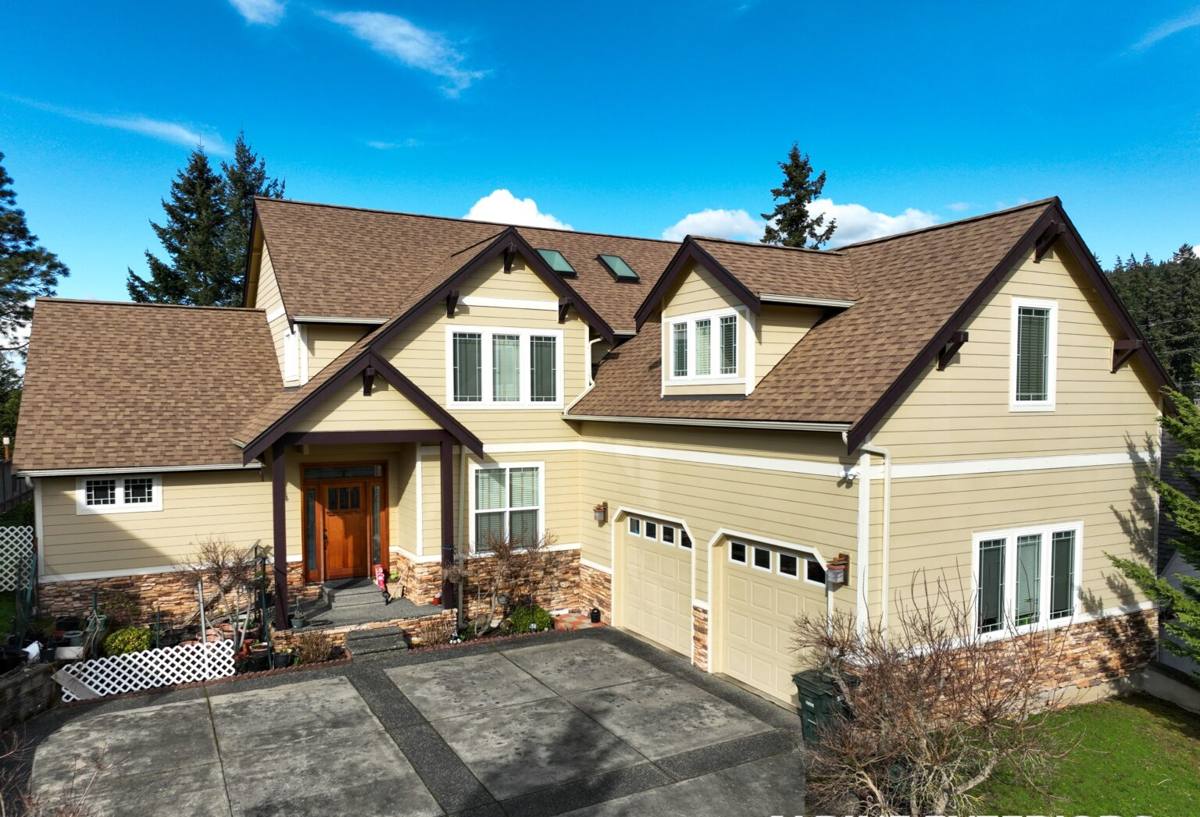
What Mukilteo Homes Need From a Deck
Salt Air and Metal Hardware
Standard hot-dip galvanized fasteners hold up fine in a lot of climates, but close to the water, salt air speeds up corrosion on ledger bolts, joist hangers, and screws. Over time, corroding hardware is one of the more serious hidden problems a deck can develop, because it's structural and it's out of sight under the decking. We spec stainless steel or high-grade coated fasteners and connectors for waterfront and near-waterfront properties, and we pay particular attention to the ledger board connection — the single most safety-critical joint on any attached deck.
Driving Rain and Water Management
Wind-driven rain off the Sound doesn't fall straight down — it gets pushed sideways into ledger connections, stair stringers, and any spot where the deck meets siding or trim. That means flashing detail matters more here than it would on a sheltered inland lot. A ledger board without proper flashing and a drainage gap is one of the most common causes of hidden rot we find when we're called out to repair an older deck.
Moss, Algae, and Long Wet Seasons
Snohomish County's wet fall-through-spring stretch gives moss and algae plenty of time to establish on any deck surface that stays damp. Beyond looking bad, a mossy deck surface gets slick and becomes a fall hazard, especially on stairs. Board spacing, surface texture, and orientation relative to sun exposure all affect how fast a deck grows moss — and they're all decisions we make at the design stage, not problems to manage after the fact.
Choosing the Right Decking Material for This Climate
There's no single "best" decking material — the right choice depends on budget, maintenance appetite, and how exposed the site is to sun, rain, and salt air. Here's how the common options actually compare for a Mukilteo property:
| Material | Moisture & Moss Behavior | Maintenance | Typical Lifespan |
|---|---|---|---|
| Pressure-treated wood | Absorbs water; needs sealing to resist moss and swelling | Annual cleaning, re-sealing every 1-3 years | 10-15 years with upkeep |
| Cedar | Naturally rot-resistant but still needs sealing near salt air | Regular cleaning, periodic staining/sealing | 15-20 years with upkeep |
| Composite decking | Doesn't absorb water; some early products trapped moisture at fastener points | Periodic washing to clear surface algae; no sealing/staining | 25-30 years, per manufacturer warranties |
| PVC/synthetic decking | Fully water-resistant; least hospitable surface for moss | Occasional washing | 25+ years, per manufacturer warranties |
Wood costs less up front but asks for real ongoing attention in this climate — skip a season of sealing and you'll see it in the boards. Composite and PVC cost more initially but hold up with far less maintenance against moss and moisture, which is a big part of why they've become the common choice for exposed, near-water sites like Mukilteo. We'll walk through the honest trade-offs for your specific site rather than push one product line.
What a Correctly Built Deck Involves
The Structural Frame
Everything visible on a deck sits on a frame that has to be sized correctly for the actual loads it will carry — furniture, hot tubs, gatherings, snow load in a hard winter. Joist spacing, beam sizing, and footing depth all get calculated for the specific deck, not assumed from a rule of thumb. This is also where corrosion-resistant hardware matters most, since the frame is what fails first when fasteners degrade.
The Ledger Connection
For decks attached to the house, the ledger board is bolted through the rim joist with proper flashing integrated into the siding or sheathing above it, plus a drainage gap behind the ledger so water doesn't sit trapped against the house. This detail is where we see the most costly failures on older decks that were built without it.
Footings and Post Bases
Footings need to be sized and set below frost depth per local code, and post bases should hold posts up off the concrete rather than embedding wood directly in it — direct-embedded posts hold moisture against the wood and rot from the base up, which is especially fast in a climate this wet.
Railings and Stairs
Railing height, baluster spacing, and stair rise/run all follow code for safety, and they're also where a lot of the deck's design character comes through — cable rail, glass panel, or traditional wood baluster options all read differently.
Finishing Details
Board spacing for drainage and airflow, fastener choice (hidden clips vs. face screws), and picture-frame or breaker-board trim details all affect both the look and the long-term moisture performance of the surface.
Common Deck Problems We See in Mukilteo
- Rusted or corroding joist hangers and ledger bolts on decks more than 10-15 years old
- Soft or spongy decking near the house where the ledger connection lacks proper flashing
- Persistent moss and algae buildup on shaded or low-airflow sections of decking
- Posts rotting at the base from direct concrete embedment or standing water around footings
- Railings that have loosened from wood movement and repeated wet-dry cycles
- Stair stringers showing rot where they meet grade-level concrete or soil
If any of these sound familiar, it's usually worth an inspection before the problem reaches the frame — catching corrosion or rot early is a repair; catching it late is often a rebuild.
Our Process for a Custom Deck Project
- On-site assessment. We look at the site's exposure — how much direct rain and wind it takes, sun/shade pattern, drainage, and (for repairs) the condition of the existing structure.
- Design and material selection. We go over layout, decking material, railing style, and any features like built-in seating or multi-level design, matched to your budget and maintenance preference.
- Permitting. Most attached decks and any deck over a certain height require a permit; we handle the permit process and make sure the design meets current code.
- Construction. Footings, framing, decking, railings, and stairs are built in sequence with inspections at the structural stages.
- Final walkthrough. We go over the finished deck with you, including care and maintenance guidance specific to the material you chose.
New Builds vs. Repairs vs. Replacement
Not every deck problem calls for a full rebuild. If the frame and footings are sound and the issues are cosmetic or limited to decking boards, a resurfacing or partial repair can extend the deck's life for a reasonable cost. But if we find corrosion at structural connections, rot in the ledger or posts, or footings that were undersized or set too shallow to begin with, patching the surface just hides a problem that will resurface. Part of our assessment is being straight with you about which category your deck falls into before we recommend a scope of work.
Signs You Likely Need a Repair, Not a Rebuild
- Decking boards are worn or splintering but the frame underneath is solid
- Railings are loose but posts and connections are intact
- Moss and staining are surface-level with no soft spots underneath
Signs You're Likely Looking at a Rebuild
- Soft or spongy sections anywhere on the deck surface
- Visible rust or corrosion at joist hangers, ledger bolts, or post bases
- Posts embedded directly in concrete showing rot at the base
- The deck was built without a permit or doesn't meet current railing/stair code
Why Local Experience in Mukilteo and Snohomish County Matters
A deck design that works fine in a drier inland climate can fall apart fast on an exposed, salt-air site like Mukilteo. Knowing to spec stainless fasteners near the water, detail ledger flashing for wind-driven rain, and choose board spacing that resists Snohomish County's long moss season isn't something you get from a generic spec — it comes from building decks in this exact climate, repeatedly, and seeing what holds up and what doesn't. We also know the local permitting process for deck construction in this area, which keeps projects moving instead of stalling on paperwork.
Maintenance That Actually Extends a Deck's Life Here
- Clear debris from between boards and off railings before the wet season sets in, so water and organic matter don't sit and feed moss growth
- Wash the surface periodically to remove algae film before it gets slick, especially on stairs and shaded sections
- Re-seal wood decking on the schedule the product calls for — skipping a cycle in this climate shows up fast
- Check for loose railings or fasteners each fall, since wet-dry cycling loosens connections over time
- Keep an eye on the ledger area and post bases for any staining or softness, since that's where hidden problems start
If you're planning a new deck or dealing with an aging one in Mukilteo, we're glad to come take a look and give you an honest read on what it needs. Reach out for a free, no-pressure estimate using the form below.