 Everett
 Asphalt Shingle Roofing Built for Mukilteo's Waterfront Climate
Mukilteo sits right on Puget Sound, and that location cuts both ways. The views are part of why people love living here, but the same water that makes the setting is also what wears out a roof faster than it would inland. Salt-laden air off the Sound, driving rain that comes in sideways during winter storms, and a moss season that can stretch from fall through spring all put real, measurable stress on asphalt shingles. A roof that would coast along for two decades in a drier, more sheltered part of Snohomish County often needs attention sooner here — not because the shingles are bad, but because the environment is tougher.
We install and repair asphalt shingle roofs throughout Mukilteo and the rest of the Everett area, and the approach we take here is shaped by what actually happens to a roof in this specific microclimate, not a generic install job.
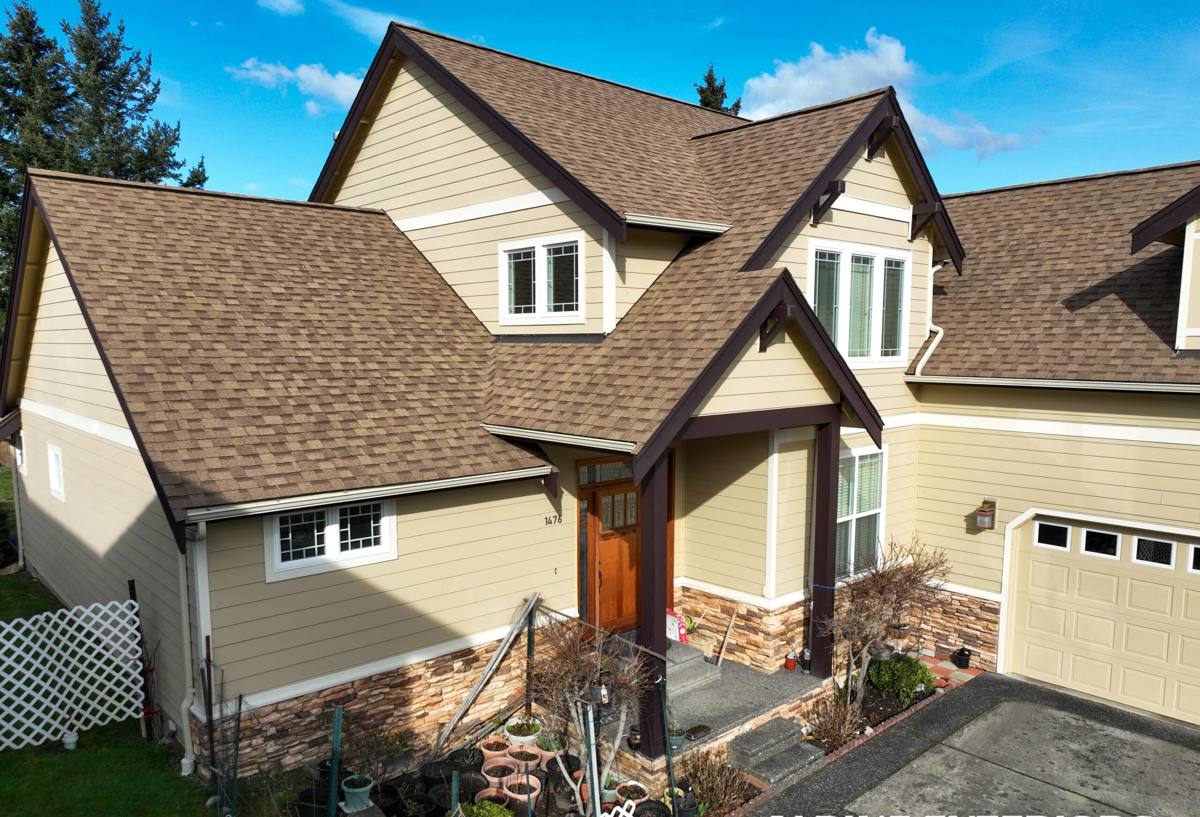
What Mukilteo's Climate Actually Does to a Shingle Roof
Salt air and corrosion
Homes within a mile or two of the water deal with airborne salt that settles on metal flashing, fasteners, gutters, and vents. Over time this accelerates corrosion on anything that isn't a corrosion-resistant grade of metal. On a roof, the flashing around chimneys, valleys, and vent pipes is usually the first place this shows up — not the shingles themselves.
Driving, wind-driven rain
Storms off the Sound don't always fall straight down. Wind-driven rain gets pushed sideways and upward under shingle edges, into valleys, and around any penetration in the roof — skylights, plumbing vents, chimneys. A roof that's watertight in a light, calm rain can still leak in a sideways Puget Sound storm if the underlayment, flashing, and shingle overlap weren't detailed correctly.
Moss and the long wet season
Western Washington's moss problem is well known, but Mukilteo's mix of marine humidity, shade from mature trees on many lots, and a wet season that can run eight or nine months a year makes it worse than in drier parts of the state. Moss holds moisture against the shingle surface, lifts shingle edges as it grows, and gradually breaks down the granule surface that protects the asphalt underneath.
What a Correct Asphalt Shingle Job Looks Like Here
A roof built for this climate is different in a handful of specific ways from a standard install:
- Full ice-and-water underlayment at eaves and valleys, not just the minimum code requirement, since these are the first places wind-driven rain finds its way in
- Corrosion-resistant flashing at chimneys, sidewalls, and roof-to-wall transitions rather than standard-grade metal that pits and rusts faster in salt air
- Balanced intake and exhaust ventilation, so moisture from inside the house doesn't condense on the underside of the roof deck during our cool, damp winters
- Proper shingle nailing pattern and fastener count rated for the wind exposure a waterfront or near-waterfront lot actually sees
- Algae-resistant granules on the shingle itself, which slow (not eliminate) the dark streaking and moss-friendly surface that shows up fast in this climate
Skipping any one of these doesn't necessarily cause a problem the first year. It shows up in year six or eight, as a leak at a valley, premature granule loss, or moss establishing itself faster than it should.
Signs a Mukilteo Roof Needs a Look
Because of the climate here, we'd rather homeowners catch small issues early than wait for a leak inside the house. Watch for:
- Moss or dark green growth building up on north-facing slopes or shaded sections
- Granules collecting in gutters or at downspout outlets after storms
- Shingle edges that look curled, cupped, or lifted, especially after a windy winter
- Rust staining below flashing points, vents, or chimney counterflashing
- Daylight visible through the roof deck from inside the attic
- Soft or spongy spots when walking the roof (a sign of trapped moisture underneath)
- Streaking or discoloration that keeps returning even after a light cleaning
Any one of these on its own usually isn't an emergency. Several at once, or moss combined with visible granule loss, is usually a sign the roof is in its last few years of useful life rather than needing a small repair.
How We Approach a Mukilteo Roofing Job
- On-site inspection. We walk the roof (weather permitting) and check the attic from inside, looking at ventilation, deck condition, insulation contact, and any signs of past moisture intrusion.
- Honest repair-or-replace assessment. We tell you plainly whether the roof has years left in it or is past the point where repairs make sense, and why.
- Written scope and materials. Before any work starts, you get a clear description of what's being done, what shingle and underlayment products are being used, and what the flashing and ventilation plan looks like.
- Tear-off and deck check. On a full replacement, we remove old roofing down to the deck and inspect the sheathing for rot or soft spots before anything new goes down — this is where hidden moisture damage from wind-driven rain usually surfaces.
- Underlayment and flashing first. Ice-and-water shield at eaves and valleys, synthetic underlayment across the field, and new flashing at every penetration and wall transition — all before a single shingle is installed.
- Shingle installation to spec. Correct exposure, nailing pattern, and starter/hip/ridge detailing, matched to the wind exposure of your specific lot.
- Final walk-through. We review the finished roof with you, including ventilation and any maintenance recommendations specific to your property's tree cover and sun exposure.
Repair or Replace? What Actually Drives That Decision
Not every roof problem in Mukilteo means a full replacement. Here's how we think through it:
| Situation | Repair Often Makes Sense | Replacement Is Usually the Better Call |
|---|---|---|
| Age of roof | Under 12–15 years, isolated issue | Approaching or past the shingle's rated lifespan |
| Leak location | Single, identifiable source (one flashing point, one damaged section) | Multiple leak points or leaks in different areas after rain events |
| Granule loss | Localized to one slope or area | Widespread, with bare or shiny patches across most of the roof |
| Moss condition | Surface growth, shingles still lie flat | Moss has lifted shingle edges or grown under tabs |
| Deck condition | Solid, no soft spots found | Soft, spongy, or visibly rotted sheathing found during inspection |
Shingle Options and How They Hold Up in This Climate
Not all asphalt shingles are built the same, and the differences matter more in a marine climate like Mukilteo's than they would somewhere drier.
| Shingle Type | Typical Lifespan | How It Handles This Climate |
|---|---|---|
| 3-tab shingles | Roughly 15–20 years | Lighter and less wind-resistant; can be a reasonable budget option on sheltered, low-slope sections but less suited to exposed or waterfront lots |
| Architectural (laminated) shingles | Roughly 25–30+ years | Heavier, better wind rating, and more resistant to the lifting and curling that shows up after windy Sound storms |
| Algae-resistant (AR) shingles | Same as base product | Copper- or zinc-infused granules slow dark streaking and moss-friendly buildup; worth the modest upgrade in most of Mukilteo |
For most Mukilteo homes, we recommend architectural shingles with algae-resistant granules as the baseline, not the upgrade. The added durability and moss resistance tend to pay for themselves over the life of the roof given how much moisture and shade this area deals with. That said, a 3-tab product still has a place on a detached garage, shed, or budget-driven project where the roof is small, low-slope, and well-sheltered from wind.
Maintenance That Actually Matters Here
A well-installed roof in Mukilteo still needs some seasonal attention, mostly because of moss and debris rather than the shingles wearing out prematurely:
- Keep gutters clear so water isn't backing up under the shingle edge, especially under trees that drop needles or leaves
- Have moss treated or removed before it lifts shingle tabs — done gently, without pressure-washing the granule surface off
- Trim back tree limbs that keep a roof section shaded and damp longer than the rest of the roof
- Check attic ventilation isn't blocked by insulation, especially after any insulation work
- Have flashing points checked every few years, since that's where salt-air corrosion shows up first
Why It Matters That We Already Work in Mukilteo
A roofing crew that only occasionally works this close to the water can miss things that are obvious to a crew that's out here regularly — how much heavier the moss growth is on a shaded, north-facing slope near the Sound, which flashing details actually hold up against wind-driven rain versus which ones look fine on installation day and fail in year four, and how Snohomish County's permitting and inspection process works for reroofing projects. We're an Everett-based crew, and Mukilteo is part of our regular service area, not a special trip. That means our estimates account for the real conditions on your roof, not a generic climate assumption.
Get a Straight Answer About Your Roof
If you're dealing with moss buildup, a slow leak, or just want an honest read on how many years your current roof has left, we're happy to take a look. The estimate is free, there's no pressure to sign anything on the spot, and you'll get a clear explanation of what we find and what your realistic options are. Use the form below to get started.