 Everett
 Why Snohomish Roofs Need a Different Kind of Metal Roofing Plan
Snohomish sits close enough to the water and low enough in the tree canopy that roofs here take a specific kind of beating. You get salt-laden air drifting in off Puget Sound, long stretches of driving rain that can last for days, and a moss season that seems to start earlier and run later every year. A metal roof can handle all of that better than almost anything else on the market, but only if it's specified and installed with this exact climate in mind. A generic metal roofing job, done the way it might be done in a dry inland climate, will not hold up the same way here.
We work on homes throughout Everett and Snohomish County, and the roofs we see failing early almost always share the same root causes: the wrong fastening system for wind-driven rain, panel or trim choices that trap moisture instead of shedding it, and metals or coatings that weren't matched to a marine-influenced environment. This page walks through what a correct metal roofing job looks like for a Snohomish home, and why local experience matters as much as the materials themselves.
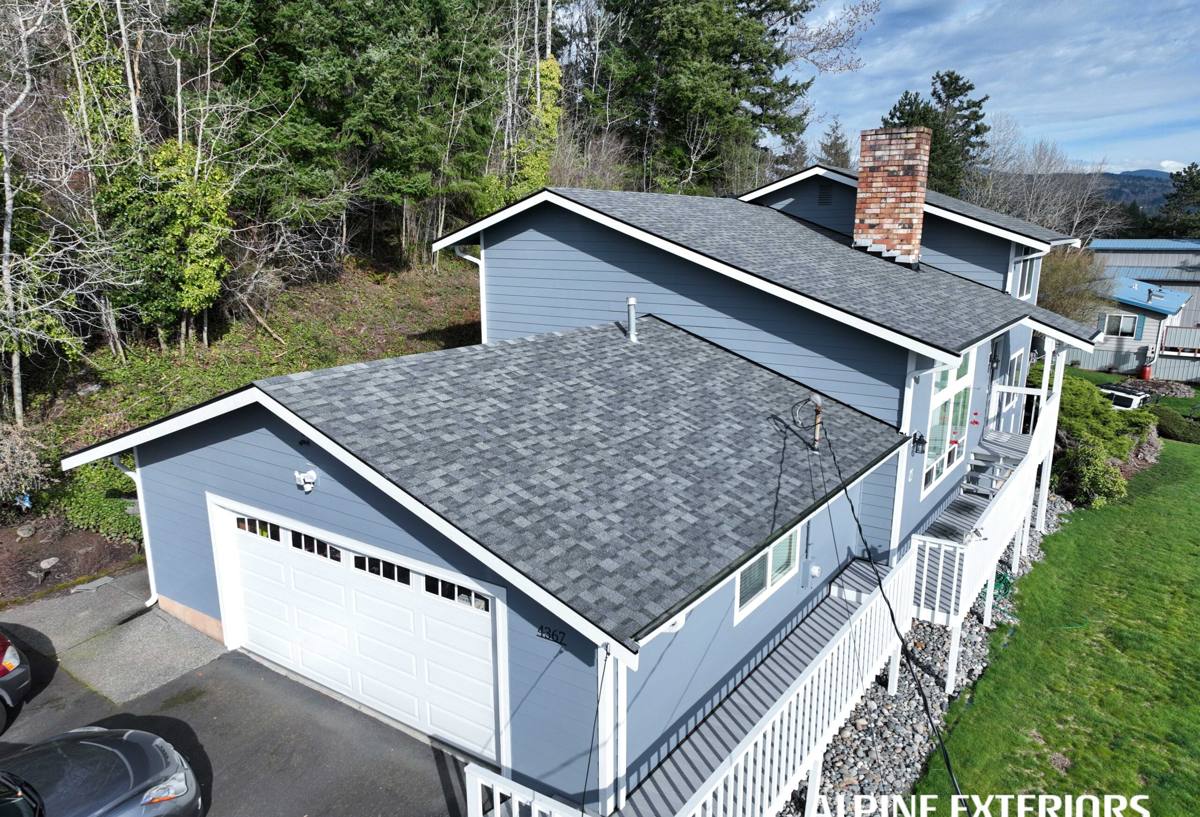
What Snohomish's Climate Actually Does to a Roof
Salt Air and Corrosion
Snohomish isn't oceanfront, but it's close enough to Puget Sound and the Snohomish River delta that airborne salt and moisture reach roofs here more than most homeowners realize. Over years, that exposure accelerates corrosion on unprotected fasteners, cut edges, and lower-grade coatings. It doesn't happen overnight, which is exactly why it catches people off guard — the roof looks fine for a decade, then rust starts showing up at seams and fastener heads all at once.
Driving Rain and Wind-Driven Moisture
Western Washington rain is rarely just falling straight down. Storms off the Sound push rain sideways, and that wind-driven moisture finds its way into laps, seams, and penetrations that a fair-weather installation wouldn't have to worry about. On a metal roof, this makes seam design, panel overlap, and underlayment choice far more important than they'd be in a drier climate.
Moss and Organic Growth
Shade from mature trees, consistent moisture, and mild temperatures add up to a long moss season in this area — often close to year-round on north-facing slopes. Moss holds moisture against roofing materials and, on the wrong substrate, can accelerate deterioration. Metal roofing is one of the most moss-resistant options available because it doesn't give moss spores the porous surface they need to take hold, but detailing still matters at valleys and low-slope transitions where debris and moisture collect.
Why Metal Roofing Is a Strong Fit for This Area
- Sheds wind-driven rain more effectively than shingled surfaces when panels and seams are installed correctly
- Resists moss and organic growth far better than asphalt shingles or wood shakes
- Handles the freeze-thaw and heavy rain cycles common to Snohomish County without granule loss or shingle curling
- Long service life reduces how often a roof surface is exposed to salt-air corrosion risk during re-roofing
- Lower long-term maintenance burden for homeowners who don't want to be cleaning moss off their roof every year or two
None of that means metal roofing is maintenance-free or that every metal system performs the same way in this environment. The coating, gauge, fastening method, and underlayment all matter, and cutting corners on any of them shows up faster here than it would in a milder climate.
Getting the Metal, Coating, and Fastening Right for a Marine-Influenced Climate
Material and Coating Choices
Not all metal roofing is built the same, and in a salt-air environment the coating matters as much as the base metal. We favor coated steel and aluminum systems with finishes rated for coastal or marine exposure, and we're careful about matching fasteners and flashing metals to the panel material to avoid galvanic corrosion — a problem that shows up when dissimilar metals sit in contact with each other in a wet environment.
Seams and Fastening
Standing seam systems, where panels are mechanically locked together rather than relying on exposed fasteners, are generally the better choice for Snohomish's wind-driven rain. Exposed-fastener panel systems can work on the right project, but they depend heavily on correct fastener spacing, washer quality, and periodic inspection — details that matter more here than in a dry climate where a missed fastener might go unnoticed for years.
Underlayment and Ice/Water Protection
A quality synthetic or self-adhered underlayment underneath the metal is non-negotiable in this climate. It's the backup layer that protects the roof deck if wind-driven rain ever gets past the panel seams, and it's especially important at eaves, valleys, and any low-slope section where water sits longer before draining.
Metal Roofing Comparison for Snohomish Conditions
| Factor | Standing Seam Metal | Exposed-Fastener Metal | Asphalt Shingle |
|---|---|---|---|
| Wind-driven rain performance | Strong — concealed fasteners, mechanically locked seams | Good if maintained; fasteners can loosen over time | Moderate; more vulnerable at laps and edges |
| Moss resistance | Strong | Strong | Weak without regular cleaning |
| Salt-air corrosion resistance | Strong with proper coating and fastener matching | Moderate; exposed fasteners are the weak point | Not a factor in the same way, but granule loss accelerates in wet climates |
| Typical service life | Longest of the three, with proper install | Long, but tied to fastener maintenance | Shortest, especially with moss and moisture exposure |
| Upfront cost | Highest | Mid-range | Lowest |
The right choice depends on your roof's slope, budget, and how long you plan to own the home — we'll walk through the honest trade-offs for your specific roof rather than pushing one system by default.
What a Correct Metal Roofing Job Involves
Assessment First
Before any material gets ordered, we look at the roof deck condition, existing ventilation, slope, valleys, and any chronic moss or moisture problem areas. A metal roof is only as good as what it's installed over, and a deck with hidden rot or a ventilation problem will undermine even the best panel system.
Ventilation
Proper attic and roof ventilation prevents condensation from building up underneath the metal panels — a real risk in our humid, mild-temperature climate. Skipping this step is one of the most common ways a metal roof underperforms, regardless of how good the panels themselves are.
Flashing and Penetrations
Chimneys, vents, skylights, and valleys are where most roof leaks originate, metal or otherwise. Correct flashing detail at every penetration, matched to the panel profile, is what actually keeps wind-driven rain out over the long run.
Cleanup and Disposal
A full tear-off and metal roof installation generates old roofing material and packaging waste that needs to be hauled off the property, not left for the homeowner to deal with.
Our Process for Snohomish Metal Roofing Projects
- On-site inspection of the existing roof, deck, ventilation, and problem areas specific to your property
- Honest walkthrough of metal system options, coatings, and costs based on what your roof and budget actually call for
- Written estimate with a clear scope — no vague line items
- Scheduled installation with attention to weather windows, since a partially open roof in Snohomish rain is not something we risk
- Final walkthrough covering flashing details, ventilation, and maintenance expectations
Maintenance Expectations for a Snohomish Metal Roof
- Clear debris from valleys and low-slope areas at least once or twice a year, especially under overhanging trees
- Have gutters checked and cleaned regularly — clogged gutters push water back under roof edges
- Watch for any staining or streaking near fasteners or seams, which can be an early sign of a coating or sealant issue
- Schedule a periodic inspection after major windstorms common to the Puget Sound region
- Keep an eye on any moss growth in shaded valleys even though metal resists it far better than shingles
Why Hiring a Crew That Already Works in Snohomish Matters
Metal roofing installation isn't the kind of job where general roofing experience automatically transfers to local conditions. A crew that mostly works drier inland climates may not think twice about fastener corrosion resistance, wind-driven rain detailing, or moss-prone valley design — because in their usual conditions, those details matter less. In Snohomish, they're the difference between a roof that performs for decades and one that develops problems in five or ten years.
We work on homes throughout Everett and greater Snohomish County, which means we've seen how roofs in this specific area age, where they tend to develop problems first, and which details actually hold up against Snohomish County's rain, wind, and moss pressure over time. That local pattern recognition is something a crew passing through the area for a single job simply doesn't have.
If you're weighing metal roofing for your Snohomish home, we're happy to walk your roof, answer questions honestly, and put together a written estimate — no pressure, no obligation. Use the form below to request your free estimate.