 Everett
 Why Bayside Roofs Wear Differently Than Roofs Inland
If you live in the Bayside area of Everett, you already know your roof works harder than one a few miles inland. Being close to the water means more airborne salt, more wind-driven rain hitting the roof at an angle instead of straight down, and a longer stretch of damp, shaded months where moss and moisture just sit on the surface. Snohomish County's marine climate is tough on every roofing material, but it's especially unforgiving on cheap fasteners, thin flashing, and coatings that weren't rated for salt exposure in the first place.
Metal roofing, done correctly, is one of the better answers to this environment. Done poorly — wrong fastener type, wrong panel gauge, skipped underlayment — it can fail faster than the asphalt shingle roof it replaced. This page is about what "correctly" actually means for a Bayside home, not metal roofing in general.
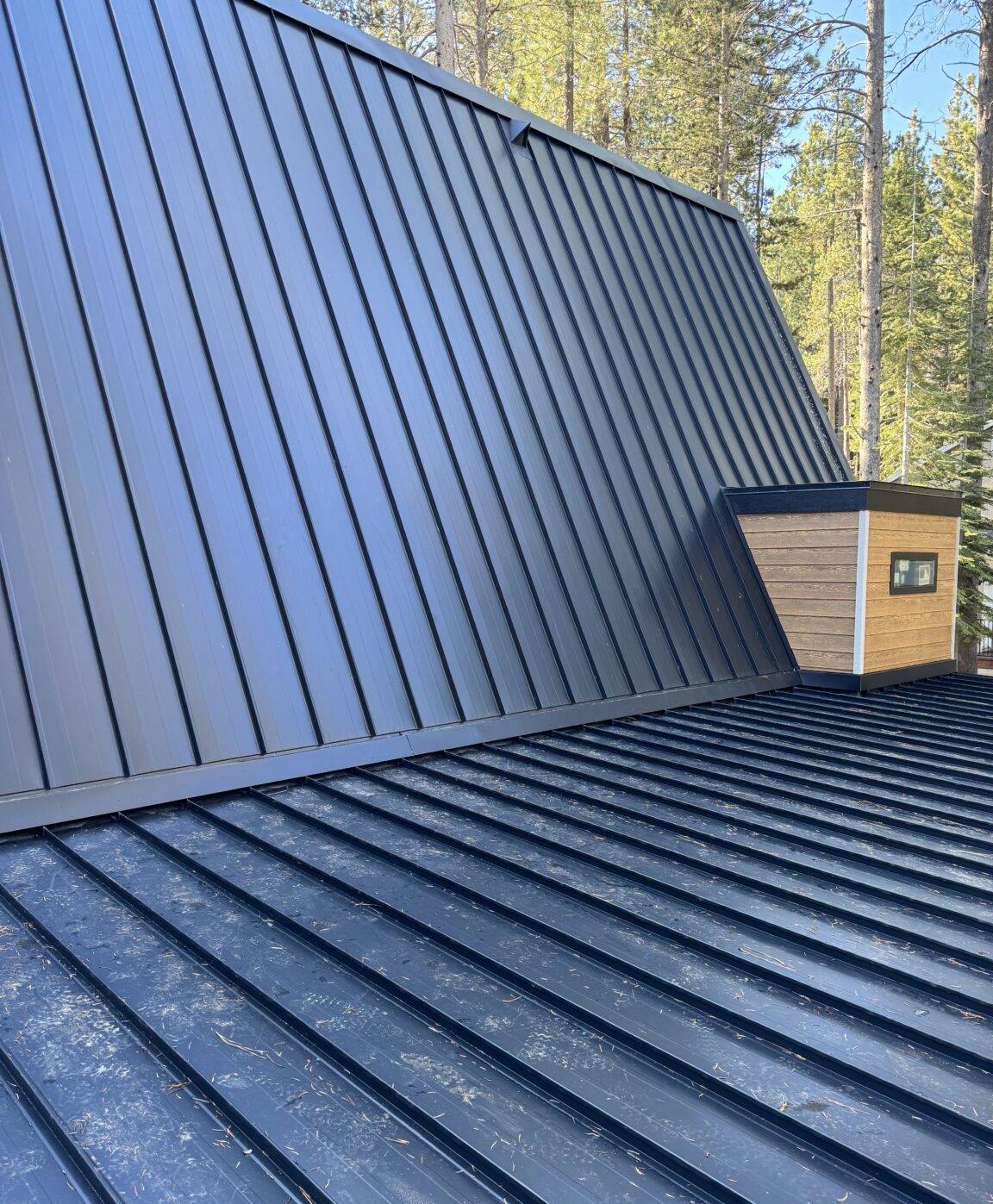
What Salt Air, Driving Rain, and Moss Season Do to a Roof
Salt air and corrosion
Airborne salt from Puget Sound accelerates corrosion on any exposed metal, especially at cut edges, fastener heads, and dissimilar-metal contact points. This isn't unique to Bayside, but proximity to the water means the exposure is more constant. The practical impact: fastener choice and panel coating matter more here than they would on a home twenty miles east.
Driving rain and wind-driven water
Storms off the Sound often push rain sideways, not straight down. A roof that only sheds water well in calm conditions can still leak during a wind event if the underlayment, flashing laps, and panel seams aren't built to handle water moving uphill or sideways for a few seconds at a time. This is where installation detail matters more than the metal itself.
Moss and prolonged dampness
Everett's long wet season, combined with shade from mature trees common in older neighborhoods, gives moss plenty of time to establish. Moss holds moisture against the roof surface far longer than the surface would otherwise stay wet, and on the wrong substrate that trapped moisture leads to premature coating breakdown or wood rot underneath. Metal roofing doesn't feed moss the way organic shingle surfaces can, but valleys, low-slope sections, and areas with poor airflow still need to be designed to drain and dry quickly.
Metal Roofing Systems That Actually Hold Up Here
Not all "metal roofing" is the same product, and the differences matter a lot in a marine climate. We steer Bayside homeowners toward systems with proven corrosion resistance and a panel profile that seals well under wind-driven rain, rather than the cheapest per-square option.
| System | Best fit | Salt-air performance | Trade-offs |
|---|---|---|---|
| Standing seam steel (Galvalume or similar coated steel) | Most Bayside homes, especially near the water | Strong — factory coatings are rated for coastal exposure | Higher upfront cost; requires a crew experienced with seaming and thermal movement |
| Aluminum panel systems | Homes with the highest direct salt exposure | Excellent — aluminum doesn't rust | Softer metal, more careful handling during install; typically a cost step up |
| Exposed-fastener metal panels | Detached garages, shops, lower-visibility roofs | Fair — depends heavily on fastener quality and gasket condition over time | Fasteners and washers eventually need inspection/replacement; not our first pick for primary residences here |
| Stone-coated steel shingles/tiles | Homes wanting a traditional shingle or tile look | Good, when flashing details are done to spec | More complex flashing at hips, valleys, and penetrations |
For most Bayside homes, we recommend standing seam steel or aluminum because the concealed-fastener design removes the long-term weak point of exposed screws sitting in salt air for decades. It costs more up front than exposed-fastener panel, but it's the system that ages the way homeowners expect a "40+ year roof" to age.
What a Correct Metal Roofing Installation Actually Involves
The panel itself is maybe a third of what determines whether a metal roof performs in this climate. The rest is detail work that's easy to shortcut and hard to inspect once the roof is closed up.
Underlayment
We install a synthetic or high-temp ice-and-water underlayment rated for the coastal wind-driven rain this area sees, not a builder-grade felt. Valleys, eaves, and any low-slope transitions get self-adhered membrane, since these are the areas most likely to see water pushed uphill during a storm.
Fasteners and clips
Fastener metal has to be compatible with the panel metal to avoid galvanic corrosion — mixing metals at the fastener is one of the more common causes of premature rust we see on older installs near the water. On standing seam, concealed clips do the structural work, which keeps fastener penetrations out of the weather layer entirely.
Flashing and penetrations
Every pipe boot, chimney, skylight curb, and wall transition is a place water can find a way in. Flashing gets formed and lapped correctly — shingled the right direction, sealed with compatible sealant, and mechanically fastened where needed — instead of relying on caulk as the primary defense.
Ventilation
Proper intake and exhaust ventilation keeps moisture from condensing on the underside of the panels and in the attic. In a climate this damp, under-ventilated attics are a common hidden cause of sheathing rot that has nothing to do with the roof surface itself.
Moss and drainage design
Where trees shade part of the roof, we pay extra attention to panel lap direction, valley width, and gutter sizing so water and debris move off the roof instead of collecting. Metal sheds moss far better than organic shingles, but a poorly designed valley can still trap needles and grit that hold moisture.
Our Process, Start to Finish
- On-site assessment — we look at the existing roof structure, decking condition, ventilation, and any moss or moisture staining before quoting anything.
- System recommendation — based on your home's exposure, slope, and how long you plan to stay in the house, we recommend a panel type and explain the trade-offs honestly.
- Tear-off and deck inspection — old roofing comes off and we check the decking for rot or soft spots before anything new goes down, since this is the one point in the project where hidden damage is actually visible.
- Underlayment and flashing installation — the water-management layer goes in first and gets inspected before panels are installed over it.
- Panel installation — panels, seams, and clips installed to manufacturer spec and adjusted for your roof's actual slope and exposure.
- Final walk-through — we walk the roof and the ground with you, cover care and warranty terms, and make sure gutters and downspouts are handling water correctly before we consider the job done.
Maintenance a Bayside Metal Roof Actually Needs
Metal roofing is lower-maintenance than shingles, but "low-maintenance" isn't "no-maintenance," especially this close to the water.
- Clear gutters and valleys of needles and debris at least twice a year, more often if you have overhanging trees
- Rinse visible salt residue or grime off the roof surface during an annual exterior check, particularly on homes with a direct water view
- Check pipe boots and sealant at penetrations every year or two — these wear out well before the metal panels do
- Watch for any panel fasteners (on exposed-fastener systems) that look loose, rusted, or missing a washer
- Keep an eye on moss or algae buildup in shaded valleys and low-slope sections, and remove it gently rather than pressure-washing at close range
- After major windstorms, do a quick visual check for lifted flashing or debris impact, especially near the shoreline
What Drives the Cost of a Metal Roof in This Area
| Factor | Why it matters here |
|---|---|
| Panel material (steel vs. aluminum) | Aluminum costs more but is the strongest choice for the most exposed, closest-to-water lots |
| Roof complexity (valleys, dormers, penetrations) | More transitions mean more flashing labor, which is where leaks actually start |
| Deck condition | Homes with prior moss or moisture damage may need sheathing repair before install |
| Underlayment upgrade | Full self-adhered underlayment costs more than standard synthetic but matters more in wind-driven rain |
| Access and site conditions | Steep slopes, limited driveway access, or waterfront lots can affect staging and labor time |
We give straightforward, itemized quotes so you can see what you're paying for — material, labor, and any deck repair — rather than a single lump number.
Why It Matters That We Already Work in Bayside
A roofing crew that mostly works inland can still install metal roofing competently, but they may not default to the coastal-rated underlayment, compatible fasteners, or ventilation detailing that a home this close to Puget Sound actually needs. Crews who work the Bayside area regularly see how salt air, wind direction, and moss season play out on real roofs over years, not just on a spec sheet. That local pattern recognition is what shows up later as the difference between a roof that's still tight at year fifteen and one that's already showing fastener rust or flashing failure.
We're an Everett-based crew serving Snohomish County, and Bayside homes are part of our regular service area — not an occasional job we drive out for. If you're considering metal roofing for your home, we're happy to walk your roof, explain what we see, and put together a straightforward, no-pressure estimate. There's a form below to get that started whenever you're ready.