 Everett
 Marysville's Climate Is Rough on Siding — Here's Why
Marysville sits close enough to Puget Sound and the Snohomish River delta that salt-laden air, humidity, and wind-driven rain are a constant fact of life for anything mounted on the outside of a house. Add in the long stretch of gray, wet months that Snohomish County gets every year, and you have a climate that's genuinely tough on exterior building materials — not in a dramatic, once-a-decade-storm way, but in a slow, grinding, year-round way.
Three things do most of the damage over time:
- Salt air — even homes several miles inland get some exposure, and salt accelerates corrosion of fasteners and degrades certain paints and coatings faster than inland climates.
- Driving rain — wind-driven rain doesn't just hit siding, it gets pushed sideways and upward into laps, seams, and trim joints where a weak installation will let it through.
- Moss and algae season — Marysville's damp, shaded conditions for much of the year create ideal growing conditions for moss and mildew on north-facing walls, under eaves, and anywhere airflow is limited.
None of this means siding is doomed to fail here. It means the material and the installation both have to be chosen with this specific climate in mind, not a generic one.
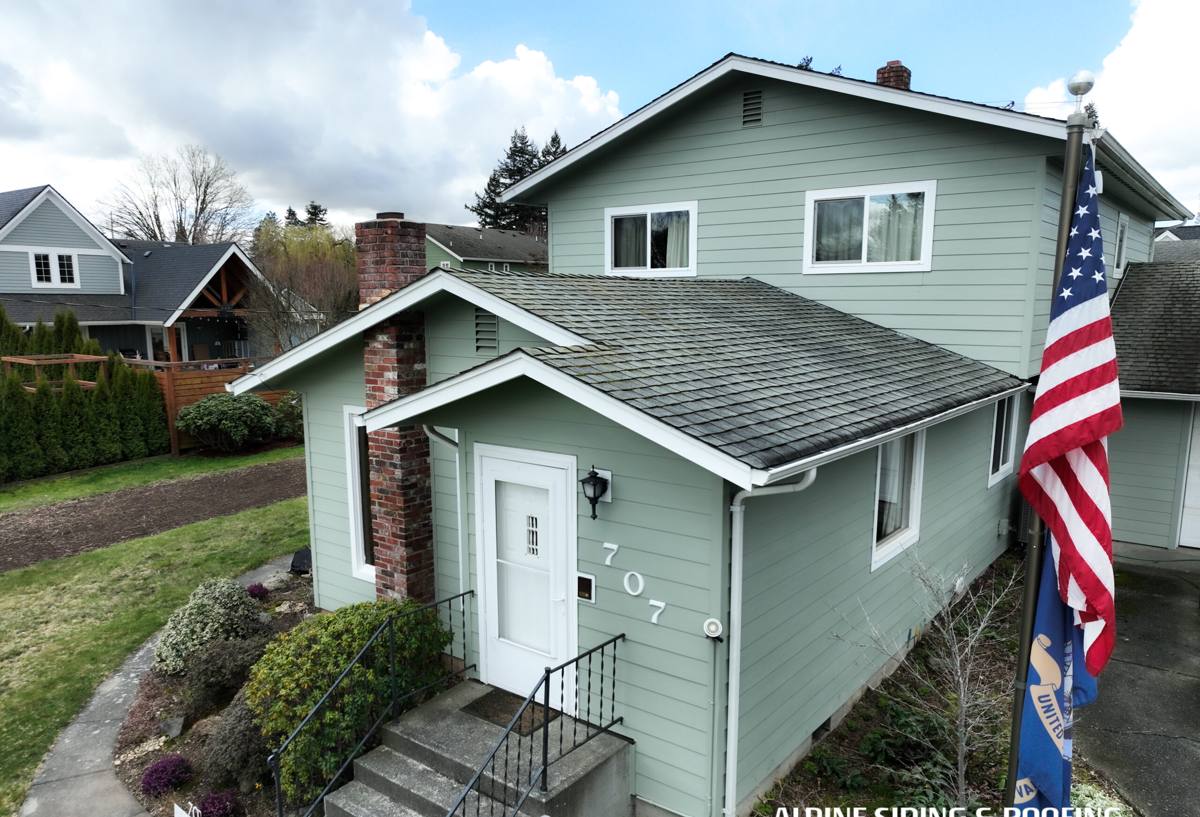
Signs a Marysville Home Actually Needs Siding Replacement
Not every issue means full replacement — some are spot repairs. But there are specific signs, especially common in this area, that point to a bigger problem underneath:
- Soft or spongy spots when you press on the siding, especially near the bottom courses or around window and door trim
- Paint that's bubbling, peeling, or failing faster than it should, particularly on walls that face prevailing wind and rain
- Persistent moss or dark streaking that comes back within a season or two of cleaning
- Visible gaps, warping, or buckling in panels or lap boards
- Rising utility bills or drafts that suggest the water-resistive barrier behind the siding has failed
- Siding that's original to a home built in the 1990s or 2000s with lower-grade wood composite or early-generation hardboard products, which were common in this region and have a known track record of moisture failure
If you're seeing more than one of these, it's worth having someone look at what's happening behind the siding, not just the surface.
What a Correct Siding Replacement Actually Involves
Siding replacement done right is not just "take the old stuff off, nail up new boards." In a climate like Marysville's, the assembly behind the visible siding matters as much as the siding itself. A correct job includes:
Full Tear-Off and Inspection
We remove the old siding down to the sheathing so we can actually see what's there — not guess. This is when hidden rot, damaged sheathing, or failed old flashing gets found and dealt with, instead of being sealed back up under new material.
Water-Resistive Barrier
A properly lapped, correctly fastened weather-resistive barrier goes on before any siding. Given how much wind-driven rain this area sees, this layer is doing a lot of the real work of keeping a house dry — the siding is the first line of defense, this barrier is the backup.
Flashing at Every Penetration
Windows, doors, hose bibs, vents, and any other penetration through the wall need proper flashing and integration with the water-resistive barrier. This is where a huge share of siding failures actually start — not in the field of the wall, but at these transition points.
Correct Fastening and Clearances
Fastener type, spacing, and depth all matter, especially in a salt-air environment where the wrong fastener corrodes years before the siding around it fails. We also maintain proper clearance from grade, roof lines, and decks so water has somewhere to go instead of wicking into the bottom of the wall.
Finish Work
Trim, caulking at the right joints (and not caulking joints that should be left to drain), and touch-up painting where field-cut edges are exposed.
Why We Install Only James Hardie Fiber Cement Siding
We don't install vinyl, LP SmartSide, or cedar. That's a deliberate standard, not a sales pitch, and it matters especially in a climate like this one.
Vinyl siding can work fine in some climates, but it has real limits here: it expands and contracts more than fiber cement with our seasonal swings, and it can warp with prolonged heat or impact. Wood composite products, cedar, and similar materials are only as good as the moisture management around them, and in a region with this much sustained dampness, that margin for error gets thin fast — those products can look great for years and then fail all at once when water finally gets past the finish.
James Hardie fiber cement is non-combustible, doesn't support moss and mildew growth the way wood-based products do, and holds its factory-applied ColorPlus finish far longer than field-applied paint on wood siding. Hardie also builds specific product lines engineered for different climate zones — the HZ5 line used in this region is formulated for wetter, cooler climates like ours, which is a meaningful difference from a generic all-climate product. The warranty is transferable and backed by a manufacturer with decades of track record, not just a marketing claim.
We standardized on one product line because we can install it to spec every time, back it with a real warranty, and stop guessing about how it will hold up in Marysville's specific weather.
Our Process, Start to Finish
- On-site inspection — we look at the current siding, trim, flashing, and any visible problem areas before quoting anything.
- Written estimate — scope, product line, color, and timeline, with no pressure to sign on the spot.
- Tear-off and sheathing inspection — old material comes off, sheathing gets checked and repaired if needed.
- Barrier and flashing installation — done before a single piece of new siding goes up.
- Hardie siding installation — installed to manufacturer spec for fastening, clearance, and joint treatment.
- Final walkthrough — we go over the finished job with you before calling it done.
What Drives the Cost of a Marysville Siding Replacement
Every home is different, but these are the main factors that move the price of a job up or down:
| Factor | Why It Matters |
|---|---|
| Home size and wall complexity | More square footage, dormers, and wall angles mean more material and labor time |
| Extent of hidden damage | Rotted sheathing found during tear-off adds repair work before new siding can go on |
| Siding profile and color | Lap width, shingle-style panels, and factory colors carry different material costs |
| Trim and detail work | Corner boards, window trim, and fascia detail add labor beyond the flat wall area |
| Access and site conditions | Steep lots, tight setbacks, or limited equipment access affect labor time |
| Story height | Second-story and taller walls require more scaffolding and safety setup |
We won't quote a firm number without seeing the house, but these are the variables that actually move a bid — not vague "market conditions."
Why Hiring a Crew That Already Works in Marysville Matters
A crew that regularly works in Marysville and the surrounding Snohomish County area already knows what this climate does to a house over time. That's not a small thing. It means we're not learning on your project — we already know which wall orientations take the worst weather, where moss tends to establish first, and how to sequence a tear-off around this area's rain patterns so your home isn't sitting open to the weather longer than it needs to be.
It also means we can speak plainly about what a local building department will expect for permitting and inspection, and we're not relying on general climate assumptions that don't hold up in the Pacific Northwest.
Keeping New Siding in Good Shape After Installation
Even the best siding installation benefits from basic upkeep, especially in this climate:
- Rinse siding gently once or twice a year to keep salt residue and grime from building up
- Keep gutters clear so overflow doesn't run down the wall face
- Trim back vegetation and shrubs to keep airflow around the base of walls, which discourages moss
- Check caulking at trim joints periodically and have any cracked sections resealed
- Address any impact damage or cracked panels promptly rather than letting water find its way in
Fiber cement is low-maintenance compared to wood, but "low-maintenance" isn't "no-maintenance," and a little attention goes a long way toward getting the full lifespan out of the material.
Get a Straightforward Look at Your Siding
If your Marysville home is showing any of the signs above, or you just want an honest opinion on whether repair or full replacement makes more sense, we're happy to take a look. There's no pressure and no obligation — just a clear read on what your siding actually needs. Use the form below to request a free estimate.