 Everett
 Why Marysville Siding Takes More Punishment Than People Expect
Marysville sits where Snohomish County's marine air meets open exposure off Puget Sound and the Snohomish River delta, and that combination is tougher on exterior siding than most homeowners realize until they've lived with it a few years. Salt-laden air moves inland on prevailing winds, wind-driven rain hits west and south-facing walls at an angle instead of straight down, and the region's long, mild, wet stretch from October through May keeps exterior surfaces damp for days at a time. Add tree cover and low winter sun angles common in Marysville's residential neighborhoods, and you get ideal conditions for moss, algae, and moisture to take hold on siding that isn't built or installed to handle it.
None of this is unique to Marysville in the abstract — it's the same story across the Puget Sound lowlands — but it matters a great deal at the level of an individual house. A siding product or installation detail that would be fine in a drier climate can fail here in a fraction of the time. That's the lens we use on every Marysville job: not "will this look good on day one," but "will this hold up through fifteen or twenty wet seasons."
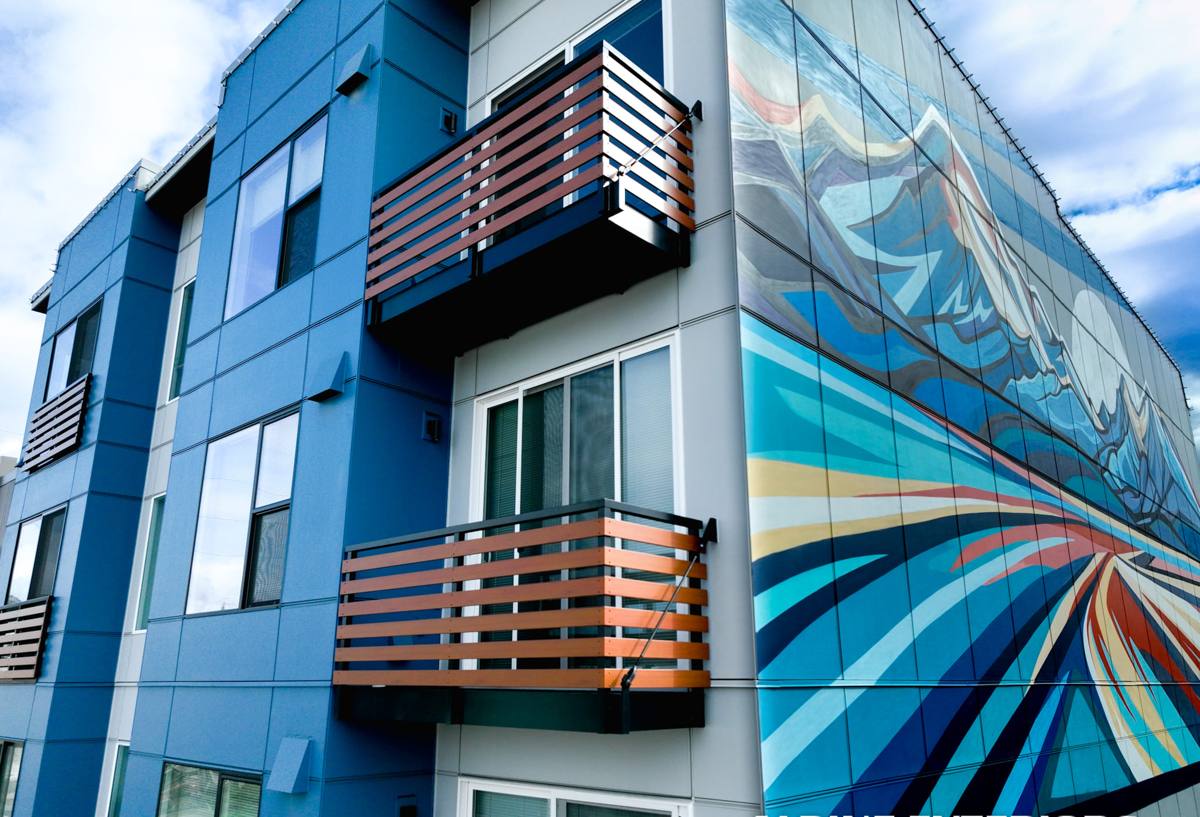
What Marysville Homes Actually Need From Their Siding
Strip away the marketing language and a home in this climate needs siding that does four things well:
- Resists moisture absorption so it doesn't swell, cup, or hold water against the wall assembly
- Holds a factory finish that doesn't chalk, fade, or need repainting every few years in UV and salt exposure
- Stays dimensionally stable through repeated wet-dry and freeze-thaw cycles without cracking at joints
- Resists moss and algae growth on shaded, north-facing, and tree-covered elevations
Wood-based and engineered-wood products struggle with the first and third points because wood fiber, even when treated, absorbs moisture at cut edges and panel joints. Vinyl handles moisture fine but is a poor match for the second and fourth — it doesn't hold paint (it isn't meant to), and dark colors especially can look tired within a decade in this kind of weathering. Fiber cement, done right, is the one category built to answer all four at once — which is a big part of why it's become the standard choice for siding replacements in this part of Snohomish County.
Why We Install Only James Hardie
Everett Exterior installs James Hardie fiber cement siding exclusively. We don't carry LP SmartSide, vinyl, Cemplank, Allura, or primed wood species like spruce or cedar, and we're upfront about why: we'd rather stand fully behind one system we trust than split our crew's expertise and our warranty commitments across several.
James Hardie's HZ5 product line is engineered specifically for climates like ours — wetter, milder, with more moisture cycling than the drier regions HZ10 is built for. The fiber cement itself is non-combustible, doesn't support moss and mold growth the way wood fiber can, and holds dimensional shape through the wet-dry swings that cause engineered wood products to swell at cut edges over time. The ColorPlus factory finish is baked on under controlled conditions rather than field-applied, which means better UV and salt resistance than most site-painted finishes and a longer stretch before repainting becomes necessary — often well beyond what field-applied paint on wood siding delivers.
That's not a knock on every other product on the market — LP SmartSide and quality vinyl both have legitimate uses and loyal customers. It's a statement about our standard: on a wall in Marysville that's going to see salt air, driving rain, and months of damp shade every year, fiber cement engineered for this exact climate is what we're willing to put our name behind.
What Correct Fiber Cement Installation Actually Involves
Fiber cement's reputation rests almost entirely on installation quality. The material itself is durable; a poorly installed job on a good product will still fail early, and a huge share of the "siding problems" homeowners run into trace back to installation shortcuts, not the material.
Moisture Management Behind the Siding
Correct installation starts before the first plank goes up. That means a proper weather-resistive barrier, correctly lapped and taped, with flashing at every penetration — windows, doors, hose bibs, light fixtures, and anywhere else something breaks the plane of the wall. In a climate that gets driving rain from multiple directions, flashing details that would be forgiving elsewhere aren't forgiving here. Water finds the gaps eventually.
Clearances and Fastening
James Hardie specifies minimum clearances from grade, roof lines, decks, and other horizontal surfaces for a reason — those gaps let water drain and air circulate instead of wicking up into the plank's cut edge. Fastener spacing, type, and placement also matter more than people assume: over-driven or under-driven nails, wrong fastener spacing, or fastening through the wrong zone of the plank all shorten the life of the installation and can void manufacturer warranty coverage.
Joints, Caulking, and Trim
Butt joints, corner trim, and transitions to windows and trim boards are where a lot of amateur and rushed installs go wrong. Hardie's installation guidelines call for specific joint treatment — some joints should be caulked, others are designed to be left with a gap and flashed instead — and using the wrong approach traps moisture rather than shedding it. Caulk quality and application matter too; the wrong sealant fails faster in this climate's UV and moisture cycling than most homeowners expect.
Our Marysville Installation Process
We run the same disciplined process on every Marysville job, adjusted for the specifics of the house:
- Inspection and assessment — we look at the existing siding, sheathing, and any signs of past moisture intrusion before quoting anything, because what's underneath the current siding changes the scope
- Tear-off and sheathing check — old siding comes off and we inspect the sheathing for rot or damage before it's covered back up; this is the point where hidden problems get caught and fixed, not papered over
- Weather barrier and flashing — a correctly lapped weather-resistive barrier and flashing at every penetration, sized and detailed for this climate's wind-driven rain
- James Hardie installation to manufacturer spec — proper clearances, fastener pattern, and joint treatment throughout, not just on the visible elevations
- Trim, corners, and caulking — finished with the correct sealant and joint approach for each transition
- Final walkthrough — we go over the finished job with the homeowner before calling it done
Every step is documentable, and we're glad to walk a homeowner through what's happening behind the siding at any point during the job — this isn't work we need to hide.
Siding Options Compared for This Climate
| Factor | James Hardie Fiber Cement | Vinyl | Engineered Wood / LP-Type |
|---|---|---|---|
| Moisture absorption | Very low, engineered for wet climates (HZ5) | None, but expands/contracts with temperature | Higher risk at cut edges and panel joints |
| Moss/algae resistance | Strong; doesn't feed moss growth | Moderate; surface algae still common in shade | Weaker; organic fiber content is more vulnerable |
| Finish longevity | Factory-baked ColorPlus, long repaint interval | Color molded in, but fades and chalks over time | Field or factory paint, shorter repaint cycle |
| Fire resistance | Non-combustible | Combustible | Combustible |
| Installation sensitivity | High — must follow manufacturer spec closely | Moderate | Moderate to high |
This table isn't meant to declare every alternative unusable — it's meant to show why, for the specific stresses a Marysville exterior sees, fiber cement engineered for this climate comes out ahead across the factors that actually determine how the wall performs in year ten and year twenty, not just year one.
What Drives Cost on a Marysville Siding Job
| Cost Factor | Why It Matters |
|---|---|
| House size and elevation count | More square footage and more corners/transitions mean more material and labor |
| Existing sheathing condition | Rot or damage found during tear-off adds repair scope before new siding goes up |
| Siding profile and plank width | Lap siding, panel siding, and shingle-style Hardie products carry different material and labor costs |
| Trim and detail work | Homes with more windows, dormers, and architectural detail require more precision trim and flashing work |
| Access and site conditions | Multi-story sections, tight lot lines, or landscaping obstacles affect labor time |
We don't quote broad price ranges without seeing the house — too much of the cost depends on what's actually underneath the existing siding and how the home is laid out. A free on-site estimate gives an accurate number instead of a guess.
Why a Crew That Already Works Marysville Matters
Siding crews that work across a wide, dry-climate territory don't always carry the same instincts for wind-driven rain detailing or moss-prone shaded walls that a crew based in Snohomish County develops from repetition. Working Marysville and the surrounding Everett area regularly means we're familiar with local permitting expectations, typical construction of homes in this area's various eras of development, and the specific failure patterns that show up on older siding jobs when we do tear-offs — which informs exactly where we pay extra attention on a new install. That local pattern recognition is hard to substitute for.
Maintenance Checklist for Marysville Homeowners
Correctly installed James Hardie siding is low-maintenance, not zero-maintenance. A short annual routine keeps it performing as designed:
- Rinse siding annually to remove salt residue and organic buildup, especially on shaded or tree-covered elevations
- Check caulking at trim, window, and door transitions yearly for cracking or separation
- Keep gutters clear so overflow doesn't run down the wall face repeatedly
- Trim back vegetation and tree limbs that keep siding sections shaded and damp
- Watch for moss starting at ground-level clearances or low horizontal surfaces and address it early
- Have any impact damage or cracked planks repaired promptly rather than left through a wet season
None of this is heavy work, but skipping it is how a well-installed job ages faster than it should.
Ready for a Straight Answer on Your Marysville Home
If your siding is showing moss, cracking, or wear, or you're planning ahead for a replacement, we're happy to take a look and give you an honest read on condition and options — no pressure, no hard sell. Request a free estimate using the form below and we'll get a local crew out to walk the property with you.