 Everett
 Siding Repair Built for Lynnwood's Weather
Lynnwood sits close enough to Puget Sound and the surrounding lowland weather patterns that homes here take a particular kind of beating: salt-tinged air moving in off the water, long stretches of driving rain pushed sideways by wind, and a moss season that can run most of the year in shaded, north-facing yards. None of that is unusual for Snohomish County, but it does mean siding repair here isn't the same job as siding repair in a dry inland climate. Water finds every gap, moss holds moisture against a wall for months at a time, and salt air accelerates corrosion on fasteners and trim faster than most homeowners expect.
We're an Everett-based crew that works Lynnwood regularly, and this page is about one thing: what it actually takes to repair siding correctly on a home in this specific climate, and how we approach it when you call us out for a repair rather than a full re-side.
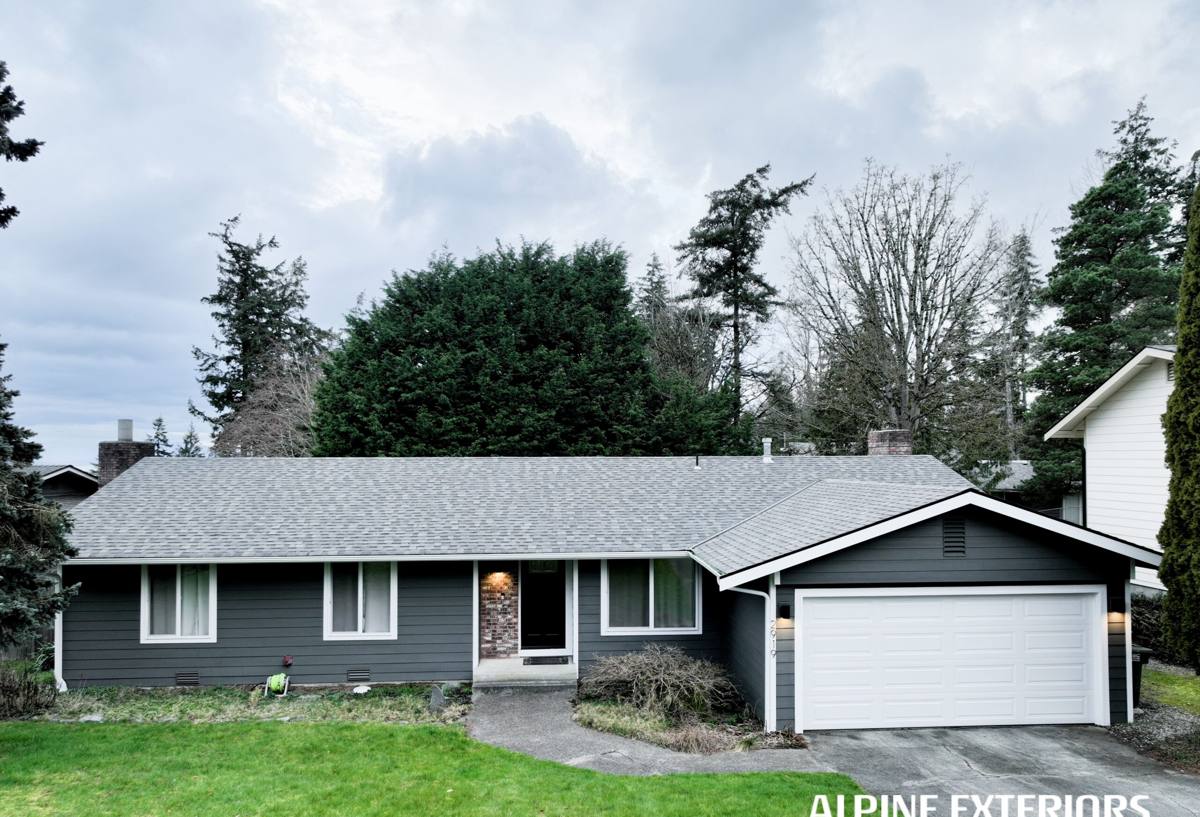
What We See Most Often on Lynnwood Homes
Every siding material fails differently, and knowing the failure pattern is half the diagnosis. Here's what shows up most on repair calls in this area:
- Cedar and wood siding: soft, spongy boards near the bottom courses and around window sills, usually from years of moisture wicking up from grade or pooling behind trim that was never properly flashed.
- Vinyl siding: panels that have warped, buckled, or blown off in wind events, plus cracking at fastener points after years of temperature swings and UV exposure.
- Primed spruce/engineered wood products (including LP SmartSide): edge swelling and delamination where cut ends or seams weren't field-sealed, especially on north and west-facing walls that stay damp longest.
- Older fiber cement: cracked caulk joints, failing paint film, and occasional impact damage from debris or ladders, but the board itself is usually still sound underneath.
- Moss and organic growth: dark staining and soft, damp wall sections in shaded areas, low-sun exposures, and anywhere gutters or downspouts have been dumping water against the wall for too long.
A lot of these problems look cosmetic from the ground. They rarely are. Discoloration and soft spots are almost always a sign that water has already gotten past the surface material and into the layers behind it.
What a Correct Siding Repair Actually Involves
It starts behind the siding, not on it
Anyone can pop off a damaged board and nail up a new one. That's not a repair — it's a cover-up if nobody checks what's underneath. A correct repair starts with pulling back enough of the surrounding material to see the water-resistive barrier, the flashing, and the sheathing. In a climate that gets as much driving rain as Lynnwood does, hidden rot behind a small crack is far more common than homeowners expect.
Moisture doesn't stay where it started
Water that gets behind siding travels — down framing members, along sheathing seams, into corners. That's why we probe the area around any visible damage, not just the damaged board itself. A single cracked panel might be the only visible symptom of a leak that's been spreading for a season or two.
Flashing and drainage get fixed, not just siding
If the damage was caused by bad flashing, a missing kick-out, or a downspout dumping water straight onto a wall, replacing the siding without correcting that source just resets the clock on the same failure. We treat the water management detail as part of the repair, not an optional add-on.
The patch has to match — in material and in movement
Mixing siding materials in a repair (say, patching real wood with an engineered composite, or fiber cement with vinyl) creates mismatched expansion, different paint adhesion, and a visible seam that ages differently than the rest of the wall. We match material type wherever possible, and where the original product is one we don't install (more on that below), we'll tell you honestly what your options are instead of pretending a mismatched patch is a long-term fix.
Repair or Replace? How We Help You Decide
Not every damaged section needs a full re-side, and not every "small" repair should stay small. Here's the general framework we use when we're standing in front of a wall:
| Situation | Usually a Repair | Usually Points to Replacement |
|---|---|---|
| Damage extent | Isolated to one or two boards/panels | Spread across multiple wall sections or elevations |
| Sheathing condition | Solid, dry, no soft spots found | Soft, delaminated, or visibly rotted sheathing |
| Cause | One-time impact damage, a single flashing failure | Systemic moisture intrusion, chronic moss, aging material at end of life |
| Material age | Newer siding, isolated defect | Original siding is decades old and failing broadly |
| Material type | Fiber cement in otherwise good condition | Legacy vinyl, cedar, or engineered wood already showing widespread wear |
We'll always give you the repair option first if it's genuinely sound. We don't upsell full re-sides on homes that just need a section fixed — but we also won't patch over a wall that's going to fail again in two years and call it done.
What Affects the Cost of a Siding Repair
Every home and every failure is different, so we don't quote a repair without seeing it in person. In general, though, these are the factors that move the price:
| Factor | Why It Matters |
|---|---|
| Hidden damage behind the surface | Rotted sheathing or framing adds real labor and material beyond the visible patch |
| Access and height | Second-story and steep-roofline sections take more setup and time |
| Color and profile matching | Matching an older product's exact profile or faded color can add sourcing time |
| Flashing and drainage corrections | Fixing the actual water source, not just the siding, is part of a lasting repair |
| Extent of moss/moisture cleanup | Heavier organic growth means more prep before any new material goes on |
As a broad range, a straightforward, single-section repair with sound sheathing underneath tends to run a few hundred dollars; anything involving hidden rot, multiple sections, or flashing rework climbs from there. We'll always walk you through the actual scope before we give you a number.
Our Repair Process
- On-site inspection. We look at the damage, the surrounding siding, the flashing, and the grading/drainage around that section of the home.
- Open it up. We pull back enough material to see the sheathing and water-resistive barrier condition before quoting anything final.
- Diagnose the cause. Impact damage, flashing failure, moss retention, or material end-of-life all get treated differently.
- Honest scope conversation. We tell you what's a repair, what's borderline, and what's actually a replacement decision — before work starts, not after.
- Repair the source, not just the symptom. Flashing, drainage, or kick-out corrections happen alongside the siding work itself.
- Match and install. We install matching material where possible, properly fastened and sealed for this climate.
- Final check. We walk the repair with you before we consider the job finished.
Why Our Repair Work Only Uses James Hardie Fiber Cement
When a repair calls for new siding material — a patch section, a full elevation, or matching into an area that's being extended — we install James Hardie fiber cement and nothing else. We don't carry vinyl, LP SmartSide, Cemplank, Allura, primed spruce, or cedar on our trucks, and that's a deliberate standard, not a lack of options.
In a repair context specifically, that matters for a few reasons. Hardie's ColorPlus factory finish gives us a much better shot at matching color into an existing wall without a visible seam, because the finish is baked on at the factory rather than field-painted, and it holds its color far longer than a site-applied coat. The material itself is non-combustible and doesn't absorb water the way wood-based products do, so a properly installed Hardie patch isn't going to soften or swell the way a cedar or engineered wood repair might a few winters from now in this rainfall. And because it's climate-engineered for wet regions, a Hardie repair section tends to age at the same rate as the surrounding Hardie siding, instead of one section weathering faster and creating a visible mismatch down the line.
If your existing siding is a legacy product we don't install — vinyl, cedar, LP, or similar — we'll still tell you honestly whether a patch makes sense or whether that section (or the whole elevation) is better served by transitioning to Hardie. We're not going to pretend a mismatched material repair is a permanent fix just to get a quick job done.
Why a Crew That Already Works Lynnwood Matters
Siding repair is a trade where local experience actually shows up in the finished work. A crew that regularly works Lynnwood and the broader Everett area already knows which wall orientations hold moss longest, how driving rain off the Sound tends to find gaps around trim and windows, and what corrosion looks like on fasteners exposed to salt-influenced air over a few winters. That's not something you learn from a manual — it's something you learn from opening up enough walls in this specific climate to see the pattern repeat.
It also means faster response. We're not driving in from out of the county to look at a leak that's actively getting worse, and we're not guessing at Snohomish County code requirements or typical construction practices for homes built in this area's various eras. Local familiarity shortens the time between "we noticed a problem" and "it's actually fixed."
After the Repair: Keeping It From Happening Again
A good repair should outlast the conditions that caused the original damage. A few habits go a long way in this climate:
- Keep gutters and downspouts clear so water isn't dumping directly against a wall section
- Trim back vegetation and tree cover that keeps a wall shaded and damp longer than it needs to be
- Rinse moss and organic buildup off siding before it has a chance to hold moisture against the surface for months
- Check caulk joints around windows, doors, and trim yearly — caulk fails well before the siding does
- Watch for soft spots, staining, or bubbling paint after major storms, and address them early rather than waiting
- Confirm grading and splash-back areas near the foundation are directing water away from the wall base
Catching a small issue in year one is a repair. Ignoring the same issue for five years is usually a much bigger job.
If you've got a section of siding on your Lynnwood home that's cracked, soft, discolored, or just not looking right, we're happy to come take a look. We'll give you a straight answer on what's actually going on behind it and a free, no-pressure estimate for fixing it right — no obligation, just an honest read on your walls.