 Everett
 Metal Roofing Built for Lynnwood's Weather, Not a Showroom
Lynnwood sits close enough to Puget Sound and the Everett waterfront that homes here deal with a specific mix of weather stress: salt-tinged air moving in off the water, long stretches of driving rain from fall through spring, and a moss season that can run most of the year in shaded, north-facing yards. A roof that performs well in a drier inland climate can still struggle here if it wasn't specified and installed with this exact combination in mind. Metal roofing, done correctly, handles all three of these stressors better than most other roofing materials — but "done correctly" is doing a lot of work in that sentence, and it's where a lot of installations fall short.
This page is about what a metal roof needs to actually deliver on its promise for a Lynnwood home: the right panel and coating choice, the right fastening and flashing details, and a crew that has already worked through Snohomish County's weather quirks on other roofs nearby.
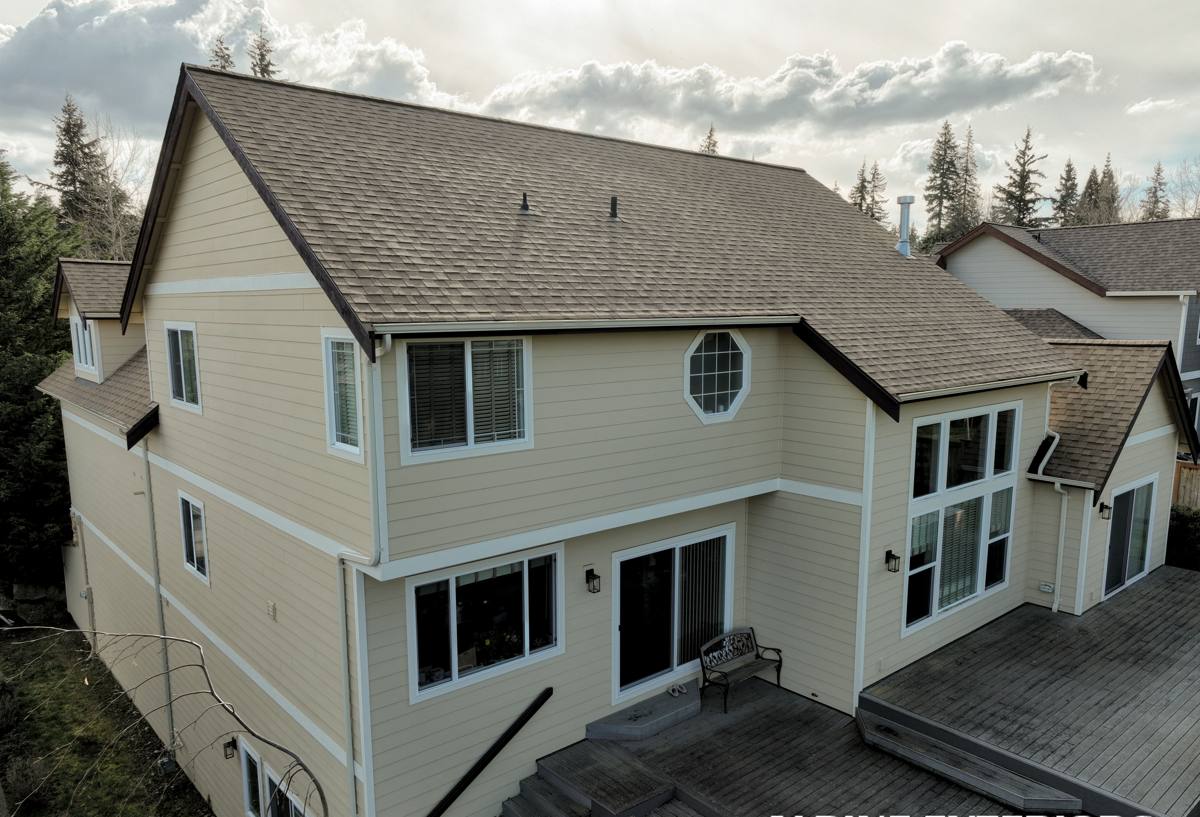
What Lynnwood's Climate Actually Does to a Roof
Salt Air and Corrosion
Proximity to Puget Sound means airborne salt is a real, ongoing factor, not an occasional coastal-storm event. Salt-laden moisture accelerates corrosion at fasteners, cut edges, and any point where a coating has been scratched or thinned during installation. Metal roofing can resist this well, but only when the panel's coating system and the fastener material are matched for a marine-influenced environment. Mixing incompatible metals, or using standard fasteners because they're cheaper or on hand, is one of the most common ways a metal roof starts showing rust streaks years before it should.
Driving Rain and Wind-Driven Water
Rain here doesn't always fall straight down. Wind off the Sound can push rain sideways under standard laps, valleys, and around penetrations if those details weren't built with wind-driven water in mind. A metal roof's watertightness comes almost entirely from how the seams, laps, and flashings are executed — the panel itself is the easy part.
Moss, Shade, and Slow-Drying Roof Sections
Many Lynnwood lots have mature trees and north-facing roof planes that stay damp for days after a storm. Moss and algae take hold in those slow-drying spots first. On composition roofing, moss roots into the granules and lifts shingle edges over time. Metal roofing gives moss nothing to root into, which is one of the material's real advantages in this climate — but debris left in valleys or against a chimney can still hold moisture against the surface and stain or streak a finish if it's never cleaned out.
Choosing the Right Metal Roofing System
"Metal roofing" covers several genuinely different products, and the right choice depends on the home's roof pitch, style, and how visible the roof is from the street.
| System | Best For | Trade-offs |
|---|---|---|
| Standing seam (concealed fastener) | Most residential roofs, especially anything visible from the street or with moderate-to-low pitch | Higher upfront cost; best long-term seam performance and cleanest look |
| Exposed-fastener panel | Shops, outbuildings, budget-driven projects | Lower cost, but fasteners penetrate the panel face and need periodic inspection/re-torquing over the roof's life |
| Stone-coated steel | Homeowners who want a shake or tile look with metal's durability | More installation labor and detailing than standing seam; good match for certain architectural styles |
For most Lynnwood homes, we point people toward standing seam with concealed fasteners. In a salt-air, high-rain environment, keeping fastener penetrations off the panel face removes one of the more common long-term failure points, and the interlocking seam handles wind-driven rain better than exposed-fastener systems.
Coating and Finish
The coating matters as much as the base metal. A quality paint or coating system (such as a PVDF-type finish) resists chalking and fading under years of UV and moisture exposure, and it's the coating — not just the substrate — that carries most of the corrosion resistance near salt air. We treat coating warranty terms and gauge (panel thickness) as part of the same decision, not an afterthought after color is picked.
What a Correct Metal Roof Installation Involves
The panels themselves are only one part of the system. A correct install for this area includes:
- A full tear-off and deck inspection — metal roofing should go over a sound deck, not layered over failing material
- Ice-and-water shield or an equivalent self-adhering underlayment at eaves, valleys, and around every penetration, sized for our rain volumes rather than a minimum-code amount
- Panel and clip fastening specified for local wind exposure, factoring in whether the home sits in an open or wind-exposed spot versus a sheltered lot
- Compatible-metal fasteners and flashing to avoid galvanic corrosion between dissimilar metals
- Properly formed and sealed valleys, ridge caps, and step flashing at every wall or chimney intersection
- Continuous or balanced intake and exhaust ventilation, so moisture from inside the home doesn't condense against the underside of the panels
Skipping any one of these doesn't usually show up as a leak in year one. It shows up three, five, or ten years later — as rust bleeding through a seam, a soft spot at a valley, or moss building up where water is actually pooling instead of shedding.
Ventilation Is Not Optional Here
Our humid, rainy climate makes attic ventilation a bigger deal than it is in drier regions. A metal roof installed over a poorly ventilated attic can trap moisture underneath the deck, leading to condensation, deck rot, and insulation damage that has nothing to do with the roof surface itself leaking. Part of a correct metal roof job is checking existing intake and exhaust ventilation and correcting it if it's undersized — not just installing panels and moving on.
Flashing and Penetrations: Where Roofs Actually Fail
Most roof leaks, metal or otherwise, don't start in the field of the roof — they start at a transition: a chimney, a skylight curb, a plumbing vent, a wall intersection, or a valley. Metal roofing raises the stakes on these details because metal expands and contracts with temperature more than composition shingles, so flashing has to be designed to allow that movement without opening a gap. Rigid, sealant-only flashing details that aren't built to move tend to crack loose within a few seasons. We detail penetrations with mechanical flashing and expansion allowance first, and use sealant as a secondary backup, not the only line of defense.
Our Process for a Lynnwood Metal Roof
- On-site assessment — pitch, exposure, existing ventilation, decking condition, and any moss/moisture patterns from past seasons
- System selection — panel profile, gauge, and coating matched to the home's exposure and your budget, explained in plain terms
- Written scope and pricing — what's included (tear-off, underlayment, flashing, ventilation work) so there are no surprise change orders mid-project
- Tear-off and deck repair — replacing any rotted or soft decking before a single panel goes on
- Underlayment and flashing installation — the part that actually keeps water out, done before the panels themselves
- Panel installation — fastened and seamed per manufacturer spec and local wind/rain conditions
- Final walkthrough — reviewing valleys, penetrations, and ventilation with you before we call it done
Maintenance: What a Metal Roof Actually Needs
One appeal of metal roofing in this climate is how little routine maintenance it needs compared to composition shingles — but "little" isn't "none." A short annual or twice-yearly checklist keeps small issues from becoming expensive ones:
- Clear leaves, needles, and debris from valleys and against any wall or chimney flashing, especially after fall storms
- Check exposed-fastener systems for loosened screws or worn washers (standing seam has no exposed fasteners to check)
- Look for early rust spotting at cut edges, fastener heads, or scratches — a quick touch-up now prevents a bigger repair later
- Confirm gutters and downspouts are flowing freely, since a metal roof sheds water faster and in higher volume during heavy rain than shingles do
- Watch shaded, north-facing sections for moss or algae buildup on debris, even though the metal surface itself resists rooting
Cost Factors for a Lynnwood Metal Roof
Pricing varies by roof size, pitch, complexity, and system, so we won't quote a number here that wouldn't hold up once we've seen your roof. What we can tell you is what drives the range:
| Factor | Why It Matters |
|---|---|
| Panel system | Standing seam costs more upfront than exposed-fastener panels but needs less ongoing attention |
| Roof complexity | More valleys, dormers, and penetrations mean more flashing labor, which is where quality is won or lost |
| Decking condition | Rot or soft sheathing found during tear-off adds material and labor, but skipping the repair guarantees future problems |
| Ventilation upgrades | Correcting undersized intake/exhaust adds cost now but protects the deck and insulation long-term |
| Coating and gauge | Heavier gauge panels and better coatings cost more but hold up longer against salt air and UV |
Metal roofing is a longer-term investment than composition shingles in almost every case. The value case is in the years of low maintenance and reduced replacement frequency, not necessarily the lowest number on day one.
Why a Crew That Already Works Lynnwood Matters
Roofing crews who mainly work drier or more sheltered areas sometimes under-detail for wind-driven rain, salt exposure, or ventilation needs simply because their usual jobs don't demand it. A crew that regularly works Snohomish County roofs already knows which roof planes in this area tend to stay damp longest, how much underlayment coverage the local rain volume actually calls for, and how coastal-influenced air affects fastener and flashing choices. That familiarity shows up in the details that don't get inspected after the fact — the ones that determine whether a metal roof performs for twenty-plus years or starts showing problems in five.
It also matters for warranty follow-through. A crew based and working in the area is available for a service call or a warranty question without treating your roof as a one-time, out-of-town job.
Get a Straight Answer for Your Roof
Every roof is a little different — pitch, tree cover, sun exposure, and existing ventilation all change what a correct metal roof installation looks like for your specific home. If you're considering metal roofing for a Lynnwood-area property, we're glad to take a look and give you a straightforward, no-pressure estimate using the form below.