 Everett
 Storm Damage Roof Repair Built for Lake Stevens Conditions
Homes around Lake Stevens take a different kind of beating than roofs in drier parts of the country. You're close enough to Puget Sound that moist, salt-tinged air moves through the region on a regular basis, you get driving wind-driven rain off the water and out of the Cascade foothills, and the tree cover that makes this area beautiful also means a long moss season that never really ends. None of that is a one-time event — it's a slow, repeated cycle that finds every weak point in a roof over time. Storm damage repair here isn't just about patching what a single windstorm tore loose. It's about understanding how that damage happened in the first place and making sure the repair holds up through the next round of weather, not just the next dry week.
We work on roofs throughout Snohomish County, and Lake Stevens roofs show a consistent pattern: wind-lifted shingle tabs on north and west-facing slopes, granule loss from repeated saturation, and moss intrusion at the edges and valleys where debris collects under tree canopy. A repair that doesn't account for all three of those factors tends to fail again within a season or two.
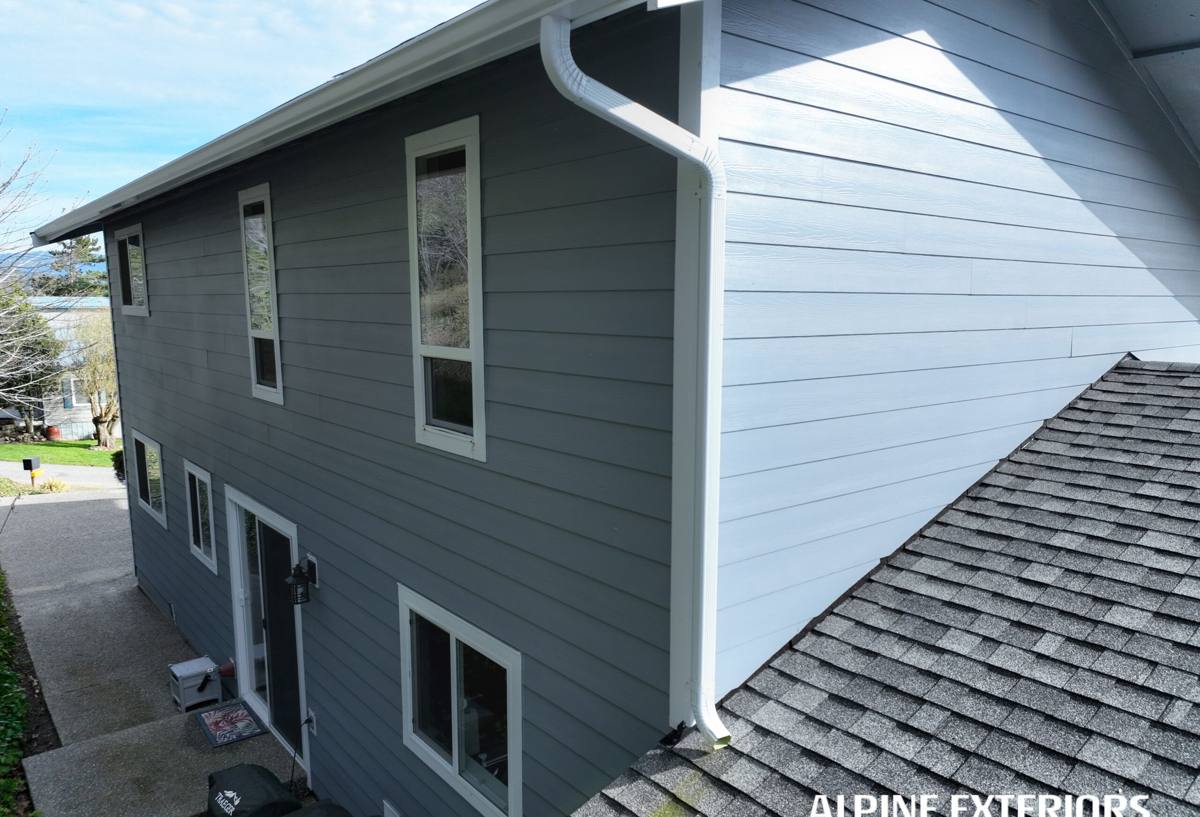
What Actually Causes Storm Damage on Local Roofs
Wind-Driven Rain, Not Just Wind
A lot of homeowners assume storm damage means missing shingles after a big windstorm. More often, the damage is quieter than that. Sustained wind pushes rain sideways and up under shingle tabs, past flashing laps, and into gaps that would never leak in a straight-down rain. Over enough storms, that repeated intrusion softens the underlayment and decking before a single shingle ever visibly moves.
Moss and Trapped Moisture
Snohomish County's tree cover and damp climate give moss a long growing season. Moss holds water against the shingle surface far longer than the shingle is designed to tolerate, which accelerates granule loss and can lift shingle edges enough for wind to get underneath. A roof that looks fine from the ground can already have moss working against it in the shaded valleys and north slope.
Salt-Influenced Air and Metal Fatigue
Being within reach of Puget Sound air means metal flashing, fasteners, and vent components corrode faster here than they would further inland. Corroded flashing is one of the most common hidden causes of a "mystery leak" that shows up after a storm even though the shingles themselves look intact.
Signs You May Have Storm Damage
Some storm damage is obvious. Most of it isn't. Here's what we ask homeowners to check after any significant wind or rain event:
- Shingle tabs that look lifted, curled, or creased, even if none are missing
- Granules collecting in gutters or at the base of downspouts after a storm
- New or worsening moss growth along the ridge, valleys, or north-facing slope
- Water stains on interior ceilings or upper-floor walls that appear after wind-driven rain specifically
- Flashing around chimneys, skylights, or roof-wall intersections that looks bent, separated, or rusted
- Soft spots or noticeable sagging felt when walking the attic space, not just the roof surface
- Debris or branch strikes that punctured or displaced shingles
If you notice any of these, the smart move is a roof inspection before the next storm, not after the next leak.
What a Correct Storm Damage Repair Involves
A quick patch job on visible damage might stop a leak for a while, but it usually doesn't address why the damage happened. A correct repair works from the decking out:
- Decking check. Any area affected by sustained moisture gets checked for soft or delaminated plywood before new material goes down. Repairing over soft decking just guarantees a repeat visit.
- Underlayment restoration. Torn or saturated underlayment is replaced, not just covered. In valleys and eave edges where wind-driven rain concentrates, we use self-adhered ice-and-water membrane rather than standard felt or synthetic underlayment, because it seals around fasteners instead of just shedding water.
- Flashing repair or replacement. Corroded or bent flashing at chimneys, skylights, sidewalls, and valleys gets replaced rather than caulked over. Caulk is a short-term fix on a long-term corrosion problem.
- Shingle matching and tie-in. New shingles are matched as closely as possible to the existing roof and woven into the surrounding field correctly so the repair doesn't become its own future leak point.
- Moss and debris clearing. Any moss or organic debris in the repair area and surrounding valleys is cleared as part of the job, not left for the homeowner to deal with separately.
Our Process for Lake Stevens Storm Repairs
1. Inspection First, Always
We start with a full roof inspection, not just a look at the spot you're worried about. Storm damage rarely stays confined to one area, and we'd rather find every affected spot in one visit than have you call us back after the next rain.
2. A Straight Answer on Scope
After the inspection, we tell you plainly whether you're looking at a targeted repair or whether the damage is extensive enough that repair isn't the more cost-effective path. We don't pad small jobs into bigger ones, and we don't talk homeowners out of a repair that will genuinely hold.
3. Insurance Documentation, If Needed
If the damage may be covered under your homeowner's policy, we document conditions with the kind of detail an adjuster needs — photos, measurements, and a clear description of the storm-related cause. We work for you, not the insurance company, but a well-documented repair estimate makes the claims process smoother on both sides.
4. The Repair Itself
Work is scheduled around the weather window, not squeezed in during a storm just because you're worried. Temporary protection (tarping, sealing exposed areas) is used if there's an active leak risk before the permanent repair can be completed properly.
5. Follow-Up Check
We check back in after the next significant rain event to confirm the repair is performing as expected. A repair that only gets inspected on a sunny day hasn't really been tested yet.
Repair or Replace? Honest Cost Factors
Not every storm-damaged roof needs to be replaced, but not every roof should be repaired indefinitely either. These are the factors that actually drive that decision:
| Factor | Leans Toward Repair | Leans Toward Replacement |
|---|---|---|
| Age of roof | Under 12-15 years | Nearing or past manufacturer's expected service life |
| Extent of damage | Isolated to one or two areas | Spread across multiple slopes |
| Decking condition | Solid, no soft spots found | Widespread soft or delaminated sections |
| Moss and granule loss | Localized, manageable | Advanced across most of the roof surface |
| Shingle availability | Close color/style match available | Discontinued line, mismatch would be visible |
| Storm damage history | First significant event | Repeated repairs over recent years |
Cost for a straightforward storm damage repair generally runs from a few hundred dollars for a small, contained fix up to a few thousand for multi-area damage involving flashing and decking work. Full replacement is a larger investment but resets the clock on all of the above. We'll give you real numbers for your specific roof — broad ranges without seeing the damage aren't much use to you.
Why Hiring a Crew That Already Works Lake Stevens Matters
Storm damage repair isn't a one-size-fits-all trade. A crew that mostly works drier climates may under-spec underlayment or skip moss remediation because it's not something they deal with often. A crew that works Snohomish County roofs regularly already knows:
- Which slopes and roof styles in this area tend to take the worst wind-driven rain
- How aggressive moss growth gets in shaded, tree-lined lots and how to address it without damaging shingles
- Which flashing materials hold up against the salt-influenced air moving in off Puget Sound
- How to schedule repair work realistically around this region's rain patterns instead of promising timelines that don't hold up
That local familiarity shows up in fewer callbacks and repairs that are built for the conditions your roof actually faces, not generic conditions.
Maintenance That Prevents the Next Storm Repair
Once storm damage is repaired, a little seasonal attention goes a long way toward not repeating the process:
- Clear moss and debris from valleys and gutters before the wet season sets in
- Trim back overhanging branches that drop debris and hold moisture against the roof
- Have flashing and roof penetrations checked every few years for corrosion, especially if your home is exposed to open wind
- Address small leaks or lifted shingles right away rather than waiting for the next big storm to make the decision for you
If you're dealing with storm damage now, or you just want a professional opinion on whether your roof is holding up the way it should, we're happy to take a look. Reach out for a free, no-pressure estimate using the form below.