 Everett
 Siding Replacement for Lake Stevens Homes
Lake Stevens has grown fast over the last two decades, and that growth means a wide mix of housing stock — everything from older lake-area homes to newer construction on the hillsides above town. What almost all of them have in common is exposure to the same wet, temperate climate that defines Snohomish County: long stretches of driving rain, heavy shoulder-season humidity, and moss that finds a foothold anywhere siding stays damp too long. Add in the marine-influenced air that moves through this part of Western Washington off Puget Sound, and you have conditions that are hard on exterior materials year after year.
Siding replacement is one of those projects homeowners often put off until it's obviously failing — visible rot, peeling paint, boards that flex when you press on them. By the time it's that visible, moisture has usually been working behind the surface for a while. We work on homes throughout Lake Stevens and the greater Everett area, and the patterns we see here are consistent enough that we can speak to them directly rather than in generalities.
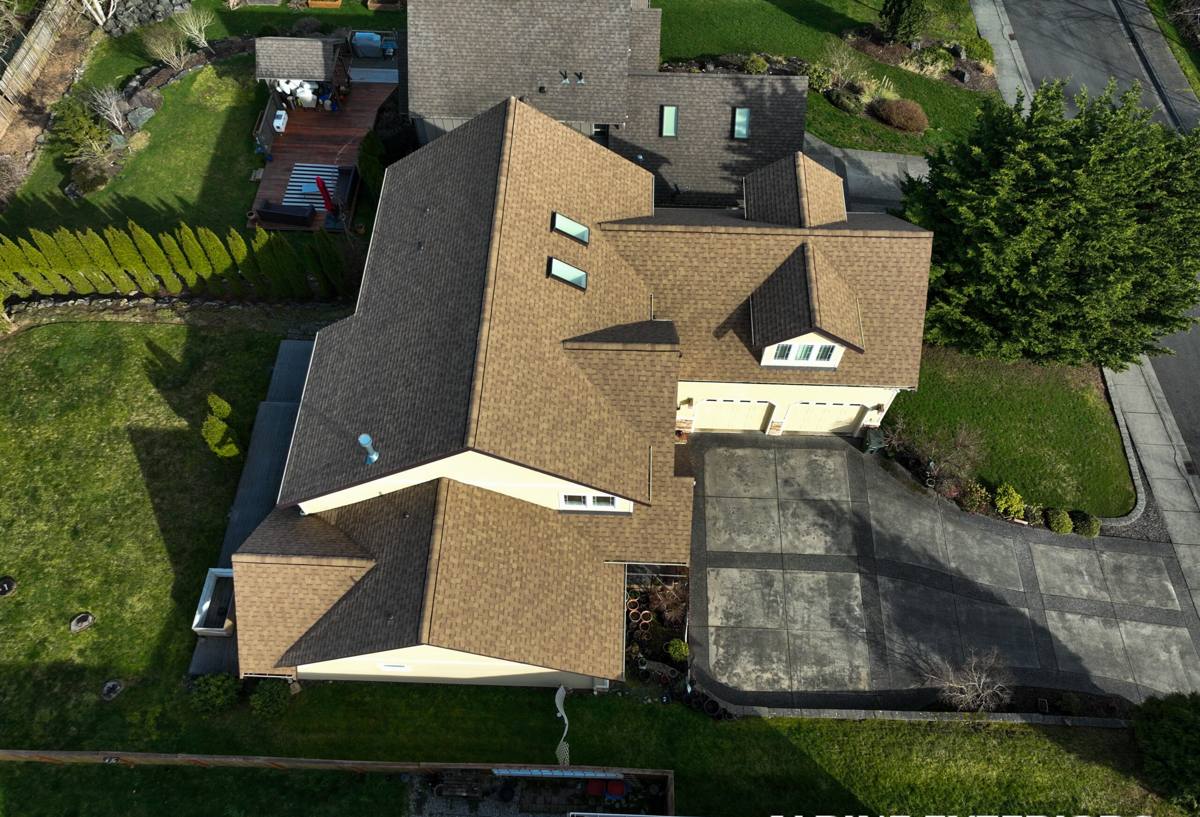
What This Climate Actually Does to Siding
It's worth being specific about the mechanism, not just the symptom. Snohomish County doesn't get extreme weather events very often — it gets moderate, relentless moisture. That's a different kind of stress than a hot, dry climate or a hurricane-prone one, and it punishes different weaknesses in a siding system.
Moss and Organic Growth
Moss needs three things: shade, moisture, and a surface it can grip. Lake Stevens has plenty of tree cover, long wet seasons, and — on wood-based or textured siding — plenty of surface for spores to catch. Moss holds water against the substrate, which accelerates rot in wood products and can stain and degrade paint film on almost anything. Once moss establishes on a wall, it tends to come back faster each time unless the underlying moisture problem (poor drainage, tight clearance to grade, insufficient overhangs) gets addressed, not just power-washed away.
Driving Rain and Wind-Driven Moisture
Wind off the lake and the broader Puget Sound corridor pushes rain sideways during storms, forcing water into laps, seams, and penetrations that would stay dry in a calmer climate. This is why flashing detail and lap coverage matter more here than they would in a drier region — a siding job that's "close enough" somewhere else can leak here.
Humidity and Slow Drying Cycles
Even without active rain, this region holds humidity for long stretches. Siding and the water-resistive barrier behind it need to be able to dry out between wet events. Materials or installations that trap moisture — rather than shedding it and allowing drying — end up chronically damp, which is the single biggest driver of premature siding failure we see on Snohomish County homes.
What Correct Siding Replacement Involves
A siding replacement is not just swapping old boards for new ones. Done right, it's a full building-envelope job. Skipping the underlying steps is how homeowners end up replacing siding again in ten years instead of thirty.
- Full tear-off of failing siding and trim, not spot patching over hidden problems
- Inspection of sheathing for rot, soft spots, or prior water damage, with repairs before anything new goes on
- Installation of a proper water-resistive barrier (WRB), correctly lapped so water sheds downward and outward
- Correct flashing at every penetration — windows, doors, hose bibs, vents, and roof-to-wall transitions
- Rainscreen or furring where appropriate, to give the wall a drainage and drying gap behind the siding
- Manufacturer-spec fastening, lap dimensions, and clearances (siding held off grade, decks, and roof lines correctly)
- Factory-finished material where possible, to avoid field-painted seams and cut edges being the weak point
Each of those steps exists because of a specific failure mode we see in this climate. Cut a corner on flashing, and driving rain finds it. Skip the rainscreen gap, and humidity keeps the wall assembly damp longer than it should be. This is the level of detail that separates a siding job that lasts a few years from one that lasts decades.
Signs a Lake Stevens Home Needs Siding Replacement
Homeowners usually notice one of these before they call, but it's worth knowing the full list, since some of these are easy to miss from the ground.
- Visible moss or algae staining that returns quickly after cleaning
- Soft, spongy, or delaminating boards, especially near the bottom courses and corners
- Paint that's peeling, bubbling, or needs repainting far more often than it should
- Gaps opening at seams, laps, or trim joints
- Visible warping, cupping, or buckling of panels or lap boards
- Interior signs — musty smell, staining, or soft drywall near exterior walls — that point to moisture getting behind the siding
- Siding that's simply reached the end of its expected service life, even if it looks intact from the street
Why We Install Only James Hardie Fiber Cement
We don't install vinyl, LP SmartSide, Cemplank, Allura, primed spruce, or cedar. That's a deliberate standard, not a matter of not having access to those products, and it's worth explaining honestly rather than just stating it.
Each of those alternatives has real strengths — vinyl is inexpensive and low-maintenance in the right climate, engineered wood products like LP SmartSide are workable and reasonably priced, cedar has genuine natural beauty and a long history in this region. But in a climate defined by sustained moisture, moss pressure, and driving rain, each carries a trade-off we're not willing to put our name behind:
- Vinyl can warp or distort in temperature swings and doesn't hold paint if a homeowner ever wants to change color; it also relies heavily on perfect installation to manage water at seams and laps.
- Wood-based engineered siding (LP SmartSide and similar) is a wood-fiber product at its core — better protected than raw wood, but still vulnerable to swelling, edge damage, and moisture intrusion if any part of the installation or maintenance schedule slips.
- Cedar is a natural wood product that requires ongoing maintenance — sealing, staining, and vigilance against exactly the moss and moisture issues this region is known for — to avoid rot.
- Cemplank and Allura are also fiber cement, and reasonable products in their own right, but we've standardized our crews, fastening details, and warranty relationships around one manufacturer's system rather than mixing specs across brands.
James Hardie fiber cement is non-combustible, engineered specifically for climate zones like the Pacific Northwest (Hardie's HZ5 product line is formulated for exactly this kind of wet, moderate climate), and finished at the factory with ColorPlus — a baked-on finish that resists fading and doesn't require field painting at installation. It doesn't feed moss the way wood-based products can, it holds up to sustained moisture exposure, and it carries a strong transferable warranty when installed to Hardie's specifications. That combination is why it's the only product we put on homes.
Comparing Siding Options for This Climate
| Factor | James Hardie Fiber Cement | Vinyl | Wood-Based Engineered (LP SmartSide) | Cedar |
|---|---|---|---|---|
| Moisture resistance | Strong — engineered for wet climates | Good if installed correctly; seams are the weak point | Moderate — wood core is protected but not immune | Requires ongoing sealing/maintenance |
| Moss/organic growth | Resistant, low food source | Resistant surface, but growth can build in seams | Vulnerable if finish is compromised | Prone without regular maintenance |
| Finish/color life | Factory ColorPlus finish, long fade resistance | Color molded in but can fade/chalk | Field-applied or factory finish, repaint eventually needed | Needs re-staining/sealing on a regular cycle |
| Fire performance | Non-combustible | Combustible | Combustible (wood-based) | Combustible |
| Typical maintenance | Low — occasional cleaning | Low | Moderate — finish upkeep matters | High — regular sealing/staining |
Cost varies by home size, elevation complexity, and how much sheathing repair is needed once the old siding comes off — which is impossible to price accurately without seeing the house. What we can say honestly is that James Hardie sits at a higher upfront cost than vinyl and often comparable to or below well-maintained cedar over the life of the product, once you factor in the maintenance vinyl and wood products require to perform in this climate.
Our Process on a Lake Stevens Project
The steps are the same on every home, but the details change based on what we find once the old siding is off.
- On-site assessment. We walk the exterior, check problem areas homeowners flag, and look at drainage, grade clearance, and roof-to-wall details before quoting anything.
- Written scope and estimate. You know what's being torn off, what's being installed, and what happens if we find sheathing damage before work starts.
- Tear-off and inspection. Old siding and trim come off, sheathing gets inspected, and any rot or damage gets repaired — not covered up.
- Water-resistive barrier and flashing. Installed and lapped correctly at every penetration, before a single piece of new siding goes up.
- James Hardie installation to manufacturer spec. Correct fastening, clearances, and lap details, done by crews who install this product regularly.
- Final walkthrough. We go over the finished work with you before considering the job done.
Why a Crew That Already Works Lake Stevens Matters
A siding crew that's worked Lake Stevens and the surrounding Everett area repeatedly has already seen how local lots drain, how tree cover affects moss pressure on different sides of a house, and what Snohomish County's permitting and inspection process expects. That familiarity shows up in fewer surprises mid-project — knowing which older homes in this area are likely to have hidden moisture damage behind the siding, or which lots need extra attention to grade clearance because of how the property sits relative to drainage.
It also means we're not learning this climate on your home. The moss, the driving rain, the long wet stretches between dry spells — these are conditions we plan for from the first inspection, not variables we discover partway through the job.
If your Lake Stevens home is showing signs of siding failure, or you'd rather replace it proactively than wait for visible damage, we're happy to take a look. Reach out for a free, no-pressure estimate using the form below.